

#southkoreaplanstolet3500listedfirmsbuybitcoin
Integrating multi-sig hardware and MPC institutional wallets with K-IFRS general ledgers requires a three-tier architecture. Standard enterprise ERPs (like SAP S/4HANA or Oracle Cloud) cannot natively ingest raw blockchain telemetry or calculate moving-average cost basis under K-IFRS.
To bridge this gap, organizations deploy specialized crypto sub-ledger middleware that normalizes raw on-chain events into structured journal entries (JEs) formatted for standard Enterprise Resource Planning (ERP) ingestion.
1. Key Sub-Ledger Middleware Platforms
Crypto sub-ledgers connect multi-sig vault APIs directly to ERP chart-of-accounts:
Cryptio: Enterprise-grade sub-ledger designed for high-volume corporate treasuries. It features native connectors for MPC vaults (Fireblocks, Fordefi) and multi-sig protocols (Safe), offering K-IFRS/IFRS-compliant revaluation and automated impairment modules.
Bitwave: Focuses on enterprise treasury workflows, tax-lot management, and impairment accounting under both US GAAP and IFRS. It maps multi-sig wallet approvals and gas fees directly into corporate expenses and ledger line items.
TRES Finance: Provides continuous auditing and sub-ledger reconciliation across complex multi-sig setups, staking contracts, and institutional custody accounts, piping verified trial balance entries into main accounting suites.
Lukka Prime & Enterprise Offers institutional-grade pricing valuation engines paired with a sub-ledger framework to calculate fair-value impairment losses under active-market K-IFRS rules.
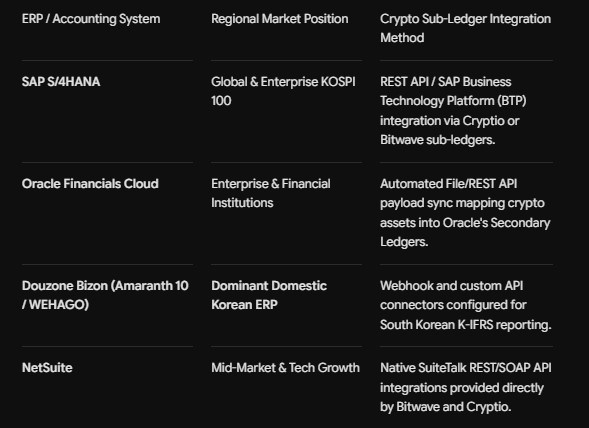
2. Supported ERP Systems & Native Modules
The target General Ledger (GL) absorbs the pre-processed journal entries from the sub-ledger middleware:
3. Technical Integration Mechanism
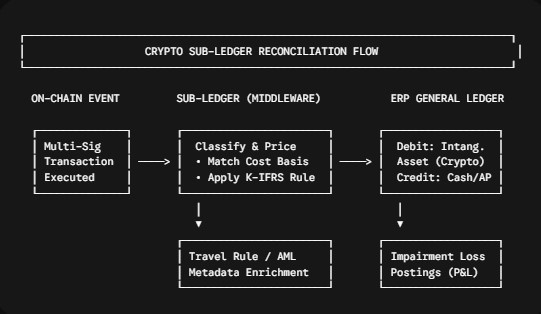
Step 1: Wallet Data Ingestion
The sub-ledger connects via read-only APIs or extended public keys (xpub/ypub/zpub) to track wallet activities without retaining spending authority.
Step 2: K-IFRS Classification & Valuation
The middleware tags transactions according to K-IFRS (e.g., Intangible Asset vs. Inventory):
Cost-Basis Calculation: Applies Moving-Average or Weighted-Average accounting to calculate historical cost.
Impairment Recognition: Evaluates daily active-market pricing data from local South Korean exchanges (Upbit, Bithumb). If market value falls below carrying cost, it automatically generates an Impairment Loss Journal Entry.
Step 3: Localized Compliance & ERP Posting
Before generating final GL postings, the middleware attaches metadata—such as counterparty VASP identity details for Travel Rule verification. It then pushes formatted double-entry journal logs (Debit: Intangible Asset, Credit: Retained Earnings / Realized Gain) directly into the ERP's primary or secondary ledgers.