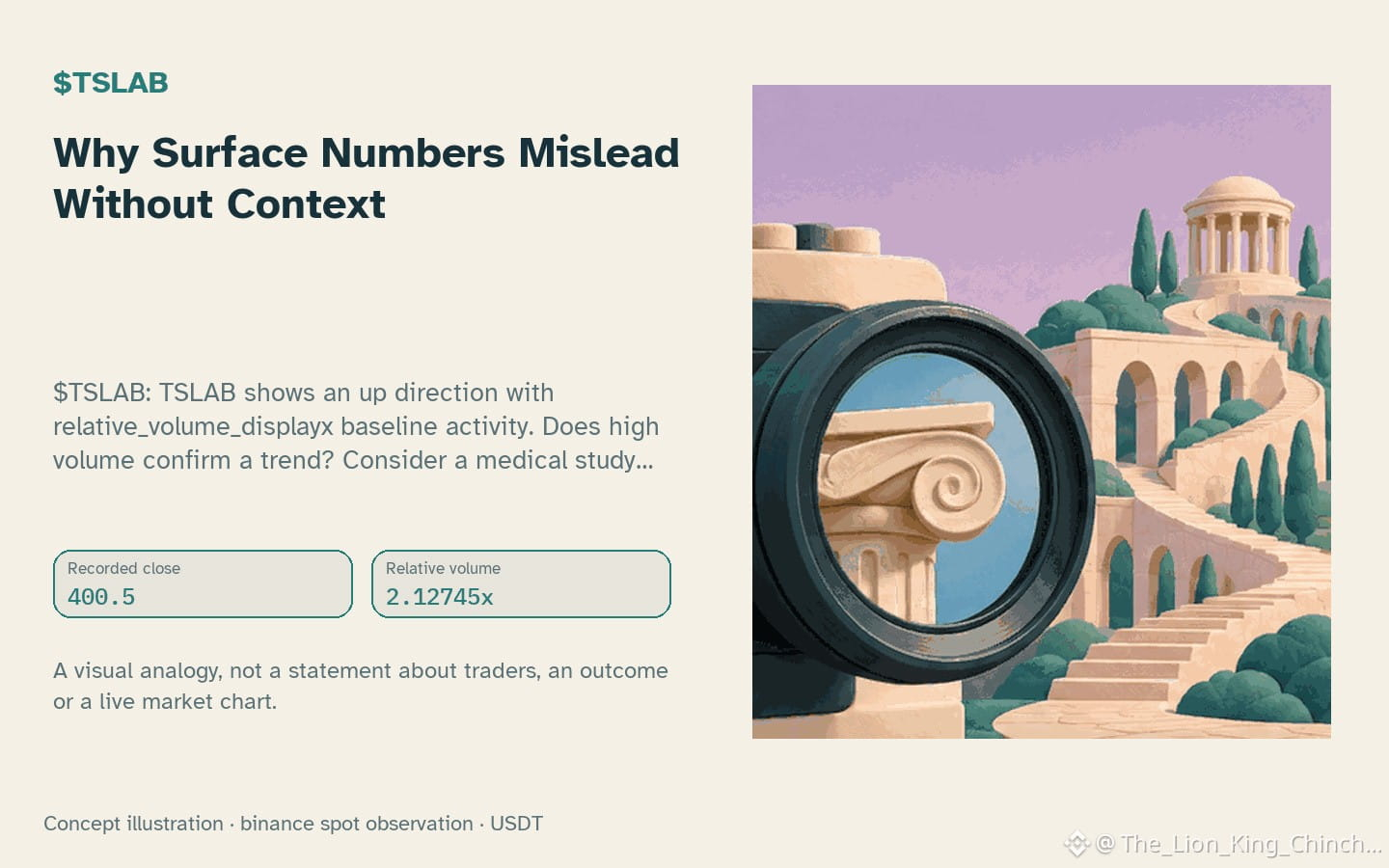
$TSLAB : Why Surface Numbers Mislead Without Context
$TSLAB : TSLAB shows an up direction with relative_volume_displayx baseline activity. Does high volume confirm a trend? Consider a medical study claiming a cure in a sample of ten patients. The headline is shocking, but the sample size limits confidence. Similarly, a single volume spike lacks context without surrounding candles. Surface numbers often mislead when stripped of their mechanical background. Relative volume measures activity against preceding candles, not absolute buying pressure. A limit order resting at price affects liquidity. A market order crossing it changes price instantly. Confusing these mechanics leads to false conclusions about intent. If volume is high but price stays inside the recorded range, absorption may occur, or traders may simply be exiting without moving the asset further. This hypothetical scenario illustrates how a metric can be real but misinterpreted. The counterexample is a market where high volume coincides with a sharp drop. There, the same relative volume token signals caution rather than confidence. Self-check requires asking what alternative execution styles produce identical data. Limits and uncertainties remain crucial; candles alone do not verify motive or flow. Future closed-candle evidence could weaken this interpretation if price breaks resistance while maintaining similar volume patterns. Connecting the number to its physical mechanism prevents the label from overriding the underlying process. Always verify the baseline window before trusting a single ratio. This approach turns a static figure into a dynamic hypothesis test. The lesson is to question the mechanism behind every surface label before acting.
Probabilistic market research, not a recommendation or guaranteed return.
#TSLAB #CryptoEducation #CryptoLearning