

🚨
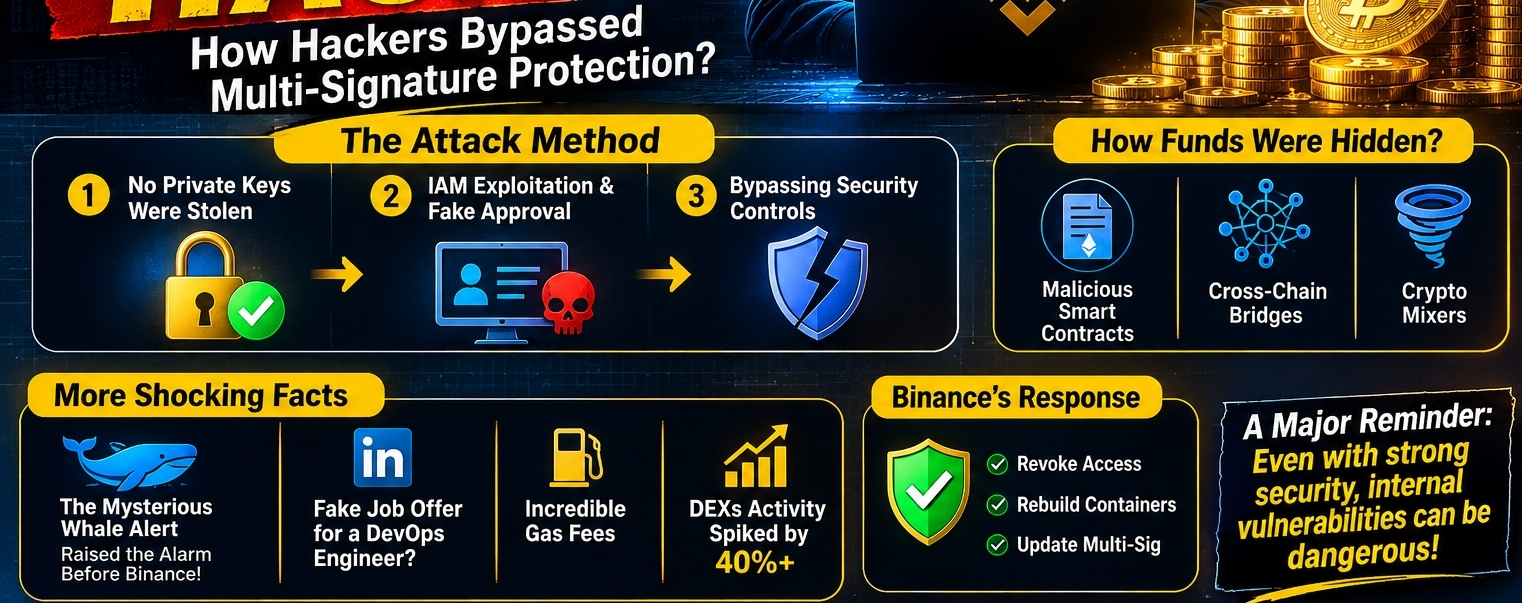
The biggest technical shock was not simply the amount of money involved, but how the attackers managed to withdraw such massive sums despite the existence of Multi-Signature (Multi-Sig) security systems.
🔐 How Did the Hackers Bypass Multi-Sig Security?
1. Private Keys Were Not Stolen
Investigations reportedly confirmed that the attackers did not steal the private keys of Binance's hot or cold wallets. This was a critical distinction, as stolen private keys could have made fund recovery significantly more difficult.
2. Manipulating the Working Environment and Approval Process
Instead of stealing private keys, the hackers allegedly exploited access to the internal Identity and Access Management (IAM) system.
They deployed malicious software inside a compromised container, allowing them to simulate legitimate withdrawal requests and route them to the Automated Signing Service.
3. Bypassing Security Controls
The malicious software reportedly manipulated the required validation criteria, causing the automated system to interpret large withdrawal requests as legitimate internal commands approved by the development team.
🌐 How Did the Attackers Attempt to Hide the Stolen Funds?
Once the funds left Binance wallets, the attackers reportedly used several sophisticated techniques:
• Malicious Smart Contracts
Custom smart contracts were deployed in advance across Ethereum, BNB Chain, and Solana. These contracts reportedly acted as temporary collection points, allowing the attackers to distribute the stolen assets rapidly.
• Cross-Chain Bridges
Assets were moved across different blockchain networks using decentralized bridges, making it more difficult to follow the movement of funds across multiple ecosystems.
• Crypto Mixers
Large amounts of cryptocurrency were reportedly routed through mixing services to make wallet transactions harder to trace. However, freezing efforts allegedly managed to intercept approximately $3 billion before the funds could be fully mixed.
🛡️ Binance's Emergency Response
To contain the attack, Binance's technical team reportedly revoked access permissions and digital certificates associated with the affected engineer and compromised cloud environment.
The team also rebuilt critical containers and updated the multi-signature security infrastructure.
🔎 Other Important Details Surrounding the Binance Hack
🐋 1. The Mysterious Whale That Helped Raise the Alarm
Before Binance's official announcement, blockchain monitoring accounts such as Whale Alert reportedly detected unusual movements involving billions of dollars in stablecoins, including USDT and USDC, from Binance wallets to unknown addresses.
These community alerts allegedly encouraged blockchain security companies and stablecoin protocols to respond quickly, helping freeze a significant portion of the funds before they could be moved or laundered.
🎮 2. The DevOps Engineer: Victim of a Fake Recruitment Offer?
Unconfirmed technical reports suggest that the affected development engineer may have been compromised through a social engineering attack.
The alleged scenario involved:
A highly attractive fake job offer through LinkedIn.
A request to download and run a technical assessment file.
Malware being installed after the file was executed.
Attackers potentially gaining access to the engineer's administrative permissions within Binance.
Some reports have drawn comparisons with tactics associated with the Lazarus Group, which has been linked to North Korean cyber operations.
Important: These recruitment-related allegations have not been officially confirmed by Binance.
💸 3. The Incredible Gas Fees
To accelerate the movement of funds and prevent transactions from being interrupted, the attackers allegedly paid exceptionally high blockchain transaction fees.
These unusual gas payments reportedly helped prioritize transactions and move funds within a very short period.
📉 4. The Temporary Rise of Decentralized Exchanges (DEXs)
Following concerns about centralized exchanges, some users reportedly moved funds toward decentralized platforms such as:
Uniswap
PancakeSwap
These platforms allegedly experienced a significant increase in trading activity as users sought greater control over their own private keys.
⚠️ Final Thoughts
This incident highlights an important lesson for the entire cryptocurrency industry:
Even when private keys remain secure, compromised internal infrastructure, identity management systems, and automated approval processes can create serious security vulnerabilities.
The future of crypto security depends not only on protecting wallets, but also on securing employees' devices, cloud infrastructure, access permissions, and automated signing systems.
🔐 Not your keys, not your coins — but even institutional security systems need continuous protection.
📢 Follow for more updates about Blockchain, Cybersecurity, Cryptocurrency, and Web3.
#Binance #BinanceHack #CryptoSecurity #CyberSecurity #BlockchainSecurity #Blockchain #Cryptocurrency #CryptoNews #HackerNews #Ethereum #BNBChain #Solana #USDT #USDC #DeFi #DEX #Uniswap #PancakeSwap #SmartContracts #MultiSig #PrivateKeys #CryptoWallet #CryptoHack #CyberAttack #Hacking #EthicalHacking #WhiteHatHacker #BlackHatHacker #LazarusGroup #NorthKorea #DevOps #CloudSecurity #IAM #Web3 #BlockchainTechnology #CryptoInvesting #DigitalAssets #Stablecoins #CrossChain #CryptoMixer #GasFees #InformationSecurity #DataSecurity #TechNews #FinTech #DigitalFinance #DecentralizedFinance #CryptoCommunity #WhaleAlert #BinanceNews