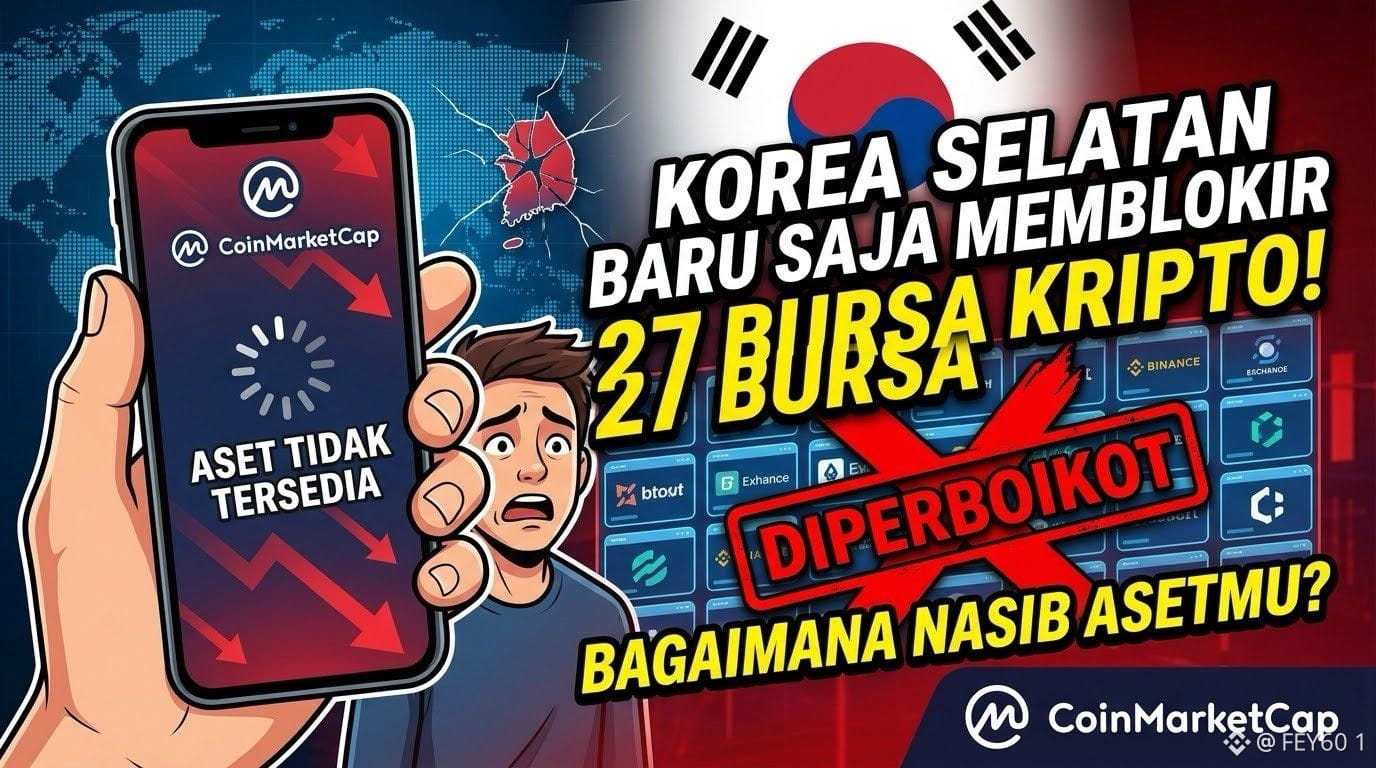
The South Korean government, through its Financial Intelligence Unit (FIU), has taken decisive action by blocking access to 27 overseas crypto exchanges at the network level.
.
Major names such as KuCoin, MEXC, Phemex, BingX, and BitMart are now officially inaccessible to domestic users because they have not registered under AML (Anti-Money Laundering) regulations.
.
Many local users are now having difficulty withdrawing funds from these platforms.
.
📌 Key Facts About This Development:
• Access blocked: 27 unregistered overseas exchanges have been blocked at the network level since October 13.
• Withdrawal issues: Affected users may have difficulty securing their assets; DAXA will step in to handle the withdrawal escalation process.
• Legal action: A total of 44 unregistered operators have been referred to the authorities.
Of all the platforms operating in the country, only around 28 South Korean exchanges hold official licenses.
💡 4 Key Perspectives and Insights:
1️⃣ Liquidity Shock
The sudden disappearance of 27 exchanges is bound to affect global liquidity flows. Which assets or altcoins will feel the pressure first?
2️⃣ Accelerating Asset Exodus
More than $110 billion reportedly left South Korean exchanges in 2025 alone. Will these stricter regulations further accelerate the outflow of funds from centralized exchanges?
3️⃣ How Effective Are Workarounds?
Some platforms typically try changing their URL domains to evade blocks. But are workarounds like this still effective amid strict FIU oversight?
4️⃣ Risk Management for Affected Users
For users whose assets are stuck, what critical steps should they take today before access is completely cut off?
🤔 What’s your take on these strict regulations? Will this decisive action have a positive impact on industry security, or will it stifle innovation and market liquidity?
#CryptoNews #SouthKorea #Regulation
.
Major names such as KuCoin, MEXC, Phemex, BingX, and BitMart are now officially inaccessible to domestic users because they have not registered under AML (Anti-Money Laundering) regulations.
.
Many local users are now having difficulty withdrawing funds from these platforms.
.
📌 Key Facts About This Development:
• Access blocked: 27 unregistered overseas exchanges have been blocked at the network level since October 13.
• Withdrawal issues: Affected users may have difficulty securing their assets; DAXA will step in to handle the withdrawal escalation process.
• Legal action: A total of 44 unregistered operators have been referred to the authorities.
Of all the platforms operating in the country, only around 28 South Korean exchanges hold official licenses.
💡 4 Key Perspectives and Insights:
1️⃣ Liquidity Shock
The sudden disappearance of 27 exchanges is bound to affect global liquidity flows. Which assets or altcoins will feel the pressure first?
2️⃣ Accelerating Asset Exodus
More than $110 billion reportedly left South Korean exchanges in 2025 alone. Will these stricter regulations further accelerate the outflow of funds from centralized exchanges?
3️⃣ How Effective Are Workarounds?
Some platforms typically try changing their URL domains to evade blocks. But are workarounds like this still effective amid strict FIU oversight?
4️⃣ Risk Management for Affected Users
For users whose assets are stuck, what critical steps should they take today before access is completely cut off?
🤔 What’s your take on these strict regulations? Will this decisive action have a positive impact on industry security, or will it stifle innovation and market liquidity?
#CryptoNews #SouthKorea #Regulation