

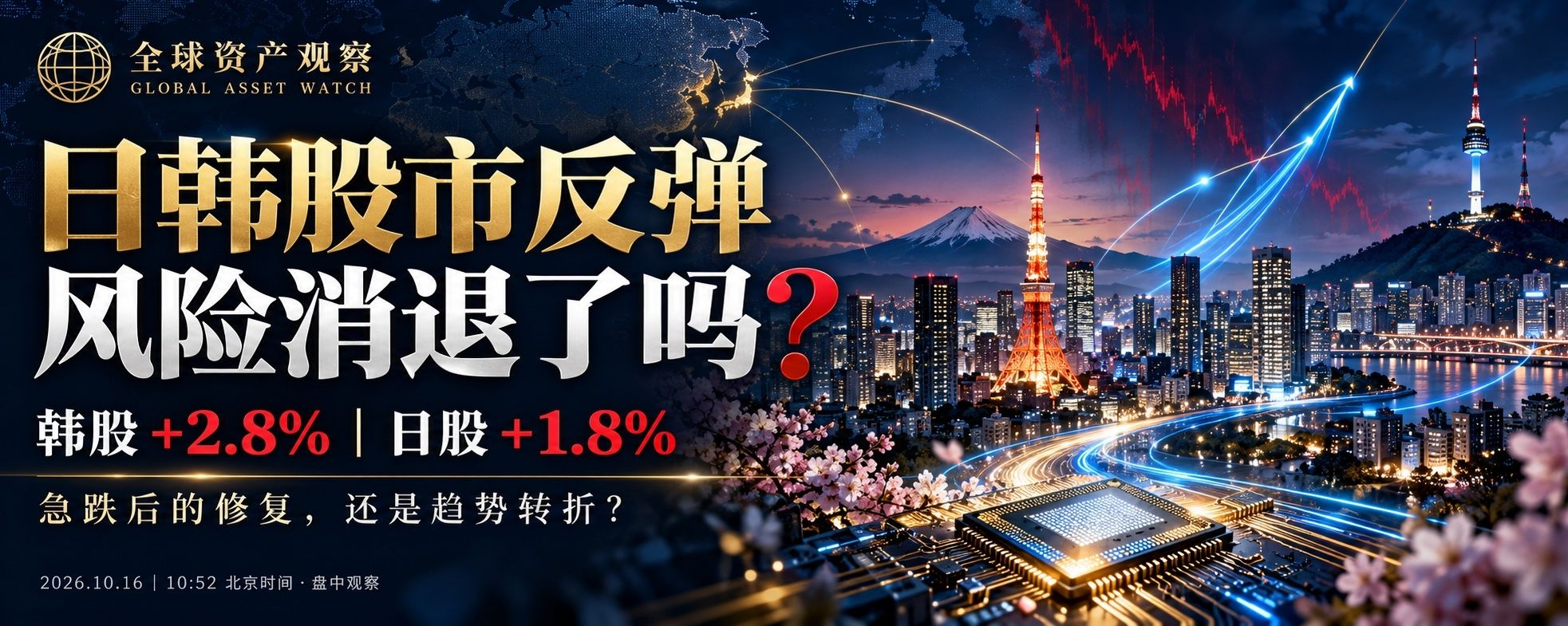

Asian stock markets have finally rebounded. But my assessment is that selling pressure has eased somewhat; whether the risks have receded remains to be seen, and more evidence is needed.
A Reuters update at 10:52 a.m. Beijing time on October 16 showed South Korea’s KOSPI up 2.8% and Japan’s Nikkei up 1.8%. In the previous trading session, the two indexes had fallen nearly 8% and nearly 5%, respectively. These rebound figures are intraday data, not closing results. (reuters.com)
The gains may look substantial, but losses and gains are not symmetrical. A simple example: if an index falls from 100 to 92 and then rises 2.8%, it only gets back to 94.58. A rebound can reduce losses, but it does not mean lost ground has been recovered.
More importantly, have the issues behind this round of adjustments changed?
Earlier, yields on some of CoreWeave’s bonds maturing in 2032 rose above 15%, sparking concerns in the market about financing for AI infrastructure. These yields reflect levels set by bond-market trading; they should not be interpreted directly as the interest rate on all of the company’s borrowing, nor do they mean that a default has occurred. (reuters.com)
This makes me focus more on one question: can growing AI demand turn into cash flow fast enough to cover construction investment and debt payments?
Having orders and growing revenue is not the same as being able to service debt on an ongoing basis; delivery timelines, costs, and collection cycles still stand in the way. A stock can rebound quickly, but resolving these issues usually takes longer.
Of course, risk should not be equated directly with crisis. The Wall Street Journal reported that CoreWeave’s shares reversed an intraday decline to close up 5.9% in U.S. trading on October 15. This shows that the market has not reached a uniformly pessimistic view, but the stock’s recovery alone is not enough to prove that financing pressure has eased. (wsj.com)
Next, I’ll be watching three things:
First, whether credit markets improve in tandem. If the stock rises while the bonds of related companies remain under sustained pressure, the foundation for this recovery is still fragile.
Second, whether the rebound can withstand a retest. A one-day surge can easily be influenced by short-term trading; whether prices hold their lows during a subsequent pullback is a better test of the buying’s staying power.
Third, whether earnings reports provide evidence of cash flow. More than promises to keep expanding investment, I value operating cash flow, financing arrangements, and the ability to convert orders into revenue and cash collections.
For now, I see this rise as an initial recovery following a sharp sell-off. Bargain buying and short covering may both have played a part, but without evidence from fund flows and positioning, it’s not possible to say which force was dominant.
This warrants closer attention, but it’s not enough to declare the risk over. A truly convincing change would be for prices to stabilize, financing pressure to ease, and cash flow to improve—all at the same time.
Global Asset Watch | GLOBAL ASSET WATCH
Market data as reported at 10:52 a.m. Beijing time on October 16, 2026