

ETHcryptohub
15.6k Posts
ETHcryptohub
 Square Verified+
Gold Standard Club, the Founding Co-builder of Binance's Top Guild! Verified KOL ✅ Binance Future Scalper ✅ UID : 57601406 ✅ X : @Ethcryptohub

BTC Holder
High-Frequency Trader
5.9 Years
1.4K+ Following
51.1K+ Followers
45.9K+ Liked
Posts
All
Quotes
Videos
Live
PINNED
PINNED

E L E X A
·
--
🚨 IT’S LIVE 🚨
Watching is simple… but winners take action 👀
🎁 Want FREE $USDT?
💬 Comment 888
❤️ Like
🔁 Share
➕ Follow
⏳ Don’t miss your chance — spots are limited!
Drop 888 below and join now 🚀
#Crypto #USDT #Giveaway
Watching is simple… but winners take action 👀
🎁 Want FREE $USDT?
💬 Comment 888
❤️ Like
🔁 Share
➕ Follow
⏳ Don’t miss your chance — spots are limited!
Drop 888 below and join now 🚀
#Crypto #USDT #Giveaway

Flora Firdos
·
--
🔥 $USDT PALA giveaway time! 💸👀
One lucky person from our amazing community is getting a little reward. 🎁💚
Want in? Just:
💬 Comment 999
❤️ Hit like
🔄 Repost this post
➕ Follow me
Finish all the steps and you’re entered! 🚀🍀
Who’s feeling lucky today? 👀💰
One lucky person from our amazing community is getting a little reward. 🎁💚
Want in? Just:
💬 Comment 999
❤️ Hit like
🔄 Repost this post
➕ Follow me
Finish all the steps and you’re entered! 🚀🍀
Who’s feeling lucky today? 👀💰
·
--
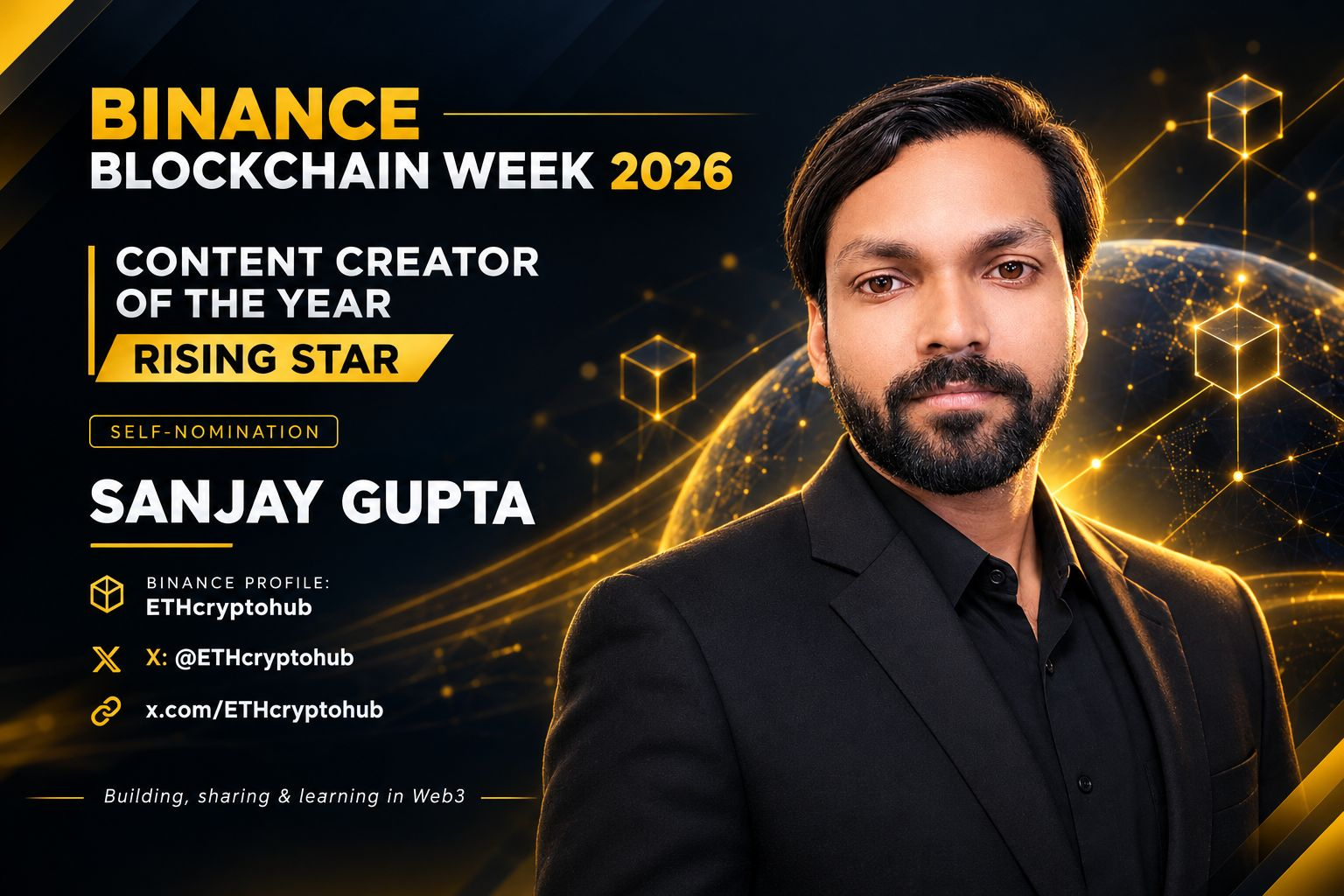
🎙️ ETHcryptohub Community - Nomination Rising Star ✨
End
02 h 02 m 48 s
638
AGTUSDT
Perp
Position
-1.74
2
·
--
🎙️ Let's Vote: Rising Star ✨ ETHcryptohub Community
End
03 h 39 m 18 s
947
GTCUSDT
Perp
Limit/Long
0%
0
·
--
🎙️ Today I have applied for Nomination under Rising Star ✨ Support 🤝
End
03 h 44 m 32 s
1.2k

1INCHUSDT
Perp
Position
-0.67
1


Binance Square Official
·
--
The Blockchain 100, 2026
The Blockchain 100 Award 2026 — FAQ
About the Award
What is The Blockchain 100 Award 2026?
The Blockchain 100 Award is an annual award presented by Binance in collaboration with global media and ecosystem partners. It honors financial content creators who have made a profound impact on the industry through education, information sharing, and inspirational content. In 2026, the award will recognize a total of 100 creators across multiple categories.
Who can participate?
The campaign is open to the global Binance community. Anyone can submit public nominations (including self-nominations), and any Binance verified user can vote during the community voting stage. However, the campaign may not be available in every region — eligibility depends on your country or region of residence.
Is the campaign available in my region?
The nomination and voting features may not be available in all regions, and the list of eligible regions may be updated periodically at Binance's discretion. If the campaign is unavailable in your region, you will not be able to participate. Please check the event page for the most up-to-date availability.
Award Categories
How many creators will be honored?
A total of 100 creators will be honored across three categories: Community Influencer of the Year, Trader of the Year and Content Creator of the Year.
The Content Creator category is further divided into three sub-categories: Best Live Streamer, Best LongForm Creator and Rising Star.
What are the Categories and how many awardees under each category?
Timeline
What are the key dates?
Who can submit a nomination?
Anyone can participate in public nominations through the nomination survey on The Blockchain 100 event page — this includes self-nominations. Media and ally partners of The Blockchain 100 can also submit nominations.
How do I nominate a creator?
Visit The Blockchain 100 event page during the nomination period and complete the nomination survey. You may nominate creators for different award categories through the nomination survey.
Can I nominate the same creator for multiple categories?
No. Each nomination can include the same creator for up to one category only.
Can I nominate myself?
Yes, self-nominations are accepted.
How can a nominee improve their chances of being shortlisted?
The more valid and diverse nominations a candidate receives, the higher their chances of being shortlisted. Encourage supporters, communities, and partners to submit nominations.
How can I check if my nomination is successful?
You will see a confirmation after you submit your nomination through the survey. If you don’t see the confirmation, please submit again. Unfortunately, we are unable to check nomination records manually if you do not have your Binance UID recorded when you submit your nomination.
What are the basic eligibility criteria for nominees?
All nominated creators must meet all of the following:
Primarily produce educational or inspirational content on finance-related topics (traditional finance and/or crypto);Have a public-facing identity with no major controversies;Must have an active account with fewer than five Binance Square violations in since 2026-01-01, and no bans on Binance Square during the event (2026-10-13 09:00 UTC to 2026-10-29 09:00 UTC) or on major social platforms (e.g. X, YouTube).
Are there additional requirements for specific categories?
Yes:
Community Influencer of the Year (must meet all of the following):
Follower count: at least 100,000 genuine followers on one major social media platform;Impact: content widely shared and discussed across the industry;Tenure: how long they have contributed to the industry.
Trader of the Year (must meet at least one):
A verifiable trading record on Binance or another platform (spot, futures, on-chain, or tradfi); ORRecognized and ranked top on Binance's smart money leaderboard, Binance Square leaderboard, lead trader leaderboard, etc.
Content Creator:
Must submit the nominated creator's most representative content piece for community voting and evaluation.
What is the selection process?
After nominations close, candidates will be evaluated based on multiple factors, including but not limited to:
The number and diversity of valid nominations (from online nominations or industry recommendations);Quantifiable influence, such as audience size (subscribers, followers);Engagement metrics, including views, likes, and shares;Industry impact, such as driving industry adoption, guiding public opinion, or promoting community development.
Shortlisted candidates will proceed to the community voting stage, and the final winners will be determined based on the voting results.
Community Voting
Who can vote?
Each Binance verified user can participate. You must be logged into a Binance account that has completed identity verification.
How many votes can I cast?
Each verified user can cast one vote per category or sub-category per day, with a maximum of five votes daily across all categories.
When do my votes refresh, and where can I check them?
Voting counts refresh daily at 00:00 (UTC). Remaining votes can be viewed on the event page
When do the daily rankings update?
There are 5 leaderboards, one for each category, showing the rankings of creators. Rankings update daily at 00:00 (UTC) on the event page. These rankings are for reference only and are not final.
When are the final results announced?
Final results will be confirmed and announced on 2026-10-29 at 09:00 (UTC) on the event page.
How can I generate a share link to my or any creator’s voting page?
Hover over the creator you want to share, click Share, and the generated share link will direct users to the creator’s profile when clicked.
Why can’t I vote?
Each Binance user who has completed KYC verification may cast up to 5 votes per day, with a limit of one vote per category per day. Votes refresh daily at 00:00 UTC. You can see the number of remaining votes on The Blockchain 100 page. You cannot vote in a category once you have no remaining votes for that category.
Also, participation is subject to eligibility based on the user's country or region of residence, or account status.
Why am I/my friends nominated but not on the list?
Not all creators nominated will be shortlisted for the community vote due to the high volume of nominations received. Candidates will be evaluated based on multiple factors, including but not limited to:
The number and diversity of valid nominations (from online submissions or industry recommendations);Quantifiable influence, such as audience size (subscribers, followers);Engagement metrics, including views, likes, and shares;Industry impact, such as driving adoption, shaping public opinion, or promoting community development.
If you do not see yourself in the community vote, it means you were not shortlisted based on the criteria above.
How can I check the full shortlisted candidates?
The full list of shortlisted candidates will be publicly available on October 19, 2026, on the event page when the Community Vote opens.
Prizes & Recognition
When will the final results be announced?
Final results will be confirmed and announced on October 29, 2026, at 9:00 UTC.
What do awardees receive?
All 100 winners will receive a physical trophy engraved with their name and award category.
In addition, the following 29 winners will be invited to attend Binance Blockchain Week 2026 in Bangkok and the offline awards ceremony:
Community Influencer of the Year: all 10 winnersTrader of the Year: top 10Content Creator of the Year: top 3 in each sub-category (Best Live Streamer, Best Long-Form Creator, Rising Star)
I am one of the winners, what should I do next?
After the announcement on October 29, 2026, at 9:00 UTC, Binance staff will reach out to you via push notifications or email to arrange your journey to Binance Blockchain Week or trophy delivery if you cannot attend in person.
Rules & Fairness
Can I use multiple accounts to vote?
No. Illegally bulk-registered accounts or sub-accounts are not eligible and will be removed at the end of the vote. Batch voting (casting multiple votes simultaneously) is considered invalid and will be removed daily as well as at the end of the voting period.
What are participants required to do?
Participants (voters, nominees, awardees) must cooperate with the organisers in a timely manner and comply with instructions as soon as reasonably possible. Failure to do so may result in disqualification or invalidation of votes.
Can I run a community giveaway to promote my nomination and gather votes?
Yes. You are allowed to run community giveaways to promote yourself during the campaign. However, the following will be considered violations of the campaign rules and may result in disqualification and/or removal of votes:
Use of illegally bulk-registered accounts or sub-accounts;Suspected use of bots or automated voting;Attacking or coordinating against other creators' communities.
This is consistent with the campaign's Terms and Conditions, which already invalidate bulk-registered accounts, batch voting, and any interference with Binance's program operation.
For full details, please refer to the official announcement.
About the Award
What is The Blockchain 100 Award 2026?
The Blockchain 100 Award is an annual award presented by Binance in collaboration with global media and ecosystem partners. It honors financial content creators who have made a profound impact on the industry through education, information sharing, and inspirational content. In 2026, the award will recognize a total of 100 creators across multiple categories.
Who can participate?
The campaign is open to the global Binance community. Anyone can submit public nominations (including self-nominations), and any Binance verified user can vote during the community voting stage. However, the campaign may not be available in every region — eligibility depends on your country or region of residence.
Is the campaign available in my region?
The nomination and voting features may not be available in all regions, and the list of eligible regions may be updated periodically at Binance's discretion. If the campaign is unavailable in your region, you will not be able to participate. Please check the event page for the most up-to-date availability.
Award Categories
How many creators will be honored?
A total of 100 creators will be honored across three categories: Community Influencer of the Year, Trader of the Year and Content Creator of the Year.
The Content Creator category is further divided into three sub-categories: Best Live Streamer, Best LongForm Creator and Rising Star.
What are the Categories and how many awardees under each category?
Timeline
What are the key dates?
Who can submit a nomination?
Anyone can participate in public nominations through the nomination survey on The Blockchain 100 event page — this includes self-nominations. Media and ally partners of The Blockchain 100 can also submit nominations.
How do I nominate a creator?
Visit The Blockchain 100 event page during the nomination period and complete the nomination survey. You may nominate creators for different award categories through the nomination survey.
Can I nominate the same creator for multiple categories?
No. Each nomination can include the same creator for up to one category only.
Can I nominate myself?
Yes, self-nominations are accepted.
How can a nominee improve their chances of being shortlisted?
The more valid and diverse nominations a candidate receives, the higher their chances of being shortlisted. Encourage supporters, communities, and partners to submit nominations.
How can I check if my nomination is successful?
You will see a confirmation after you submit your nomination through the survey. If you don’t see the confirmation, please submit again. Unfortunately, we are unable to check nomination records manually if you do not have your Binance UID recorded when you submit your nomination.
What are the basic eligibility criteria for nominees?
All nominated creators must meet all of the following:
Primarily produce educational or inspirational content on finance-related topics (traditional finance and/or crypto);Have a public-facing identity with no major controversies;Must have an active account with fewer than five Binance Square violations in since 2026-01-01, and no bans on Binance Square during the event (2026-10-13 09:00 UTC to 2026-10-29 09:00 UTC) or on major social platforms (e.g. X, YouTube).
Are there additional requirements for specific categories?
Yes:
Community Influencer of the Year (must meet all of the following):
Follower count: at least 100,000 genuine followers on one major social media platform;Impact: content widely shared and discussed across the industry;Tenure: how long they have contributed to the industry.
Trader of the Year (must meet at least one):
A verifiable trading record on Binance or another platform (spot, futures, on-chain, or tradfi); ORRecognized and ranked top on Binance's smart money leaderboard, Binance Square leaderboard, lead trader leaderboard, etc.
Content Creator:
Must submit the nominated creator's most representative content piece for community voting and evaluation.
What is the selection process?
After nominations close, candidates will be evaluated based on multiple factors, including but not limited to:
The number and diversity of valid nominations (from online nominations or industry recommendations);Quantifiable influence, such as audience size (subscribers, followers);Engagement metrics, including views, likes, and shares;Industry impact, such as driving industry adoption, guiding public opinion, or promoting community development.
Shortlisted candidates will proceed to the community voting stage, and the final winners will be determined based on the voting results.
Community Voting
Who can vote?
Each Binance verified user can participate. You must be logged into a Binance account that has completed identity verification.
How many votes can I cast?
Each verified user can cast one vote per category or sub-category per day, with a maximum of five votes daily across all categories.
When do my votes refresh, and where can I check them?
Voting counts refresh daily at 00:00 (UTC). Remaining votes can be viewed on the event page
When do the daily rankings update?
There are 5 leaderboards, one for each category, showing the rankings of creators. Rankings update daily at 00:00 (UTC) on the event page. These rankings are for reference only and are not final.
When are the final results announced?
Final results will be confirmed and announced on 2026-10-29 at 09:00 (UTC) on the event page.
How can I generate a share link to my or any creator’s voting page?
Hover over the creator you want to share, click Share, and the generated share link will direct users to the creator’s profile when clicked.
Why can’t I vote?
Each Binance user who has completed KYC verification may cast up to 5 votes per day, with a limit of one vote per category per day. Votes refresh daily at 00:00 UTC. You can see the number of remaining votes on The Blockchain 100 page. You cannot vote in a category once you have no remaining votes for that category.
Also, participation is subject to eligibility based on the user's country or region of residence, or account status.
Why am I/my friends nominated but not on the list?
Not all creators nominated will be shortlisted for the community vote due to the high volume of nominations received. Candidates will be evaluated based on multiple factors, including but not limited to:
The number and diversity of valid nominations (from online submissions or industry recommendations);Quantifiable influence, such as audience size (subscribers, followers);Engagement metrics, including views, likes, and shares;Industry impact, such as driving adoption, shaping public opinion, or promoting community development.
If you do not see yourself in the community vote, it means you were not shortlisted based on the criteria above.
How can I check the full shortlisted candidates?
The full list of shortlisted candidates will be publicly available on October 19, 2026, on the event page when the Community Vote opens.
Prizes & Recognition
When will the final results be announced?
Final results will be confirmed and announced on October 29, 2026, at 9:00 UTC.
What do awardees receive?
All 100 winners will receive a physical trophy engraved with their name and award category.
In addition, the following 29 winners will be invited to attend Binance Blockchain Week 2026 in Bangkok and the offline awards ceremony:
Community Influencer of the Year: all 10 winnersTrader of the Year: top 10Content Creator of the Year: top 3 in each sub-category (Best Live Streamer, Best Long-Form Creator, Rising Star)
I am one of the winners, what should I do next?
After the announcement on October 29, 2026, at 9:00 UTC, Binance staff will reach out to you via push notifications or email to arrange your journey to Binance Blockchain Week or trophy delivery if you cannot attend in person.
Rules & Fairness
Can I use multiple accounts to vote?
No. Illegally bulk-registered accounts or sub-accounts are not eligible and will be removed at the end of the vote. Batch voting (casting multiple votes simultaneously) is considered invalid and will be removed daily as well as at the end of the voting period.
What are participants required to do?
Participants (voters, nominees, awardees) must cooperate with the organisers in a timely manner and comply with instructions as soon as reasonably possible. Failure to do so may result in disqualification or invalidation of votes.
Can I run a community giveaway to promote my nomination and gather votes?
Yes. You are allowed to run community giveaways to promote yourself during the campaign. However, the following will be considered violations of the campaign rules and may result in disqualification and/or removal of votes:
Use of illegally bulk-registered accounts or sub-accounts;Suspected use of bots or automated voting;Attacking or coordinating against other creators' communities.
This is consistent with the campaign's Terms and Conditions, which already invalidate bulk-registered accounts, batch voting, and any interference with Binance's program operation.
For full details, please refer to the official announcement.
30D trade $DUSK 6.1K USDT
Verified
30D trade $DUSK 1.3K USDT
Log in to explore more content