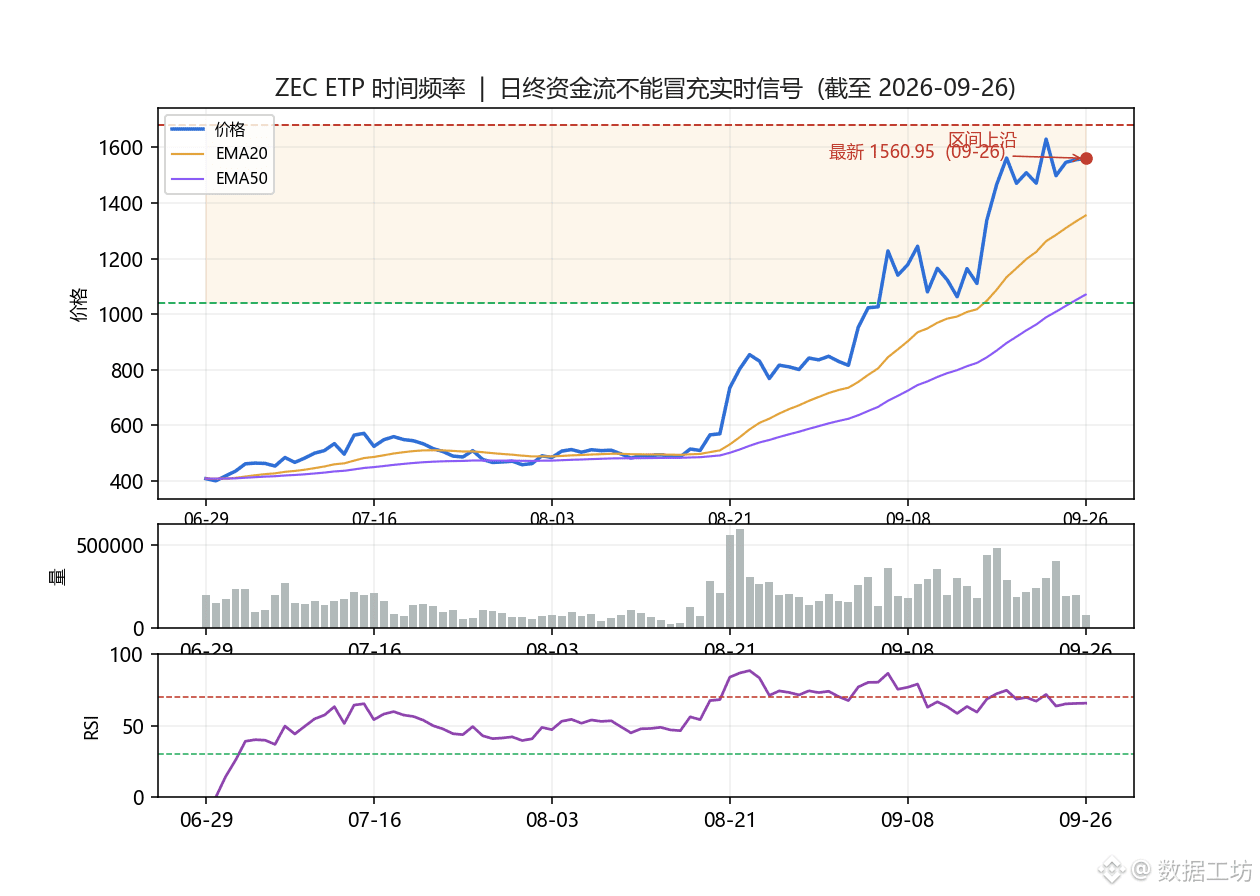
ETP listing doesn’t equal a real-time buy order. The easiest thing to confuse is the time frequency of the fund flows.
When there are new developments related to Zcash ETPs, many people will immediately put the news, the coin price, and the fund flows on the same chart. But the three types of data have different time granularities:
1. Announcements are event time;
2. ETP listings are trading time;
3. Subscriptions/redemptions or fund flows are typically reported on a daily end-of-day basis;
4. Coin price is updated continuously for 24 hours.
If you don’t clearly specify the time zone and the cutoff convention, it’s easy for backtests to mistakenly place “data known only after the close” into the intraday period, creating look-ahead bias. My approach is to store the announcement time, listing time, fund-flow date, and price timestamps separately, and then build an event window.
When looking at ETP/ETF data, what do you first confirm?
A: Announcement time
B: Listing time
C: Fund-flow date
D: Time zone and the closing/cutoff convention
#ZEC #ETP #数据质量 #量化 #数据控
When there are new developments related to Zcash ETPs, many people will immediately put the news, the coin price, and the fund flows on the same chart. But the three types of data have different time granularities:
1. Announcements are event time;
2. ETP listings are trading time;
3. Subscriptions/redemptions or fund flows are typically reported on a daily end-of-day basis;
4. Coin price is updated continuously for 24 hours.
If you don’t clearly specify the time zone and the cutoff convention, it’s easy for backtests to mistakenly place “data known only after the close” into the intraday period, creating look-ahead bias. My approach is to store the announcement time, listing time, fund-flow date, and price timestamps separately, and then build an event window.
When looking at ETP/ETF data, what do you first confirm?
A: Announcement time
B: Listing time
C: Fund-flow date
D: Time zone and the closing/cutoff convention
#ZEC #ETP #数据质量 #量化 #数据控