

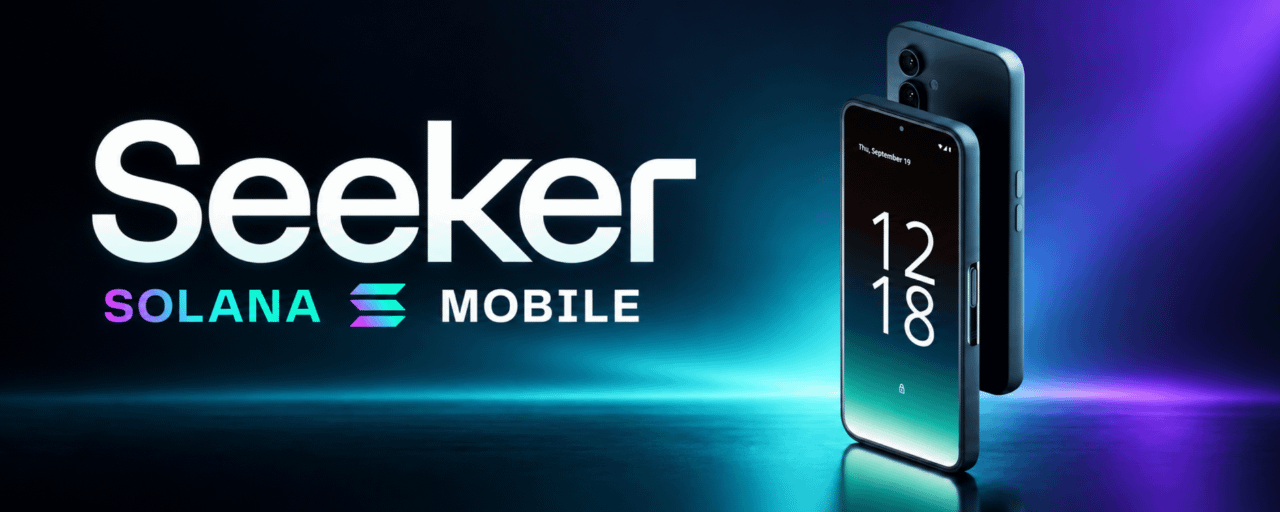

I’ve been interested in technology related to cryptocurrency for a long time. Solana Seeker is one of the few devices that I would genuinely like to buy.
This is not just an Android with a Solana logo. Inside, it has a secure key vault, its own dApp store, a digital identity, and access to a separate Web3 ecosystem.
It’s made for people who use cryptocurrency, interact with dApp, and want the Solana ecosystem right on their phone.
Not for the camera. Not for the processor.
But how relevant is all of this in 2026?
Right now, Seeker is officially sold for $500, and the phone itself is still the main device in the ecosystem.
Key specs:
— MediaTek Dimensity 7300;
— 8 GB of RAM;
— 128 GB of storage;
— 120 Hz AMOLED display;
— battery 4500 mAh;
If you look only at the specs, for $500 you can find a more powerful Android phone.
But the main value of Seeker is not hidden in the camera or the processor.
The phone includes Seed Vault — a hardware-secured key storage. Transactions are confirmed with a fingerprint and a double press.
Solana dApp Store — a separate store for Web3 applications. It already has over 1,000 apps: wallets, DeFi, DePIN, games, payments, and apps available only to owners of Solana Mobile.
Each device also receives a Seeker ID and its own Genesis Token. The Genesis Token is what confirms that there’s a real Seeker owner in front of the ecosystem and grants access to specific dApps, bonuses, and rewards.
And this system has already worked in practice.
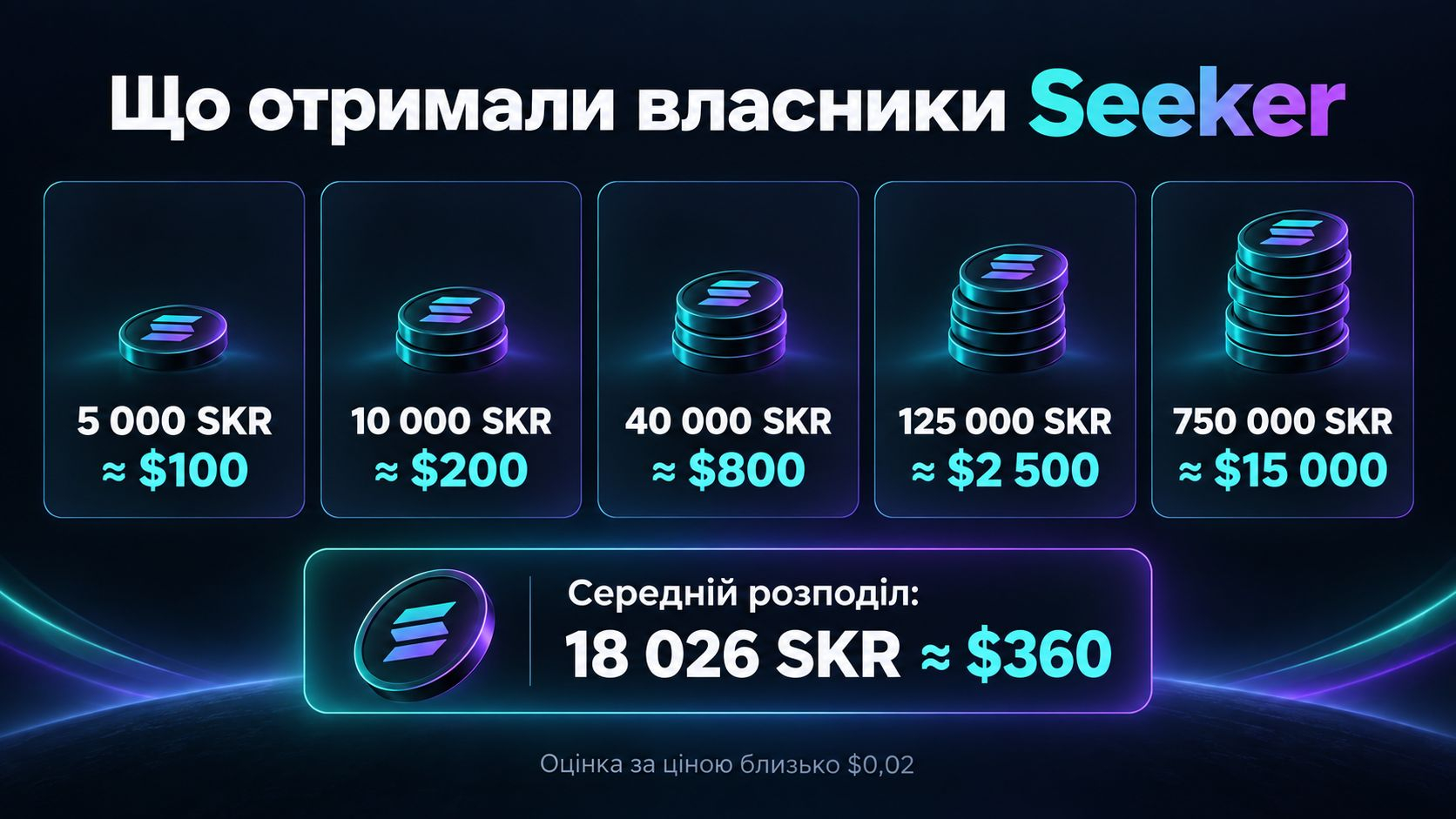
The best example of a real reward is the first SKR distribution. After Seeker Season 1 ended, 1.819 billion SKR were distributed among 100,908 users. Depending on the activity tier, owners received $SKR 5,000, 10,000, 40,000, 125,000, or 750,000. The average distribution was about 18,026 SKR per user.
As of September 26, 2026, $SKR costs about $0.0202. At this price, the average airdrop would be about $364. The minimum 5,000 SKR — roughly $101; 40,000 SKR — $808; and 125,000 $SKR — about $2,525. At the historical all-time high of $0.05582, the average distribution was estimated at approximately $1,006.
What’s left now?
— Seeker Season 2;
— more than 1,000 apps in the Solana dApp Store;
— new DeFi, DePIN, and gaming projects;
— exclusive bonuses for owners;
— tracking phone activity, using dApp, and on-chain transactions;
— possible future SKR distributions and other airdrops.
Solana Mobile’s next model hasn’t been officially announced yet. Instead, the company has started offering its technologies to other Android manufacturers. So the next crypto phone could appear under a different brand.
For Ukrainian users, there’s another important point: Seeker can be officially ordered to Ukraine. As part of Solana Mobile Ukraine, it’s included in the list of available countries, and delivery is listed as free.
But $500 isn’t the final price. Due to exceeding the customs limit of €150, customs duty, VAT, and processing fees may be added. So the final cost of the phone for a Ukrainian buyer could approach $600–620.
My conclusion:
As a regular main smartphone, Seeker doesn’t look like the most powerful buy for $500.
But if you’re a crypto enthusiast, hold $SOL or actively use the Solana ecosystem, then the value of the phone is completely different.
You get a separate Web3 device with Seed Vault, Solana dApp Store, Seeker ID, Genesis Token, and access to special apps and rewards.
Personally, I’d buy it specifically as a second working crypto phone. And I’d still keep the main capital in a separate hardware wallet.
So what would you choose: buy Seeker now, wait for the new model, or get a regular phone along with a cold wallet?