



Luca Schnetzler, known as Luca Netz, lived a reality that seems to belong to a parallel reality.

There was no luxurious office. There were no millions in the account. There were no investors, headlines, or a global brand to lead the way.
There was instability.
Luca grew up in a family that faced enormous financial difficulties and spent part of his childhood in a situation of housing vulnerability. He and his mother lived for years moving between different places, including rooms, couches, and temporary shelters, living a childhood below the poverty line.
Years later, that boy who had to learn too early how to deal with a lack of money would be at the head of one of the most unlikely stories in the crypto universe.
And maybe the most curious thing is that Luca did not get there by following the traditional path.
He dropped out of school as a teenager.
He started working at a distribution center.
He sold products online.
He discovered the power of social media before many people understood how to turn attention into money.
And by 18, he had already made his first million dollars.
But that still wasn’t the most surprising part of the story.
The real leap would happen when he decided to bet everything he had on NFTs precisely at the moment of the NFT crisis.
Luca Netz’s story begins far from the glamour associated with the crypto universe.
Raised by a poor single mother, Luca had a childhood marked by financial difficulties and instability. The need to make money did not appear to him as a distant entrepreneurial ambition.
It was a concrete need.
It was about surviving.
That difference helps explain much of the business personality he would later develop.
While other teenagers were focused on school and social life, Luca began looking for ways to generate income.
He even dropped out of high school shortly after, got a job as a logistics assistant packing boxes at Ring, a company known for its home security devices.
The job, however, did not just awaken in him the desire to receive a paycheck every month.
It sparked curiosity.
Luca began observing how companies worked. How products were sold. How brands grew. How money came in and out of a business.
He did not want to spend his life just carrying out tasks.
He wanted to understand the mechanism behind them.
And it was that curiosity that led him to the internet.
The first major turning point came when Luca entered e-commerce.
He noticed something that would become fundamental to his entire career: it was not necessarily necessary to have a big brand to sell a lot. It was necessary to know where people’s attention was.
He started selling fake chains with a luxurious look online.
The product was not gold. They were plated or fake versions of pieces that, if made with real gold, would cost thousands of dollars.
But Luca found a different way to sell it.
Instead of spending a fortune trying to buy advertising, he looked for fan pages of celebrities on Instagram, and his chains were not just any chains—they were imitation jewelry replicas used by those celebrities.
The logic was simple!
A page with dozens or hundreds of followers could charge a small amount to promote a product. If the post generated sales, you just repeated the process.
It was a kind of marketing laboratory.
Luca tested.
He watched.
He reinvested.
It scaled.
In his interview with Fortune, he said he even paid fan pages tied to artists like Kendrick Lamar to promote his chains. Some campaigns cost only tens of dollars and could generate thousands in sales.
The result was impressive.
In just nine months, according to Netz himself, the business had surpassed US$1 million in cumulative revenue.
In total, more than 300,000 chains are said to have been sold before the company was later traded for around US$8 million.
Luca was only 18 years old.
And he had just discovered something he would carry for the rest of his career:
Attention is an asset!
It would be easy to tell this story as if Luca had simply discovered a viral product and gotten rich.
But there is a more interesting part.
Before NFTs, he scaled professionally through the advertising he got from the chain business and went through different businesses and roles.
Among them, he was connected to Gel Blaster, a toy company that used small gel balls as recreational ammunition. Luca became an investor in the brand and later took on the role of CMO.
There, he learned a skill that would later become decisive.
How to take something that exists on the internet and put it into the physical world.
That experience would help explain one of the most important decisions of his career.
When everyone was looking at NFTs as digital images traded in crypto wallets, Luca began to see something else.
A brand!
In July 2021, a collection called Pudgy Penguins was launched on the Ethereum blockchain.

There were 8,888 digital penguin characters with different traits.
The collection sold out quickly. The project gained attention and created a passionate community.
But there was a problem.
Execution did not keep up with the potential.
Promotions were not delivered, the community began to lose trust, and the project entered an increasingly complicated situation. The community’s own historical documentation describes the period as one of strong dissatisfaction with the original team.
It was exactly at that moment that Luca entered the story.
He was not a stranger watching from the outside.
It was someone who had bought a Pudgy Penguin NFT and started participating in the community.
And he noticed something that other investors perhaps could not see.
Behind the NFTs there was intellectual property.
There were characters.
There was a community.
There was a recognizable aesthetic.
And, above all, there was a story that could be much bigger than the blockchain itself.
In April 2022, Luca acquired the brand rights with all his savings for approximately US$2.5 million, including intellectual property rights and assets related to the project.
To many people, it seemed like an absurd bet—he had no other choice; that business had to work.
The NFT market was about to face one of the hardest periods in its history: its collapse.
But Luca was looking at something else.
While the market asked how much a JPEG was worth, he asked:
“What if this is a brand?”
A few months after the acquisition, the cryptocurrency market entered a deep downturn.
NFT prices collapsed.
Several projects disappeared.
Investors lost money.
The enthusiasm that had taken over the industry in 2021 began to evaporate.
It would have been the perfect moment to give up.
Luca did the opposite.
The strategy began to change.
Instead of relying exclusively on the appreciation of NFTs, Lucas began building a business around intellectual property.
And that meant doing something that seemed almost contradictory for a company born on the blockchain:
Take the penguins off the screen!
Pudgy Penguins began to take physical form.
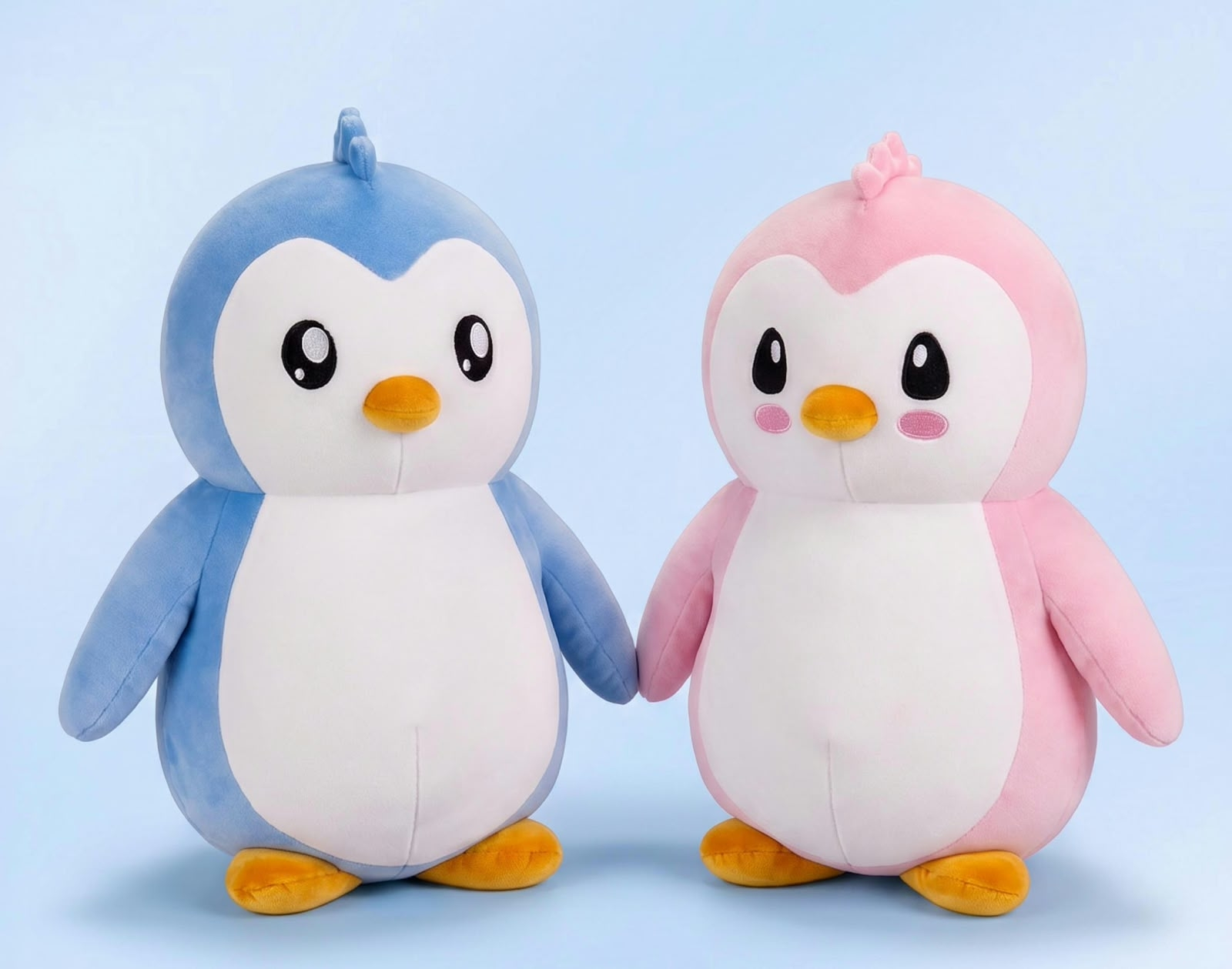
Plushies.
Toys.
Licensed products.
Characters that once existed mainly in digital wallets began appearing on the shelves of major retailers.
Walmart.
Target.
Five Below.
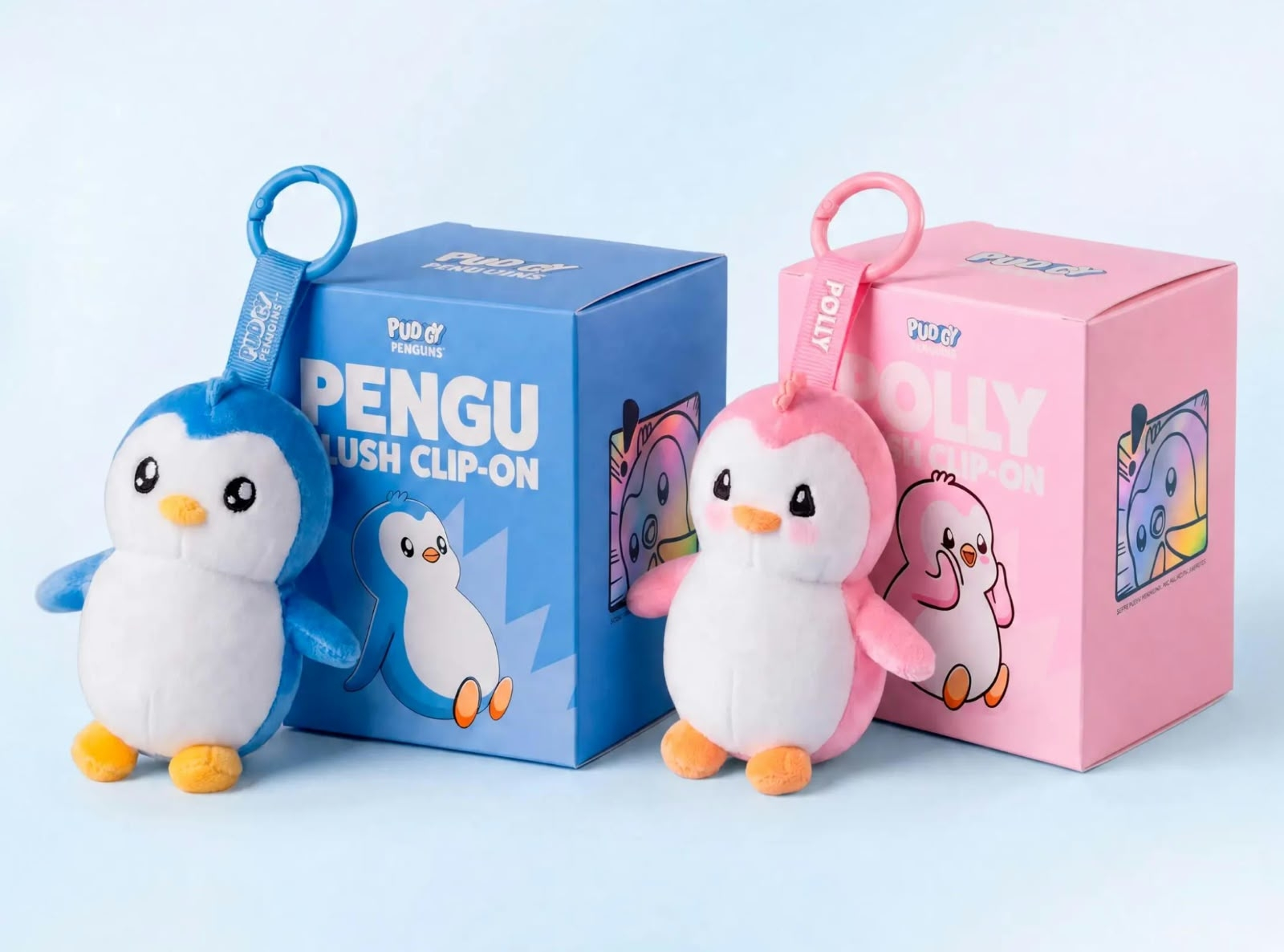
The project was undergoing a rare transition: it was moving from being just an internet phenomenon to becoming a real-world consumer brand.
The strategy had another detail as well.
The toys did not need to completely abandon the technology that had given birth to the brand.
Physical products could work as a gateway to the digital universe.
This combination of a traditional toy on one side and a digital identity on the other became one of the main bets of the business model Luca was once again building.
In his interview with Forbes, he highlighted precisely this transformation: after acquiring Pudgy Penguins, Lucas Netz shifted the focus to physical toys, licensing, and media, helping the brand navigate the so-called “crypto winter.”
The results started to show in the numbers.
In 2023, the company recorded more than US$10 million in sales, and later reached more than 1 million toys sold in just one year.
What once seemed like just a collection of penguin NFTs was starting to behave like a traditional intellectual property company.
But Luca still had another card up his sleeve.
If Pudgy Penguins had managed to turn digital characters into physical products, the next step was to build an even bigger bridge between the community, the brand’s culture, and the crypto market.

The token was launched on the Solana blockchain and distributed largely through an airdrop aimed at eligible ecosystem participants. The project’s official page itself confirms the use of Ethereum and Solana wallets in the eligibility and claim process.
There is an important distinction here.
The $PENGU should not simply be confused with “the value of Pudgy Penguins”.
It is a separate crypto asset, associated with the ecosystem and the community.
And, as with any crypto asset, its price can experience large fluctuations.
But from a strategic point of view, the launch represented something bigger.
The penguins stopped being just characters.
They began to occupy different layers of the internet:
NFTs.
Memes.
Toys.
Social media.
Games.
Licensing.
Cryptocurrency.
That multiplicity is precisely what makes Luca’s story so interesting.
Maybe that is the most important part of the entire journey.
Anyone who quickly looks at Pudgy Penguins may see only cute penguin drawings.
Luca saw intellectual property.
And intellectual property can travel.
It can become a toy.
It can become a cartoon character.
It can appear on clothing.
It can be licensed.
It can enter games.
It can become a meme.
It can take over social media.
It can create community.
It is the same logic that allowed brands like Pokémon, Hello Kitty, and other cultural properties to cross generations and formats.
The difference is that Pudgy Penguins was born at a time when the digital community itself could take part in building and distributing the brand.
In 2026, this expansion continues.
The company announced new initiatives in categories such as beauty and wellness, collectibles, and lifestyle, as well as partnerships with brands and organizations across different sectors. According to Pudgy Penguins itself, the brand has also surpassed 100 billion views on GIPHY.
The little penguin was no longer just an NFT.
It became a language.
There is a powerful irony in this story.
When Luca was a teenager, money meant security.
A house.
Stability.
The possibility of not depending on the next opportunity.
Years later, he would be running a company built on a completely different idea: turning attention and community into a global brand.
Luca’s net worth today is estimated at more than US$100 million.
But what really stands out in Luca’s life story is not just how much money he accumulated.
It is the speed of transformation.
From a teenager in extreme poverty and vulnerability to multimillionaire.
From warehouse worker…
To e-commerce entrepreneur.
From entrepreneur...
To millionaire at 18.
From millionaire...
To investor in a failed NFT collection.
And from investor in a failed NFT collection...
To CEO of a brand that managed to cross the virtual world and reach the shelves of the largest retail chains in the United States.
It may be tempting to look at Luca Netz and conclude that his story is simply about making money.
It isn’t!
The most interesting part is the ability to perceive value where other people saw only something temporary.
When fake chains were in style, he saw distribution.
When Instagram was full of fan pages, he saw cheap advertising.
As Gel Blaster grew, he saw a product that could reach the mass market.
When Pudgy Penguins was in crisis, he saw intellectual property.
And when the market collapsed, he didn’t try to save just one NFT project.
He tried to build a brand.
That difference changed everything.
Because there is a huge distance between buying something that is going up and buying something you believe you can build.
Luca chose the second option.
And maybe that is why the Pudgy Penguins story survived the NFT cycle itself.
The market can change.
Cryptocurrencies can fall.
NFTs can leave the headlines.
Trends can disappear.
But characters that manage to win over a community can endure.
Today, Luca Schnetzler is known as the man behind the transformation of Pudgy Penguins.
But reducing his story to the title of “the CEO who became a millionaire with NFTs” would mean missing the most fascinating part.
The story began long before the blockchain.
It started with a boy who learned early that no one would come solve his problems for him.
It continued with a teenager who dropped out of school and entered the workforce.
He went through e-commerce, marketing, and toys.
And it came to a collection of 8,888 digital penguins that, at a certain point, seemed to have lost its way.
Luca bought it for about US$2.5 million.
The market called it madness.
He called it opportunity.
And maybe that is the best way to understand his entire journey.
Luca Netz did not become a multimillionaire because he found a perfect opportunity.
He became a multimillionaire because he learned to look at imperfect opportunities and ask what they could become.
Pudgy Penguins were just drawings.
Until someone saw characters.
They were just NFTs.
Until someone saw intellectual property.
They were just a community.
Until someone saw a brand.
They were just penguins.
Until Luca decided to take them beyond the blockchain.
And maybe that is the part of the story that still hasn’t ended.
Because if there is one thing Luca Netz’s trajectory makes clear, it is that the business was never just about selling penguins.
It was about finding out how far a penguin could go.
If you enjoyed Luca Netz’s story and want to see other stories of overcoming challenges in the crypto market, consider supporting our page. Until next time.