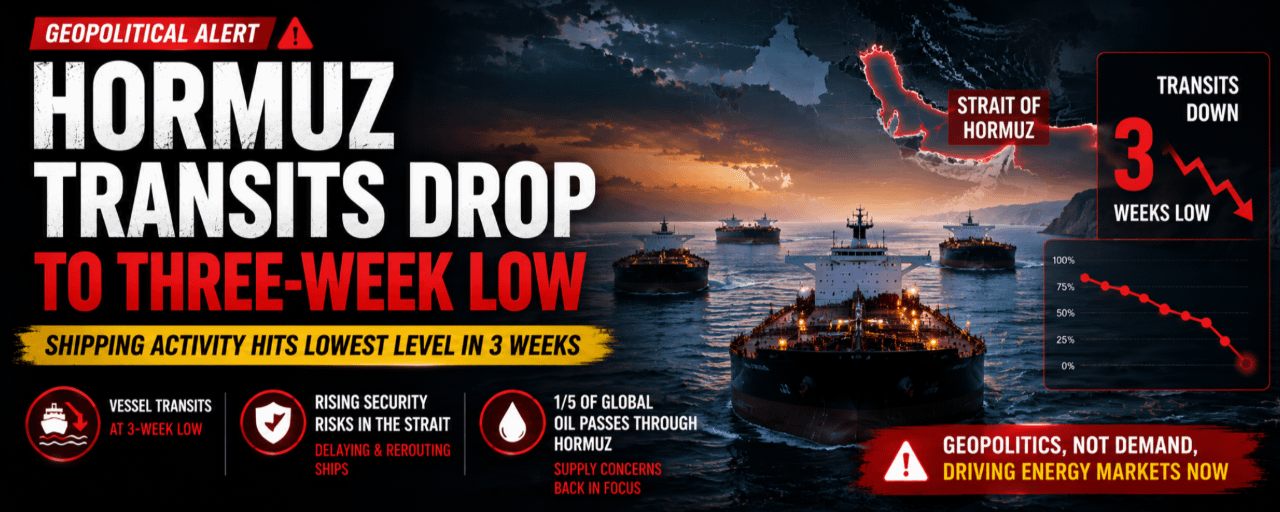
🚨 #HormuzTransitsDropToThreeWeekLow
The Strait of Hormuz, one of the world's most important energy chokepoints, is seeing a sharp slowdown in vessel traffic as security risks continue to rise. That's putting global energy markets back on high alert.
📊 What Happened
• Vessel transits through the Strait of Hormuz have dropped to their lowest level in about three weeks, according to shipping data.
• Ongoing U.S.-Iran tensions and attacks on commercial shipping are making many operators delay or reroute voyages.
• Several tankers have reportedly paused, turned back, or avoided the area, while no VLCC or LNG tanker transits were recorded on some recent days.
🧠 The Edge
Markets aren't reacting just to the number of ships—they're watching how long the disruption lasts.
The Strait of Hormuz handles roughly one-fifth of global oil trade, so even a temporary decline in traffic can tighten supply expectations, lift freight and insurance costs, and add upward pressure to oil prices if tensions persist.
🎯 What to Watch
✅ Whether commercial shipping activity begins to recover over the coming days.
⚠️ Any further escalation that could disrupt oil exports and keep energy prices elevated.
⚡ Quick Take: Right now, geopolitics—not demand—is driving the energy market narrative.
👇 Do you think the Strait of Hormuz will remain operational, or could shipping disruptions become more severe?
#AKEUSDT #AKE #ESPORTSUSDT #BrentRises12%Weekly