Right now, a lot of AI products have a common issue: they just stop after giving an answer.
You ask it for market insights, risk management conclusions, or project analysis, and it can definitely spit out a long response. But a few days later, if you want to revisit it: what model did it use? What data did it pull? Were the results modified? It's pretty hard to clarify that.
This is actually a rarely discussed contradiction in AI applications: people are increasingly relying on AI for judgments, yet the AI's assessments often lack a "record feel."
I think OpenGradient has valuable potential because it aims to transform AI reasoning from a temporary answer into a traceable computational record.
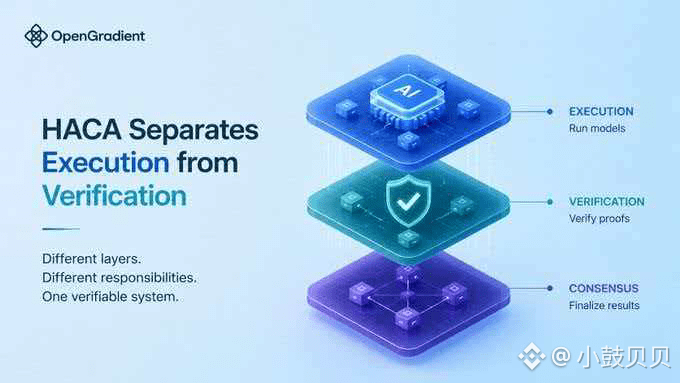
The browser, verification layer, TEE inference, and on-chain settlement in the project are all addressing this gap. It's not just about the AI giving you answers; each call should have an execution path, verification status, and settlement info behind it.
This may not be obvious in regular chats, but it’s crucial in finance, auditing, compliance, and agent scenarios.
For instance, if an AI agent suggests "reduce the risk exposure of a certain position," you can't just leave a chat screenshot afterward. A more reasonable approach would be to trace the model it called, the input it used, the execution time, and evidence of completion.
It's similar to on-chain transactions. We don't just look at the four words "transfer successful"; we also check the hash, block, status, and amount. In the future, AI calls will align more closely with this logic.
Of course, having a record doesn't guarantee the result is correct. It can only address whether the "process exists and whether it has been modified"; it can't replace human judgment of the conclusion itself.
But I believe this is the foundation for AI to enter serious scenarios. Intelligence without records is only suitable for lightweight use; to truly engage in funds and decision-making processes, AI must leave traceable footprints.
$OPG @OpenGradient #OPG
You ask it for market insights, risk management conclusions, or project analysis, and it can definitely spit out a long response. But a few days later, if you want to revisit it: what model did it use? What data did it pull? Were the results modified? It's pretty hard to clarify that.
This is actually a rarely discussed contradiction in AI applications: people are increasingly relying on AI for judgments, yet the AI's assessments often lack a "record feel."
I think OpenGradient has valuable potential because it aims to transform AI reasoning from a temporary answer into a traceable computational record.
The browser, verification layer, TEE inference, and on-chain settlement in the project are all addressing this gap. It's not just about the AI giving you answers; each call should have an execution path, verification status, and settlement info behind it.
This may not be obvious in regular chats, but it’s crucial in finance, auditing, compliance, and agent scenarios.
For instance, if an AI agent suggests "reduce the risk exposure of a certain position," you can't just leave a chat screenshot afterward. A more reasonable approach would be to trace the model it called, the input it used, the execution time, and evidence of completion.
It's similar to on-chain transactions. We don't just look at the four words "transfer successful"; we also check the hash, block, status, and amount. In the future, AI calls will align more closely with this logic.
Of course, having a record doesn't guarantee the result is correct. It can only address whether the "process exists and whether it has been modified"; it can't replace human judgment of the conclusion itself.
But I believe this is the foundation for AI to enter serious scenarios. Intelligence without records is only suitable for lightweight use; to truly engage in funds and decision-making processes, AI must leave traceable footprints.
$OPG @OpenGradient #OPG