

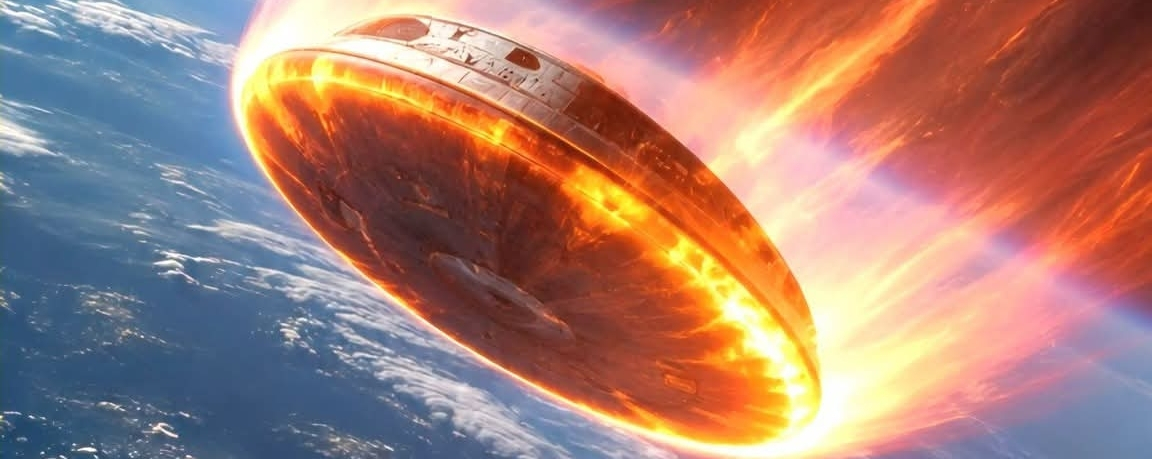

Musk is at it again, leaving the world in awe: A spaceship shaped like a disc and the dream of a factory in the sky
+On June 24, 2026, SpaceX plans to test Starfall, a re-entry vehicle capable of bringing back 1,000 kg of cargo from orbit to Earth. This figure is tens of times greater than current commercial capabilities. If successful, that flight could unlock the door for factories operating off-planet and create a market worth hundreds of billions of USD in the coming decades.
The bottleneck lies in the downward leg.
+On June 24, 2026, an object shaped like a flat disk will leave its launch pad and head into orbit. It won’t carry people. It won’t carry communications satellites or military equipment either.
+Its job is much simpler: bring cargo from space back to Earth. But sometimes the biggest changes start with very small things.
+If the test flight succeeds, SpaceX's Starfall could open up an entirely new industry, where factories sit outside the atmosphere and products are shipped back to the ground the way goods are currently moved from an industrial park to a seaport.
+For more than half a century, humanity has learned how to send objects into orbit. Rockets keep getting stronger. Launch costs keep getting lower. Thousands of satellites are circling Earth every day.
+But getting goods up to the sky is far easier than getting goods back down from the sky. That's why space manufacturing is developing more slowly than expected.
+In a microgravity environment, many materials can be made with quality far beyond what can be achieved on the ground. Pharmaceutical-grade crystals form more evenly. Some types of optical fiber have higher purity. Semiconductor materials can also reach better precision.
The problem is in the return trip. A company that wants to produce a few dozen kilograms of material in orbit may have to spend tens of millions of dollars to bring it back to Earth.
+Many projects have therefore stayed at the experimental level. Pioneering companies like Varda have shown that space manufacturing is feasible. However, current return capacity is still measured in only a few dozen kilograms per trip.
Starfall was created to solve that problem. Based on the information released, SpaceX's new vehicle could return about 1,000 kg of cargo to the ground in a single mission.
That figure is tens of times larger than the commercial capacity that currently exists. In transportation, a truck that can carry 30 tons changes all logistics operations compared with one that carries only 1 ton.
+Starfall is aiming for a similar effect. The more compelling part is its form.
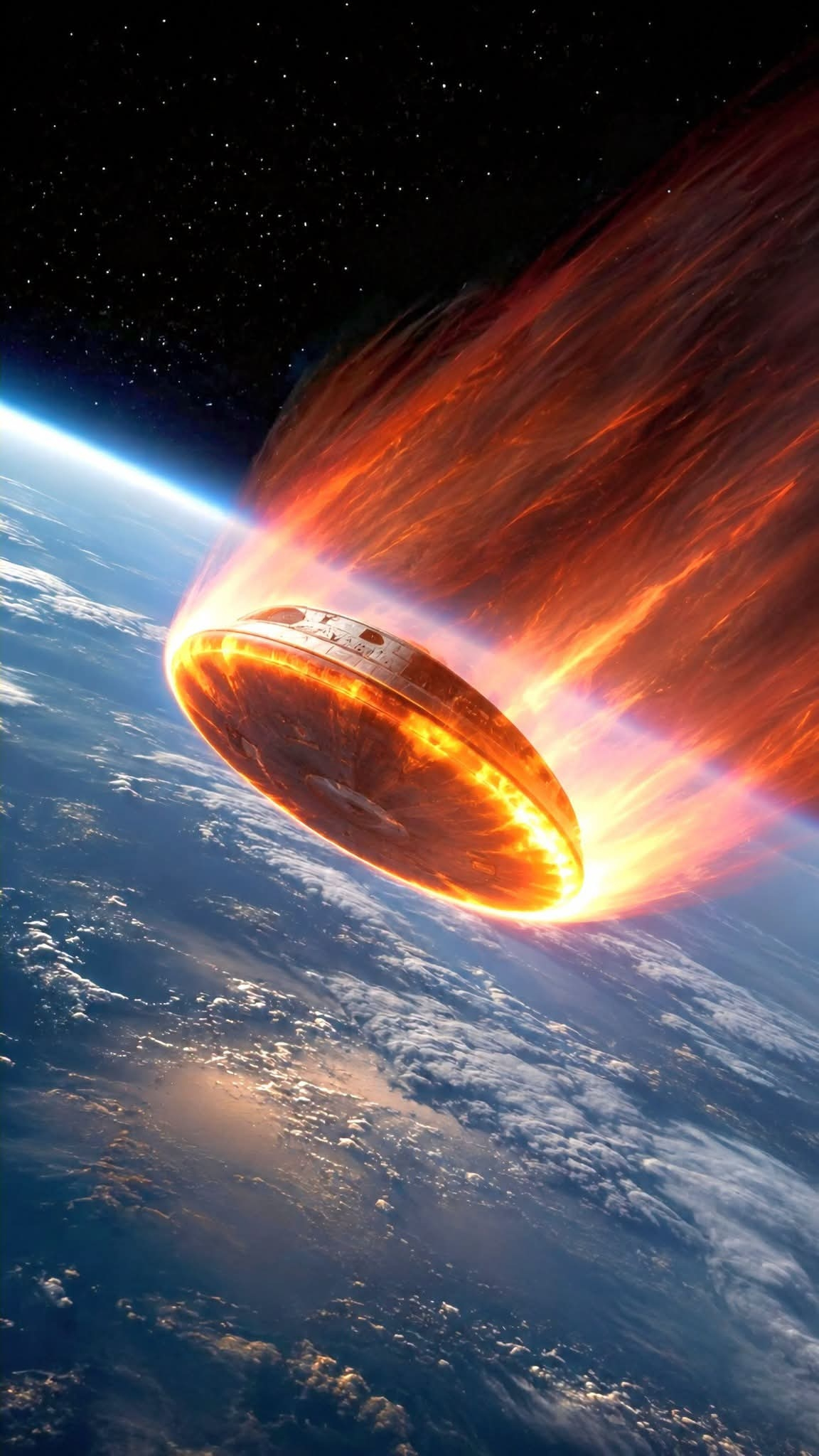
Instead of being shaped like a traditional capsule, Starfall is a flat disk with a diameter of about 3.1 m.
+SpaceX engineers believe that this shape helps the vehicle handle heat better when it plunges into the atmosphere at speeds of tens of thousands of kilometers per hour.
+If it succeeds, it would be a major technological advance in return logistics.
A new race in orbit
+When people think of SpaceX, many immediately think of rockets. But the company's history shows that they often look beyond a single product.
First came rockets. Then satellites. Next came the global internet network. Then came space communications systems.
Now it's return logistics. From a business perspective, Starfall means more than just a spacecraft.
+It shows that SpaceX wants to control the entire end-to-end space logistics cycle.
+A business producing materials in orbit may need rockets to launch cargo high up, communication systems to control it, a data network to transmit information, and finally a vehicle to bring the products back to the ground.
+SpaceX is involved in most of those links. That's why many analysts track Starfall with special interest.
+For many years, SpaceX has made money by launching customers into orbit. In the future, they could make money by returning their customers' products back to Earth.
×Two complete transport legs would create an entirely new market. It would also put space manufacturing businesses into a different stage of competition.
+Companies that were SpaceX customers may soon face a competitor with resources many times greater.
+Technology’s history has seen similar shifts before. Companies that built websites once depended on search engines. Then the search engines themselves moved into many of their customers’ business areas.
+The space manufacturing industry may be on the verge of a scenario similar to that.
The first factory off Earth
+More than 100 years ago, when the first aircraft took off, very few people could envision the global air network we have today.
+Many experts say the space manufacturing industry is at a stage similar to that.
+What’s happening today is still small. Total industry revenue isn’t significant. Production volumes are very low. The products are still experimental.
+But technology history often shifts when costs fall below a certain threshold.
+Personal computing exploded when prices dropped sharply. Smartphones became widespread when manufacturing costs fell low enough. The internet took off when the cost of access was nearly zero.
+Space-based manufacturing will also need a moment like that. Starfall could be one of the first building blocks.
+If every return trip can bring 1,000 kg of cargo at a significantly lower cost, business models that used to exist only on paper will have a chance to become real.
+One day, medicines produced in a microgravity environment could appear in hospitals.
+Ultra-pure materials can be used in next-generation electronics. Those products will be manufactured hundreds of kilometers above the ground.
+What’s notable is that it all starts with solving a very specific bottleneck: how to bring cargo back.
+For years, SpaceX has created change by tackling what seem to be the most boring problems.
Cheap rockets. Cheap satellites. Cheap internet. Now comes the era of cheap everything.
+If Starfall completes its first test flight as expected, humanity will be witnessing the opening moment of an industry that, decades from now, will be seen as as ordinary as air freight is today.
+A disk-shaped spacecraft might not spark a revolution right away.
+But sometimes history is kicked off by objects far smaller than the dreams they carry. And the price $SPCXB is still going down. Those stuck in high-price areas should consider yourselves contributions to aerospace research. And $LUNC will be to the moon.