


April 18, 2026 — The clearing will have lasted only one night.
On Saturday morning, April 18, Iran announced the closure of the strategic Strait of Hormuz, whereas the day before, it had been completely reopened to commercial vessels. A brutal turnaround, illustrating the volatility of a crisis that has lasted nearly two months.
A hope swept away in a few hours
Less than 24 hours after the announcement of the reopening of the strait, Iran reversed its decision and proclaimed, on Saturday, April 18, the state television: « The status of the Strait of Hormuz returns to its initial state. It remains under the strict control of our armed forces. »
At least eight oil and gas carriers had crossed early Saturday through the strait, with Iran declaring it open on Friday afternoon for the duration of the ceasefire. The cold shower for shipowners and financial markets was even more brutal.
The Iran–United States standoff
The reason for this turnaround is clear: Iran is resuming "strict control" of the strait in response to the continued U.S. blockade of Iranian ports. Tehran had, however, made a gesture by "good faith accepting to allow the passage of a limited number of oil tankers," but denounces that the Americans "continue to engage in acts of piracy under the guise of the so-called blockade."
For his part, Donald Trump stated that the U.S. blockade of Iranian ports would remain "fully in effect" until the end of negotiations, describing the Iranian maneuver as "blackmail."
A crisis that began at the end of February
Since February 28, 2026, the Strait of Hormuz has been experiencing significant geopolitical and economic disturbances following joint military strikes by the United States and Israel against Iran, which notably resulted in the death of Iranian Supreme Leader Ali Khamenei.
Since the beginning of the war, maritime traffic has practically come to a halt, with limited transit — from 160 ships passing through the strait on February 27 to only 12 per day on average during March. At least 19 civilian ships — oil tankers, container ships, and other cargo vessels — have been attacked in the strait.
A global threat to energy
The stakes extend far beyond the region. One-fifth of the world's crude oil and liquefied natural gas typically transit through the Strait of Hormuz.
On March 21, 2026, the executive director of the International Energy Agency (IEA) estimated that the prolonged closure of this strait is "the greatest threat to global energy security in all of history."
Negotiations at a standstill
This hardening comes amid a diplomatic ballet to try to end the war in the Middle East, beyond the two-week ceasefire that came into effect on April 8 between Iran and the United States. While Trump speaks of an "imminent deal," the Iranian Supreme National Security Council assures that "no compromise" will be made.
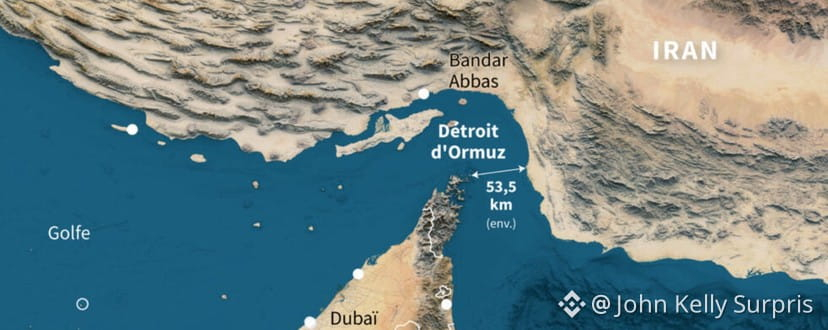
The Strait of Hormuz, fifty kilometers wide between Iran and Oman, remains today a hostage of a war of nerves whose outcome is still unknown.
Sources: AFP, France Info, La Presse, Radio-Canada, Le Grand Continent — April 18-19, 2026