

I spent some time looking into @Fabric Foundation (ROBO), trying to understand whether it’s just another narrative-driven crypto project or something more structural. What stood out to me is that it doesn’t really position itself as a typical protocol it feels more like an attempt to define missing infrastructure.
The problem it’s addressing is fairly clear once you think about it. We have robots and AI systems that can perform tasks, but they don’t exist as independent economic participants. They can’t transact, coordinate across systems, or operate outside centralized control layers.
In practice, everything is still siloed. A robot works within its own ecosystem, owned and managed by a single entity. There’s no shared layer where machines can interact with each other economically.
What Fabric proposes is relatively straightforward in concept. It gives machines an identity an on chain presence tied to a wallet. That alone changes the model, because now a robot can theoretically send, receive, and hold value.
From there, the system adds a coordination layer. Tasks can be assigned and executed across a network rather than within a closed system. It’s not entirely new conceptually, but applying it to machines instead of humans is where it becomes interesting.
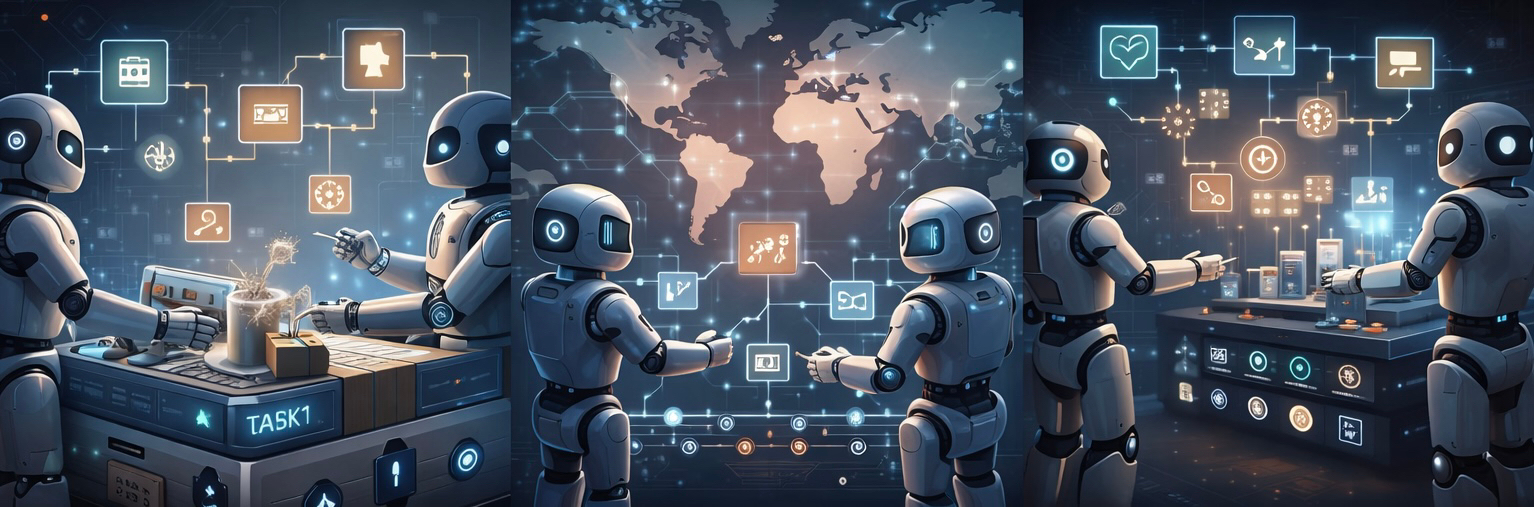
The part I paid closer attention to was how value flows. The ROBO token is used for payments, staking, and access. In theory, a robot could earn by completing tasks and spend on services like energy or data.
I think this design is reasonable, but it depends heavily on whether real world activity can be verified reliably. The protocol introduces a form of work verification tied to physical output, which is difficult to get right in practice.
Technically, the architecture is layered. There’s an operating system layer (OM1) that abstracts hardware differences. On top of that, the Fabric protocol handles identity, communication, and task coordination. Blockchain sits underneath for settlement and governance.
What interested me most is that these layers are somewhat decoupled. It suggests the system is designed to evolve, rather than being locked into a single stack.
At the same time, a lot of this still feels early. The coordination model makes sense on paper, but it’s not clear how it performs under real-world constraints latency, reliability, adversarial behavior, and so on.
Compared to other projects, Fabric is less focused on pure digital coordination and more on bridging into the physical world. That’s a harder problem, and also a less proven one.
I don’t see it as a short-term system. It depends on broader trends robot adoption, standardization, and willingness of manufacturers to integrate into a shared network.
Still, the direction is worth paying attention to. If machines begin to operate more autonomously, the question of how they coordinate and exchange value will become unavoidable.
Right now, Fabric feels like an early attempt at answering that question. Whether it becomes the standard or just an experiment probably depends less on the token and more on whether the ecosystem actually materializes.