

Binance News
404.6k Posts

Binance News
 Binance Officially Verified Account
Report
Follow Binance News to stay on top of industry trends & news
9 Following
2.3M+ Followers
2.8M+ Liked
Top
Replies
Videos
·
--
Stacks Labs CEO Muneeb Ali Outlines Five Priorities for First 30 Days BackStacks Labs CEO Muneeb Ali said his first 30 days back will focus on five areas: expanding institutional business development, simplifying the management structure, publishing a two-year technology roadmap, strengthening communication with large STX holders, and clarifying STX value-capture mechanisms. According to Odaily, he said institutional demand for Bitcoin Bonds is increasing, and the future roadmap will also cover institutional-grade BTC privacy and quantum-resistant technology. Stacks Labs plans to transfer all intellectual property to a shareholder-free endowment.
Stacks Labs CEO Muneeb Ali Outlines Five Priorities for First 30 Days Back
Stacks Labs CEO Muneeb Ali said his first 30 days back will focus on five areas: expanding institutional business development, simplifying the management structure, publishing a two-year technology roadmap, strengthening communication with large STX holders, and clarifying STX value-capture mechanisms. According to Odaily, he said institutional demand for Bitcoin Bonds is increasing, and the future roadmap will also cover institutional-grade BTC privacy and quantum-resistant technology. Stacks Labs plans to transfer all intellectual property to a shareholder-free endowment.
3
6
2.2k
·
--
BitMine Buys and Receives 12,500 ETH From BitGoBitMine (0xE0cd...e22) bought and received 12,500 ETH from BitGo, worth $33.65 million. According to Odaily, BitMine now holds 4.9% of ETH’s total supply, close to its "Alchemy of 5%" target.
BitMine Buys and Receives 12,500 ETH From BitGo
BitMine (0xE0cd...e22) bought and received 12,500 ETH from BitGo, worth $33.65 million. According to Odaily, BitMine now holds 4.9% of ETH’s total supply, close to its "Alchemy of 5%" target.
3
2
7
11.9k
·
--
Article
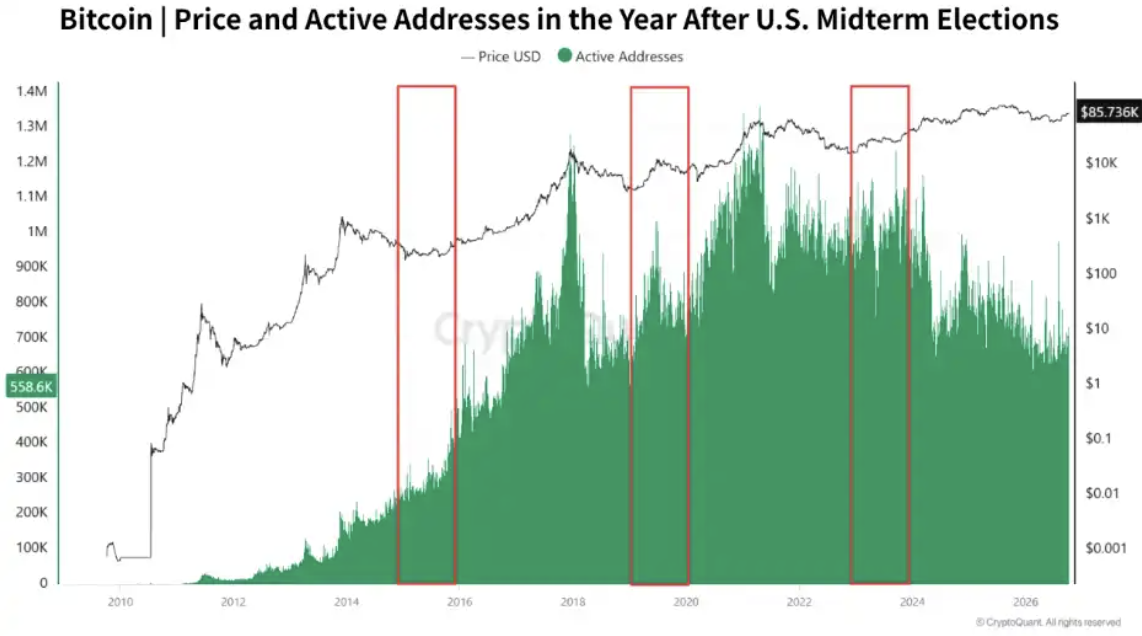
Bitcoin News | Bitcoin Rose After Every U.S. Midterm Since 2014, but Three-Cycle Sample Limits 2026 SignalKey TakeawaysThe S&P 500 has risen in the 12 months following all 19 U.S. midterm elections since 1950, with an average gain of 15.4%.Bitcoin gained 24.5%, 44.9% and 92.3% in the 12 months following the 2014, 2018 and 2022 midterm elections, respectively.Bitcoin's sample consists of only three midterm cycles, making a “100% probability” interpretation statistically misleading.Short-term performance can differ sharply: BTC plunged 45.5% in the first month after the 2018 midterms before ultimately posting a positive 12-month return.Treasury yields, institutional demand and U.S. crypto regulation could be more important for Bitcoin after the 2026 midterms than historical seasonality alone.Bitcoin has risen during the 12 months following every U.S. midterm election in its available history, prompting analysts to examine whether the 2026 election could again provide a favorable backdrop for BTC.According to analysis from CryptoQuant contributor XWIN Japan, Bitcoin gained 24.5% following the 2014 midterms, 44.9% after 2018 and 92.3% after 2022.The pattern resembles a much longer trend in U.S. equities. Since 1950, the S&P 500 has finished higher 12 months after each of 19 midterm elections, generating an average return of 15.4%.However, describing either pattern as a literal 100% probability of future gains goes beyond what the historical data can establish.S&P 500 Has a 19-for-19 Post-Midterm RecordThe S&P 500's historical record is substantial compared with Bitcoin's.Across the 19 midterm elections since 1950, the index was higher 12 months later every time. The average gain was approximately 15.4%.That represents a 100% historical hit rate within this specific sample, rather than a 100% probability that stocks will rise following the 2026 midterms.Past election cycles occurred under different combinations of economic growth, inflation, interest rates and monetary policy.Bitcoin Gained 24.5% to 92.3% After Previous MidtermsBitcoin's post-midterm history is also positive, but considerably shorter.BTC's 12-month returns following the three previous midterms were:2014: +24.5%2018: +44.9%2022: +92.3%That gives Bitcoin a three-for-three historical record. However, three observations are insufficient to establish a reliable predictive relationship between U.S. midterm elections and future BTC returns.The 2018 cycle demonstrates the risk particularly clearly. Bitcoin initially fell 45.5% during the first month following the election, yet was ultimately 44.9% higher after 12 months.Why the 2026 Bitcoin Cycle Could Be DifferentThe macroeconomic backdrop remains critical.Recent market conditions include elevated Treasury yields, changing Federal Reserve expectations and significant institutional participation through spot Bitcoin ETFs.XWIN Japan identified Treasury yield stabilization, continued institutional buying and regulatory progress as three factors to monitor after the 2026 midterms.Clear election results may reduce political uncertainty, but that does not automatically translate into easier financial conditions or stronger Bitcoin prices.Midterm History Is a Tailwind, Not a GuaranteeThe historical data therefore provide a potentially bullish backdrop without establishing what Bitcoin will do after the 2026 election.The S&P 500's 19-for-19 record is notable, while Bitcoin's positive returns following all three midterms in its history provide an interesting parallel.But Bitcoin's small sample makes the distinction between historical frequency and probability especially important.For BTC, the more consequential question after the midterms may be whether political uncertainty declines at the same time that Treasury yields stabilize, institutional demand remains strong and regulatory conditions improve.If those factors align, history could provide an additional tailwind. If financial conditions deteriorate, three previous post-midterm rallies offer little guarantee that Bitcoin will make it four in a row.
Bitcoin News | Bitcoin Rose After Every U.S. Midterm Since 2014, but Three-Cycle Sample Limits 2026 Signal
Key TakeawaysThe S&P 500 has risen in the 12 months following all 19 U.S. midterm elections since 1950, with an average gain of 15.4%.Bitcoin gained 24.5%, 44.9% and 92.3% in the 12 months following the 2014, 2018 and 2022 midterm elections, respectively.Bitcoin's sample consists of only three midterm cycles, making a “100% probability” interpretation statistically misleading.Short-term performance can differ sharply: BTC plunged 45.5% in the first month after the 2018 midterms before ultimately posting a positive 12-month return.Treasury yields, institutional demand and U.S. crypto regulation could be more important for Bitcoin after the 2026 midterms than historical seasonality alone.Bitcoin has risen during the 12 months following every U.S. midterm election in its available history, prompting analysts to examine whether the 2026 election could again provide a favorable backdrop for BTC.According to analysis from CryptoQuant contributor XWIN Japan, Bitcoin gained 24.5% following the 2014 midterms, 44.9% after 2018 and 92.3% after 2022.The pattern resembles a much longer trend in U.S. equities. Since 1950, the S&P 500 has finished higher 12 months after each of 19 midterm elections, generating an average return of 15.4%.However, describing either pattern as a literal 100% probability of future gains goes beyond what the historical data can establish.S&P 500 Has a 19-for-19 Post-Midterm RecordThe S&P 500's historical record is substantial compared with Bitcoin's.Across the 19 midterm elections since 1950, the index was higher 12 months later every time. The average gain was approximately 15.4%.That represents a 100% historical hit rate within this specific sample, rather than a 100% probability that stocks will rise following the 2026 midterms.Past election cycles occurred under different combinations of economic growth, inflation, interest rates and monetary policy.Bitcoin Gained 24.5% to 92.3% After Previous MidtermsBitcoin's post-midterm history is also positive, but considerably shorter.BTC's 12-month returns following the three previous midterms were:2014: +24.5%2018: +44.9%2022: +92.3%That gives Bitcoin a three-for-three historical record. However, three observations are insufficient to establish a reliable predictive relationship between U.S. midterm elections and future BTC returns.The 2018 cycle demonstrates the risk particularly clearly. Bitcoin initially fell 45.5% during the first month following the election, yet was ultimately 44.9% higher after 12 months.Why the 2026 Bitcoin Cycle Could Be DifferentThe macroeconomic backdrop remains critical.Recent market conditions include elevated Treasury yields, changing Federal Reserve expectations and significant institutional participation through spot Bitcoin ETFs.XWIN Japan identified Treasury yield stabilization, continued institutional buying and regulatory progress as three factors to monitor after the 2026 midterms.Clear election results may reduce political uncertainty, but that does not automatically translate into easier financial conditions or stronger Bitcoin prices.Midterm History Is a Tailwind, Not a GuaranteeThe historical data therefore provide a potentially bullish backdrop without establishing what Bitcoin will do after the 2026 election.The S&P 500's 19-for-19 record is notable, while Bitcoin's positive returns following all three midterms in its history provide an interesting parallel.But Bitcoin's small sample makes the distinction between historical frequency and probability especially important.For BTC, the more consequential question after the midterms may be whether political uncertainty declines at the same time that Treasury yields stabilize, institutional demand remains strong and regulatory conditions improve.If those factors align, history could provide an additional tailwind. If financial conditions deteriorate, three previous post-midterm rallies offer little guarantee that Bitcoin will make it four in a row.
11
6
45
34k
·
--
Binance Spot Will Add JPMB, LLYB, SECZB and USDEB Trading PairsAccording to the [announcement](https://www.binance.com/en/support/announcement/detail/9c34999b27234dfe9c43d2ac33cebde4) from Binance, Binance Exchange will open trading on Binance Spot for four bStocks trading pairs and enable Spot Algo Trading Bots and Rebalancing Bots services for JPMorgan Chase (JPMB), Eli Lilly (LLYB), Securitize Corp (SECZB) and StablecoinX Inc (USDEB). The new pairs, JPMB/USDT, LLYB/USDT, SECZB/USDT and USDEB/USDT, are scheduled to begin trading at 2026-10-07 12:00 (UTC). Spot Algo Trading Bots will be aligned with the Spot listing time, while Rebalancing Bots will be enabled within 24 hours of the assets being listed on Spot. Binance also said users will be able to trade bStocks against BTC, USDT and other tokens on Binance Convert at zero fees within one hour of the assets being listed on Binance Spot. In addition, zero maker fees will apply to the listed bStocks trading pairs from the listing time until 2026-10-31 23:59 (UTC).
Binance also stated that users can start tokenizing their direct stock holdings into bStocks in preparation for trading. The conversion rate is 1:1 between each underlying stock and its bStocks, with zero conversion fees. The announcement listed the BNB Smart Chain smart contracts for JPMB, LLYB, SECZB and USDEB. Withdrawals for JPMB, LLYB, SECZB and USDEB will open at 2026-10-07 13:00 (UTC).
Binance Spot Will Add JPMB, LLYB, SECZB and USDEB Trading Pairs
According to the announcement from Binance, Binance Exchange will open trading on Binance Spot for four bStocks trading pairs and enable Spot Algo Trading Bots and Rebalancing Bots services for JPMorgan Chase (JPMB), Eli Lilly (LLYB), Securitize Corp (SECZB) and StablecoinX Inc (USDEB). The new pairs, JPMB/USDT, LLYB/USDT, SECZB/USDT and USDEB/USDT, are scheduled to begin trading at 2026-10-07 12:00 (UTC). Spot Algo Trading Bots will be aligned with the Spot listing time, while Rebalancing Bots will be enabled within 24 hours of the assets being listed on Spot. Binance also said users will be able to trade bStocks against BTC, USDT and other tokens on Binance Convert at zero fees within one hour of the assets being listed on Binance Spot. In addition, zero maker fees will apply to the listed bStocks trading pairs from the listing time until 2026-10-31 23:59 (UTC).
Binance also stated that users can start tokenizing their direct stock holdings into bStocks in preparation for trading. The conversion rate is 1:1 between each underlying stock and its bStocks, with zero conversion fees. The announcement listed the BNB Smart Chain smart contracts for JPMB, LLYB, SECZB and USDEB. Withdrawals for JPMB, LLYB, SECZB and USDEB will open at 2026-10-07 13:00 (UTC).
Binance also stated that users can start tokenizing their direct stock holdings into bStocks in preparation for trading. The conversion rate is 1:1 between each underlying stock and its bStocks, with zero conversion fees. The announcement listed the BNB Smart Chain smart contracts for JPMB, LLYB, SECZB and USDEB. Withdrawals for JPMB, LLYB, SECZB and USDEB will open at 2026-10-07 13:00 (UTC).
4
1.3k
·
--

Article
Binance News | Binance Goes ‘All In’ on AI as Yi He Outlines Vision for the Future of FinanceKey TakeawaysBinance is going “all in on AI,” with Yi He positioning artificial intelligence and blockchain as the technological foundation for the platform’s next phase.Binance’s AI ecosystem centers on Binance AI, Binance AI Pro and Agent OS, targeting users from beginners to advanced traders and developers.Binance AI Pro is expected to receive a major upgrade in mid-to-late October, allowing users to build and automate financial strategies using natural language.Binance wants AI to lower barriers to investing by making market analysis, trading, wealth management and eventually Web3 interactions easier to access.Security remains central: automated AI Pro strategies are designed to operate within user-approved limits, with separate sub-accounts and Binance’s risk controls.Yi He said Binance’s broader goal is “financial democratization,” giving more users access to financial knowledge and tools previously available mainly to sophisticated investors.Yi He: Binance Is Going ‘All In’ on AIBinance is making artificial intelligence a core part of its long-term product strategy as the crypto exchange looks to combine AI and blockchain technology across trading, investing, payments and Web3.Speaking during a Binance Square Live AMA, Binance co-founder Yi He said the company’s strategy is to go “all in on AI,” with the broader goal of transforming Binance into financial infrastructure for the AI era.Yi He said AI should make sophisticated financial analysis accessible even to users without an investment background. Binance wants its AI products to break down on-chain analysis, market information and different investment frameworks into formats that ordinary users can understand.The strategy is built around three products: Binance AI for everyday users, Binance AI Pro for more advanced financial automation, and Agent OS for developers.Binance AI Targets Personalized Market IntelligenceBinance AI is designed as a personalized financial assistant rather than a conventional chatbot.According to Binance Chief Product Officer Jeff, the product can use authorized user information to personalize market content and tools.Binance plans to tailor information around users’ holdings and watchlists, including relevant news, market movements, on-chain whale activity and Smart Money signals.The company is also testing a personalized “Relevant to Me” experience that could include daily market briefs and alerts across crypto and traditional financial assets such as stocks, gold and oil.Future monitoring tools could track movements across intervals ranging from 30 seconds to one hour, while AI-generated market reviews would explain why assets in a user's portfolio moved.Binance AI Pro Upgrade Planned for Mid-to-Late OctoberOne of the biggest announcements from the AMA was the upcoming upgrade to Binance AI Pro.The new version is planned for mid-to-late October and is intended to turn natural-language instructions into executable financial strategies and automated tasks.For example, a user could ask AI Pro to monitor a divergence between Bitcoin's price and funding rate and take an action if predefined conditions are met.AI Pro could then define the trigger conditions, select the necessary data, establish risk limits and determine execution and stopping conditions.The goal is to remove the need for users to write code, manually connect APIs or maintain their own infrastructure.Binance said AI Pro is also being built with more than 1,000 planned data request types, spanning market quotes, U.S. stocks, news and technical indicators.The platform plans to support backtesting for most strategies over time and provide persistent cloud sandboxes that allow strategies to operate continuously.AI Trading Will Operate Within User-Approved LimitsBinance executives repeatedly emphasized that financial AI cannot be allowed to operate without clear authorization.Before an AI Pro strategy goes live, users will be shown a visual framework explaining its triggers, data sources, decisions, actions and stopping conditions.Automation will then remain within the permissions and capital limits approved by the user. Changes that expand those boundaries would require another confirmation.Binance also plans to isolate automated strategies through independent sub-accounts, limiting the potential impact of an individual strategy on a user's main account.While AI can increasingly handle information retrieval and asset selection, Binance said final trading decisions will still require user confirmation.Binance Wants to Connect AI With Web3The roadmap extends beyond centralized exchange trading.Binance executives confirmed that integrating AI more deeply with Binance Wallet and Web3 functionality is part of the plan.The aim is for AI agents to combine different capabilities—including spot, futures, Earn and Web3 operations—into automated workflows.In one example discussed during the AMA, an AI agent could manage profits from spot trading, move assets into Earn and subsequently transfer funds into an agent wallet for on-chain activity.Binance acknowledged that the current agentic wallet experience can be difficult for ordinary users and said reducing that barrier is a priority.Yi He Sees AI Making Trading Much SimplerYi He said the longer-term shift could move financial applications away from complicated menus and toward intent-driven interfaces.Instead of navigating a complex trading screen, a user could simply tell AI what they want to accomplish and define the constraints.She gave the example of instructing AI Pro to buy $100,000 worth of Bitcoin at $75,000.Longer term, AI could understand whether someone is a HODLer or active trader and whether they prefer strategies such as dollar-cost averaging or grid trading, before presenting suitable structured strategies for confirmation.Yi He ultimately wants financial products to become significantly easier to use, drawing comparisons with the simplicity that products such as the iPad and TikTok brought to their respective markets.Financial Democratization at the Center of Binance’s AI StrategyBeyond trading efficiency, Yi He framed Binance’s AI strategy around what she described as financial equality or financial democratization.She argued that many users globally lack access to investment knowledge that is commonplace in more mature financial markets. AI could help close that gap by explaining how macroeconomic developments, breaking news, company fundamentals and other factors affect asset prices.The goal is to take users from basic financial understanding through increasingly sophisticated tools — from Binance AI to AI Pro and eventually programmable agents and strategies.For Binance, that progression represents a broader vision for finance in the AI era: lower the knowledge barrier, lower the technical barrier and give more users access to sophisticated financial capabilities.Yi He also cautioned users against FOMO and blindly following social-media signals, urging investors to make independent decisions rather than attempting to interpret every post or comment as a trading signal.
Binance News | Binance Goes ‘All In’ on AI as Yi He Outlines Vision for the Future of Finance
Key TakeawaysBinance is going “all in on AI,” with Yi He positioning artificial intelligence and blockchain as the technological foundation for the platform’s next phase.Binance’s AI ecosystem centers on Binance AI, Binance AI Pro and Agent OS, targeting users from beginners to advanced traders and developers.Binance AI Pro is expected to receive a major upgrade in mid-to-late October, allowing users to build and automate financial strategies using natural language.Binance wants AI to lower barriers to investing by making market analysis, trading, wealth management and eventually Web3 interactions easier to access.Security remains central: automated AI Pro strategies are designed to operate within user-approved limits, with separate sub-accounts and Binance’s risk controls.Yi He said Binance’s broader goal is “financial democratization,” giving more users access to financial knowledge and tools previously available mainly to sophisticated investors.Yi He: Binance Is Going ‘All In’ on AIBinance is making artificial intelligence a core part of its long-term product strategy as the crypto exchange looks to combine AI and blockchain technology across trading, investing, payments and Web3.Speaking during a Binance Square Live AMA, Binance co-founder Yi He said the company’s strategy is to go “all in on AI,” with the broader goal of transforming Binance into financial infrastructure for the AI era.Yi He said AI should make sophisticated financial analysis accessible even to users without an investment background. Binance wants its AI products to break down on-chain analysis, market information and different investment frameworks into formats that ordinary users can understand.The strategy is built around three products: Binance AI for everyday users, Binance AI Pro for more advanced financial automation, and Agent OS for developers.Binance AI Targets Personalized Market IntelligenceBinance AI is designed as a personalized financial assistant rather than a conventional chatbot.According to Binance Chief Product Officer Jeff, the product can use authorized user information to personalize market content and tools.Binance plans to tailor information around users’ holdings and watchlists, including relevant news, market movements, on-chain whale activity and Smart Money signals.The company is also testing a personalized “Relevant to Me” experience that could include daily market briefs and alerts across crypto and traditional financial assets such as stocks, gold and oil.Future monitoring tools could track movements across intervals ranging from 30 seconds to one hour, while AI-generated market reviews would explain why assets in a user's portfolio moved.Binance AI Pro Upgrade Planned for Mid-to-Late OctoberOne of the biggest announcements from the AMA was the upcoming upgrade to Binance AI Pro.The new version is planned for mid-to-late October and is intended to turn natural-language instructions into executable financial strategies and automated tasks.For example, a user could ask AI Pro to monitor a divergence between Bitcoin's price and funding rate and take an action if predefined conditions are met.AI Pro could then define the trigger conditions, select the necessary data, establish risk limits and determine execution and stopping conditions.The goal is to remove the need for users to write code, manually connect APIs or maintain their own infrastructure.Binance said AI Pro is also being built with more than 1,000 planned data request types, spanning market quotes, U.S. stocks, news and technical indicators.The platform plans to support backtesting for most strategies over time and provide persistent cloud sandboxes that allow strategies to operate continuously.AI Trading Will Operate Within User-Approved LimitsBinance executives repeatedly emphasized that financial AI cannot be allowed to operate without clear authorization.Before an AI Pro strategy goes live, users will be shown a visual framework explaining its triggers, data sources, decisions, actions and stopping conditions.Automation will then remain within the permissions and capital limits approved by the user. Changes that expand those boundaries would require another confirmation.Binance also plans to isolate automated strategies through independent sub-accounts, limiting the potential impact of an individual strategy on a user's main account.While AI can increasingly handle information retrieval and asset selection, Binance said final trading decisions will still require user confirmation.Binance Wants to Connect AI With Web3The roadmap extends beyond centralized exchange trading.Binance executives confirmed that integrating AI more deeply with Binance Wallet and Web3 functionality is part of the plan.The aim is for AI agents to combine different capabilities—including spot, futures, Earn and Web3 operations—into automated workflows.In one example discussed during the AMA, an AI agent could manage profits from spot trading, move assets into Earn and subsequently transfer funds into an agent wallet for on-chain activity.Binance acknowledged that the current agentic wallet experience can be difficult for ordinary users and said reducing that barrier is a priority.Yi He Sees AI Making Trading Much SimplerYi He said the longer-term shift could move financial applications away from complicated menus and toward intent-driven interfaces.Instead of navigating a complex trading screen, a user could simply tell AI what they want to accomplish and define the constraints.She gave the example of instructing AI Pro to buy $100,000 worth of Bitcoin at $75,000.Longer term, AI could understand whether someone is a HODLer or active trader and whether they prefer strategies such as dollar-cost averaging or grid trading, before presenting suitable structured strategies for confirmation.Yi He ultimately wants financial products to become significantly easier to use, drawing comparisons with the simplicity that products such as the iPad and TikTok brought to their respective markets.Financial Democratization at the Center of Binance’s AI StrategyBeyond trading efficiency, Yi He framed Binance’s AI strategy around what she described as financial equality or financial democratization.She argued that many users globally lack access to investment knowledge that is commonplace in more mature financial markets. AI could help close that gap by explaining how macroeconomic developments, breaking news, company fundamentals and other factors affect asset prices.The goal is to take users from basic financial understanding through increasingly sophisticated tools — from Binance AI to AI Pro and eventually programmable agents and strategies.For Binance, that progression represents a broader vision for finance in the AI era: lower the knowledge barrier, lower the technical barrier and give more users access to sophisticated financial capabilities.Yi He also cautioned users against FOMO and blindly following social-media signals, urging investors to make independent decisions rather than attempting to interpret every post or comment as a trading signal.
5
10
43
16.2k
·
--
Article
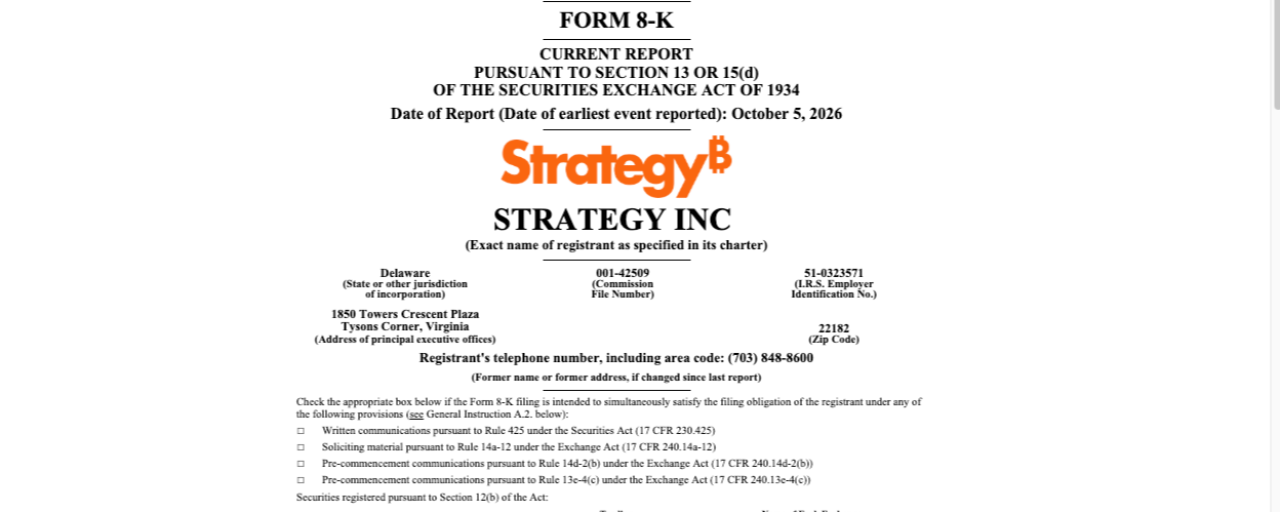
Strategy Estimates $4.1 Billion Income-Tax Benefit After Bitcoin Fair Value RisesStrategy estimated a $4.1 billion income-tax benefit after Bitcoin's fair value rose above cost as of September 30, according to its October 5 filing. According to CryptoSlate, the benefit reflects a lower estimated tax expense through an accounting adjustment, rather than a cash tax windfall.
Strategy said the management-prepared figures had neither been audited nor reviewed by KPMG. The company also noted that an ETF's underlying Bitcoin acquisition cost is separate from each shareholder's break-even price and does not by itself establish redemption activity or market sales.
US spot Bitcoin ETFs recorded $89.8 million in net outflows on October 5, while Farside Investors' data showed inflows into BlackRock's fund.
Strategy Estimates $4.1 Billion Income-Tax Benefit After Bitcoin Fair Value Rises
Strategy estimated a $4.1 billion income-tax benefit after Bitcoin's fair value rose above cost as of September 30, according to its October 5 filing. According to CryptoSlate, the benefit reflects a lower estimated tax expense through an accounting adjustment, rather than a cash tax windfall.
Strategy said the management-prepared figures had neither been audited nor reviewed by KPMG. The company also noted that an ETF's underlying Bitcoin acquisition cost is separate from each shareholder's break-even price and does not by itself establish redemption activity or market sales.
US spot Bitcoin ETFs recorded $89.8 million in net outflows on October 5, while Farside Investors' data showed inflows into BlackRock's fund.
Strategy said the management-prepared figures had neither been audited nor reviewed by KPMG. The company also noted that an ETF's underlying Bitcoin acquisition cost is separate from each shareholder's break-even price and does not by itself establish redemption activity or market sales.
US spot Bitcoin ETFs recorded $89.8 million in net outflows on October 5, while Farside Investors' data showed inflows into BlackRock's fund.
3
2
9
12.4k
·
--

Article
Igloo Shuts Down Abstract Blockchain and Refocuses on Pudgy Penguins and PENGUNFT and IP company Igloo, Inc. said it will shut down the consumer-focused blockchain Abstract and redirect staff and resources to Pudgy Penguins, Pudgy NFT, and the PENGU token. According to ChainCatcher, the company said Abstract was built as a consumer blockchain but was constrained by high operating costs, limited liquidity, a weak DeFi ecosystem, and declining market interest.
Igloo said it had spent engineering, ecosystem, and infrastructure resources on Abstract, but the project lost tens of millions of dollars over the past two years as the company tried to keep it running, expand it, and find product-market fit and a path to profitability. The company said closing Abstract was the right decision after even better-capitalized firms struggled to find product-market fit for their own blockchains.
Igloo said it will now focus on strengthening the brand path from products and content to PENGU and then to Pudgy Penguins NFTs.
Igloo Shuts Down Abstract Blockchain and Refocuses on Pudgy Penguins and PENGU
NFT and IP company Igloo, Inc. said it will shut down the consumer-focused blockchain Abstract and redirect staff and resources to Pudgy Penguins, Pudgy NFT, and the PENGU token. According to ChainCatcher, the company said Abstract was built as a consumer blockchain but was constrained by high operating costs, limited liquidity, a weak DeFi ecosystem, and declining market interest.
Igloo said it had spent engineering, ecosystem, and infrastructure resources on Abstract, but the project lost tens of millions of dollars over the past two years as the company tried to keep it running, expand it, and find product-market fit and a path to profitability. The company said closing Abstract was the right decision after even better-capitalized firms struggled to find product-market fit for their own blockchains.
Igloo said it will now focus on strengthening the brand path from products and content to PENGU and then to Pudgy Penguins NFTs.
Igloo said it had spent engineering, ecosystem, and infrastructure resources on Abstract, but the project lost tens of millions of dollars over the past two years as the company tried to keep it running, expand it, and find product-market fit and a path to profitability. The company said closing Abstract was the right decision after even better-capitalized firms struggled to find product-market fit for their own blockchains.
Igloo said it will now focus on strengthening the brand path from products and content to PENGU and then to Pudgy Penguins NFTs.
1
6
6k
·
--
Singapore Foreign Minister Says Trump Is Not 'Completely Wrong' on Hormuz DisruptionAccording to CNBC, Singapore Foreign Minister Vivian Balakrishnan said U.S. President Donald Trump is not "completely wrong" in arguing that disruption to energy flows through the Strait of Hormuz is Asia's problem. Balakrishnan said Asian economies are among the biggest buyers of energy shipped through the waterway and warned that any prolonged disruption would be especially consequential for the region. He said Singapore views freedom of navigation through international waterways as non-negotiable, calling it an existential issue and a matter of international law. Balakrishnan also said Iran's efforts to assert greater control over traffic through Hormuz could amount to a potential veto over the strait, giving Tehran greater leverage than even a potential nuclear weapon from an Iranian point of view. He said he does not expect the U.S. or Gulf states to accept such a situation and added that he sees a lot of pushing and shoving in the next few months, with no quick diplomatic off-ramp.
Singapore Foreign Minister Says Trump Is Not 'Completely Wrong' on Hormuz Disruption
According to CNBC, Singapore Foreign Minister Vivian Balakrishnan said U.S. President Donald Trump is not "completely wrong" in arguing that disruption to energy flows through the Strait of Hormuz is Asia's problem. Balakrishnan said Asian economies are among the biggest buyers of energy shipped through the waterway and warned that any prolonged disruption would be especially consequential for the region. He said Singapore views freedom of navigation through international waterways as non-negotiable, calling it an existential issue and a matter of international law. Balakrishnan also said Iran's efforts to assert greater control over traffic through Hormuz could amount to a potential veto over the strait, giving Tehran greater leverage than even a potential nuclear weapon from an Iranian point of view. He said he does not expect the U.S. or Gulf states to accept such a situation and added that he sees a lot of pushing and shoving in the next few months, with no quick diplomatic off-ramp.
2
5
7.3k
·
--
Dubai VARA Issues Reserve Asset Audit Circular for VASPsDubai’s Virtual Assets Regulatory Authority (VARA) issued a reserve asset audit circular on October 6, setting minimum requirements for independent audits of virtual asset service providers (VASPs). According to Odaily, VASPs must maintain reserves equal to at least 100% of customer liabilities throughout the review period, hold the same virtual assets on a 1:1 basis, and reconcile balances daily. The audit scope must cover hot wallets, warm wallets, cold wallets, third-party wallet infrastructure, and assets held in third-party custody, while also checking customer asset segregation, wallet control, and whether assets are subject to rehypothecation, lending, or other uses.
Dubai VARA Issues Reserve Asset Audit Circular for VASPs
Dubai’s Virtual Assets Regulatory Authority (VARA) issued a reserve asset audit circular on October 6, setting minimum requirements for independent audits of virtual asset service providers (VASPs). According to Odaily, VASPs must maintain reserves equal to at least 100% of customer liabilities throughout the review period, hold the same virtual assets on a 1:1 basis, and reconcile balances daily. The audit scope must cover hot wallets, warm wallets, cold wallets, third-party wallet infrastructure, and assets held in third-party custody, while also checking customer asset segregation, wallet control, and whether assets are subject to rehypothecation, lending, or other uses.
1
501
·
--
Article
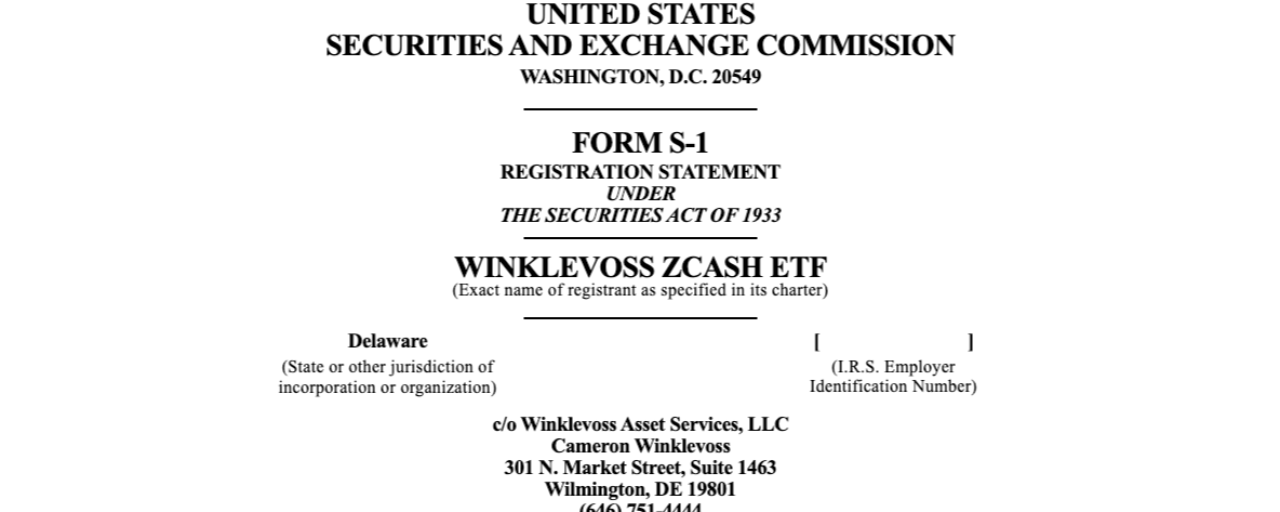
Winklevoss Files Spot Zcash ETF Application With U.S. SECWinklevoss has filed a spot Zcash ETF application with the U.S. SEC, according to ChainCatcher. The proposed ETF is planned for listing on Nasdaq under the ticker WINK.
Winklevoss Files Spot Zcash ETF Application With U.S. SEC
Winklevoss has filed a spot Zcash ETF application with the U.S. SEC, according to ChainCatcher. The proposed ETF is planned for listing on Nasdaq under the ticker WINK.
1
9
10.7k
·
--
US MARKET CLOSE | S&P 500 Closes Above 7,800 for the First Time, Nasdaq Hits Record High on Tech Rally and Declining YieldsThe S&P 500 rose 0.58% to a record close of 7,818.93 on Tuesday, surpassing the 7,800 mark for the first time, while the Dow Jones Industrial Average gained 253.38 points, or 0.49%, to close at 51,521.28. The Nasdaq Composite advanced 0.45% to a record close of 27,599.79. According to Sina Finance, the broad market gains were fueled by a rally in chip stocks, with Marvell Technology rising 5.8%, Advanced Micro Devices gaining nearly 3%, and Broadcom adding 3.7%. The benchmark 10-year Treasury yield fell more than 4 basis points to 5.262%, and the 30-year yield dropped over 3 basis points to 5.631%, both having hit levels unseen since 2002 on Monday. Treasury Secretary Scott Bessent sought to reassure investors, saying economic growth combined with spending restraint would "soon" alter the government's borrowing trajectory. Morgan Stanley Wealth Management Chief Investment Officer Lisa Shalett attributed the sharp bond market volatility over the past six weeks to a potential new Federal Reserve policy framework, economic growth trends, elevated oil prices, and ongoing Middle East tensions. Traders are awaiting the release of the Fed's September meeting minutes on Wednesday. The US trade deficit widened to $105.6 billion in August, the highest since March 2025. The dollar index fell to 101.754, its lowest since October 2. IPO activity on Wall Street has slowed sharply, with investors pushing back on elevated AI valuations. BCA Research data showed technology companies that went public this year have seen their shares fall an average of about 23% since their first trading day.
US MARKET CLOSE | S&P 500 Closes Above 7,800 for the First Time, Nasdaq Hits Record High on Tech Rally and Declining Yields
The S&P 500 rose 0.58% to a record close of 7,818.93 on Tuesday, surpassing the 7,800 mark for the first time, while the Dow Jones Industrial Average gained 253.38 points, or 0.49%, to close at 51,521.28. The Nasdaq Composite advanced 0.45% to a record close of 27,599.79. According to Sina Finance, the broad market gains were fueled by a rally in chip stocks, with Marvell Technology rising 5.8%, Advanced Micro Devices gaining nearly 3%, and Broadcom adding 3.7%. The benchmark 10-year Treasury yield fell more than 4 basis points to 5.262%, and the 30-year yield dropped over 3 basis points to 5.631%, both having hit levels unseen since 2002 on Monday. Treasury Secretary Scott Bessent sought to reassure investors, saying economic growth combined with spending restraint would "soon" alter the government's borrowing trajectory. Morgan Stanley Wealth Management Chief Investment Officer Lisa Shalett attributed the sharp bond market volatility over the past six weeks to a potential new Federal Reserve policy framework, economic growth trends, elevated oil prices, and ongoing Middle East tensions. Traders are awaiting the release of the Fed's September meeting minutes on Wednesday. The US trade deficit widened to $105.6 billion in August, the highest since March 2025. The dollar index fell to 101.754, its lowest since October 2. IPO activity on Wall Street has slowed sharply, with investors pushing back on elevated AI valuations. BCA Research data showed technology companies that went public this year have seen their shares fall an average of about 23% since their first trading day.
1
2
1.5k
·
--
Bitcoin(BTC) Drops Below 84,000 USDT with a 2.05% Decrease in 24 HoursOn Oct 07, 2026, 02:03 AM(UTC). According to Binance Market Data, Bitcoin has dropped below 84,000 USDT and is now trading at 83,837.5625 USDT, with a narrowed 2.05% decrease in 24 hours.
Bitcoin(BTC) Drops Below 84,000 USDT with a 2.05% Decrease in 24 Hours
On Oct 07, 2026, 02:03 AM(UTC). According to Binance Market Data, Bitcoin has dropped below 84,000 USDT and is now trading at 83,837.5625 USDT, with a narrowed 2.05% decrease in 24 hours.
3
4
5.6k
·
--
Tom Lee Says Tokenization Will Expand Across Traditional Finance Over the Next DecadeTom Lee said at Token2049 that the market is at the start of a supercycle and that everything running on traditional finance will be tokenized over the next 10 years. According to Odaily, he said most traditional financial institutions will build on Ethereum, including BlackRock, JPMorgan, and Robinhood.
Tom Lee Says Tokenization Will Expand Across Traditional Finance Over the Next Decade
Tom Lee said at Token2049 that the market is at the start of a supercycle and that everything running on traditional finance will be tokenized over the next 10 years. According to Odaily, he said most traditional financial institutions will build on Ethereum, including BlackRock, JPMorgan, and Robinhood.
1
10
5.6k
·
--
Crypto News | Bitcoin Holds $86K as Yields and Oil Retreat — Nikkei Reclaims 70,000, KOSPI Slips, Fed Minutes Due WednesdayBitcoin held just above $86,000 Tuesday after a fourth rejection near $87,000, with oil below $100 (Brent $98.45, WTI $87.32) and Treasury yields retreating from 2002 highs providing macro relief. FxPro flagged $84,000 as the level that shifts momentum to sellers with $80,000 in view. The Nikkei reclaimed 70,000 on chip buying while the KOSPI slipped back below 7,000 ahead of Samsung's preliminary Q3 results. Bitcoin's 3-for-3 post-midterm record (2014: +24.5%, 2018: +44.9%, 2022: +92.3%) is a tailwind with a three-observation sample — treasury yield stabilization and regulatory progress matter more than the pattern. Strategy's market cap surpassed Rumble; Strive overtook 140+ companies in a month. Fed minutes Wednesday.Bitcoin Rose After Every U.S. Midterm Since 2014, but Three-Cycle Sample Limits 2026 SignalBitcoin posted positive 12-month returns following all three midterms in its history: 2014 +24.5%, 2018 +44.9%, 2022 +92.3%. The S&P 500's comparable record is 19-for-19 since 1950 with a 15.4% average gain. Three observations cannot establish a reliable predictive relationship — the 2018 cycle illustrates why: Bitcoin fell 45.5% in the first month before finishing up 44.9% at 12 months. CryptoQuant's XWIN Japan identified three factors that matter more than the pattern: Treasury yield stabilization, continued institutional buying through spot ETFs, and regulatory progress. If those conditions align after November's midterms, history adds tailwind. If financial conditions deteriorate, three prior cycles offer no guarantee of a fourth.Bitcoin Rises Above $86K as Oil Prices and Treasury Yields RetreatBitcoin traded just above $86,000 Tuesday — down 0.2% over 24 hours after a fourth rejection near $87,000 since September 23. The macro backdrop provided partial relief: Brent fell below $100 and Treasury yields retreated from their highest levels since 2002. FxPro: the pattern of higher lows remains intact but is under pressure — a break below $84,000 strengthens the bearish case, and a move through $83,000 puts $80,000 in view. ZEC +2%, DOGE -2%, SOL -1%. Fed meeting minutes arrive Wednesday and could provide the next directional signal for rate expectations, which shifted sharply on September's 29,000 NFP miss (October hike odds now 17.7%).Strategy Market Cap Surpasses Rumble as Bitcoin Treasury Firms Climb RankingsStrategy's market cap surpassed Rumble while Strive overtook more than 140 public companies in the past month as Bitcoin held near $86,000. Strategy holds 845,050 BTC at a $75,419 average cost — at $86,000, the position carries an ~$11,400/BTC unrealized gain. The company is spending cash to repurchase STRC preferred ($635M+ so far, $2B authorization) rather than buying Bitcoin — a judgment that the discount on its securities offers better value. Strive, running the opposite playbook, issued SATA preferred at par to accumulate 25,000 BTC. Bitcoin treasury company market caps are doubly sensitive: they move with Bitcoin's price and with the premium or discount investors assign to their BTC holdings — both variables favorable at current levels.Nikkei Reclaims 70,000 on Chip Buying; KOSPI Slips Below 7,000Tokyo's Nikkei 225 rose 1.05% to 70,683 — its highest in more than three months — as Advantest +3.85% and Tokyo Electron +0.31% led semiconductor buying following Monday's Nasdaq record high. Seoul's KOSPI fell 0.89% to 6,941, slipping back below 7,000 with SK Hynix -3.69% and Samsung -1.45% ahead of preliminary Q3 results this week. The KOSDAQ jumped 2.98% — small-cap tech outperforming large-cap memory is consistent with AI demand rotating from infrastructure (where DRAM is the bottleneck) toward application layer. Hong Kong's Hang Seng +240 points as DeepSeek approached 80B yuan in its latest funding round (Tencent and CATL among leads) ahead of a planned IPO. Taiwan's TAIEX rose for a fifth straight session to 49,822 — approaching the 50,000 mark — as TSMC +0.39% while MediaTek -4.74%.Brent Crude Falls More Than 1% as WTI Drops 1.25%Brent crude fell more than 1% to $98.45 — below $100 for the first time since the September escalation peak — and WTI declined 1.25% to $87.32. The retreat from September's ~$109 Brent high (driven by the Saudi East-West pipeline closure and Hormuz disruption) represents a 10% pullback with meaningful consequences for the inflation path: energy was the primary driver of headline PCE at 3.4% vs core at 3%. BofA raised its second-half Brent average forecast to $95 from $83 in late September — at $98.45, spot still sits above that revised forecast. Whether the decline extends or reverses determines whether the inflation relief from Wednesday's Fed minutes turns into a durable macro tailwind for Bitcoin.
Crypto News | Bitcoin Holds $86K as Yields and Oil Retreat — Nikkei Reclaims 70,000, KOSPI Slips, Fed Minutes Due Wednesday
Bitcoin held just above $86,000 Tuesday after a fourth rejection near $87,000, with oil below $100 (Brent $98.45, WTI $87.32) and Treasury yields retreating from 2002 highs providing macro relief. FxPro flagged $84,000 as the level that shifts momentum to sellers with $80,000 in view. The Nikkei reclaimed 70,000 on chip buying while the KOSPI slipped back below 7,000 ahead of Samsung's preliminary Q3 results. Bitcoin's 3-for-3 post-midterm record (2014: +24.5%, 2018: +44.9%, 2022: +92.3%) is a tailwind with a three-observation sample — treasury yield stabilization and regulatory progress matter more than the pattern. Strategy's market cap surpassed Rumble; Strive overtook 140+ companies in a month. Fed minutes Wednesday.Bitcoin Rose After Every U.S. Midterm Since 2014, but Three-Cycle Sample Limits 2026 SignalBitcoin posted positive 12-month returns following all three midterms in its history: 2014 +24.5%, 2018 +44.9%, 2022 +92.3%. The S&P 500's comparable record is 19-for-19 since 1950 with a 15.4% average gain. Three observations cannot establish a reliable predictive relationship — the 2018 cycle illustrates why: Bitcoin fell 45.5% in the first month before finishing up 44.9% at 12 months. CryptoQuant's XWIN Japan identified three factors that matter more than the pattern: Treasury yield stabilization, continued institutional buying through spot ETFs, and regulatory progress. If those conditions align after November's midterms, history adds tailwind. If financial conditions deteriorate, three prior cycles offer no guarantee of a fourth.Bitcoin Rises Above $86K as Oil Prices and Treasury Yields RetreatBitcoin traded just above $86,000 Tuesday — down 0.2% over 24 hours after a fourth rejection near $87,000 since September 23. The macro backdrop provided partial relief: Brent fell below $100 and Treasury yields retreated from their highest levels since 2002. FxPro: the pattern of higher lows remains intact but is under pressure — a break below $84,000 strengthens the bearish case, and a move through $83,000 puts $80,000 in view. ZEC +2%, DOGE -2%, SOL -1%. Fed meeting minutes arrive Wednesday and could provide the next directional signal for rate expectations, which shifted sharply on September's 29,000 NFP miss (October hike odds now 17.7%).Strategy Market Cap Surpasses Rumble as Bitcoin Treasury Firms Climb RankingsStrategy's market cap surpassed Rumble while Strive overtook more than 140 public companies in the past month as Bitcoin held near $86,000. Strategy holds 845,050 BTC at a $75,419 average cost — at $86,000, the position carries an ~$11,400/BTC unrealized gain. The company is spending cash to repurchase STRC preferred ($635M+ so far, $2B authorization) rather than buying Bitcoin — a judgment that the discount on its securities offers better value. Strive, running the opposite playbook, issued SATA preferred at par to accumulate 25,000 BTC. Bitcoin treasury company market caps are doubly sensitive: they move with Bitcoin's price and with the premium or discount investors assign to their BTC holdings — both variables favorable at current levels.Nikkei Reclaims 70,000 on Chip Buying; KOSPI Slips Below 7,000Tokyo's Nikkei 225 rose 1.05% to 70,683 — its highest in more than three months — as Advantest +3.85% and Tokyo Electron +0.31% led semiconductor buying following Monday's Nasdaq record high. Seoul's KOSPI fell 0.89% to 6,941, slipping back below 7,000 with SK Hynix -3.69% and Samsung -1.45% ahead of preliminary Q3 results this week. The KOSDAQ jumped 2.98% — small-cap tech outperforming large-cap memory is consistent with AI demand rotating from infrastructure (where DRAM is the bottleneck) toward application layer. Hong Kong's Hang Seng +240 points as DeepSeek approached 80B yuan in its latest funding round (Tencent and CATL among leads) ahead of a planned IPO. Taiwan's TAIEX rose for a fifth straight session to 49,822 — approaching the 50,000 mark — as TSMC +0.39% while MediaTek -4.74%.Brent Crude Falls More Than 1% as WTI Drops 1.25%Brent crude fell more than 1% to $98.45 — below $100 for the first time since the September escalation peak — and WTI declined 1.25% to $87.32. The retreat from September's ~$109 Brent high (driven by the Saudi East-West pipeline closure and Hormuz disruption) represents a 10% pullback with meaningful consequences for the inflation path: energy was the primary driver of headline PCE at 3.4% vs core at 3%. BofA raised its second-half Brent average forecast to $95 from $83 in late September — at $98.45, spot still sits above that revised forecast. Whether the decline extends or reverses determines whether the inflation relief from Wednesday's Fed minutes turns into a durable macro tailwind for Bitcoin.
52
10
132
8.2k
·
--
Aptos Labs Proposes MonoMove Upgrade for Blockchain Execution EngineAptos Labs announced MonoMove, which it described as the largest proposed upgrade in the history of the Aptos blockchain execution engine. According to ChainCatcher, internal tests showed MonoMove could run smart contracts up to 55 times faster than the current system.
On Decibel, the fully on-chain trading platform incubated by Aptos Labs, collateral withdrawal speed was said to improve by up to 55 times, while order placement speed improved by up to 22 times.
Aptos Labs Proposes MonoMove Upgrade for Blockchain Execution Engine
Aptos Labs announced MonoMove, which it described as the largest proposed upgrade in the history of the Aptos blockchain execution engine. According to ChainCatcher, internal tests showed MonoMove could run smart contracts up to 55 times faster than the current system.
On Decibel, the fully on-chain trading platform incubated by Aptos Labs, collateral withdrawal speed was said to improve by up to 55 times, while order placement speed improved by up to 22 times.
On Decibel, the fully on-chain trading platform incubated by Aptos Labs, collateral withdrawal speed was said to improve by up to 55 times, while order placement speed improved by up to 22 times.
1
10
10.4k
·
--
Peter Brandt Prefers Monero And Solana Charts Over XRPVeteran trader Peter Brandt compared weekly charts of XRP, Monero and Solana and said XRP ranks behind its peers on classical price patterns and measured moves. According to BeInCrypto, Brandt sees XRP’s cup-and-handle as a conditional setup with an upside objective near $2.16, but says heavy overhead supply makes the target uncertain. He called Monero his clear favorite and said Solana’s larger cup-and-handle looks cleaner and more decisive.
Peter Brandt Prefers Monero And Solana Charts Over XRP
Veteran trader Peter Brandt compared weekly charts of XRP, Monero and Solana and said XRP ranks behind its peers on classical price patterns and measured moves. According to BeInCrypto, Brandt sees XRP’s cup-and-handle as a conditional setup with an upside objective near $2.16, but says heavy overhead supply makes the target uncertain. He called Monero his clear favorite and said Solana’s larger cup-and-handle looks cleaner and more decisive.
3
29.2k
·
--
Article
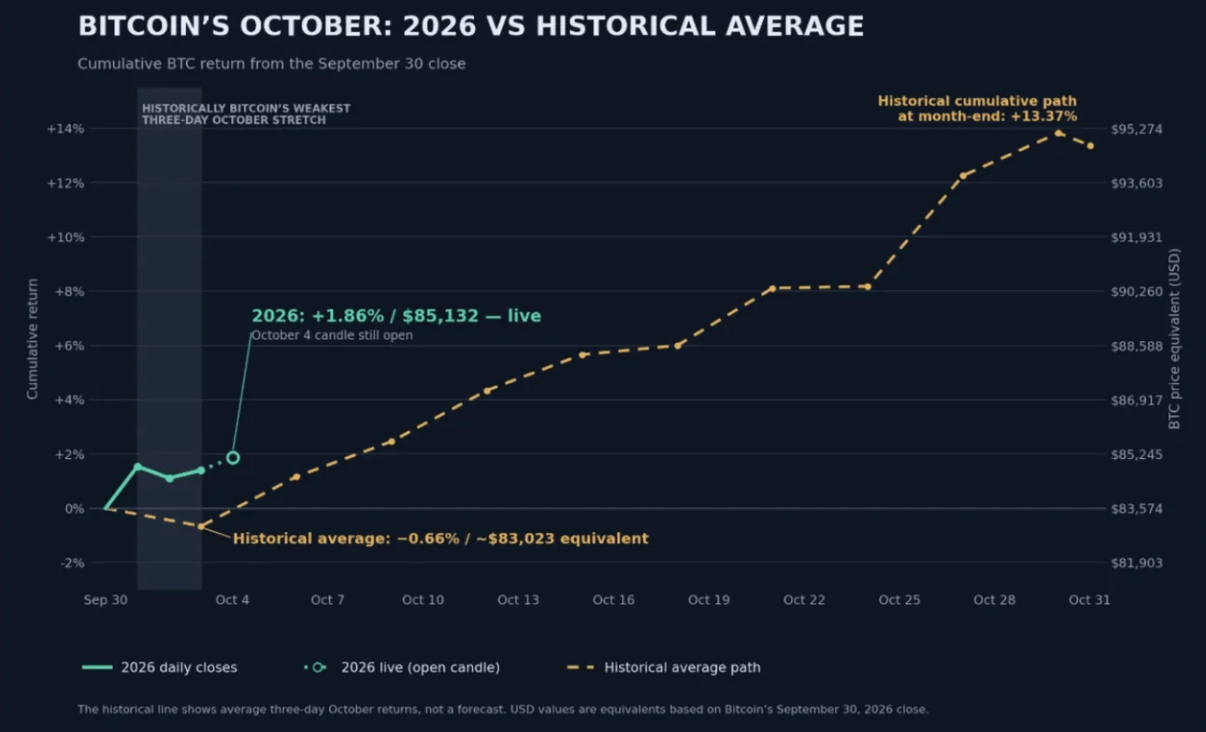
Crypto News | Bitcoin Price Targets 2026 Open at $87,570 as Bond Yields and Fed Minutes Take FocusKey TakeawaysBitcoin briefly revisited $87,000, with the 2026 yearly open at $87,570 emerging as the next major resistance level.BTC secured its highest weekly close since late January at $86,532, but bulls have yet to reclaim the yearly open.Traders are watching the 10-year Treasury auction and Federal Reserve meeting minutes on Wednesday as bond yields remain near multi-decade highs.Bitcoin gained 1.4% during the first three days of October, outperforming the historical average decline of 0.66% for the period.Since 2013, Bitcoin has delivered an average October gain of 18.7%, although historical performance does not guarantee similar returns in 2026.Bitcoin is again testing the upper end of its recent trading range, with bulls attempting to reclaim the cryptocurrency's 2026 opening price of $87,570.BTC recorded its highest weekly close since late January at $86,532 on Bitstamp, followed by brief moves toward $87,000. The latest push represents Bitcoin's fourth attempt to break higher since Sept. 21.The price action comes as traders turn their attention to U.S. Treasury yields, Federal Reserve policy and Bitcoin's historically strong October seasonality.Bitcoin's $87,570 Yearly Open Becomes Key ResistanceBitcoin has repeatedly tested the $87,000 region but has yet to establish a sustained breakout above its 2026 opening price.The $87,570 yearly open now represents an important technical threshold. Reclaiming it would turn Bitcoin's 2026 yearly candle positive.Short-term liquidity remains concentrated around the current range. CoinGlass data showed notable liquidity around $83,700, while bids and asks around the spot price have helped keep volatility compressed.Trader and analyst Rekt Capital identified approximately $82,500 as key support and $86,700 as the resistance Bitcoin needs to decisively overcome.According to his analysis, losing $82,500 could increase the risk of BTC revisiting its previous $60,000–$80,000 range. A confirmed breakout above $86,700, meanwhile, could open a higher trading range extending toward $93,700.Treasury Yields and Fed Minutes Take Center StageThe U.S. bond market could provide the week's biggest macro catalyst for Bitcoin.Last week, the 10-year Treasury yield reached 5.34%, while the 30-year yield climbed to 5.69%, levels not seen since 2002.Yields initially declined following weaker U.S. nonfarm payroll data but subsequently recovered much of the move. The 10-year yield stood around 5.25% on Monday.Attention now turns to Wednesday's 10-year Treasury note auction and the release of minutes from the Federal Reserve's September meeting.Market expectations for another October rate increase have fallen sharply. CME FedWatch data cited in the source showed the probability of another 25-basis-point hike dropping from around 70% a week earlier to approximately 18%.However, expectations for additional tightening later in the year remain elevated, keeping interest rates and Treasury yields an important potential headwind for Bitcoin and other risk assets.Bitcoin Defies Historically Weak Start to OctoberBitcoin has also started October stronger than its historical seasonal pattern would suggest.According to CryptoQuant data cited in the source, the first three days of October have historically been Bitcoin's weakest three-day stretch of the month, producing an average decline of 0.66%.BTC instead gained approximately 1.4% during the first three days of October 2026, while its month-to-date advance reached around 2.7%.The stronger start comes after Bitcoin gained more than 40% during Q3, recording its best third-quarter performance since 2017.Bitcoin October Returns Average 18.7%October has historically been one of Bitcoin's stronger months.CoinGlass data cited in the source shows Bitcoin has gained an average 18.7% in October since 2013.Only three of the previous 13 October periods finished negative, with the largest decline occurring in 2014 at approximately 13%.Applying the historical average mechanically to current prices would put Bitcoin near $100,000, though past seasonal performance does not determine future returns.For now, the more immediate test remains $87,570.A sustained move above Bitcoin's 2026 opening price would turn the yearly candle positive and strengthen the case for a move into a higher trading range. Failure to break resistance would keep the focus on support around $82,500 as bond-market volatility and Federal Reserve expectations continue to shape the broader risk environment.
Crypto News | Bitcoin Price Targets 2026 Open at $87,570 as Bond Yields and Fed Minutes Take Focus
Key TakeawaysBitcoin briefly revisited $87,000, with the 2026 yearly open at $87,570 emerging as the next major resistance level.BTC secured its highest weekly close since late January at $86,532, but bulls have yet to reclaim the yearly open.Traders are watching the 10-year Treasury auction and Federal Reserve meeting minutes on Wednesday as bond yields remain near multi-decade highs.Bitcoin gained 1.4% during the first three days of October, outperforming the historical average decline of 0.66% for the period.Since 2013, Bitcoin has delivered an average October gain of 18.7%, although historical performance does not guarantee similar returns in 2026.Bitcoin is again testing the upper end of its recent trading range, with bulls attempting to reclaim the cryptocurrency's 2026 opening price of $87,570.BTC recorded its highest weekly close since late January at $86,532 on Bitstamp, followed by brief moves toward $87,000. The latest push represents Bitcoin's fourth attempt to break higher since Sept. 21.The price action comes as traders turn their attention to U.S. Treasury yields, Federal Reserve policy and Bitcoin's historically strong October seasonality.Bitcoin's $87,570 Yearly Open Becomes Key ResistanceBitcoin has repeatedly tested the $87,000 region but has yet to establish a sustained breakout above its 2026 opening price.The $87,570 yearly open now represents an important technical threshold. Reclaiming it would turn Bitcoin's 2026 yearly candle positive.Short-term liquidity remains concentrated around the current range. CoinGlass data showed notable liquidity around $83,700, while bids and asks around the spot price have helped keep volatility compressed.Trader and analyst Rekt Capital identified approximately $82,500 as key support and $86,700 as the resistance Bitcoin needs to decisively overcome.According to his analysis, losing $82,500 could increase the risk of BTC revisiting its previous $60,000–$80,000 range. A confirmed breakout above $86,700, meanwhile, could open a higher trading range extending toward $93,700.Treasury Yields and Fed Minutes Take Center StageThe U.S. bond market could provide the week's biggest macro catalyst for Bitcoin.Last week, the 10-year Treasury yield reached 5.34%, while the 30-year yield climbed to 5.69%, levels not seen since 2002.Yields initially declined following weaker U.S. nonfarm payroll data but subsequently recovered much of the move. The 10-year yield stood around 5.25% on Monday.Attention now turns to Wednesday's 10-year Treasury note auction and the release of minutes from the Federal Reserve's September meeting.Market expectations for another October rate increase have fallen sharply. CME FedWatch data cited in the source showed the probability of another 25-basis-point hike dropping from around 70% a week earlier to approximately 18%.However, expectations for additional tightening later in the year remain elevated, keeping interest rates and Treasury yields an important potential headwind for Bitcoin and other risk assets.Bitcoin Defies Historically Weak Start to OctoberBitcoin has also started October stronger than its historical seasonal pattern would suggest.According to CryptoQuant data cited in the source, the first three days of October have historically been Bitcoin's weakest three-day stretch of the month, producing an average decline of 0.66%.BTC instead gained approximately 1.4% during the first three days of October 2026, while its month-to-date advance reached around 2.7%.The stronger start comes after Bitcoin gained more than 40% during Q3, recording its best third-quarter performance since 2017.Bitcoin October Returns Average 18.7%October has historically been one of Bitcoin's stronger months.CoinGlass data cited in the source shows Bitcoin has gained an average 18.7% in October since 2013.Only three of the previous 13 October periods finished negative, with the largest decline occurring in 2014 at approximately 13%.Applying the historical average mechanically to current prices would put Bitcoin near $100,000, though past seasonal performance does not determine future returns.For now, the more immediate test remains $87,570.A sustained move above Bitcoin's 2026 opening price would turn the yearly candle positive and strengthen the case for a move into a higher trading range. Failure to break resistance would keep the focus on support around $82,500 as bond-market volatility and Federal Reserve expectations continue to shape the broader risk environment.
1
3
19
15.2k
·
--
Bitcoin(BTC) Drops Below 85,000 USDT with a 0.88% Decrease in 24 HoursOn Oct 07, 2026, 01:57 AM(UTC). According to Binance Market Data, Bitcoin has dropped below 85,000 USDT and is now trading at 84,882.601563 USDT, with a narrowed 0.88% decrease in 24 hours.
Bitcoin(BTC) Drops Below 85,000 USDT with a 0.88% Decrease in 24 Hours
On Oct 07, 2026, 01:57 AM(UTC). According to Binance Market Data, Bitcoin has dropped below 85,000 USDT and is now trading at 84,882.601563 USDT, with a narrowed 0.88% decrease in 24 hours.
1.5k
·
--
Bitcoin Long-Term Holders Cut Holdings for Seventh Straight Week as Market Absorbs SupplyCrypto analyst Axel Adler said Bitcoin long-term holders have reduced their holdings for a seventh straight week, but the selling has not yet stopped BTC from rising. According to Odaily, the market is still absorbing supply released by long-term holders.
Data showed the long-term holder position change indicator stayed positive from February through early August this year, with long-term holders adding about 1.2 million BTC in May. The indicator turned negative on August 17 and has remained in reduction mode for seven weeks. As of September 28, long-term holder holdings had fallen by 73,400 BTC, widening from a decline of 1,100 BTC a week earlier.
Adler said the current scale of selling is still limited compared with the roughly 1.07 million BTC long-term holders sold in November 2025. He added that if long-term holder selling again reaches several hundred thousand BTC while BTC price stops rising, it may indicate that the market’s ability to absorb supply is weakening.
The long-term holder SOPR metric has also stayed above 1 for a second straight week, indicating profit-taking. On September 21, the metric rose to 1.24, its highest level since January this year. As of September 28, LTH SOPR stood at 1.18, meaning BTC transferred during the period realized about 18% profit versus cost basis.
Bitcoin Long-Term Holders Cut Holdings for Seventh Straight Week as Market Absorbs Supply
Crypto analyst Axel Adler said Bitcoin long-term holders have reduced their holdings for a seventh straight week, but the selling has not yet stopped BTC from rising. According to Odaily, the market is still absorbing supply released by long-term holders.
Data showed the long-term holder position change indicator stayed positive from February through early August this year, with long-term holders adding about 1.2 million BTC in May. The indicator turned negative on August 17 and has remained in reduction mode for seven weeks. As of September 28, long-term holder holdings had fallen by 73,400 BTC, widening from a decline of 1,100 BTC a week earlier.
Adler said the current scale of selling is still limited compared with the roughly 1.07 million BTC long-term holders sold in November 2025. He added that if long-term holder selling again reaches several hundred thousand BTC while BTC price stops rising, it may indicate that the market’s ability to absorb supply is weakening.
The long-term holder SOPR metric has also stayed above 1 for a second straight week, indicating profit-taking. On September 21, the metric rose to 1.24, its highest level since January this year. As of September 28, LTH SOPR stood at 1.18, meaning BTC transferred during the period realized about 18% profit versus cost basis.
Data showed the long-term holder position change indicator stayed positive from February through early August this year, with long-term holders adding about 1.2 million BTC in May. The indicator turned negative on August 17 and has remained in reduction mode for seven weeks. As of September 28, long-term holder holdings had fallen by 73,400 BTC, widening from a decline of 1,100 BTC a week earlier.
Adler said the current scale of selling is still limited compared with the roughly 1.07 million BTC long-term holders sold in November 2025. He added that if long-term holder selling again reaches several hundred thousand BTC while BTC price stops rising, it may indicate that the market’s ability to absorb supply is weakening.
The long-term holder SOPR metric has also stayed above 1 for a second straight week, indicating profit-taking. On September 21, the metric rose to 1.24, its highest level since January this year. As of September 28, LTH SOPR stood at 1.18, meaning BTC transferred during the period realized about 18% profit versus cost basis.
10
29k
·
--
Amber Group Receives 4.669 Million ENA From EthenaAmber Group received 4.669 million ENA from Ethena, worth $1.14 million. According to Odaily, Onchain Lens monitored the transfer.
Amber Group Receives 4.669 Million ENA From Ethena
Amber Group received 4.669 million ENA from Ethena, worth $1.14 million. According to Odaily, Onchain Lens monitored the transfer.
10
15.4k
·
--
Ethereum Spot ETFs Record $202 Million Net Outflow on October 6Ethereum spot ETFs recorded a total net outflow of $202 million on U.S. Eastern Time October 6. According to ChainCatcher, BlackRock's ETHA accounted for the largest single-day outflow at $202 million, while its cumulative net inflow reached $13.036 billion.
As of press time, Ethereum spot ETFs held net assets of $17.356 billion. Their net asset ratio, measured by market value as a share of Ethereum's total market capitalization, stood at 5.27%, and cumulative net inflows reached $13.549 billion.
Ethereum Spot ETFs Record $202 Million Net Outflow on October 6
Ethereum spot ETFs recorded a total net outflow of $202 million on U.S. Eastern Time October 6. According to ChainCatcher, BlackRock's ETHA accounted for the largest single-day outflow at $202 million, while its cumulative net inflow reached $13.036 billion.
As of press time, Ethereum spot ETFs held net assets of $17.356 billion. Their net asset ratio, measured by market value as a share of Ethereum's total market capitalization, stood at 5.27%, and cumulative net inflows reached $13.549 billion.
As of press time, Ethereum spot ETFs held net assets of $17.356 billion. Their net asset ratio, measured by market value as a share of Ethereum's total market capitalization, stood at 5.27%, and cumulative net inflows reached $13.549 billion.
1
1.4k
·
--
Firelight Begins Underwriting With XRP-Backed Coverage on FlareDeFi insurance protocol Firelight has begun underwriting, with claims backed by 50.02 million XRP staked on the Flare network. According to ChainCatcher, the protocol’s first underwriting positions are allocated to two Sentora vaults.
Claims will be decided by a five-member consortium through a three-fifths majority vote. The audit report for the underwriting contract is currently marked as forthcoming.
Firelight Begins Underwriting With XRP-Backed Coverage on Flare
DeFi insurance protocol Firelight has begun underwriting, with claims backed by 50.02 million XRP staked on the Flare network. According to ChainCatcher, the protocol’s first underwriting positions are allocated to two Sentora vaults.
Claims will be decided by a five-member consortium through a three-fifths majority vote. The audit report for the underwriting contract is currently marked as forthcoming.
Claims will be decided by a five-member consortium through a three-fifths majority vote. The audit report for the underwriting contract is currently marked as forthcoming.
1
11
13.5k
·
--
Startale Japan Launches Digital Corporate Bond Paid in JPYSCStartale Japan Co. Ltd. has announced a digital corporate bond that will pay both interest and principal in the yen-backed stablecoin JPYSC. According to Odaily, the bond is aimed at Japanese individual and corporate investors and will not be offered to overseas investors.
JPYSC is issued by SBI Shinsei Trust Bank, which manages the trust assets, and is pegged 1:1 to the yen. It is classified as a type 3 electronic payment instrument under Japan's Payment Services Act. SBI VC Trade will serve as the issuing trustee and handle issuance and distribution, while Startale Group provides the underlying technology.
Startale Group CEO Sota Watanabe said the bond will test JPYSC's use in actual interest and principal payments. The announcement did not disclose the bond size, coupon rate, maturity date, or individual investment limit.
Startale Japan Launches Digital Corporate Bond Paid in JPYSC
Startale Japan Co. Ltd. has announced a digital corporate bond that will pay both interest and principal in the yen-backed stablecoin JPYSC. According to Odaily, the bond is aimed at Japanese individual and corporate investors and will not be offered to overseas investors.
JPYSC is issued by SBI Shinsei Trust Bank, which manages the trust assets, and is pegged 1:1 to the yen. It is classified as a type 3 electronic payment instrument under Japan's Payment Services Act. SBI VC Trade will serve as the issuing trustee and handle issuance and distribution, while Startale Group provides the underlying technology.
Startale Group CEO Sota Watanabe said the bond will test JPYSC's use in actual interest and principal payments. The announcement did not disclose the bond size, coupon rate, maturity date, or individual investment limit.
JPYSC is issued by SBI Shinsei Trust Bank, which manages the trust assets, and is pegged 1:1 to the yen. It is classified as a type 3 electronic payment instrument under Japan's Payment Services Act. SBI VC Trade will serve as the issuing trustee and handle issuance and distribution, while Startale Group provides the underlying technology.
Startale Group CEO Sota Watanabe said the bond will test JPYSC's use in actual interest and principal payments. The announcement did not disclose the bond size, coupon rate, maturity date, or individual investment limit.
1
591
·
--
Bitcoin Mining Concentration Eases as U.S. Share Falls, Russia's RisesHashrate Index's October 5 estimates show the U.S., Russia and China accounting for a combined 65.4% of Bitcoin mining, down from 66.2%.
According to NS3.AI, estimated U.S. hashrate declined from about 345 EH/s to 335 EH/s, while Russia's estimate increased from 162 EH/s to 170 EH/s. The global hashrate estimate changed little, moving from about 940 EH/s to 941 EH/s.
The figures reflect observations from the preceding third quarter, not completed fourth-quarter results or a live census. The country estimates also do not prove equipment ownership or control over transaction selection, so broader decentralization gains remain unproven.
Bitcoin Mining Concentration Eases as U.S. Share Falls, Russia's Rises
Hashrate Index's October 5 estimates show the U.S., Russia and China accounting for a combined 65.4% of Bitcoin mining, down from 66.2%.
According to NS3.AI, estimated U.S. hashrate declined from about 345 EH/s to 335 EH/s, while Russia's estimate increased from 162 EH/s to 170 EH/s. The global hashrate estimate changed little, moving from about 940 EH/s to 941 EH/s.
The figures reflect observations from the preceding third quarter, not completed fourth-quarter results or a live census. The country estimates also do not prove equipment ownership or control over transaction selection, so broader decentralization gains remain unproven.
According to NS3.AI, estimated U.S. hashrate declined from about 345 EH/s to 335 EH/s, while Russia's estimate increased from 162 EH/s to 170 EH/s. The global hashrate estimate changed little, moving from about 940 EH/s to 941 EH/s.
The figures reflect observations from the preceding third quarter, not completed fourth-quarter results or a live census. The country estimates also do not prove equipment ownership or control over transaction selection, so broader decentralization gains remain unproven.
1
2
7
10.2k
·
--
Aave Faces $67 Million Collateral Rollover as Pendle AUSD Tokens Near MaturityAave is approaching a $67 million collateral rollover as Pendle's October AUSD principal tokens mature on Oct. 8. According to NS3.AI, LlamaRisk said users had supplied 67.4 million of those tokens on Aave V3's Monad market as of Oct. 2.
TokenLogic has proposed listing Pendle's Dec. 17 replacement market on Aave so borrowers can keep using collateral across maturities. However, the proposed initial capacity is less than half of the expiring position, and the December pool remains small.
The main question is whether replacement capacity and liquidity can expand quickly enough for borrowers who want to continue the trade.
Aave Faces $67 Million Collateral Rollover as Pendle AUSD Tokens Near Maturity
Aave is approaching a $67 million collateral rollover as Pendle's October AUSD principal tokens mature on Oct. 8. According to NS3.AI, LlamaRisk said users had supplied 67.4 million of those tokens on Aave V3's Monad market as of Oct. 2.
TokenLogic has proposed listing Pendle's Dec. 17 replacement market on Aave so borrowers can keep using collateral across maturities. However, the proposed initial capacity is less than half of the expiring position, and the December pool remains small.
The main question is whether replacement capacity and liquidity can expand quickly enough for borrowers who want to continue the trade.
TokenLogic has proposed listing Pendle's Dec. 17 replacement market on Aave so borrowers can keep using collateral across maturities. However, the proposed initial capacity is less than half of the expiring position, and the December pool remains small.
The main question is whether replacement capacity and liquidity can expand quickly enough for borrowers who want to continue the trade.
6
8.7k
·
--
Fortitude Secures Priority Allocation for Bitmain's Next-Generation Zcash MinersCrypto mining company Fortitude has secured priority purchase allocation for Bitmain's next-generation Zcash miners under a non-binding commitment that could reach up to $100 million. According to Odaily, the miners are expected to begin delivery in the second quarter of 2027, with timing dependent on final product specifications and pricing arrangements.
Fortitude Secures Priority Allocation for Bitmain's Next-Generation Zcash Miners
Crypto mining company Fortitude has secured priority purchase allocation for Bitmain's next-generation Zcash miners under a non-binding commitment that could reach up to $100 million. According to Odaily, the miners are expected to begin delivery in the second quarter of 2027, with timing dependent on final product specifications and pricing arrangements.
3
4.2k
·
--
Ethereum(ETH) Drops Below 2,700 USDT with a Narrowed 0.20% Increase in 24 HoursOn Oct 06, 2026, 16:36 PM(UTC). According to Binance Market Data, Ethereum has dropped below 2,700 USDT and is now trading at 2,698.469971 USDT, with a narrowed narrowed 0.20% increase in 24 hours.
Ethereum(ETH) Drops Below 2,700 USDT with a Narrowed 0.20% Increase in 24 Hours
On Oct 06, 2026, 16:36 PM(UTC). According to Binance Market Data, Ethereum has dropped below 2,700 USDT and is now trading at 2,698.469971 USDT, with a narrowed narrowed 0.20% increase in 24 hours.
8
6.1k
·
--
Solana Perpetual Futures Platform Imperial Raises $1.5 Million Seed RoundSolana perpetual futures trading platform Imperial has raised a $1.5 million seed round at a $15 million valuation, led by Foundation Capital with support from Solana ecosystem angel investors. According to ChainCatcher, the funding will be used to expand Imperial's product lineup, including a perpetual contract aggregator, a lending platform, and its flagship project Armada.
Imperial said Armada is a Solana-based perpetual contract AMM that sources liquidity from DeFi platforms such as Hyperliquid, allowing traders to access deeper order books without leaving Solana.
Solana Perpetual Futures Platform Imperial Raises $1.5 Million Seed Round
Solana perpetual futures trading platform Imperial has raised a $1.5 million seed round at a $15 million valuation, led by Foundation Capital with support from Solana ecosystem angel investors. According to ChainCatcher, the funding will be used to expand Imperial's product lineup, including a perpetual contract aggregator, a lending platform, and its flagship project Armada.
Imperial said Armada is a Solana-based perpetual contract AMM that sources liquidity from DeFi platforms such as Hyperliquid, allowing traders to access deeper order books without leaving Solana.
Imperial said Armada is a Solana-based perpetual contract AMM that sources liquidity from DeFi platforms such as Hyperliquid, allowing traders to access deeper order books without leaving Solana.
10
9k
·
--
Brevan Howard To Use Ripple Prime for Prime Brokerage, Clearing, and Financing ServicesBrevan Howard will use Ripple Prime for multi-asset prime brokerage, clearing, and financing services. According to Odaily, the firm manages about $35 billion in assets and said the collaboration builds on its earlier investment in Ripple and participation in Ripple's $500 million strategic financing last year.
Brevan Howard To Use Ripple Prime for Prime Brokerage, Clearing, and Financing Services
Brevan Howard will use Ripple Prime for multi-asset prime brokerage, clearing, and financing services. According to Odaily, the firm manages about $35 billion in assets and said the collaboration builds on its earlier investment in Ripple and participation in Ripple's $500 million strategic financing last year.
4
6.7k
·
--
Liquid Capital Founder Yi Lihua Says Bitcoin Has Not Broken Key Support as Altcoins Pull BackLiquid Capital founder Yi Lihua said he has repeatedly warned that the market could face a pullback, adding that Bitcoin has not yet fallen below a key support level while altcoins have already seen a broad correction. According to ChainCatcher, he said he had judged a month ago that Bitcoin could face a pullback after rising to around $86,000.
Yi said that in a bull market, most of the time is still spent in a range-bound phase, with only a small portion of time marked by rapid gains and normal corrections, and that there is no bull market with uninterrupted upside. He added that even if the current pullback is relatively large, it remains a normal part of the broader bull trend, and advised investors not to try to trade constantly or capture every opportunity.
Liquid Capital Founder Yi Lihua Says Bitcoin Has Not Broken Key Support as Altcoins Pull Back
Liquid Capital founder Yi Lihua said he has repeatedly warned that the market could face a pullback, adding that Bitcoin has not yet fallen below a key support level while altcoins have already seen a broad correction. According to ChainCatcher, he said he had judged a month ago that Bitcoin could face a pullback after rising to around $86,000.
Yi said that in a bull market, most of the time is still spent in a range-bound phase, with only a small portion of time marked by rapid gains and normal corrections, and that there is no bull market with uninterrupted upside. He added that even if the current pullback is relatively large, it remains a normal part of the broader bull trend, and advised investors not to try to trade constantly or capture every opportunity.
Yi said that in a bull market, most of the time is still spent in a range-bound phase, with only a small portion of time marked by rapid gains and normal corrections, and that there is no bull market with uninterrupted upside. He added that even if the current pullback is relatively large, it remains a normal part of the broader bull trend, and advised investors not to try to trade constantly or capture every opportunity.
5
6.6k
·
--
ECB’s Cipollone Says Digital Euro Will Help Banks CompeteEuropean Central Bank Executive Board member Piero Cipollone said the digital euro will help European banks better compete, according to Bloomberg.
ECB’s Cipollone Says Digital Euro Will Help Banks Compete
European Central Bank Executive Board member Piero Cipollone said the digital euro will help European banks better compete, according to Bloomberg.
2
3
1.1k
·
--
Trump Mobile Data Leak Exposes 3,615 Customers, Including Staff MembersRansomware group BYOD leaked data belonging to 3,615 Trump Mobile customers last week, including members of Donald Trump's close staff. According to NS3.AI, the exposed information included names, email addresses, telephone numbers, home addresses, and order details.
Straight Arrow News reported that Trump Organization executives Eric Brunnett and Nicholas Hayes were among those affected. International Cyber Digest confirmed that White House staff member Jason Miller and pro-Trump influencer Bo Loudon were also included.
International Cyber Digest said the attacker claimed to have gained access by targeting a Liberty Mobile employee with an infostealer.
Trump Mobile Data Leak Exposes 3,615 Customers, Including Staff Members
Ransomware group BYOD leaked data belonging to 3,615 Trump Mobile customers last week, including members of Donald Trump's close staff. According to NS3.AI, the exposed information included names, email addresses, telephone numbers, home addresses, and order details.
Straight Arrow News reported that Trump Organization executives Eric Brunnett and Nicholas Hayes were among those affected. International Cyber Digest confirmed that White House staff member Jason Miller and pro-Trump influencer Bo Loudon were also included.
International Cyber Digest said the attacker claimed to have gained access by targeting a Liberty Mobile employee with an infostealer.
Straight Arrow News reported that Trump Organization executives Eric Brunnett and Nicholas Hayes were among those affected. International Cyber Digest confirmed that White House staff member Jason Miller and pro-Trump influencer Bo Loudon were also included.
International Cyber Digest said the attacker claimed to have gained access by targeting a Liberty Mobile employee with an infostealer.
3
7k
·
--
HYPE Remains Multicoin Capital's Largest Holding, Prediction Market Puts 100-Dollar October Target at 68%Multicoin Capital co-head of venture Spencer Applebaum said HYPE remains the firm's largest holding. According to Odaily, prediction markets show a 68% probability that HYPE reaches $100 in October.
HYPE Remains Multicoin Capital's Largest Holding, Prediction Market Puts 100-Dollar October Target at 68%
Multicoin Capital co-head of venture Spencer Applebaum said HYPE remains the firm's largest holding. According to Odaily, prediction markets show a 68% probability that HYPE reaches $100 in October.
3
11.4k
·
--
Whale Sells Over 138,000 LINK to Fund Hyperliquid Leveraged CRCL PositionA whale wallet identified as mtAAVEbank.ETH sold more than 138,000 LINK six hours ago for $1.9 million, according to Arkham monitoring. According to Odaily, Bitcoin had not yet fallen below $84,000 at the time, and the wallet is suspected of using the LINK sale to fund an 8x leveraged CRCL position on Hyperliquid, which at one point showed an unrealized loss of more than $1.25 million. The wallet still holds more than $21 million in digital assets, mainly stablecoins, and more than 10% of the funds came from an Aave loan.
Whale Sells Over 138,000 LINK to Fund Hyperliquid Leveraged CRCL Position
A whale wallet identified as mtAAVEbank.ETH sold more than 138,000 LINK six hours ago for $1.9 million, according to Arkham monitoring. According to Odaily, Bitcoin had not yet fallen below $84,000 at the time, and the wallet is suspected of using the LINK sale to fund an 8x leveraged CRCL position on Hyperliquid, which at one point showed an unrealized loss of more than $1.25 million. The wallet still holds more than $21 million in digital assets, mainly stablecoins, and more than 10% of the funds came from an Aave loan.
3.7k
·
--
RLUSD Market Cap Reaches $2.37 Billion as Supply Shifts Toward XRP LedgerRipple's USD stablecoin RLUSD reached a market capitalization of $2.37 billion in September 2026. According to ChainCatcher, CoinDesk research showed that in June, RLUSD supply on the XRP Ledger first exceeded Ethereum, accounting for 52% of total supply, while Ethereum held 48%. The shift suggests RLUSD liquidity is moving more toward Ripple's native settlement infrastructure, XRPL.
RLUSD Market Cap Reaches $2.37 Billion as Supply Shifts Toward XRP Ledger
Ripple's USD stablecoin RLUSD reached a market capitalization of $2.37 billion in September 2026. According to ChainCatcher, CoinDesk research showed that in June, RLUSD supply on the XRP Ledger first exceeded Ethereum, accounting for 52% of total supply, while Ethereum held 48%. The shift suggests RLUSD liquidity is moving more toward Ripple's native settlement infrastructure, XRPL.
5
15.1k
·
--
Market News | Bitcoin Rises Above $86K as Oil Prices and Treasury Yields RetreatKey TakeawaysBitcoin traded just above $86,000, down 0.2% over 24 hours after another rejection near $87,000.FxPro said a break below $84,000 could shift momentum toward sellers and put $80,000 in play.Treasury yields retreated from their highest levels since 2002 as oil slipped below $100.Markets are awaiting Federal Reserve meeting minutes on Wednesday.Bitcoin traded above $86,000 early Tuesday after briefly falling to $85,200, remaining near the upper end of its two-week trading range.BTC had pushed above $87,000 on Monday, but sellers rejected the move for the third time since Sept. 23.Bitcoin Holds Above Key $84K SupportFxPro said Bitcoin's recent pattern of higher lows remains intact but is under pressure.A break below $84,000 would strengthen the bearish case, while a move through the recent low near $83,000 could bring $80,000 into focus, according to the firm.Among major cryptocurrencies, ZEC gained nearly 2%, while DOGE fell almost 2% and SOL declined around 1%.Oil and Bond Yields EaseMacro conditions provided some relief as oil prices fell below $100 per barrel and U.S. Treasury yields retreated from levels last seen in 2002.The pullback follows a sharp bond-market sell-off driven by inflation concerns and expectations that the Federal Reserve could maintain tighter monetary policy.Attention now turns to Wednesday's Fed meeting minutes, which could provide further clues about the outlook for U.S. interest rates and financial conditions.
Market News | Bitcoin Rises Above $86K as Oil Prices and Treasury Yields Retreat
Key TakeawaysBitcoin traded just above $86,000, down 0.2% over 24 hours after another rejection near $87,000.FxPro said a break below $84,000 could shift momentum toward sellers and put $80,000 in play.Treasury yields retreated from their highest levels since 2002 as oil slipped below $100.Markets are awaiting Federal Reserve meeting minutes on Wednesday.Bitcoin traded above $86,000 early Tuesday after briefly falling to $85,200, remaining near the upper end of its two-week trading range.BTC had pushed above $87,000 on Monday, but sellers rejected the move for the third time since Sept. 23.Bitcoin Holds Above Key $84K SupportFxPro said Bitcoin's recent pattern of higher lows remains intact but is under pressure.A break below $84,000 would strengthen the bearish case, while a move through the recent low near $83,000 could bring $80,000 into focus, according to the firm.Among major cryptocurrencies, ZEC gained nearly 2%, while DOGE fell almost 2% and SOL declined around 1%.Oil and Bond Yields EaseMacro conditions provided some relief as oil prices fell below $100 per barrel and U.S. Treasury yields retreated from levels last seen in 2002.The pullback follows a sharp bond-market sell-off driven by inflation concerns and expectations that the Federal Reserve could maintain tighter monetary policy.Attention now turns to Wednesday's Fed meeting minutes, which could provide further clues about the outlook for U.S. interest rates and financial conditions.
2
13
8k
·
--
Intel Falls as Musk-TSMC Talks Raise Competition ConcernsAccording to CNBC, Intel shares fell 3% on Monday and were down another 3% in Tuesday trading after reports that Elon Musk is in talks with Taiwan Semiconductor Manufacturing about Terafab, the large semiconductor factory he is building in Texas. TSMC shares were slightly lower on Tuesday but were up 2.4% week to date. Musk said on X on Saturday that the talks were "just discussions, but something may come of it," and later replied "True" to a post describing TSMC's potential role in Terafab as supplemental. Bank of America analyst Haas Liu said the deal is likely to center on component purchases for Musk's SpaceX and Tesla businesses, while saying the likelihood of TSMC licensing technology or operating a fab with Terafab holding a meaningful share should be low. Other analysts said a broader agreement could involve foundry processes, and Mizuho's Jordan Klein said a TSMC-Musk deal would add competition to the initial partnership announced between Musk and Intel for Terafab in the spring.
Intel Falls as Musk-TSMC Talks Raise Competition Concerns
According to CNBC, Intel shares fell 3% on Monday and were down another 3% in Tuesday trading after reports that Elon Musk is in talks with Taiwan Semiconductor Manufacturing about Terafab, the large semiconductor factory he is building in Texas. TSMC shares were slightly lower on Tuesday but were up 2.4% week to date. Musk said on X on Saturday that the talks were "just discussions, but something may come of it," and later replied "True" to a post describing TSMC's potential role in Terafab as supplemental. Bank of America analyst Haas Liu said the deal is likely to center on component purchases for Musk's SpaceX and Tesla businesses, while saying the likelihood of TSMC licensing technology or operating a fab with Terafab holding a meaningful share should be low. Other analysts said a broader agreement could involve foundry processes, and Mizuho's Jordan Klein said a TSMC-Musk deal would add competition to the initial partnership announced between Musk and Intel for Terafab in the spring.
5.4k
·
--
Cardano's CIP-113 Raises Concerns Over Token Restrictions and Liquidation RiskCardano's proposed CIP-113 programmable-token standard could allow a restriction on one asset to temporarily block access to unrelated tokens in the same transaction output. According to NS3.AI, the proposal entered Cardano's main improvement-proposal repository on September 29, but it has not reached full activation.
The Cardano Foundation has described programmable tokens as infrastructure for regulated assets that may need transfer restrictions, freezes, and other compliance controls. A mechanism known as "unfracking" can separate assets without changing ownership, but the affected token's rules may prevent that separation.
Wallets and DeFi lenders may need to segregate assets or prepare for new spending and liquidation risks if the standard is adopted.
Cardano's CIP-113 Raises Concerns Over Token Restrictions and Liquidation Risk
Cardano's proposed CIP-113 programmable-token standard could allow a restriction on one asset to temporarily block access to unrelated tokens in the same transaction output. According to NS3.AI, the proposal entered Cardano's main improvement-proposal repository on September 29, but it has not reached full activation.
The Cardano Foundation has described programmable tokens as infrastructure for regulated assets that may need transfer restrictions, freezes, and other compliance controls. A mechanism known as "unfracking" can separate assets without changing ownership, but the affected token's rules may prevent that separation.
Wallets and DeFi lenders may need to segregate assets or prepare for new spending and liquidation risks if the standard is adopted.
The Cardano Foundation has described programmable tokens as infrastructure for regulated assets that may need transfer restrictions, freezes, and other compliance controls. A mechanism known as "unfracking" can separate assets without changing ownership, but the affected token's rules may prevent that separation.
Wallets and DeFi lenders may need to segregate assets or prepare for new spending and liquidation risks if the standard is adopted.
9
8.7k
·
--
STOCKS | Trump Says He Is Considering Suspending the Federal Gas TaxU.S. President Donald Trump said he is considering suspending the federal gasoline tax as fuel prices surge ahead of the midterm elections. According to Sina Finance, Trump said on Tuesday, when asked whether he was considering suspending the 18.4-cent-per-gallon federal gasoline tax, “We are considering it.”
Any such move would require approval from Congress. The article said the White House is trying to address the fuel-price crisis before the November midterm elections, while Trump has also held crisis meetings with aides to assess ways to lower prices, including a possible ban on diesel exports.
The report said dyed diesel has been allowed on public roads after Trump eased restrictions, with its 24.4-cent-per-gallon tax deferred until after the end of this year. It also said the federal gasoline tax has never been suspended since the Highway Trust Fund was established in 1956.
According to the American Automobile Association, U.S. gasoline averaged $4.37 per gallon on Tuesday, up nearly 50% from when the United States and Israel first bombed Iran in February, but still below the record $5.02 set after the Russia-Ukraine conflict began in 2022. Diesel prices hit a record $6.53 per gallon last month and were still at a historically high $6.32 per gallon on Tuesday.
STOCKS | Trump Says He Is Considering Suspending the Federal Gas Tax
U.S. President Donald Trump said he is considering suspending the federal gasoline tax as fuel prices surge ahead of the midterm elections. According to Sina Finance, Trump said on Tuesday, when asked whether he was considering suspending the 18.4-cent-per-gallon federal gasoline tax, “We are considering it.”
Any such move would require approval from Congress. The article said the White House is trying to address the fuel-price crisis before the November midterm elections, while Trump has also held crisis meetings with aides to assess ways to lower prices, including a possible ban on diesel exports.
The report said dyed diesel has been allowed on public roads after Trump eased restrictions, with its 24.4-cent-per-gallon tax deferred until after the end of this year. It also said the federal gasoline tax has never been suspended since the Highway Trust Fund was established in 1956.
According to the American Automobile Association, U.S. gasoline averaged $4.37 per gallon on Tuesday, up nearly 50% from when the United States and Israel first bombed Iran in February, but still below the record $5.02 set after the Russia-Ukraine conflict began in 2022. Diesel prices hit a record $6.53 per gallon last month and were still at a historically high $6.32 per gallon on Tuesday.
Any such move would require approval from Congress. The article said the White House is trying to address the fuel-price crisis before the November midterm elections, while Trump has also held crisis meetings with aides to assess ways to lower prices, including a possible ban on diesel exports.
The report said dyed diesel has been allowed on public roads after Trump eased restrictions, with its 24.4-cent-per-gallon tax deferred until after the end of this year. It also said the federal gasoline tax has never been suspended since the Highway Trust Fund was established in 1956.
According to the American Automobile Association, U.S. gasoline averaged $4.37 per gallon on Tuesday, up nearly 50% from when the United States and Israel first bombed Iran in February, but still below the record $5.02 set after the Russia-Ukraine conflict began in 2022. Diesel prices hit a record $6.53 per gallon last month and were still at a historically high $6.32 per gallon on Tuesday.
1
2.5k
·
--
Hyperliquid Perpetual Futures Data Added to Bloomberg Terminal as HYPE Nears Record HighHyperliquid’s 24/7 perpetual futures real-time data is now available on the Bloomberg Terminal, allowing professional investors to monitor contracts tied to cryptocurrencies, crude oil, gold, the S&P 500, chipmakers, and foreign exchange. According to ChainCatcher, the integration does not allow users to execute Hyperliquid trades directly through the Bloomberg Terminal.
Under the AQAv2 framework, Hyperliquid has received its first $14.58 million USDC payment covering 30 days. According to ChainCatcher, about 90% of the reserve yield adjusted for costs generated from USDC supply will be allocated to Hyperliquid and directed to the Assistance Fund for HYPE purchases.
Following the development, HYPE briefly rose above $95 and came close to its all-time high of $97.96. According to ChainCatcher, the number of wallets holding more than 10 HYPE has exceeded 50,000, reaching its highest level since August 15.
Hyperliquid Perpetual Futures Data Added to Bloomberg Terminal as HYPE Nears Record High
Hyperliquid’s 24/7 perpetual futures real-time data is now available on the Bloomberg Terminal, allowing professional investors to monitor contracts tied to cryptocurrencies, crude oil, gold, the S&P 500, chipmakers, and foreign exchange. According to ChainCatcher, the integration does not allow users to execute Hyperliquid trades directly through the Bloomberg Terminal.
Under the AQAv2 framework, Hyperliquid has received its first $14.58 million USDC payment covering 30 days. According to ChainCatcher, about 90% of the reserve yield adjusted for costs generated from USDC supply will be allocated to Hyperliquid and directed to the Assistance Fund for HYPE purchases.
Following the development, HYPE briefly rose above $95 and came close to its all-time high of $97.96. According to ChainCatcher, the number of wallets holding more than 10 HYPE has exceeded 50,000, reaching its highest level since August 15.
Under the AQAv2 framework, Hyperliquid has received its first $14.58 million USDC payment covering 30 days. According to ChainCatcher, about 90% of the reserve yield adjusted for costs generated from USDC supply will be allocated to Hyperliquid and directed to the Assistance Fund for HYPE purchases.
Following the development, HYPE briefly rose above $95 and came close to its all-time high of $97.96. According to ChainCatcher, the number of wallets holding more than 10 HYPE has exceeded 50,000, reaching its highest level since August 15.
3
9.6k
Join global crypto users on Binance Square
⚡️ Get latest and useful information about crypto.
💬 Trusted by the world’s largest crypto exchange.
👍 Discover real insights from verified creators.
Email / Phone number
Trending Topics
BinanceLaunchesBinanceIntelligence
662,910 views
4,112 Discussing
#binancelaunchesbinanceintelligence 🚨 WHAT IF THE NEXT BIG EXCHANGE BATTLE ISN’T ABOUT FEES? 👀
Binance just made a bigger move than adding another AI chatbot.
With Binance Intelligence, AI is moving deeper into the exchange — from understanding market data to building trading workflows. 🤖⚡
The real question is:
Who has the best liquidity?
Or who has the smartest AI layer?
If users can research, test ideas and manage trading workflows without switching between different tools, the exchange itself could become a financial assistant.
That could be a much bigger shift than it looks today.
If Binance Intelligence drives more users, more strategies and more trading activity, $BNB could become one of the tokens to watch. 👀
Is Binance building the future of AI-powered finance?
$BNB
#binancelaunchesbinanceintelligence #BinanceAI #CryptoAI #AITrading
Suleman Khan Haqqani
·9 Likes
·14.4k views
BTCFallsBelow$84K
13,764 views
59 Discussing
DubaiVARAIssuesReserveAssetAuditCircular
586 views
106 Discussing