

#stablecoin
stablecoin
3.9M views
17,933 Discussing
Hot
Latest

·
--
🚀$NVDAB $NVDAB $NVDA.US Stablecoin adoption continues to accelerate.
Visa reports that payment volume across its stablecoin-linked card programs has surged nearly 200% year-over-year.
📊 Business & commercial cards now account for approximately 17% of that volume, highlighting growing stablecoin use in real-world payments and business transactions.
The shift from crypto speculation toward everyday payments and financial infrastructure is becoming increasingly visible.
#Visa #stablecoin oins #fintech pto #fintech h #Payment ents #DigitalAssets
🚀$NVDAB $NVDAB $NVDA.US Stablecoin adoption continues to accelerate.
Visa reports that payment volume across its stablecoin-linked card programs has surged nearly 200% year-over-year.
📊 Business & commercial cards now account for approximately 17% of that volume, highlighting growing stablecoin use in real-world payments and business transactions.
The shift from crypto speculation toward everyday payments and financial infrastructure is becoming increasingly visible.
#Visa #stablecoin oins #fintech pto #fintech h #Payment ents #DigitalAssets
Visa reports that payment volume across its stablecoin-linked card programs has surged nearly 200% year-over-year.
📊 Business & commercial cards now account for approximately 17% of that volume, highlighting growing stablecoin use in real-world payments and business transactions.
The shift from crypto speculation toward everyday payments and financial infrastructure is becoming increasingly visible.
#Visa #stablecoin oins #fintech pto #fintech h #Payment ents #DigitalAssets

NVDAB+0.03%
NVDAUS+1.45%
44

0.999590.
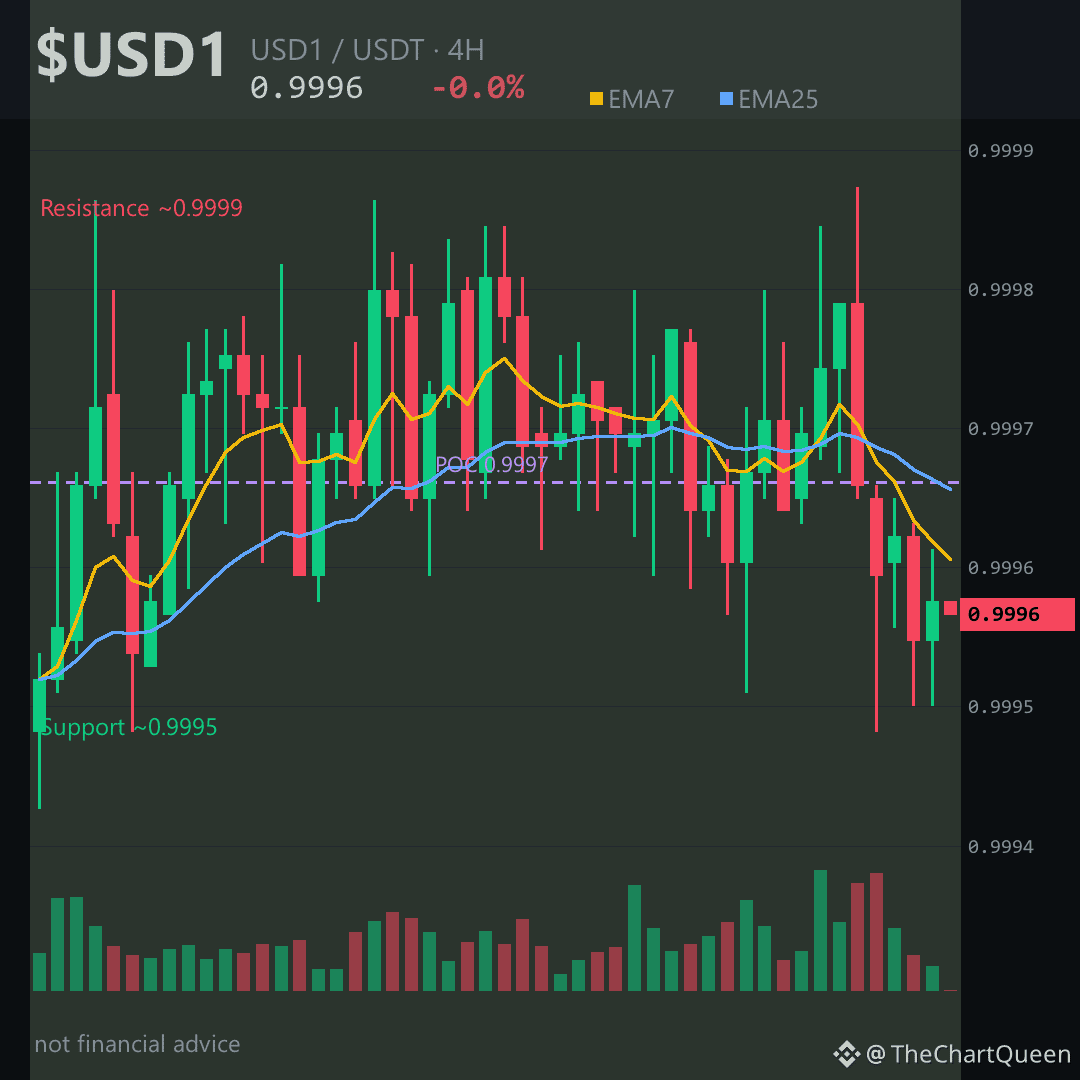
That's not a typo. $USD1 is trading a hair below the psychological magnet of parity, and the chart is whispering something most volume-scan traders will scroll past.
The 4-hour picture is the cleanest read. Price keeps getting rejected just under 0.9997 — the volume profile's point of control. Sellers are defending it. The EMA structure agrees: the faster average is below the slower one, a lean bearish posture, not a coiled spring.
There's also an unmitigated gap around 0.9997. Gaps often act like open windows price wants to revisit before continuing its drift. If that fill happens and gets rejected, the downside objective sits near 0.9775.
The levels that matter for $USD1: the pivot zone is roughly 1.0046, but the real line in the sand is 0.9997. A 4-hour close back above that zone and this bearish read loses its edge. Until then, the path of least resistance appears to be a slow bleed toward 0.9775. Tap $USD1 to pull up the chart and read these levels yourself.
My read: this is not a momentum crash — it's a quiet distribution. The risk isn't a violent dump; it's holding a position expecting volatility that never arrives.
I'll update this read if the 0.9997 area gets reclaimed or the 0.9775 zone gets tagged — follow so that update lands in your feed.
Which zone are you watching more closely on USD1 — the parity reclaim or the lower objective? 👇
⚠️ Not financial advice. DYOR.
#USD1 #Stablecoin #Crypto #BinanceSquare
0.999590.
That's not a typo. $USD1 is trading a hair below the psychological magnet of parity, and the chart is whispering something most volume-scan traders will scroll past.
The 4-hour picture is the cleanest read. Price keeps getting rejected just under 0.9997 — the volume profile's point of control. Sellers are defending it. The EMA structure agrees: the faster average is below the slower one, a lean bearish posture, not a coiled spring.
There's also an unmitigated gap around 0.9997. Gaps often act like open windows price wants to revisit before continuing its drift. If that fill happens and gets rejected, the downside objective sits near 0.9775.
The levels that matter for $USD1 : the pivot zone is roughly 1.0046, but the real line in the sand is 0.9997. A 4-hour close back above that zone and this bearish read loses its edge. Until then, the path of least resistance appears to be a slow bleed toward 0.9775. Tap $USD1 to pull up the chart and read these levels yourself.
My read: this is not a momentum crash — it's a quiet distribution. The risk isn't a violent dump; it's holding a position expecting volatility that never arrives.
I'll update this read if the 0.9997 area gets reclaimed or the 0.9775 zone gets tagged — follow so that update lands in your feed.
Which zone are you watching more closely on USD1 — the parity reclaim or the lower objective? 👇
⚠️ Not financial advice. DYOR.
#USD1 #Stablecoin #Crypto #BinanceSquare
That's not a typo. $USD1 is trading a hair below the psychological magnet of parity, and the chart is whispering something most volume-scan traders will scroll past.
The 4-hour picture is the cleanest read. Price keeps getting rejected just under 0.9997 — the volume profile's point of control. Sellers are defending it. The EMA structure agrees: the faster average is below the slower one, a lean bearish posture, not a coiled spring.
There's also an unmitigated gap around 0.9997. Gaps often act like open windows price wants to revisit before continuing its drift. If that fill happens and gets rejected, the downside objective sits near 0.9775.
The levels that matter for $USD1 : the pivot zone is roughly 1.0046, but the real line in the sand is 0.9997. A 4-hour close back above that zone and this bearish read loses its edge. Until then, the path of least resistance appears to be a slow bleed toward 0.9775. Tap $USD1 to pull up the chart and read these levels yourself.
My read: this is not a momentum crash — it's a quiet distribution. The risk isn't a violent dump; it's holding a position expecting volatility that never arrives.
I'll update this read if the 0.9997 area gets reclaimed or the 0.9775 zone gets tagged — follow so that update lands in your feed.
Which zone are you watching more closely on USD1 — the parity reclaim or the lower objective? 👇
⚠️ Not financial advice. DYOR.
#USD1 #Stablecoin #Crypto #BinanceSquare
57

🚨 HUGE: USDT is coming home to Bitcoin after more than a decade away, and this time it brings tools Bitcoin never had.
Tether-backed Utexo has secured a commercial license to issue USDT natively on Bitcoin, with mainnet launch planned for this month, October 2026.
The backstory makes this genuinely full-circle. USDT's very first tokens were issued on Bitcoin's Omni layer back on October 6, 2014. Over the following decade, the stablecoin's growth shifted almost entirely to Ethereum and Tron instead, chasing faster, cheaper, more programmable rails. Bitcoin got left behind.
Now Utexo, built specifically to bring USDT back, is using the RGB protocol to do what Bitcoin's original infrastructure couldn't: private transfers where transaction details stay off the public ledger, direct BTC-to-USDT swaps with no intermediary, and loans using native Bitcoin as collateral, no wrapping required.
That last part matters more than it sounds. Wrapped Bitcoin, like WBTC, requires trusting a custodian to hold real BTC while you use a synthetic version elsewhere. Native collateral cuts that trust assumption out entirely.
The rollout is staged: Bitcoin mainnet first, with Lightning Network support planned to follow, meaning the full vision, instant, near-free stablecoin settlement directly on Bitcoin rails, arrives in phases rather than all at once.
Tether CEO Paolo Ardoino teased the move on X back in September. Now the infrastructure, and the commercial license to actually run it, is in place.
Twelve years after USDT first launched on Bitcoin and quietly moved on, it's coming back, this time built to stay.
#Bitcoin #USDT #Tether #Crypto #Stablecoin
🚨 HUGE: USDT is coming home to Bitcoin after more than a decade away, and this time it brings tools Bitcoin never had.
Tether-backed Utexo has secured a commercial license to issue USDT natively on Bitcoin, with mainnet launch planned for this month, October 2026.
The backstory makes this genuinely full-circle. USDT's very first tokens were issued on Bitcoin's Omni layer back on October 6, 2014. Over the following decade, the stablecoin's growth shifted almost entirely to Ethereum and Tron instead, chasing faster, cheaper, more programmable rails. Bitcoin got left behind.
Now Utexo, built specifically to bring USDT back, is using the RGB protocol to do what Bitcoin's original infrastructure couldn't: private transfers where transaction details stay off the public ledger, direct BTC-to-USDT swaps with no intermediary, and loans using native Bitcoin as collateral, no wrapping required.
That last part matters more than it sounds. Wrapped Bitcoin, like WBTC, requires trusting a custodian to hold real BTC while you use a synthetic version elsewhere. Native collateral cuts that trust assumption out entirely.
The rollout is staged: Bitcoin mainnet first, with Lightning Network support planned to follow, meaning the full vision, instant, near-free stablecoin settlement directly on Bitcoin rails, arrives in phases rather than all at once.
Tether CEO Paolo Ardoino teased the move on X back in September. Now the infrastructure, and the commercial license to actually run it, is in place.
Twelve years after USDT first launched on Bitcoin and quietly moved on, it's coming back, this time built to stay.
#Bitcoin #USDT #Tether #Crypto #Stablecoin
Tether-backed Utexo has secured a commercial license to issue USDT natively on Bitcoin, with mainnet launch planned for this month, October 2026.
The backstory makes this genuinely full-circle. USDT's very first tokens were issued on Bitcoin's Omni layer back on October 6, 2014. Over the following decade, the stablecoin's growth shifted almost entirely to Ethereum and Tron instead, chasing faster, cheaper, more programmable rails. Bitcoin got left behind.
Now Utexo, built specifically to bring USDT back, is using the RGB protocol to do what Bitcoin's original infrastructure couldn't: private transfers where transaction details stay off the public ledger, direct BTC-to-USDT swaps with no intermediary, and loans using native Bitcoin as collateral, no wrapping required.
That last part matters more than it sounds. Wrapped Bitcoin, like WBTC, requires trusting a custodian to hold real BTC while you use a synthetic version elsewhere. Native collateral cuts that trust assumption out entirely.
The rollout is staged: Bitcoin mainnet first, with Lightning Network support planned to follow, meaning the full vision, instant, near-free stablecoin settlement directly on Bitcoin rails, arrives in phases rather than all at once.
Tether CEO Paolo Ardoino teased the move on X back in September. Now the infrastructure, and the commercial license to actually run it, is in place.
Twelve years after USDT first launched on Bitcoin and quietly moved on, it's coming back, this time built to stay.
#Bitcoin #USDT #Tether #Crypto #Stablecoin


1
48

·
--
North Dakota’s first dollar‑backed stablecoin just went live on Fiserv’s platform.
On October 1, Milwaukee‑based Fiserv announced its digital asset platform is live with financial institutional clients, and Bank of North Dakota’s Roughrider Coin is the first product running on it.
Roughrider Coin settles on Solana and gives more than 90 banks and credit unions in the state a new way to move money between each other via Fiserv’s Commercial Center, the system already used for traditional interbank transfers.
VersaBank will issue the stablecoin and handle custody—including minting, burning and reserve management—while Fireblocks provides tokenization services and transactions are processed on the Solana blockchain.
Fiserv says the platform also supports stablecoin card issuance, cross‑border payments, programmable commerce and treasury automation for banks, corporates, marketplaces and fintechs.
Do you think regulated stablecoins will become mainstream in U.S. banking?
#Stablecoin #FinTech #DigitalPayments #BankingInnovation
North Dakota’s first dollar‑backed stablecoin just went live on Fiserv’s platform.
On October 1, Milwaukee‑based Fiserv announced its digital asset platform is live with financial institutional clients, and Bank of North Dakota’s Roughrider Coin is the first product running on it.
Roughrider Coin settles on Solana and gives more than 90 banks and credit unions in the state a new way to move money between each other via Fiserv’s Commercial Center, the system already used for traditional interbank transfers.
VersaBank will issue the stablecoin and handle custody—including minting, burning and reserve management—while Fireblocks provides tokenization services and transactions are processed on the Solana blockchain.
Fiserv says the platform also supports stablecoin card issuance, cross‑border payments, programmable commerce and treasury automation for banks, corporates, marketplaces and fintechs.
Do you think regulated stablecoins will become mainstream in U.S. banking?
#Stablecoin #FinTech #DigitalPayments #BankingInnovation
On October 1, Milwaukee‑based Fiserv announced its digital asset platform is live with financial institutional clients, and Bank of North Dakota’s Roughrider Coin is the first product running on it.
Roughrider Coin settles on Solana and gives more than 90 banks and credit unions in the state a new way to move money between each other via Fiserv’s Commercial Center, the system already used for traditional interbank transfers.
VersaBank will issue the stablecoin and handle custody—including minting, burning and reserve management—while Fireblocks provides tokenization services and transactions are processed on the Solana blockchain.
Fiserv says the platform also supports stablecoin card issuance, cross‑border payments, programmable commerce and treasury automation for banks, corporates, marketplaces and fintechs.
Do you think regulated stablecoins will become mainstream in U.S. banking?
#Stablecoin #FinTech #DigitalPayments #BankingInnovation

1
29

·
--
💵 Why $USDT Remains Important in Crypto
Stablecoins are one of the most useful parts of the crypto ecosystem.
USDT gives traders a way to move into a dollar-pegged asset without immediately converting back to traditional fiat.
From trading to transfers, stablecoins have become deeply connected to crypto activity.
Do you mainly use USDT for trading, saving value, or transfers?
$BTTC $ZEC
#USDT #Tether #stablecoin #crypto #BinanceSquare
💵 Why $USDT Remains Important in Crypto
Stablecoins are one of the most useful parts of the crypto ecosystem.
USDT gives traders a way to move into a dollar-pegged asset without immediately converting back to traditional fiat.
From trading to transfers, stablecoins have become deeply connected to crypto activity.
Do you mainly use USDT for trading, saving value, or transfers?
$BTTC $ZEC
#USDT #Tether #stablecoin #crypto #BinanceSquare
Stablecoins are one of the most useful parts of the crypto ecosystem.
USDT gives traders a way to move into a dollar-pegged asset without immediately converting back to traditional fiat.
From trading to transfers, stablecoins have become deeply connected to crypto activity.
Do you mainly use USDT for trading, saving value, or transfers?
$BTTC $ZEC
#USDT #Tether #stablecoin #crypto #BinanceSquare
46


·
--
$BTC - USDT launches on Bitcoin amid a rally
BTC reached 86,600 USDT following the latest jobs data release.
Tether's USDT became the first USD‑stablecoin to be issued directly on the Bitcoin network.
The SEC and CFTC released a draft joint framework outlining oversight of crypto assets.
The move could broaden Bitcoin's utility, but regulatory clarity remains pending.
#Stablecoins #Stablecoin
$BTC - USDT launches on Bitcoin amid a rally
BTC reached 86,600 USDT following the latest jobs data release.
Tether's USDT became the first USD‑stablecoin to be issued directly on the Bitcoin network.
The SEC and CFTC released a draft joint framework outlining oversight of crypto assets.
The move could broaden Bitcoin's utility, but regulatory clarity remains pending.
#Stablecoins #Stablecoin
BTC reached 86,600 USDT following the latest jobs data release.
Tether's USDT became the first USD‑stablecoin to be issued directly on the Bitcoin network.
The SEC and CFTC released a draft joint framework outlining oversight of crypto assets.
The move could broaden Bitcoin's utility, but regulatory clarity remains pending.
#Stablecoins #Stablecoin
73

·
--
Bullish
$F 🔥 FUSDT — Is This Stablecoin Worth Watching?
The stablecoin narrative is getting bigger, and FUSDT is starting to attract attention.
But here’s what matters 👇
💎 Utility — Where can FUSDT actually be used?
🌐 Adoption — Is its ecosystem growing?
💧 Liquidity — How active is the market?
🔍 Transparency — What supports the token and its stability?
🚀 Development — What is being built next?
The crypto market moves fast. Narratives come and go — but real utility, liquidity, and transparency are what deserve attention.
👀 FUSDT watchers, what’s your take?
Bullish on the future of stablecoins? Or still waiting for more proof?
👇 Drop your thoughts below.
DYOR. Don’t invest based on hype alone.
#FUSDT #Crypto #stablecoin #BinanceSquare #defi #Web3 #CryptoCommunity $F
$F 🔥 FUSDT — Is This Stablecoin Worth Watching?
The stablecoin narrative is getting bigger, and FUSDT is starting to attract attention.
But here’s what matters 👇
💎 Utility — Where can FUSDT actually be used?
🌐 Adoption — Is its ecosystem growing?
💧 Liquidity — How active is the market?
🔍 Transparency — What supports the token and its stability?
🚀 Development — What is being built next?
The crypto market moves fast. Narratives come and go — but real utility, liquidity, and transparency are what deserve attention.
👀 FUSDT watchers, what’s your take?
Bullish on the future of stablecoins? Or still waiting for more proof?
👇 Drop your thoughts below.
DYOR. Don’t invest based on hype alone.
#FUSDT #Crypto #stablecoin #BinanceSquare #defi #Web3 #CryptoCommunity $F
The stablecoin narrative is getting bigger, and FUSDT is starting to attract attention.
But here’s what matters 👇
💎 Utility — Where can FUSDT actually be used?
🌐 Adoption — Is its ecosystem growing?
💧 Liquidity — How active is the market?
🔍 Transparency — What supports the token and its stability?
🚀 Development — What is being built next?
The crypto market moves fast. Narratives come and go — but real utility, liquidity, and transparency are what deserve attention.
👀 FUSDT watchers, what’s your take?
Bullish on the future of stablecoins? Or still waiting for more proof?
👇 Drop your thoughts below.
DYOR. Don’t invest based on hype alone.
#FUSDT #Crypto #stablecoin #BinanceSquare #defi #Web3 #CryptoCommunity $F
133

·
--
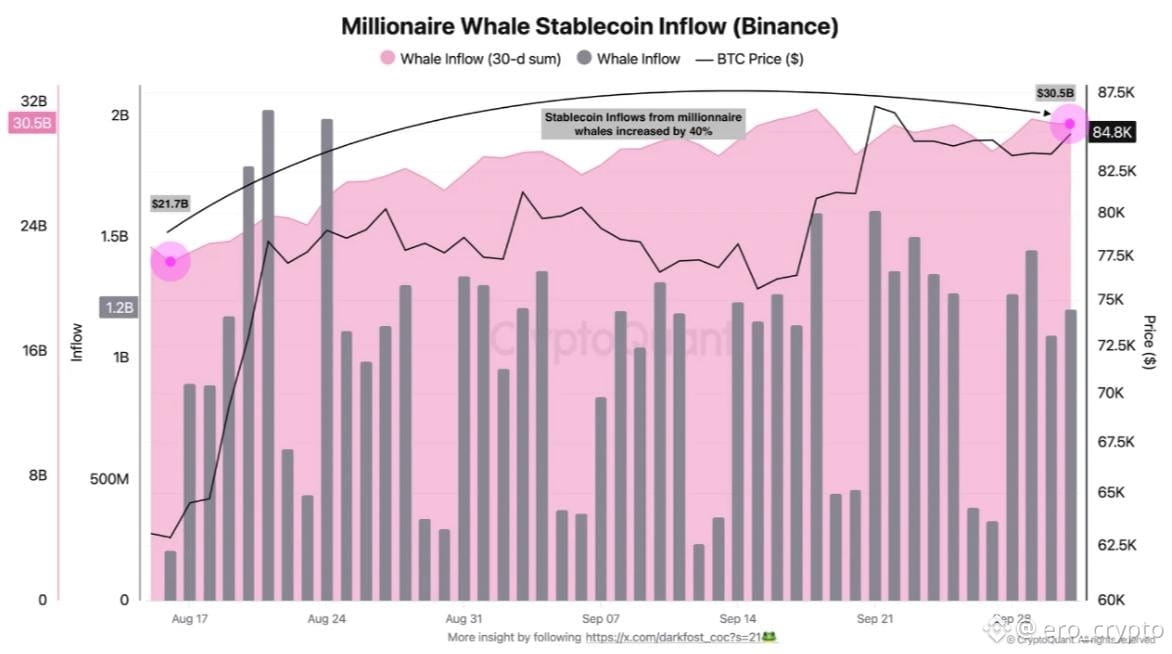
Millionaire Whales ramp up #stablecoin inflows by 40%
On a 30d sum basis, their stablecoin inflows to Binance have risen from $21.7B to $30.5B in a little over a month.
This is huge buying power.
40% increase in 30-day cumulative inflows shows large capital allocators actively depositing liquidity to buy crypto.
Millionaire Whales ramp up #stablecoin inflows by 40%
On a 30d sum basis, their stablecoin inflows to Binance have risen from $21.7B to $30.5B in a little over a month.
This is huge buying power.
40% increase in 30-day cumulative inflows shows large capital allocators actively depositing liquidity to buy crypto.
On a 30d sum basis, their stablecoin inflows to Binance have risen from $21.7B to $30.5B in a little over a month.
This is huge buying power.
40% increase in 30-day cumulative inflows shows large capital allocators actively depositing liquidity to buy crypto.
1
211

*#TreasuryLetsStatesFileStablecoinCertificationsEarly*
Big move for US crypto regulation 🇺🇸
The US Treasury issued an interim final rule on Sept 30 letting states *file for stablecoin certification early*, even if their local rules aren't finished yet.
Why it matters:
- Under the GENIUS Act, issuers under $10B can opt for *state regulation* if the state regime is certified as "substantially similar" to federal standards
- States can now submit conditional/incomplete certifications by Jan 18, 2028 to preserve their path, then finish legislation before substantive review
- Reviewed by the new Stablecoin Certification Review Committee (Treasury, Fed, FDIC - unanimous approval needed)
This accelerates the dual-track system and could spark state-level experimentation while federal standards finalize.
Comments open until Nov 30, 2026.
Bullish for regulated stablecoin innovation in the US?
#stablecoin #GENIUSAct #*#TreasuryLetsStatesFileStablecoinCertificationsEarly
*#TreasuryLetsStatesFileStablecoinCertificationsEarly*
Big move for US crypto regulation 🇺🇸
The US Treasury issued an interim final rule on Sept 30 letting states *file for stablecoin certification early*, even if their local rules aren't finished yet.
Why it matters:
- Under the GENIUS Act, issuers under $10B can opt for *state regulation* if the state regime is certified as "substantially similar" to federal standards
- States can now submit conditional/incomplete certifications by Jan 18, 2028 to preserve their path, then finish legislation before substantive review
- Reviewed by the new Stablecoin Certification Review Committee (Treasury, Fed, FDIC - unanimous approval needed)
This accelerates the dual-track system and could spark state-level experimentation while federal standards finalize.
Comments open until Nov 30, 2026.
Bullish for regulated stablecoin innovation in the US?
#stablecoin #GENIUSAct #*#TreasuryLetsStatesFileStablecoinCertificationsEarly
Big move for US crypto regulation 🇺🇸
The US Treasury issued an interim final rule on Sept 30 letting states *file for stablecoin certification early*, even if their local rules aren't finished yet.
Why it matters:
- Under the GENIUS Act, issuers under $10B can opt for *state regulation* if the state regime is certified as "substantially similar" to federal standards
- States can now submit conditional/incomplete certifications by Jan 18, 2028 to preserve their path, then finish legislation before substantive review
- Reviewed by the new Stablecoin Certification Review Committee (Treasury, Fed, FDIC - unanimous approval needed)
This accelerates the dual-track system and could spark state-level experimentation while federal standards finalize.
Comments open until Nov 30, 2026.
Bullish for regulated stablecoin innovation in the US?
#stablecoin #GENIUSAct #*#TreasuryLetsStatesFileStablecoinCertificationsEarly
62

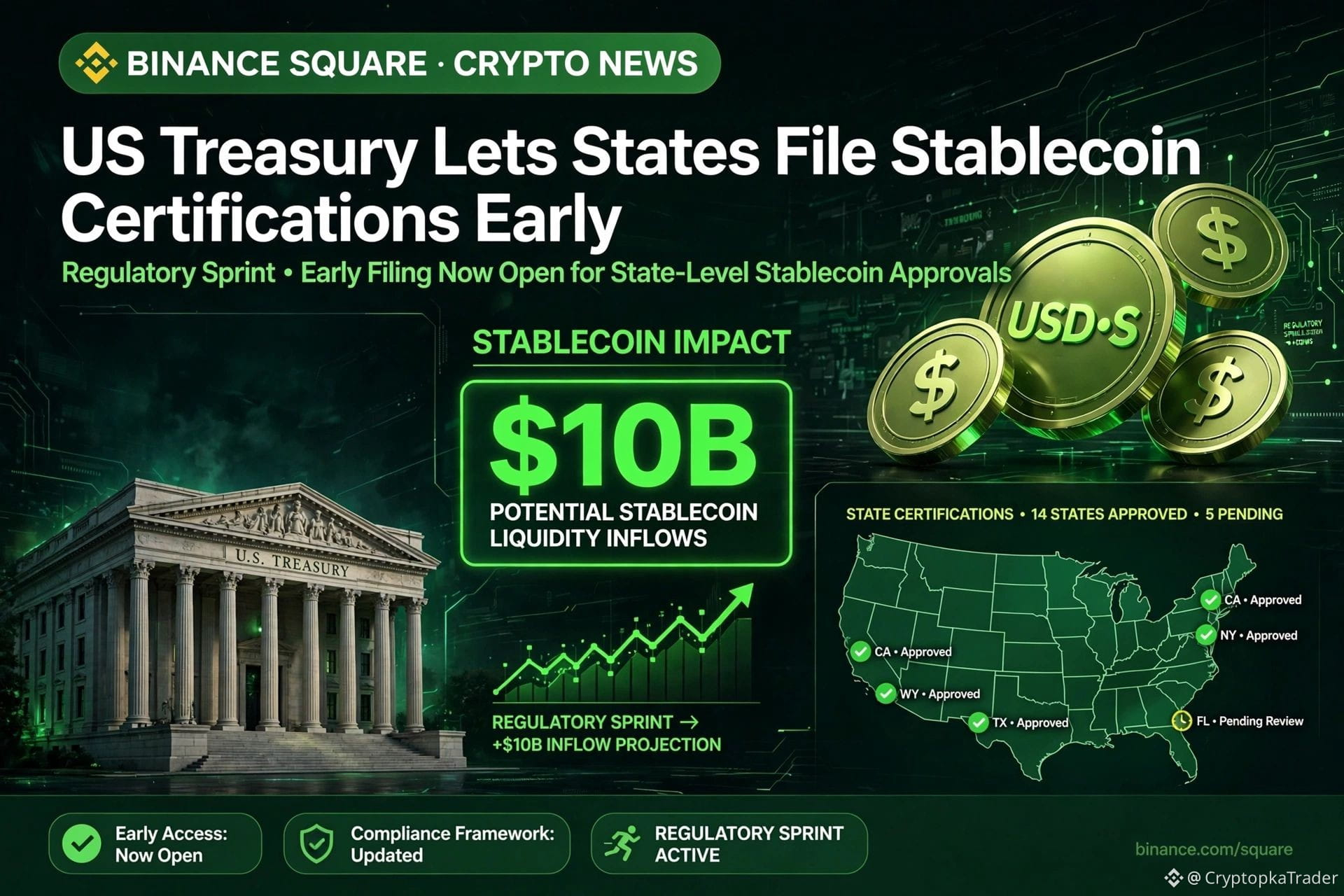
#TreasuryLetsStatesFileStablecoinCertificationsEarl 🚨 THE $10B STABLECOIN LINE IS NOW REAL!
U.S. Treasury opens early filing for state-level stablecoin certifications! 🏦
💰 $10B potential stablecoin liquidity inflow
📜 State certifications now open early
⚡ Regulatory sprint active - 14 states approved
This is HUGE for USDC USTD adoption in US!
States like CA, NY, TX, WY already approved ✅
Bullish for crypto regulation? 👇
$BTC $ETH
#Stablecoin #USATreasury
#TreasuryLetsStatesFileStablecoinCertificationsEarl 🚨 THE $10B STABLECOIN LINE IS NOW REAL!
U.S. Treasury opens early filing for state-level stablecoin certifications! 🏦
💰 $10B potential stablecoin liquidity inflow
📜 State certifications now open early
⚡ Regulatory sprint active - 14 states approved
This is HUGE for USDC USTD adoption in US!
States like CA, NY, TX, WY already approved ✅
Bullish for crypto regulation? 👇
$BTC $ETH
#Stablecoin #USATreasury
U.S. Treasury opens early filing for state-level stablecoin certifications! 🏦
💰 $10B potential stablecoin liquidity inflow
📜 State certifications now open early
⚡ Regulatory sprint active - 14 states approved
This is HUGE for USDC USTD adoption in US!
States like CA, NY, TX, WY already approved ✅
Bullish for crypto regulation? 👇
$BTC $ETH
#Stablecoin #USATreasury
32
·
--
$USDC is one of the major dollar-pegged stablecoins in the crypto market.
As stablecoin adoption grows, competition between major issuers could become increasingly important for the future of on-chain finance. 🌐
Which stablecoin do you use more — USDC or USDT?
#USDC #Stablecoin #Crypto #Binance #defi
$USDC is one of the major dollar-pegged stablecoins in the crypto market.
As stablecoin adoption grows, competition between major issuers could become increasingly important for the future of on-chain finance. 🌐
Which stablecoin do you use more — USDC or USDT?
#USDC #Stablecoin #Crypto #Binance #defi
As stablecoin adoption grows, competition between major issuers could become increasingly important for the future of on-chain finance. 🌐
Which stablecoin do you use more — USDC or USDT?
#USDC #Stablecoin #Crypto #Binance #defi
6
·
--
$USD1 remains one of the most widely used stablecoins in crypto, mainly because traders use it to move between positions and keep funds in a dollar-pegged asset.
Stablecoins are becoming an important part of crypto liquidity. 💵
Do you prefer holding USDT or USDC? 👇
#USDT #Tether #Stablecoin #Binance #crypto
$USD1 remains one of the most widely used stablecoins in crypto, mainly because traders use it to move between positions and keep funds in a dollar-pegged asset.
Stablecoins are becoming an important part of crypto liquidity. 💵
Do you prefer holding USDT or USDC? 👇
#USDT #Tether #Stablecoin #Binance #crypto
Stablecoins are becoming an important part of crypto liquidity. 💵
Do you prefer holding USDT or USDC? 👇
#USDT #Tether #Stablecoin #Binance #crypto
29

·
--
🚨 TREASURY MOVES ON STATE STABLECOIN CERTIFICATION 🇺🇸
A major regulatory step for U.S. stablecoins is taking shape. 🔥
The U.S. Treasury has issued an interim final rule establishing the process for State Stablecoin Certification under the GENIUS Act.
🏛️ WHAT JUST HAPPENED?
• 📜 Treasury published the certification procedures on Sept. 30, 2026
• 🏦 State stablecoin regulators can seek approval of their regulatory frameworks
• ⚖️ The framework must meet Treasury’s standards for substantial similarity
• 🔄 Approved state regimes can provide a regulatory pathway for qualifying stablecoin issuers
• 💰 State-regulated issuers are generally limited to $10B or less in consolidated outstanding stablecoins
• 📋 Initial and annual recertification procedures are being established
⏳ IMPORTANT: The rule is effective now, but Treasury says certifications will be accepted only after Paperwork Reduction Act approval.
🔥 WHY IT MATTERS
This creates a clearer bridge between state-level stablecoin regulation and the federal framework.
For crypto markets, the bigger story is the continued move toward formal rules around dollar-backed stablecoins, issuers, reserves, supervision and compliance.
👀 WATCH NEXT:
• State certification submissions
• Treasury approvals
• Stablecoin issuer licensing
• Federal implementation of the GENIUS Act
• Growth of regulated dollar-backed digital assets
📌 The stablecoin regulatory race is entering a new phase.
⚠️ Not financial advice. Do your own research and manage risk.
#stablecoin #crypto #USDT #USDC #GENIUSAct
🚨 TREASURY MOVES ON STATE STABLECOIN CERTIFICATION 🇺🇸
A major regulatory step for U.S. stablecoins is taking shape. 🔥
The U.S. Treasury has issued an interim final rule establishing the process for State Stablecoin Certification under the GENIUS Act.
🏛️ WHAT JUST HAPPENED?
• 📜 Treasury published the certification procedures on Sept. 30, 2026
• 🏦 State stablecoin regulators can seek approval of their regulatory frameworks
• ⚖️ The framework must meet Treasury’s standards for substantial similarity
• 🔄 Approved state regimes can provide a regulatory pathway for qualifying stablecoin issuers
• 💰 State-regulated issuers are generally limited to $10B or less in consolidated outstanding stablecoins
• 📋 Initial and annual recertification procedures are being established
⏳ IMPORTANT: The rule is effective now, but Treasury says certifications will be accepted only after Paperwork Reduction Act approval.
🔥 WHY IT MATTERS
This creates a clearer bridge between state-level stablecoin regulation and the federal framework.
For crypto markets, the bigger story is the continued move toward formal rules around dollar-backed stablecoins, issuers, reserves, supervision and compliance.
👀 WATCH NEXT:
• State certification submissions
• Treasury approvals
• Stablecoin issuer licensing
• Federal implementation of the GENIUS Act
• Growth of regulated dollar-backed digital assets
📌 The stablecoin regulatory race is entering a new phase.
⚠️ Not financial advice. Do your own research and manage risk.
#stablecoin #crypto #USDT #USDC #GENIUSAct
A major regulatory step for U.S. stablecoins is taking shape. 🔥
The U.S. Treasury has issued an interim final rule establishing the process for State Stablecoin Certification under the GENIUS Act.
🏛️ WHAT JUST HAPPENED?
• 📜 Treasury published the certification procedures on Sept. 30, 2026
• 🏦 State stablecoin regulators can seek approval of their regulatory frameworks
• ⚖️ The framework must meet Treasury’s standards for substantial similarity
• 🔄 Approved state regimes can provide a regulatory pathway for qualifying stablecoin issuers
• 💰 State-regulated issuers are generally limited to $10B or less in consolidated outstanding stablecoins
• 📋 Initial and annual recertification procedures are being established
⏳ IMPORTANT: The rule is effective now, but Treasury says certifications will be accepted only after Paperwork Reduction Act approval.
🔥 WHY IT MATTERS
This creates a clearer bridge between state-level stablecoin regulation and the federal framework.
For crypto markets, the bigger story is the continued move toward formal rules around dollar-backed stablecoins, issuers, reserves, supervision and compliance.
👀 WATCH NEXT:
• State certification submissions
• Treasury approvals
• Stablecoin issuer licensing
• Federal implementation of the GENIUS Act
• Growth of regulated dollar-backed digital assets
📌 The stablecoin regulatory race is entering a new phase.
⚠️ Not financial advice. Do your own research and manage risk.
#stablecoin #crypto #USDT #USDC #GENIUSAct

2
5

·
--
Verified
📰 Bloomberg Launches Stablecoin Dashboard on the Terminal
Source : Blockchainreporter
description: Bloomberg's new Terminal dashboard delivers hourly stablecoin supply, mint, burn, transfer and velocity data from Allium, covering more than 98% of the market.
Time : 2026-10-01 02:00:00
Credit : jide idowu
Link : https://blockchainreporter.net/bloomberg-launches-stablecoin-dashboard-on-terminal/
#usdc #crypto_adoption #usdt #stablecoin
$CORE $BTC
📰 Bloomberg Launches Stablecoin Dashboard on the Terminal
Source : Blockchainreporter
description: Bloomberg's new Terminal dashboard delivers hourly stablecoin supply, mint, burn, transfer and velocity data from Allium, covering more than 98% of the market.
Time : 2026-10-01 02:00:00
Credit : jide idowu
Link : https://blockchainreporter.net/bloomberg-launches-stablecoin-dashboard-on-terminal/
#usdc #crypto_adoption #usdt #stablecoin
$CORE $BTC
Source : Blockchainreporter
description: Bloomberg's new Terminal dashboard delivers hourly stablecoin supply, mint, burn, transfer and velocity data from Allium, covering more than 98% of the market.
Time : 2026-10-01 02:00:00
Credit : jide idowu
Link : https://blockchainreporter.net/bloomberg-launches-stablecoin-dashboard-on-terminal/
#usdc #crypto_adoption #usdt #stablecoin
$CORE $BTC
16

·
--
Bullish
From Verified Facts to Stable Settlement
verUSD makes more sense when viewed as part of @verona_dev , not as a standalone stablecoin.
Verona has spent the last few months building around one core idea, AI agents need more than access to information. They need verified facts they can actually rely on before making decisions. Through Verona’s verification infrastructure, internet data can be turned into something provable, reusable, and usable by agents without exposing the underlying raw data.
But knowing what is true is only half of the problem.
Once an agent has enough verified context to act, it still needs a way to pay for data, services, APIs, or other transactions. Traditional payment systems were built around humans opening bank accounts, using cards, and moving through checkout flows. Software operating autonomously, potentially making thousands of small payments, needs something different.
$verUSD Launched
verUSD is Verona $USD, the dollar of the Verona network. It gives agents a stable settlement unit that can sit directly behind the actions they take. Verona verifies the information, verUSD gives the agent a way to pay once that information leads to a decision.
The launch already comes with $100M+ in institutional commitments, including more than $60M in signed, contracted revenue expected to move through verUSD as payments. That matters because verUSD is not starting from zero and then searching for a use case. Payment activity already exists around Verona, and now that activity has a settlement asset designed specifically for it.
The relationship becomes much easier to see when the pieces are placed together
Verified facts ~~> agent decision ~~> verifiable action ~~> stable settlement.
Truth Engine handles the truth layer. Verona’s infrastructure supports the action that follows. And verUSD adds money to the same flow.
So the bigger story here is not simply that Verona launched another stablecoin.
It is that truth, action, and money are beginning to live inside the same agent-native system.
#stablecoin
From Verified Facts to Stable Settlement
verUSD makes more sense when viewed as part of @verona_dev , not as a standalone stablecoin.
Verona has spent the last few months building around one core idea, AI agents need more than access to information. They need verified facts they can actually rely on before making decisions. Through Verona’s verification infrastructure, internet data can be turned into something provable, reusable, and usable by agents without exposing the underlying raw data.
But knowing what is true is only half of the problem.
Once an agent has enough verified context to act, it still needs a way to pay for data, services, APIs, or other transactions. Traditional payment systems were built around humans opening bank accounts, using cards, and moving through checkout flows. Software operating autonomously, potentially making thousands of small payments, needs something different.
$verUSD Launched
verUSD is Verona $USD, the dollar of the Verona network. It gives agents a stable settlement unit that can sit directly behind the actions they take. Verona verifies the information, verUSD gives the agent a way to pay once that information leads to a decision.
The launch already comes with $100M+ in institutional commitments, including more than $60M in signed, contracted revenue expected to move through verUSD as payments. That matters because verUSD is not starting from zero and then searching for a use case. Payment activity already exists around Verona, and now that activity has a settlement asset designed specifically for it.
The relationship becomes much easier to see when the pieces are placed together
Verified facts ~~> agent decision ~~> verifiable action ~~> stable settlement.
Truth Engine handles the truth layer. Verona’s infrastructure supports the action that follows. And verUSD adds money to the same flow.
So the bigger story here is not simply that Verona launched another stablecoin.
It is that truth, action, and money are beginning to live inside the same agent-native system.
#stablecoin
verUSD makes more sense when viewed as part of @verona_dev , not as a standalone stablecoin.
Verona has spent the last few months building around one core idea, AI agents need more than access to information. They need verified facts they can actually rely on before making decisions. Through Verona’s verification infrastructure, internet data can be turned into something provable, reusable, and usable by agents without exposing the underlying raw data.
But knowing what is true is only half of the problem.
Once an agent has enough verified context to act, it still needs a way to pay for data, services, APIs, or other transactions. Traditional payment systems were built around humans opening bank accounts, using cards, and moving through checkout flows. Software operating autonomously, potentially making thousands of small payments, needs something different.
$verUSD Launched
verUSD is Verona $USD, the dollar of the Verona network. It gives agents a stable settlement unit that can sit directly behind the actions they take. Verona verifies the information, verUSD gives the agent a way to pay once that information leads to a decision.
The launch already comes with $100M+ in institutional commitments, including more than $60M in signed, contracted revenue expected to move through verUSD as payments. That matters because verUSD is not starting from zero and then searching for a use case. Payment activity already exists around Verona, and now that activity has a settlement asset designed specifically for it.
The relationship becomes much easier to see when the pieces are placed together
Verified facts ~~> agent decision ~~> verifiable action ~~> stable settlement.
Truth Engine handles the truth layer. Verona’s infrastructure supports the action that follows. And verUSD adds money to the same flow.
So the bigger story here is not simply that Verona launched another stablecoin.
It is that truth, action, and money are beginning to live inside the same agent-native system.
#stablecoin
82
·
--
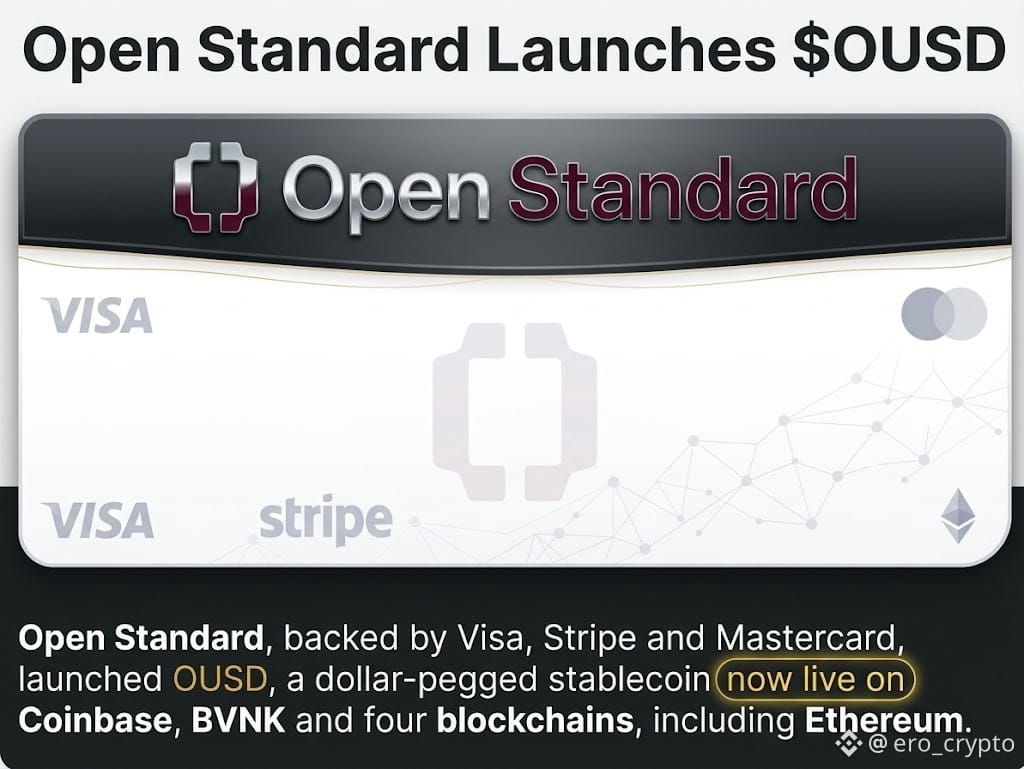
🚨 Open Standard Launches $OUSD #Stablecoin
Open Standard has launched OUSD, a dollar-pegged stablecoin backed by major players including #VİSA , #stripe , and #Mastercard .
OUSD is already live on #Coinbase , BVNK, and four blockchains, including $ETH and $SOL .
Open Standard, Visa, Stripe, Mastercard, and Shopify have committed to minting approximately $1 billion worth of OUSD to bootstrap liquidity.
Stablecoin adoption continues to expand deeper into traditional payments and financial infrastructure
🚨 Open Standard Launches $OUSD #Stablecoin
Open Standard has launched OUSD, a dollar-pegged stablecoin backed by major players including #VİSA , #stripe , and #Mastercard .
OUSD is already live on #Coinbase , BVNK, and four blockchains, including $ETH and $SOL .
Open Standard, Visa, Stripe, Mastercard, and Shopify have committed to minting approximately $1 billion worth of OUSD to bootstrap liquidity.
Stablecoin adoption continues to expand deeper into traditional payments and financial infrastructure
Open Standard has launched OUSD, a dollar-pegged stablecoin backed by major players including #VİSA , #stripe , and #Mastercard .
OUSD is already live on #Coinbase , BVNK, and four blockchains, including $ETH and $SOL .
Open Standard, Visa, Stripe, Mastercard, and Shopify have committed to minting approximately $1 billion worth of OUSD to bootstrap liquidity.
Stablecoin adoption continues to expand deeper into traditional payments and financial infrastructure
373

🌐 Market signals: TRON officially dominates the stablecoin segment with over $94 billion in USDT circulating on the network
*Details:*
📈 Price: $0.3344 (+0.15%)
📊 24h Volume: ~ $410 million
💰 Market Cap: $31.75 billion
🛡️ TVL: ~ $28 billion
💵 USDT TRC20: >$94 billion
*Looking further ahead:*
- TRON is no longer just a blockchain—it has become a true “settlement layer” for the world. Holding the largest amount of USDT in the market gives TRX an absolute advantage in liquidity and real-world utility.
- The steady growth of TVL and the number of user accounts (exceeding 405 million) shows that the TRON ecosystem is expanding sustainably, not depending on short-term hype.
Do you think TRX will soon break the previous all-time high, or continue trading sideways and accumulating?
👉 Where’s the alpha? Right here — Follow [Channel](https://app.binance.com/uni-qr/cpro/Square-Creator-4a0f2008149d?l=en&r=BOZMO8A1)
#TRX #TRON #Stablecoin #BinanceSquare $HYPE
🌐 Market signals: TRON officially dominates the stablecoin segment with over $94 billion in USDT circulating on the network
*Details:*
📈 Price: $0.3344 (+0.15%)
📊 24h Volume: ~ $410 million
💰 Market Cap: $31.75 billion
🛡️ TVL: ~ $28 billion
💵 USDT TRC20: >$94 billion
*Looking further ahead:*
- TRON is no longer just a blockchain—it has become a true “settlement layer” for the world. Holding the largest amount of USDT in the market gives TRX an absolute advantage in liquidity and real-world utility.
- The steady growth of TVL and the number of user accounts (exceeding 405 million) shows that the TRON ecosystem is expanding sustainably, not depending on short-term hype.
Do you think TRX will soon break the previous all-time high, or continue trading sideways and accumulating?
👉 Where’s the alpha? Right here — Follow [Channel](https://app.binance.com/uni-qr/cpro/Square-Creator-4a0f2008149d?l=en&r=BOZMO8A1)
#TRX #TRON #Stablecoin #BinanceSquare $HYPE
*Details:*
📈 Price: $0.3344 (+0.15%)
📊 24h Volume: ~ $410 million
💰 Market Cap: $31.75 billion
🛡️ TVL: ~ $28 billion
💵 USDT TRC20: >$94 billion
*Looking further ahead:*
- TRON is no longer just a blockchain—it has become a true “settlement layer” for the world. Holding the largest amount of USDT in the market gives TRX an absolute advantage in liquidity and real-world utility.
- The steady growth of TVL and the number of user accounts (exceeding 405 million) shows that the TRON ecosystem is expanding sustainably, not depending on short-term hype.
Do you think TRX will soon break the previous all-time high, or continue trading sideways and accumulating?
👉 Where’s the alpha? Right here — Follow [Channel](https://app.binance.com/uni-qr/cpro/Square-Creator-4a0f2008149d?l=en&r=BOZMO8A1)
#TRX #TRON #Stablecoin #BinanceSquare $HYPE
1
54

·
--
🚀 TRON affirms its position as the “king” of stablecoins as the amount of USDT circulating on the official network surpasses the $9.4 billion mark.
*Updated figures:*
📉 Current price: 0.3344 USD (+0.15%)
📈 24h trading volume: ~410 million USD
💎 Market capitalization: 31.75 billion USD
🔒 TVL: ~28 billion USD
💵 USDT (TRC20): >94 billion USD
*Quick analysis:*
Rather than being just a typical blockchain, TRON is now functioning like global payment infrastructure. Controlling such a massive amount of USDT gives TRX a clear advantage in real-world utility and liquidity. Especially with more than 405 million user accounts and a steadily growing TVL, this ecosystem is demonstrating sustainable development rather than chasing temporary hype waves.
What do you think—will TRX continue accumulating, or will it soon break out to reach new highs?
👉 Don’t miss out — Follow [Channel](https://app.binance.com/uni-qr/cpro/Square-Creator-4a0f2008149d?l=en&r=BOZMO8A1)
#TRX #TRON #Stablecoin #BinanceSquare $HYPE
🚀 TRON affirms its position as the “king” of stablecoins as the amount of USDT circulating on the official network surpasses the $9.4 billion mark.
*Updated figures:*
📉 Current price: 0.3344 USD (+0.15%)
📈 24h trading volume: ~410 million USD
💎 Market capitalization: 31.75 billion USD
🔒 TVL: ~28 billion USD
💵 USDT (TRC20): >94 billion USD
*Quick analysis:*
Rather than being just a typical blockchain, TRON is now functioning like global payment infrastructure. Controlling such a massive amount of USDT gives TRX a clear advantage in real-world utility and liquidity. Especially with more than 405 million user accounts and a steadily growing TVL, this ecosystem is demonstrating sustainable development rather than chasing temporary hype waves.
What do you think—will TRX continue accumulating, or will it soon break out to reach new highs?
👉 Don’t miss out — Follow [Channel](https://app.binance.com/uni-qr/cpro/Square-Creator-4a0f2008149d?l=en&r=BOZMO8A1)
#TRX #TRON #Stablecoin #BinanceSquare $HYPE
*Updated figures:*
📉 Current price: 0.3344 USD (+0.15%)
📈 24h trading volume: ~410 million USD
💎 Market capitalization: 31.75 billion USD
🔒 TVL: ~28 billion USD
💵 USDT (TRC20): >94 billion USD
*Quick analysis:*
Rather than being just a typical blockchain, TRON is now functioning like global payment infrastructure. Controlling such a massive amount of USDT gives TRX a clear advantage in real-world utility and liquidity. Especially with more than 405 million user accounts and a steadily growing TVL, this ecosystem is demonstrating sustainable development rather than chasing temporary hype waves.
What do you think—will TRX continue accumulating, or will it soon break out to reach new highs?
👉 Don’t miss out — Follow [Channel](https://app.binance.com/uni-qr/cpro/Square-Creator-4a0f2008149d?l=en&r=BOZMO8A1)
#TRX #TRON #Stablecoin #BinanceSquare $HYPE
68

·
--
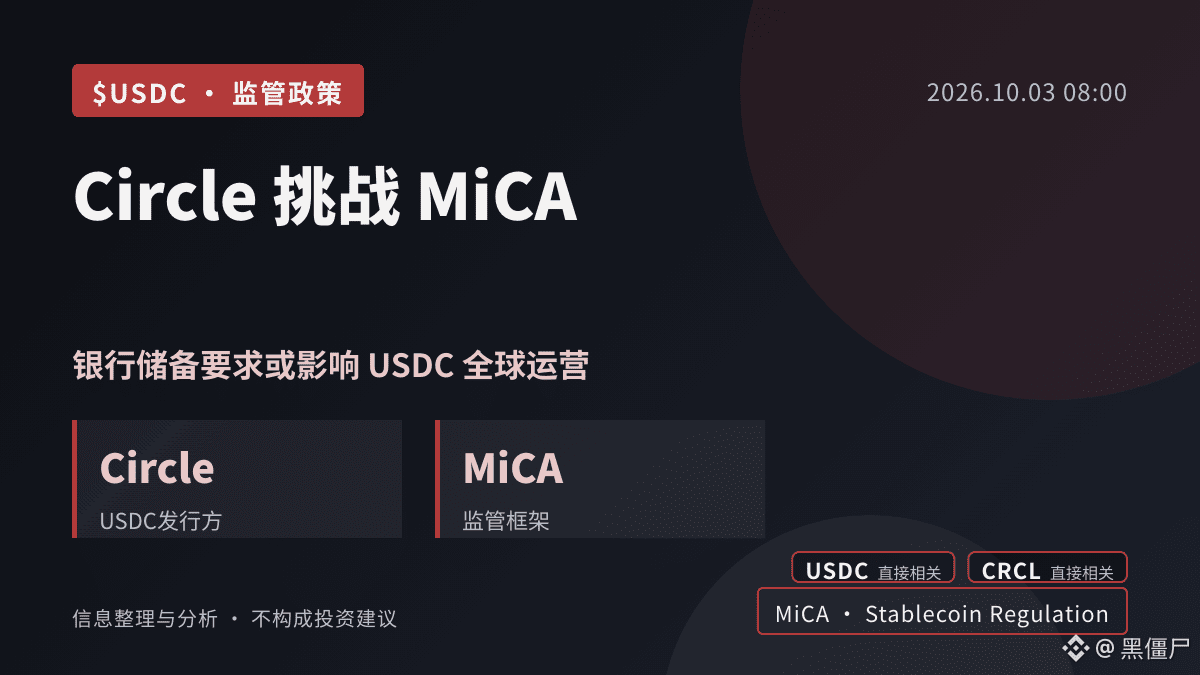
Circle pressures the EU, asking for a relaxation of MiCA’s bank reserve requirements
Circle has formally submitted to the European Commission a proposal regarding MiCA’s mandatory bank deposit requirements for stablecoin reserves and the cap on concentration. Circle believes these measures could limit the operational flexibility of one of the world’s largest stablecoins. According to a report by Decrypt, Circle argues that the current rules impose constraints on widely issued stablecoins such as USDC. According to a report by Cointelegraph, Circle hopes that during the EU’s MiCA review, it will replace the mandatory minimum bank deposit requirement with more flexible liquidity rules, while preserving cross-border liquidity arrangements.
The significance lies in the fact that MiCA is not only an EU-local rule, but an important reference point for stablecoin regulation worldwide. The reserve structure, issuance cadence, and cross-border usage of USDC will all be affected by EU rules. If the EU maintains a relatively high proportion of bank deposits, Circle’s freedom in reserve management may decrease, which in turn could affect USDC’s liquidity arrangements and the timing of institutional adoption.
From a market perspective, $USDC , as a directly impacted asset, will have its reserve structure and the issuer’s operational efficiency influenced by the regulatory outcome. $CRCL , as Circle’s publicly listed entity, will also face fluctuations in valuation and business expectations as MiCA amendments progress. Both directions are possible toward a mixed outcome: if the EU relaxes the rules, operational flexibility increases; if it keeps them strict, compliance costs and liquidity constraints rise.
The risk is that, for financial stability reasons, the EU may insist on higher minimum bank deposit requirements, and even strengthen the concentration cap. This would limit the flexibility of USDC reserves, and cross-border flows and the timing of institutional adoption could also slow down. The escalation of regulatory negotiations itself will also increase market uncertainty.
Next, it is important to watch the European Commission’s response to Circle’s proposal, as well as whether any alternative liquidity rules emerge during the MiCA review. If you are paying attention to USDC, in the short term it is more worth monitoring whether EU regulatory signals are clear, rather than prematurely betting on a direction.
$USDC $CRCL #USDC #MiCA #Stablecoin
The above is an information summary and personal analysis, and does not constitute investment advice.
Circle pressures the EU, asking for a relaxation of MiCA’s bank reserve requirements
Circle has formally submitted to the European Commission a proposal regarding MiCA’s mandatory bank deposit requirements for stablecoin reserves and the cap on concentration. Circle believes these measures could limit the operational flexibility of one of the world’s largest stablecoins. According to a report by Decrypt, Circle argues that the current rules impose constraints on widely issued stablecoins such as USDC. According to a report by Cointelegraph, Circle hopes that during the EU’s MiCA review, it will replace the mandatory minimum bank deposit requirement with more flexible liquidity rules, while preserving cross-border liquidity arrangements.
The significance lies in the fact that MiCA is not only an EU-local rule, but an important reference point for stablecoin regulation worldwide. The reserve structure, issuance cadence, and cross-border usage of USDC will all be affected by EU rules. If the EU maintains a relatively high proportion of bank deposits, Circle’s freedom in reserve management may decrease, which in turn could affect USDC’s liquidity arrangements and the timing of institutional adoption.
From a market perspective, $USDC , as a directly impacted asset, will have its reserve structure and the issuer’s operational efficiency influenced by the regulatory outcome. $CRCL , as Circle’s publicly listed entity, will also face fluctuations in valuation and business expectations as MiCA amendments progress. Both directions are possible toward a mixed outcome: if the EU relaxes the rules, operational flexibility increases; if it keeps them strict, compliance costs and liquidity constraints rise.
The risk is that, for financial stability reasons, the EU may insist on higher minimum bank deposit requirements, and even strengthen the concentration cap. This would limit the flexibility of USDC reserves, and cross-border flows and the timing of institutional adoption could also slow down. The escalation of regulatory negotiations itself will also increase market uncertainty.
Next, it is important to watch the European Commission’s response to Circle’s proposal, as well as whether any alternative liquidity rules emerge during the MiCA review. If you are paying attention to USDC, in the short term it is more worth monitoring whether EU regulatory signals are clear, rather than prematurely betting on a direction.
$USDC $CRCL #USDC #MiCA #Stablecoin
The above is an information summary and personal analysis, and does not constitute investment advice.
Circle has formally submitted to the European Commission a proposal regarding MiCA’s mandatory bank deposit requirements for stablecoin reserves and the cap on concentration. Circle believes these measures could limit the operational flexibility of one of the world’s largest stablecoins. According to a report by Decrypt, Circle argues that the current rules impose constraints on widely issued stablecoins such as USDC. According to a report by Cointelegraph, Circle hopes that during the EU’s MiCA review, it will replace the mandatory minimum bank deposit requirement with more flexible liquidity rules, while preserving cross-border liquidity arrangements.
The significance lies in the fact that MiCA is not only an EU-local rule, but an important reference point for stablecoin regulation worldwide. The reserve structure, issuance cadence, and cross-border usage of USDC will all be affected by EU rules. If the EU maintains a relatively high proportion of bank deposits, Circle’s freedom in reserve management may decrease, which in turn could affect USDC’s liquidity arrangements and the timing of institutional adoption.
From a market perspective, $USDC , as a directly impacted asset, will have its reserve structure and the issuer’s operational efficiency influenced by the regulatory outcome. $CRCL , as Circle’s publicly listed entity, will also face fluctuations in valuation and business expectations as MiCA amendments progress. Both directions are possible toward a mixed outcome: if the EU relaxes the rules, operational flexibility increases; if it keeps them strict, compliance costs and liquidity constraints rise.
The risk is that, for financial stability reasons, the EU may insist on higher minimum bank deposit requirements, and even strengthen the concentration cap. This would limit the flexibility of USDC reserves, and cross-border flows and the timing of institutional adoption could also slow down. The escalation of regulatory negotiations itself will also increase market uncertainty.
Next, it is important to watch the European Commission’s response to Circle’s proposal, as well as whether any alternative liquidity rules emerge during the MiCA review. If you are paying attention to USDC, in the short term it is more worth monitoring whether EU regulatory signals are clear, rather than prematurely betting on a direction.
$USDC $CRCL #USDC #MiCA #Stablecoin
The above is an information summary and personal analysis, and does not constitute investment advice.
211

EU issuer: Stablecoin Euro is not enough; USD token is needed
- A European issuer says the need for USD stablecoins cannot be ignored
- Businesses seek USD liquidity for payments and global settlements
- A single Euro stablecoin cannot meet market requirements
#BinanceSquare #CryptoNews #Stablecoin #EU #USD
$btc $eth
vlikevn Titanbot
Source: CoinTelegraph
EU issuer: Stablecoin Euro is not enough; USD token is needed
- A European issuer says the need for USD stablecoins cannot be ignored
- Businesses seek USD liquidity for payments and global settlements
- A single Euro stablecoin cannot meet market requirements
#BinanceSquare #CryptoNews #Stablecoin #EU #USD
$btc $eth
vlikevn Titanbot
Source: CoinTelegraph
- A European issuer says the need for USD stablecoins cannot be ignored
- Businesses seek USD liquidity for payments and global settlements
- A single Euro stablecoin cannot meet market requirements
#BinanceSquare #CryptoNews #Stablecoin #EU #USD
$btc $eth
vlikevn Titanbot
Source: CoinTelegraph
126
Log in to explore more content
Join global crypto users on Binance Square
⚡️ Get latest and useful information about crypto.
💬 Trusted by the world’s largest crypto exchange.
👍 Discover real insights from verified creators.
Email / Phone number
Trending Topics
1
#SECHaltsCryptoETFReviewsAmidFundingLapse
3,015 views
113 Discussing
2
#ZcashETFPostsFirstWeeklyOutflow$93.6M
55,837 views
167 Discussing
3
#GreekPoliceBustCryptoScamRingArrest17
163,475 views
1,147 Discussing
4
#BitcoinRejectedAt$87K
156,231 views
216 Discussing
5
#FedOctoberRateHikeOddsFallTo17%
199,000 views
1,347 Discussing
6
#NvidiaHitsRecordHighUp2.4%
140,725 views
947 Discussing
7
#CanaryFilesAmendedS1ForPEPEETF
35,260 views
642 Discussing
8
#BitcoinParesGainsAfterRallyTo$86.5K
55,740 views
171 Discussing
9
#CerebrasSinksNearly20%OnReportNvidiaToPowerOpenAI
147,114 views
1,277 Discussing
10
#SECProposesCryptoCustodyRules
200,951 views
1,591 Discussing