

#opg
opg
15.4M views
105,188 Discussing
Hot
Latest

·
--
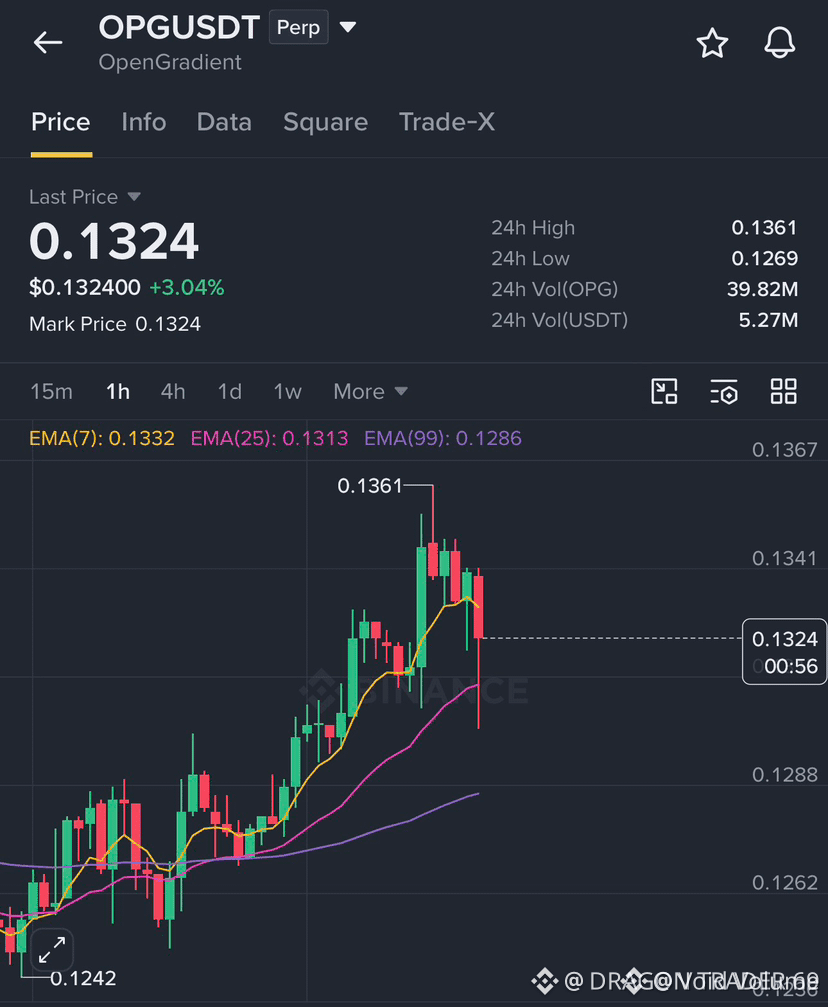
🚨 $OPG REJECTING KEY SUPPLY AT $0.1350 AS INSTITUTIONAL SELLERS TAKE CONTROL! 📉
Entry: 0.1324 - 0.1330 ⚡
Target: 0.1290 - 0.1245 🎯
Stop Loss: 0.1362 ⚠️
Sellers are aggressively defending the 0.1350 overhead supply zone, capping upside attempts and sweeping buy-side liquidity. 📊 Price action signals smart money distribution as lower-timeframe order flow shifts decisively to the downside. 📉
With rejection momentum strengthening below resistance, the path of least resistance points toward filling downside inefficiencies toward 0.1245. 🔍 Structural risk remains tightly defined above our 0.1362 invalidation level. 💬 Are you riding this structural breakdown lower or waiting for a deeper sweep? 👇
⚠️ Not financial advice. Always manage your risk. 🛡️
🏷️ #OPG #ShortSetup #MarketStructure #Trading #Crypto
🐻 📉
🚨 $OPG REJECTING KEY SUPPLY AT $0.1350 AS INSTITUTIONAL SELLERS TAKE CONTROL! 📉
Entry: 0.1324 - 0.1330 ⚡
Target: 0.1290 - 0.1245 🎯
Stop Loss: 0.1362 ⚠️
Sellers are aggressively defending the 0.1350 overhead supply zone, capping upside attempts and sweeping buy-side liquidity. 📊 Price action signals smart money distribution as lower-timeframe order flow shifts decisively to the downside. 📉
With rejection momentum strengthening below resistance, the path of least resistance points toward filling downside inefficiencies toward 0.1245. 🔍 Structural risk remains tightly defined above our 0.1362 invalidation level. 💬 Are you riding this structural breakdown lower or waiting for a deeper sweep? 👇
⚠️ Not financial advice. Always manage your risk. 🛡️
🏷️ #OPG #ShortSetup #MarketStructure #Trading #Crypto
🐻 📉
Entry: 0.1324 - 0.1330 ⚡
Target: 0.1290 - 0.1245 🎯
Stop Loss: 0.1362 ⚠️
Sellers are aggressively defending the 0.1350 overhead supply zone, capping upside attempts and sweeping buy-side liquidity. 📊 Price action signals smart money distribution as lower-timeframe order flow shifts decisively to the downside. 📉
With rejection momentum strengthening below resistance, the path of least resistance points toward filling downside inefficiencies toward 0.1245. 🔍 Structural risk remains tightly defined above our 0.1362 invalidation level. 💬 Are you riding this structural breakdown lower or waiting for a deeper sweep? 👇
⚠️ Not financial advice. Always manage your risk. 🛡️
🏷️ #OPG #ShortSetup #MarketStructure #Trading #Crypto
🐻 📉
5

·
--
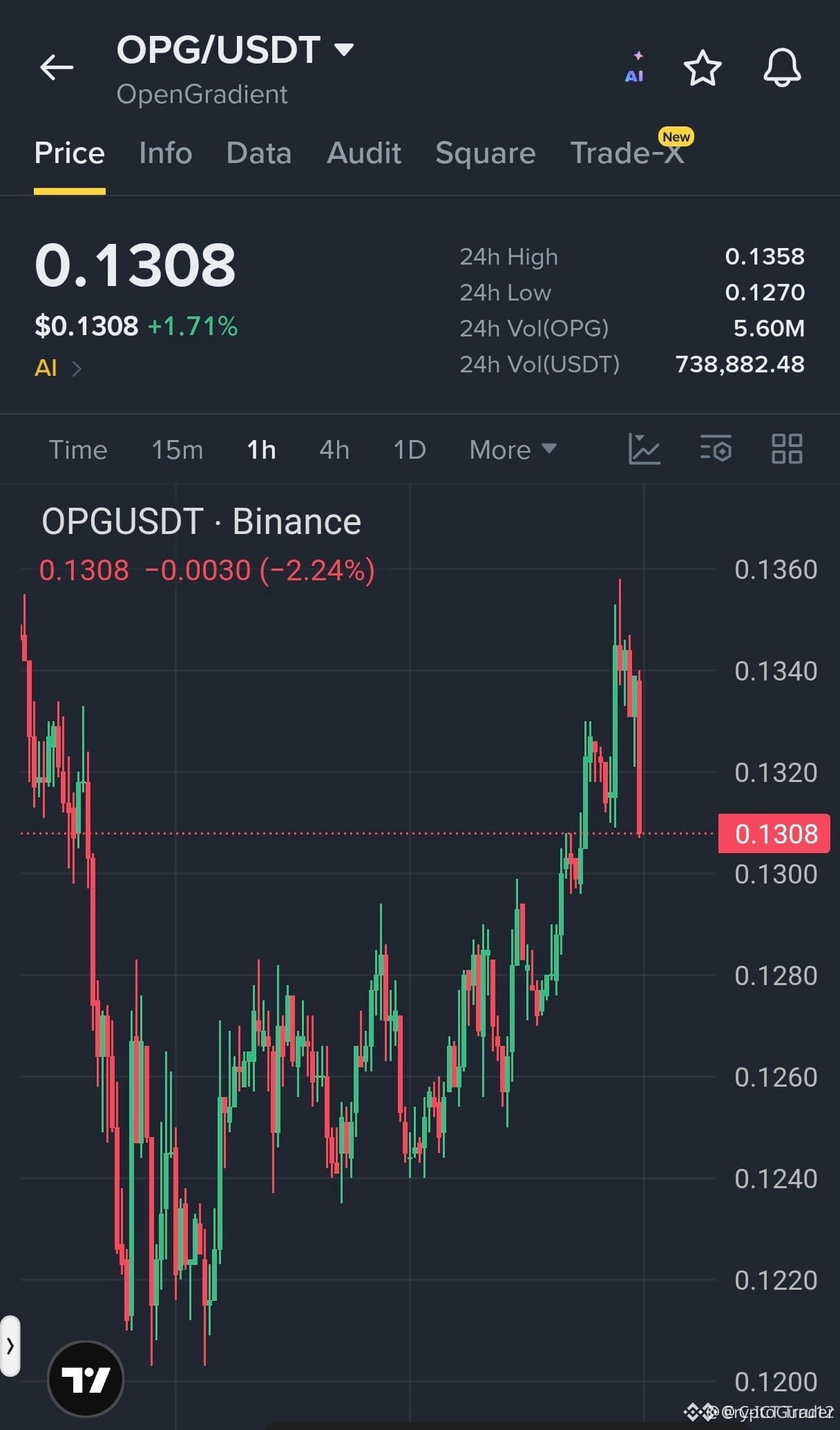
🔴 $OPG REJECTED AT RESISTANCE AS LIQUIDITY SWEEP FUELS SHORT-SIDE MOMENTUM! 📉
Entry: 0.1305 - 0.1315 ⚡
Target: 0.1245 🎯
Stop Loss: 0.1362 ⚠️
📌 $OPG swept overhead liquidity at the 0.1350 handle, only for institutional supply to step in aggressively and slam price back down toward 0.1308. 📉 This sharp rejection confirms strong seller dominance below resistance, leaving behind structural inefficiency ready for exploitation.
📊 As long as price trades beneath the 0.1350 supply zone, order flow heavily favors short-side expansion toward deeper liquidity pools. 💬 Are you positioning for lower targets here or waiting for a retest of the rejection block? 👇
⚠️ Not financial advice. Always manage your risk. 🛡️
🏷️ #OPG #ShortSetup #MarketStructure #Crypto
🐻 🎯
🔴 $OPG REJECTED AT RESISTANCE AS LIQUIDITY SWEEP FUELS SHORT-SIDE MOMENTUM! 📉
Entry: 0.1305 - 0.1315 ⚡
Target: 0.1245 🎯
Stop Loss: 0.1362 ⚠️
📌 $OPG swept overhead liquidity at the 0.1350 handle, only for institutional supply to step in aggressively and slam price back down toward 0.1308. 📉 This sharp rejection confirms strong seller dominance below resistance, leaving behind structural inefficiency ready for exploitation.
📊 As long as price trades beneath the 0.1350 supply zone, order flow heavily favors short-side expansion toward deeper liquidity pools. 💬 Are you positioning for lower targets here or waiting for a retest of the rejection block? 👇
⚠️ Not financial advice. Always manage your risk. 🛡️
🏷️ #OPG #ShortSetup #MarketStructure #Crypto
🐻 🎯
Entry: 0.1305 - 0.1315 ⚡
Target: 0.1245 🎯
Stop Loss: 0.1362 ⚠️
📌 $OPG swept overhead liquidity at the 0.1350 handle, only for institutional supply to step in aggressively and slam price back down toward 0.1308. 📉 This sharp rejection confirms strong seller dominance below resistance, leaving behind structural inefficiency ready for exploitation.
📊 As long as price trades beneath the 0.1350 supply zone, order flow heavily favors short-side expansion toward deeper liquidity pools. 💬 Are you positioning for lower targets here or waiting for a retest of the rejection block? 👇
⚠️ Not financial advice. Always manage your risk. 🛡️
🏷️ #OPG #ShortSetup #MarketStructure #Crypto
🐻 🎯
6

Most crypto projects slap "AI" on a whitepaper and call it a day. @OpenGradient actually solves the hardest problem: how do you trust AI output on-chain?
Their answer is a dual-layer trust model. zkML proves that a specific model ran on specific inputs without tampering — mathematically verifiable, no blind faith required. But zkML alone is slow for complex inference. So OpenGradient pairs it with TEEs (Trusted Execution Environments), hardware-isolated enclaves where agentic reasoning runs securely at speed.
This Hybrid AI Computing approach is why they've already hit 2M+ verifiable inferences and 500K+ zkML proofs. Devs aren't just deploying models — they're deploying provable ones, earning fees through the Model Hub when nodes use them.
$OPG (fixed 1B supply, TGE April 2026) fuels inference payments, staking, and governance. Backed by a16z crypto and Coinbase Ventures, built on Base. Currently +2.5% on $1M 24h volume.
Trust without verification is just marketing. OpenGradient makes AI outputs falsifiable — and that's what separates infrastructure from narrative.
Our own algo's full open track record — every win and loss — is in our bio.
What's harder to scale long-term: zkML proof generation or TEE hardware availability?
$OPG #OPG
Most crypto projects slap "AI" on a whitepaper and call it a day. @OpenGradient actually solves the hardest problem: how do you trust AI output on-chain?
Their answer is a dual-layer trust model. zkML proves that a specific model ran on specific inputs without tampering — mathematically verifiable, no blind faith required. But zkML alone is slow for complex inference. So OpenGradient pairs it with TEEs (Trusted Execution Environments), hardware-isolated enclaves where agentic reasoning runs securely at speed.
This Hybrid AI Computing approach is why they've already hit 2M+ verifiable inferences and 500K+ zkML proofs. Devs aren't just deploying models — they're deploying provable ones, earning fees through the Model Hub when nodes use them.
$OPG (fixed 1B supply, TGE April 2026) fuels inference payments, staking, and governance. Backed by a16z crypto and Coinbase Ventures, built on Base. Currently +2.5% on $1M 24h volume.
Trust without verification is just marketing. OpenGradient makes AI outputs falsifiable — and that's what separates infrastructure from narrative.
Our own algo's full open track record — every win and loss — is in our bio.
What's harder to scale long-term: zkML proof generation or TEE hardware availability?
$OPG #OPG
Their answer is a dual-layer trust model. zkML proves that a specific model ran on specific inputs without tampering — mathematically verifiable, no blind faith required. But zkML alone is slow for complex inference. So OpenGradient pairs it with TEEs (Trusted Execution Environments), hardware-isolated enclaves where agentic reasoning runs securely at speed.
This Hybrid AI Computing approach is why they've already hit 2M+ verifiable inferences and 500K+ zkML proofs. Devs aren't just deploying models — they're deploying provable ones, earning fees through the Model Hub when nodes use them.
$OPG (fixed 1B supply, TGE April 2026) fuels inference payments, staking, and governance. Backed by a16z crypto and Coinbase Ventures, built on Base. Currently +2.5% on $1M 24h volume.
Trust without verification is just marketing. OpenGradient makes AI outputs falsifiable — and that's what separates infrastructure from narrative.
Our own algo's full open track record — every win and loss — is in our bio.
What's harder to scale long-term: zkML proof generation or TEE hardware availability?
$OPG #OPG
147
Most on-chain AI projects ask you to trust their off-chain black box. @OpenGradient refuses to.
Their HACA architecture combines zkML proofs and Trusted Execution Environments (TEEs) to solve the "AI trust problem" at its core. Here is why that matters: zkML mathematically proves a specific model ran on specific inputs, while TEEs keep the inference process secure and isolated. You don't have to trust the node operator—you verify the computation.
With 500K+ zkML proofs already generated and 2M+ verifiable inferences, this isn't just theory. It's live infrastructure on Base, backed by a16z and Coinbase Ventures. Volume is currently $1M with a +3.4% 24h move as the market slowly wakes up to verifiable AI.
We post every algo signal's real result openly, and the full live track record + a free preview channel are in our bio/profile.
If AI execution can't be cryptographically verified on-chain, does it even belong in Web3? $OPG #OPG
Most on-chain AI projects ask you to trust their off-chain black box. @OpenGradient refuses to.
Their HACA architecture combines zkML proofs and Trusted Execution Environments (TEEs) to solve the "AI trust problem" at its core. Here is why that matters: zkML mathematically proves a specific model ran on specific inputs, while TEEs keep the inference process secure and isolated. You don't have to trust the node operator—you verify the computation.
With 500K+ zkML proofs already generated and 2M+ verifiable inferences, this isn't just theory. It's live infrastructure on Base, backed by a16z and Coinbase Ventures. Volume is currently $1M with a +3.4% 24h move as the market slowly wakes up to verifiable AI.
We post every algo signal's real result openly, and the full live track record + a free preview channel are in our bio/profile.
If AI execution can't be cryptographically verified on-chain, does it even belong in Web3? $OPG #OPG
Their HACA architecture combines zkML proofs and Trusted Execution Environments (TEEs) to solve the "AI trust problem" at its core. Here is why that matters: zkML mathematically proves a specific model ran on specific inputs, while TEEs keep the inference process secure and isolated. You don't have to trust the node operator—you verify the computation.
With 500K+ zkML proofs already generated and 2M+ verifiable inferences, this isn't just theory. It's live infrastructure on Base, backed by a16z and Coinbase Ventures. Volume is currently $1M with a +3.4% 24h move as the market slowly wakes up to verifiable AI.
We post every algo signal's real result openly, and the full live track record + a free preview channel are in our bio/profile.
If AI execution can't be cryptographically verified on-chain, does it even belong in Web3? $OPG #OPG
7
Most on-chain AI today is a trust black box: you call a model, you get an output, and you just hope it's real. The breakthrough from @OpenGradient is making AI inference cryptographically verifiable. By combining GPU nodes with zkML proofs and TEEs in their HACA architecture, the network doesn't just compute—it generates mathematical proof that the exact model ran correctly.
With 2M+ verifiable inferences and 500K+ zkML proofs already live on Base, they're turning AI into a trustless primitive. If dApps can't audit the AI they call, can decentralized AI ever truly scale?
$OPG #OPG
We post every algo signal's real result openly, and our full open track record (wins and losses) plus a free preview channel are in our bio.
Most on-chain AI today is a trust black box: you call a model, you get an output, and you just hope it's real. The breakthrough from @OpenGradient is making AI inference cryptographically verifiable. By combining GPU nodes with zkML proofs and TEEs in their HACA architecture, the network doesn't just compute—it generates mathematical proof that the exact model ran correctly.
With 2M+ verifiable inferences and 500K+ zkML proofs already live on Base, they're turning AI into a trustless primitive. If dApps can't audit the AI they call, can decentralized AI ever truly scale?
$OPG #OPG
We post every algo signal's real result openly, and our full open track record (wins and losses) plus a free preview channel are in our bio.
With 2M+ verifiable inferences and 500K+ zkML proofs already live on Base, they're turning AI into a trustless primitive. If dApps can't audit the AI they call, can decentralized AI ever truly scale?
$OPG #OPG
We post every algo signal's real result openly, and our full open track record (wins and losses) plus a free preview channel are in our bio.
55
Most "AI x crypto" projects are just ChatGPT wrappers with a token. @OpenGradient is building something structurally different — and the numbers show real usage, not vaporware.
The core insight: OpenGradient's Hybrid AI Computing (HACA) actually solves the AI x crypto trust problem. Hosting an AI model on-chain is useless if you can't verify it ran correctly without doxxing the model weights. HACA combines GPU nodes, zkML proofs, and TEEs so inference is both verifiable AND privacy-preserving. That's why 2M+ verifiable inferences have already happened across 2000+ hosted models.
For devs, the Model Hub creates an economic flywheel: open-source contributors earn when their models get used. That's the right incentive alignment.
Price is up 2.1% on $1M 24h vol — a real project still finding its market.
What's your take: does verifiable inference become the foundational layer for on-chain AI agents, or is the market overestimating how much AI logic actually needs to be on-chain?
$OPG #OPG
Our full open track record (wins and losses included) is in our bio.
Most "AI x crypto" projects are just ChatGPT wrappers with a token. @OpenGradient is building something structurally different — and the numbers show real usage, not vaporware.
The core insight: OpenGradient's Hybrid AI Computing (HACA) actually solves the AI x crypto trust problem. Hosting an AI model on-chain is useless if you can't verify it ran correctly without doxxing the model weights. HACA combines GPU nodes, zkML proofs, and TEEs so inference is both verifiable AND privacy-preserving. That's why 2M+ verifiable inferences have already happened across 2000+ hosted models.
For devs, the Model Hub creates an economic flywheel: open-source contributors earn when their models get used. That's the right incentive alignment.
Price is up 2.1% on $1M 24h vol — a real project still finding its market.
What's your take: does verifiable inference become the foundational layer for on-chain AI agents, or is the market overestimating how much AI logic actually needs to be on-chain?
$OPG #OPG
Our full open track record (wins and losses included) is in our bio.
The core insight: OpenGradient's Hybrid AI Computing (HACA) actually solves the AI x crypto trust problem. Hosting an AI model on-chain is useless if you can't verify it ran correctly without doxxing the model weights. HACA combines GPU nodes, zkML proofs, and TEEs so inference is both verifiable AND privacy-preserving. That's why 2M+ verifiable inferences have already happened across 2000+ hosted models.
For devs, the Model Hub creates an economic flywheel: open-source contributors earn when their models get used. That's the right incentive alignment.
Price is up 2.1% on $1M 24h vol — a real project still finding its market.
What's your take: does verifiable inference become the foundational layer for on-chain AI agents, or is the market overestimating how much AI logic actually needs to be on-chain?
$OPG #OPG
Our full open track record (wins and losses included) is in our bio.
205

·
--
🔥 $OPG Bullish Setup: Key Pullback into Support
📊 Market Context & Thesis:
Price action on $OPG is showing solid multi-timeframe alignment on the 1-hour and 4-hour charts, holding key moving averages with steady buyer absorption.
• Funding: 0.0050% (Neutral) • Next: 3h 46m
• Open Interest (OI): $4.23M
• 24h Volume: $4.40M
• 24h Range: 0.1201 — 0.1334 (-6.3%)
🎯 Entry: 0.12400
🛑 Stop-Loss: 0.11948 (-3.65%)
✅ Take-Profit: 0.13154 (+6.08%)
⚖️ Risk/Reward: 1:1.7
🚫 Invalidation Rule: If a 1-hour candle closes below $0.11948 (-3.65%), this bullish thesis is invalidated. Exit trade without holding into drawdowns.
⚖️ Risk Note: Moderate leverage recommended (3x–5x on Futures). Never risk more than 1–2% of total portfolio capital on a single setup.
📈 Strategy Track Record: WR 38% over 107 trades
#OPG #CryptoSignals #CryptoTrading #BinanceSquare
⚠️ Not financial advice. Always manage your risk.
🔥 $OPG Bullish Setup: Key Pullback into Support
📊 Market Context & Thesis:
Price action on $OPG is showing solid multi-timeframe alignment on the 1-hour and 4-hour charts, holding key moving averages with steady buyer absorption.
• Funding: 0.0050% (Neutral) • Next: 3h 46m
• Open Interest (OI): $4.23M
• 24h Volume: $4.40M
• 24h Range: 0.1201 — 0.1334 (-6.3%)
🎯 Entry: 0.12400
🛑 Stop-Loss: 0.11948 (-3.65%)
✅ Take-Profit: 0.13154 (+6.08%)
⚖️ Risk/Reward: 1:1.7
🚫 Invalidation Rule: If a 1-hour candle closes below $0.11948 (-3.65%), this bullish thesis is invalidated. Exit trade without holding into drawdowns.
⚖️ Risk Note: Moderate leverage recommended (3x–5x on Futures). Never risk more than 1–2% of total portfolio capital on a single setup.
📈 Strategy Track Record: WR 38% over 107 trades
#OPG #CryptoSignals #CryptoTrading #BinanceSquare
⚠️ Not financial advice. Always manage your risk.
📊 Market Context & Thesis:
Price action on $OPG is showing solid multi-timeframe alignment on the 1-hour and 4-hour charts, holding key moving averages with steady buyer absorption.
• Funding: 0.0050% (Neutral) • Next: 3h 46m
• Open Interest (OI): $4.23M
• 24h Volume: $4.40M
• 24h Range: 0.1201 — 0.1334 (-6.3%)
🎯 Entry: 0.12400
🛑 Stop-Loss: 0.11948 (-3.65%)
✅ Take-Profit: 0.13154 (+6.08%)
⚖️ Risk/Reward: 1:1.7
🚫 Invalidation Rule: If a 1-hour candle closes below $0.11948 (-3.65%), this bullish thesis is invalidated. Exit trade without holding into drawdowns.
⚖️ Risk Note: Moderate leverage recommended (3x–5x on Futures). Never risk more than 1–2% of total portfolio capital on a single setup.
📈 Strategy Track Record: WR 38% over 107 trades
#OPG #CryptoSignals #CryptoTrading #BinanceSquare
⚠️ Not financial advice. Always manage your risk.
29
Most "on-chain AI" is just an oracle reading an off-chain API. @OpenGradient is one of the few building actual on-chain agents.
Their hybrid stack (GPU nodes + zkML proofs + TEEs) means inference runs verifiably on Base. No black box, no trusting a centralized server.
With 2M+ verifiable inferences and 500K+ zkML proofs already generated, agents can reason autonomously and prove it cryptographically. And 2000+ models in the Model Hub means devs monetize directly.
$OPG is down 3.7% today on just $1M volume — quiet, but the tech milestones are loud. Backed by a16z crypto and Coinbase Ventures.
If you want full transparency: our algo's complete open track record, wins and losses included, is in our bio.
What's a real use case where verifiable agent reasoning beats a standard API call?
$OPG #OPG
Most "on-chain AI" is just an oracle reading an off-chain API. @OpenGradient is one of the few building actual on-chain agents.
Their hybrid stack (GPU nodes + zkML proofs + TEEs) means inference runs verifiably on Base. No black box, no trusting a centralized server.
With 2M+ verifiable inferences and 500K+ zkML proofs already generated, agents can reason autonomously and prove it cryptographically. And 2000+ models in the Model Hub means devs monetize directly.
$OPG is down 3.7% today on just $1M volume — quiet, but the tech milestones are loud. Backed by a16z crypto and Coinbase Ventures.
If you want full transparency: our algo's complete open track record, wins and losses included, is in our bio.
What's a real use case where verifiable agent reasoning beats a standard API call?
$OPG #OPG
Their hybrid stack (GPU nodes + zkML proofs + TEEs) means inference runs verifiably on Base. No black box, no trusting a centralized server.
With 2M+ verifiable inferences and 500K+ zkML proofs already generated, agents can reason autonomously and prove it cryptographically. And 2000+ models in the Model Hub means devs monetize directly.
$OPG is down 3.7% today on just $1M volume — quiet, but the tech milestones are loud. Backed by a16z crypto and Coinbase Ventures.
If you want full transparency: our algo's complete open track record, wins and losses included, is in our bio.
What's a real use case where verifiable agent reasoning beats a standard API call?
$OPG #OPG
1
340

·
--
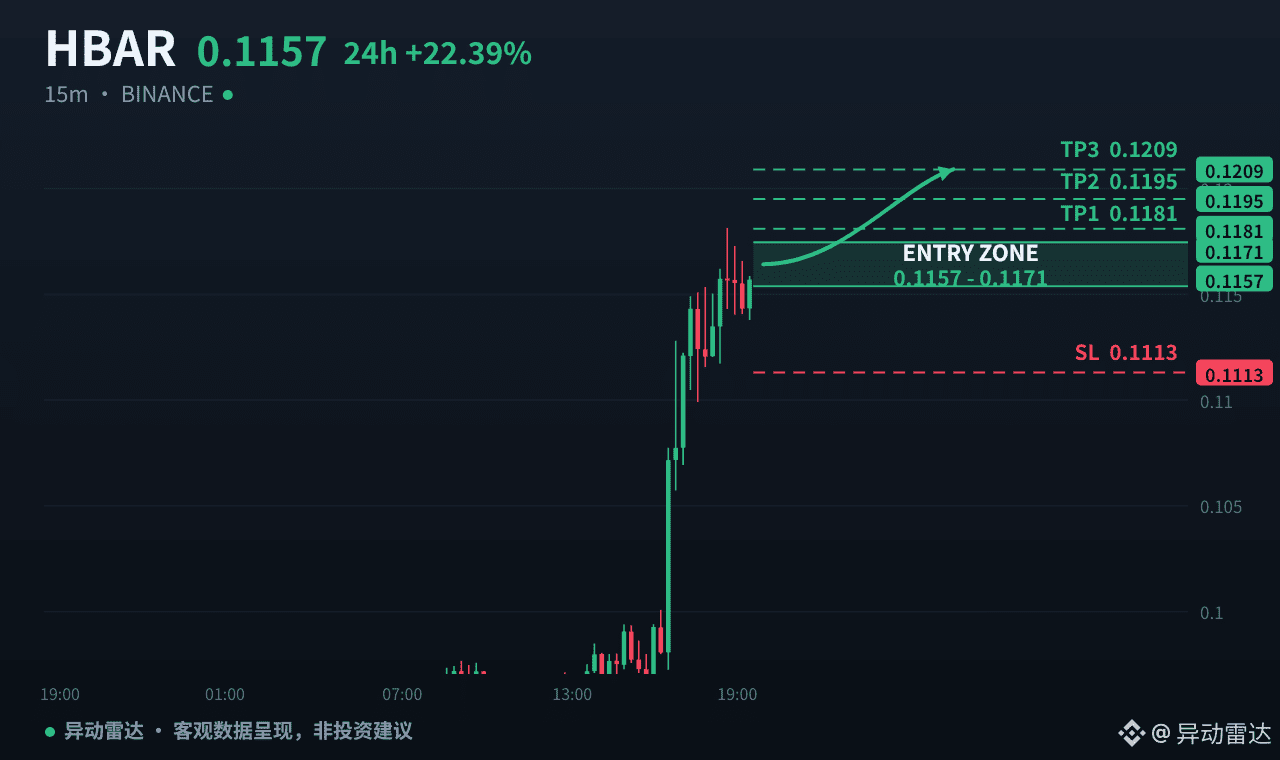
$HBAR within 3.2 hours of increased holdings by 51.4%; someone is building a position
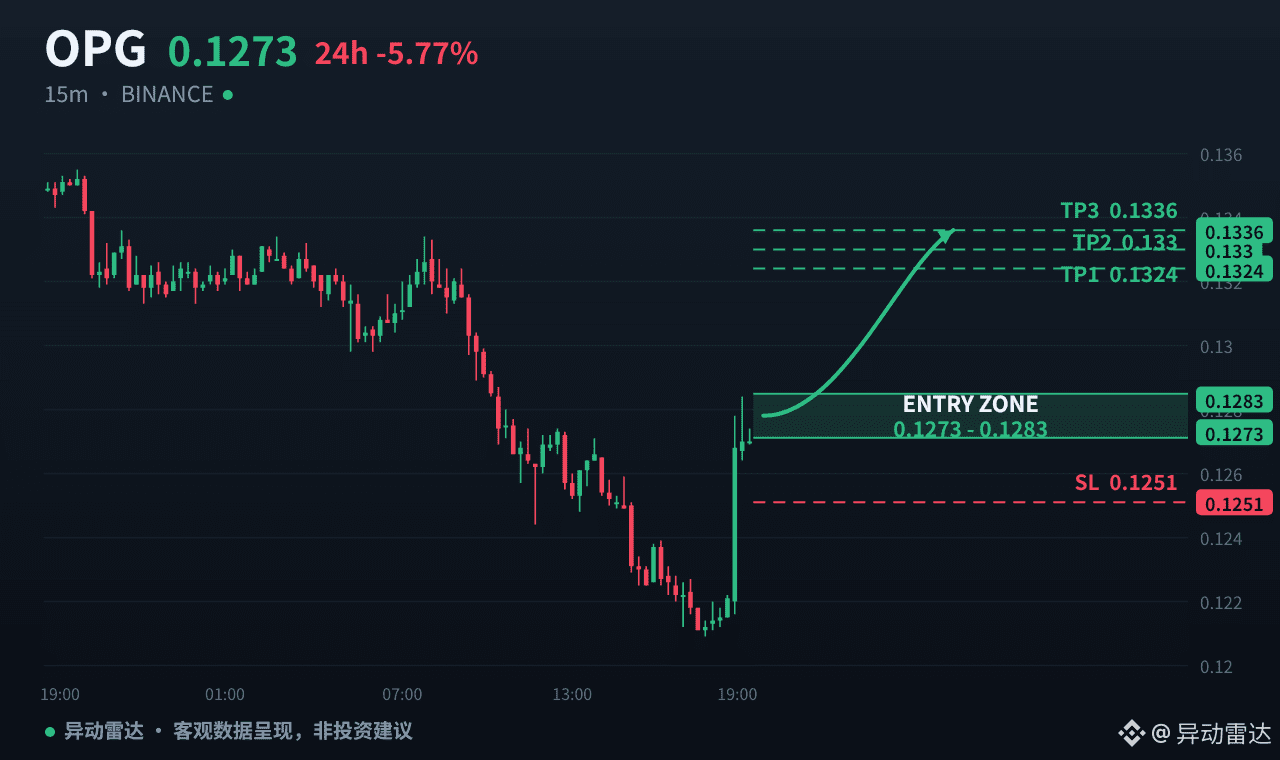
$OPG net buys of 690,000 in half an hour, with volume rising to 7.3x
💰 HBAR 0.1157 slightly bullish
🟢 Hold above 0.1171
Target 0.1181 / 0.1195 / 0.1209
Stop loss 0.1113
🔴 Breaks below 0.0960
Next downside 0.0950 / 0.0946
🧠 【Trader battle—qualitative analysis】:The main player uses the large-holder long/short ratio of 1.90 to strongly go long; the aggressive trade ratio of 0.90 shows sell-side initiative. In the past 3.2 hours, holdings increased by +51.42%. To confirm that the trend continues, it needs to be maintained. Long and short are still in a battle; the direction has not been confirmed.
📊 【Candlestick pattern & momentum structure】:Limited usable data; for now treat it as range-bound consolidation and do not predict structure.
🚀 【Key levels for right-side chasing】:Hold above 0.1171 to confirm the right-side signal. Stop loss at 0.1113. Do not enter from the left side within the consolidation range.
💡 【Practical trading execution instructions】:Do not chase longs before it holds on increased volume. Use strict stop-loss orders, control position size, and refuse to “hold the bag.”
━━━━━━━━━
💰 OPG 0.1273 slightly bullish
🟢 Hold above 0.1278
Target 0.1324 / 0.1330 / 0.1336
Stop loss 0.1251
🔴 Breaks below 0.1248
Next downside 0.1225 / 0.1209
🧠 【Trader battle—qualitative analysis】:The main player uses the large-holder long/short ratio of 2.22 to strongly go long; the aggressive trade ratio of 1.03 indicates a tug-of-war between longs and shorts. Long and short are still battling; the direction has not been confirmed.
📊 【Candlestick pattern & momentum structure】:Limited usable data; for now treat it as range-bound consolidation and do not predict structure.
🚀 【Key levels for right-side chasing】:Hold above 0.1278 to confirm the right-side signal. Stop loss at 0.1251. Do not enter from the left side within the consolidation range.
💡 【Practical trading execution instructions】:Do not chase longs before it holds on increased volume. Use strict stop-loss orders, control position size, and refuse to “hold the bag.”
—
🕒 Data taken from 09-28 19:18 (UTC+8) Binance futures market; you can verify it yourself
Objective data presentation only; not investment advice—watch your risk.
#HBAR #OPG
$HBAR within 3.2 hours of increased holdings by 51.4%; someone is building a position
$OPG net buys of 690,000 in half an hour, with volume rising to 7.3x
💰 HBAR 0.1157 slightly bullish
🟢 Hold above 0.1171
Target 0.1181 / 0.1195 / 0.1209
Stop loss 0.1113
🔴 Breaks below 0.0960
Next downside 0.0950 / 0.0946
🧠 【Trader battle—qualitative analysis】:The main player uses the large-holder long/short ratio of 1.90 to strongly go long; the aggressive trade ratio of 0.90 shows sell-side initiative. In the past 3.2 hours, holdings increased by +51.42%. To confirm that the trend continues, it needs to be maintained. Long and short are still in a battle; the direction has not been confirmed.
📊 【Candlestick pattern & momentum structure】:Limited usable data; for now treat it as range-bound consolidation and do not predict structure.
🚀 【Key levels for right-side chasing】:Hold above 0.1171 to confirm the right-side signal. Stop loss at 0.1113. Do not enter from the left side within the consolidation range.
💡 【Practical trading execution instructions】:Do not chase longs before it holds on increased volume. Use strict stop-loss orders, control position size, and refuse to “hold the bag.”
━━━━━━━━━
💰 OPG 0.1273 slightly bullish
🟢 Hold above 0.1278
Target 0.1324 / 0.1330 / 0.1336
Stop loss 0.1251
🔴 Breaks below 0.1248
Next downside 0.1225 / 0.1209
🧠 【Trader battle—qualitative analysis】:The main player uses the large-holder long/short ratio of 2.22 to strongly go long; the aggressive trade ratio of 1.03 indicates a tug-of-war between longs and shorts. Long and short are still battling; the direction has not been confirmed.
📊 【Candlestick pattern & momentum structure】:Limited usable data; for now treat it as range-bound consolidation and do not predict structure.
🚀 【Key levels for right-side chasing】:Hold above 0.1278 to confirm the right-side signal. Stop loss at 0.1251. Do not enter from the left side within the consolidation range.
💡 【Practical trading execution instructions】:Do not chase longs before it holds on increased volume. Use strict stop-loss orders, control position size, and refuse to “hold the bag.”
—
🕒 Data taken from 09-28 19:18 (UTC+8) Binance futures market; you can verify it yourself
Objective data presentation only; not investment advice—watch your risk.
#HBAR #OPG
$OPG net buys of 690,000 in half an hour, with volume rising to 7.3x
💰 HBAR 0.1157 slightly bullish
🟢 Hold above 0.1171
Target 0.1181 / 0.1195 / 0.1209
Stop loss 0.1113
🔴 Breaks below 0.0960
Next downside 0.0950 / 0.0946
🧠 【Trader battle—qualitative analysis】:The main player uses the large-holder long/short ratio of 1.90 to strongly go long; the aggressive trade ratio of 0.90 shows sell-side initiative. In the past 3.2 hours, holdings increased by +51.42%. To confirm that the trend continues, it needs to be maintained. Long and short are still in a battle; the direction has not been confirmed.
📊 【Candlestick pattern & momentum structure】:Limited usable data; for now treat it as range-bound consolidation and do not predict structure.
🚀 【Key levels for right-side chasing】:Hold above 0.1171 to confirm the right-side signal. Stop loss at 0.1113. Do not enter from the left side within the consolidation range.
💡 【Practical trading execution instructions】:Do not chase longs before it holds on increased volume. Use strict stop-loss orders, control position size, and refuse to “hold the bag.”
━━━━━━━━━
💰 OPG 0.1273 slightly bullish
🟢 Hold above 0.1278
Target 0.1324 / 0.1330 / 0.1336
Stop loss 0.1251
🔴 Breaks below 0.1248
Next downside 0.1225 / 0.1209
🧠 【Trader battle—qualitative analysis】:The main player uses the large-holder long/short ratio of 2.22 to strongly go long; the aggressive trade ratio of 1.03 indicates a tug-of-war between longs and shorts. Long and short are still battling; the direction has not been confirmed.
📊 【Candlestick pattern & momentum structure】:Limited usable data; for now treat it as range-bound consolidation and do not predict structure.
🚀 【Key levels for right-side chasing】:Hold above 0.1278 to confirm the right-side signal. Stop loss at 0.1251. Do not enter from the left side within the consolidation range.
💡 【Practical trading execution instructions】:Do not chase longs before it holds on increased volume. Use strict stop-loss orders, control position size, and refuse to “hold the bag.”
—
🕒 Data taken from 09-28 19:18 (UTC+8) Binance futures market; you can verify it yourself
Objective data presentation only; not investment advice—watch your risk.
#HBAR #OPG
36
Most crypto "AI" claims sound great until you ask the terrifying question: how do you actually KNOW the model ran the right computation?
@OpenGradient solves the trust gap with a dual-layer approach. zkML proves the inference was executed correctly via cryptographic math — no re-running needed. TEEs (Trusted Execution Environments) create isolated hardware enclaves so sensitive data stays sealed even from the node operator. It's not just decentralized compute, it's mathematically enforced integrity.
With 500K+ zk proofs generated and a slight 24h pullback on $2M volume, the tech is building quietly. Our own algo's full open track record is in our bio if you want transparency too.
What will it take for builders to finally demand cryptographic proof for on-chain AI? $OPG #OPG
Most crypto "AI" claims sound great until you ask the terrifying question: how do you actually KNOW the model ran the right computation?
@OpenGradient solves the trust gap with a dual-layer approach. zkML proves the inference was executed correctly via cryptographic math — no re-running needed. TEEs (Trusted Execution Environments) create isolated hardware enclaves so sensitive data stays sealed even from the node operator. It's not just decentralized compute, it's mathematically enforced integrity.
With 500K+ zk proofs generated and a slight 24h pullback on $2M volume, the tech is building quietly. Our own algo's full open track record is in our bio if you want transparency too.
What will it take for builders to finally demand cryptographic proof for on-chain AI? $OPG #OPG
@OpenGradient solves the trust gap with a dual-layer approach. zkML proves the inference was executed correctly via cryptographic math — no re-running needed. TEEs (Trusted Execution Environments) create isolated hardware enclaves so sensitive data stays sealed even from the node operator. It's not just decentralized compute, it's mathematically enforced integrity.
With 500K+ zk proofs generated and a slight 24h pullback on $2M volume, the tech is building quietly. Our own algo's full open track record is in our bio if you want transparency too.
What will it take for builders to finally demand cryptographic proof for on-chain AI? $OPG #OPG
313

·
--
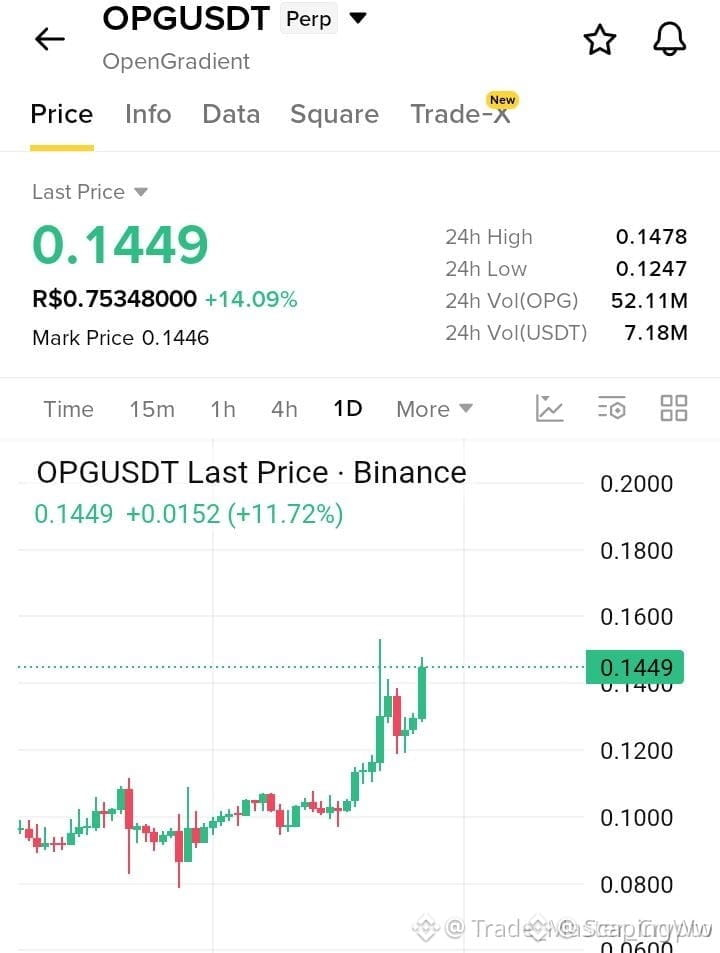
💥 $OPG DEMAND ZONE ABSORPTION PREPARES FOR POWERFUL MOMENTUM RECLAIM 🟢
Entry: 0.01449 ⚡
$OPG is quietly carving out a high-conviction long structure right off the 0.01449 base. Smart money has been systematically absorbing sell-side liquidity here, laying the groundwork for a sharp upward expansion as momentum flips. 📊
While retail traders distract themselves with rotation plays across $RARE and $MUBARAK , the order flow on $OPG reflects clean institutional positioning. ⚡ The downside drift is exhausting rapidly, giving patient buyers an exceptional risk-defined entry window. 💡
💬 Are you scaling into this demand block early or waiting for confirmed breakout volume? 👇
⚠️ Not financial advice. Always manage your risk. 🛡️
🏷️ #OPG #LongSetup #Altcoins #Crypto #Trading
🎯 🪂
💥 $OPG DEMAND ZONE ABSORPTION PREPARES FOR POWERFUL MOMENTUM RECLAIM 🟢
Entry: 0.01449 ⚡
$OPG is quietly carving out a high-conviction long structure right off the 0.01449 base. Smart money has been systematically absorbing sell-side liquidity here, laying the groundwork for a sharp upward expansion as momentum flips. 📊
While retail traders distract themselves with rotation plays across $RARE and $MUBARAK , the order flow on $OPG reflects clean institutional positioning. ⚡ The downside drift is exhausting rapidly, giving patient buyers an exceptional risk-defined entry window. 💡
💬 Are you scaling into this demand block early or waiting for confirmed breakout volume? 👇
⚠️ Not financial advice. Always manage your risk. 🛡️
🏷️ #OPG #LongSetup #Altcoins #Crypto #Trading
🎯 🪂
Entry: 0.01449 ⚡
$OPG is quietly carving out a high-conviction long structure right off the 0.01449 base. Smart money has been systematically absorbing sell-side liquidity here, laying the groundwork for a sharp upward expansion as momentum flips. 📊
While retail traders distract themselves with rotation plays across $RARE and $MUBARAK , the order flow on $OPG reflects clean institutional positioning. ⚡ The downside drift is exhausting rapidly, giving patient buyers an exceptional risk-defined entry window. 💡
💬 Are you scaling into this demand block early or waiting for confirmed breakout volume? 👇
⚠️ Not financial advice. Always manage your risk. 🛡️
🏷️ #OPG #LongSetup #Altcoins #Crypto #Trading
🎯 🪂
28
Verified
The AI x crypto narrative is crowded with promises, but most projects skip the hardest part: cryptographic verification of outputs.
@OpenGradient solves this with a hybrid architecture combining GPU nodes, zkML proofs, and TEEs. Instead of trusting a black-box API, every inference is mathematically verifiable on-chain. That distinction matters when smart contracts are executing based on AI outputs.
Built on Base with EVM compatibility, the platform already hosts 2,000+ models and generated 500K+ zkML proofs. Developers earn through the Model Hub when their models get used, creating a real feedback loop.
With backing from a16z crypto and Coinbase Ventures, $OPG currently trades up 6.5% on $2M volume. The token secures inference payments, staking, and node rewards — not just governance theater.
We post every algo signal's real result openly and the full live track record + a free preview channel are in our bio.
What's your take — will verifiable AI inference become the standard, or is trustless ML overkill for most applications?
$OPG #OPG
The AI x crypto narrative is crowded with promises, but most projects skip the hardest part: cryptographic verification of outputs.
@OpenGradient solves this with a hybrid architecture combining GPU nodes, zkML proofs, and TEEs. Instead of trusting a black-box API, every inference is mathematically verifiable on-chain. That distinction matters when smart contracts are executing based on AI outputs.
Built on Base with EVM compatibility, the platform already hosts 2,000+ models and generated 500K+ zkML proofs. Developers earn through the Model Hub when their models get used, creating a real feedback loop.
With backing from a16z crypto and Coinbase Ventures, $OPG currently trades up 6.5% on $2M volume. The token secures inference payments, staking, and node rewards — not just governance theater.
We post every algo signal's real result openly and the full live track record + a free preview channel are in our bio.
What's your take — will verifiable AI inference become the standard, or is trustless ML overkill for most applications?
$OPG #OPG
@OpenGradient solves this with a hybrid architecture combining GPU nodes, zkML proofs, and TEEs. Instead of trusting a black-box API, every inference is mathematically verifiable on-chain. That distinction matters when smart contracts are executing based on AI outputs.
Built on Base with EVM compatibility, the platform already hosts 2,000+ models and generated 500K+ zkML proofs. Developers earn through the Model Hub when their models get used, creating a real feedback loop.
With backing from a16z crypto and Coinbase Ventures, $OPG currently trades up 6.5% on $2M volume. The token secures inference payments, staking, and node rewards — not just governance theater.
We post every algo signal's real result openly and the full live track record + a free preview channel are in our bio.
What's your take — will verifiable AI inference become the standard, or is trustless ML overkill for most applications?
$OPG #OPG
365

·
--
$OPG +11.12% | $TLM +10.84% | $WAXP +10.66%
#OPG is up 11.12% at $0.1409, trading $1.8 M. The network’s focus on decentralized AI infrastructure could give it a niche edge as AI demand grows.
#TLM rose 10.84% to $0.00169700 with $3.2 M changing hands, showing solid interest despite its low price point.
#WAXP climbed 10.66% to $0.00685000, volume also $1.8 M, hinting at renewed activity on the WAX ecosystem.
👀 Watch whether the volume uptick for OPG translates into sustained buying pressure, as its AI‑centric use case may attract longer‑term participants.
#Write2Earn #Binance
$OPG +11.12% | $TLM +10.84% | $WAXP +10.66%
#OPG is up 11.12% at $0.1409, trading $1.8 M. The network’s focus on decentralized AI infrastructure could give it a niche edge as AI demand grows.
#TLM rose 10.84% to $0.00169700 with $3.2 M changing hands, showing solid interest despite its low price point.
#WAXP climbed 10.66% to $0.00685000, volume also $1.8 M, hinting at renewed activity on the WAX ecosystem.
👀 Watch whether the volume uptick for OPG translates into sustained buying pressure, as its AI‑centric use case may attract longer‑term participants.
#Write2Earn #Binance
#OPG is up 11.12% at $0.1409, trading $1.8 M. The network’s focus on decentralized AI infrastructure could give it a niche edge as AI demand grows.
#TLM rose 10.84% to $0.00169700 with $3.2 M changing hands, showing solid interest despite its low price point.
#WAXP climbed 10.66% to $0.00685000, volume also $1.8 M, hinting at renewed activity on the WAX ecosystem.
👀 Watch whether the volume uptick for OPG translates into sustained buying pressure, as its AI‑centric use case may attract longer‑term participants.
#Write2Earn #Binance
18

·
--
Bullish
$OPG Is Pushing Into A Major Breakout Zone
#OPG is showing strong bullish momentum after climbing from 0.1250 to 0.1456 with buyers now testing the 0.1480 resistance If this level breaks the next targets could be 0.1500 and 0.1600 while 0.1400 remains the key support zone
{future}(OPGUSDT)
$SOL
{future}(SOLUSDT)
$BTC
{spot}(BTCUSDT)
$OPG Is Pushing Into A Major Breakout Zone
#OPG is showing strong bullish momentum after climbing from 0.1250 to 0.1456 with buyers now testing the 0.1480 resistance If this level breaks the next targets could be 0.1500 and 0.1600 while 0.1400 remains the key support zone
$SOL
$BTC
#OPG is showing strong bullish momentum after climbing from 0.1250 to 0.1456 with buyers now testing the 0.1480 resistance If this level breaks the next targets could be 0.1500 and 0.1600 while 0.1400 remains the key support zone
$SOL
$BTC
1
33

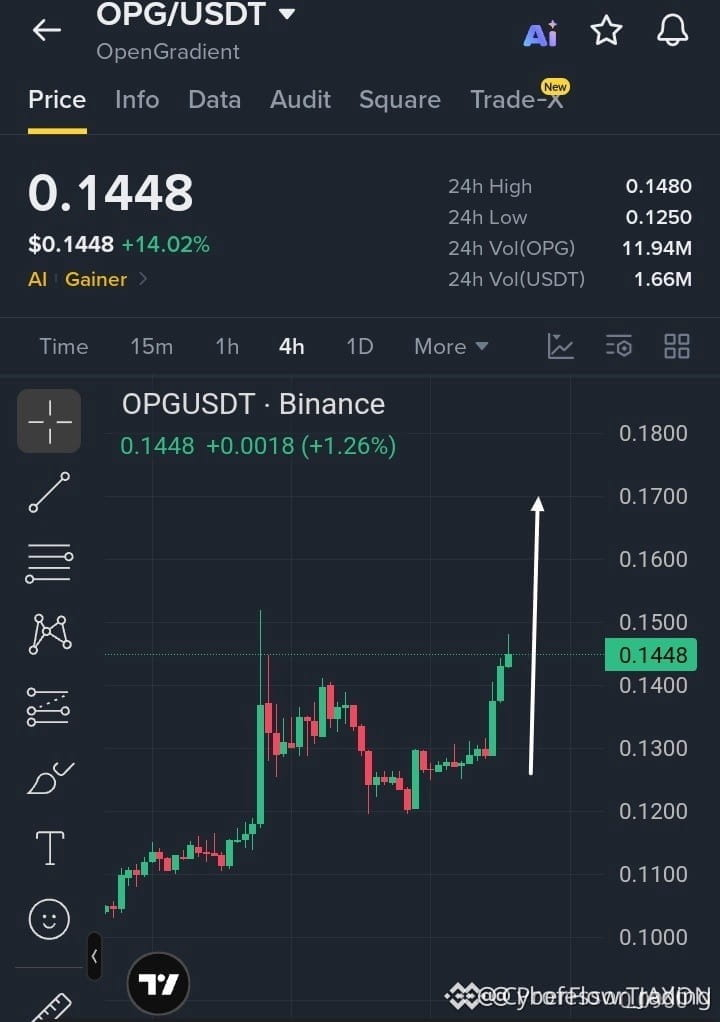
💥 $OPG FLIPS CRITICAL RESISTANCE WITH HIGH-VELOCITY BREAKOUT TOWARD 0.17 RECLAIM! ⚡
Entry: 0.142 - 0.145 🟢
Target: 0.150 - 0.170 🚀
Stop Loss: 0.136 ⚠️
Buyers just forcefully carved out a clean structure flip above the 0.13 - 0.14 consolidation block. As long as bulls defend the 0.140 zone as fresh support, order flow favors a sustained expansion phase. 📊
⚡ Momentum indicators show aggressive spot absorption taking place on every micro-dip. 💡 With liquidity thinning out above current levels, the pathway toward the 0.170 target range is opening up fast. 💬 Are you bidding this breakout retest or waiting for higher confirmation? 👇
⚠️ Not financial advice. Always manage your risk. 🛡️
🏷️ #OPG #LongSetup #Breakout #Altcoins #Crypto
🔥 💎
💥 $OPG FLIPS CRITICAL RESISTANCE WITH HIGH-VELOCITY BREAKOUT TOWARD 0.17 RECLAIM! ⚡
Entry: 0.142 - 0.145 🟢
Target: 0.150 - 0.170 🚀
Stop Loss: 0.136 ⚠️
Buyers just forcefully carved out a clean structure flip above the 0.13 - 0.14 consolidation block. As long as bulls defend the 0.140 zone as fresh support, order flow favors a sustained expansion phase. 📊
⚡ Momentum indicators show aggressive spot absorption taking place on every micro-dip. 💡 With liquidity thinning out above current levels, the pathway toward the 0.170 target range is opening up fast. 💬 Are you bidding this breakout retest or waiting for higher confirmation? 👇
⚠️ Not financial advice. Always manage your risk. 🛡️
🏷️ #OPG #LongSetup #Breakout #Altcoins #Crypto
🔥 💎
Entry: 0.142 - 0.145 🟢
Target: 0.150 - 0.170 🚀
Stop Loss: 0.136 ⚠️
Buyers just forcefully carved out a clean structure flip above the 0.13 - 0.14 consolidation block. As long as bulls defend the 0.140 zone as fresh support, order flow favors a sustained expansion phase. 📊
⚡ Momentum indicators show aggressive spot absorption taking place on every micro-dip. 💡 With liquidity thinning out above current levels, the pathway toward the 0.170 target range is opening up fast. 💬 Are you bidding this breakout retest or waiting for higher confirmation? 👇
⚠️ Not financial advice. Always manage your risk. 🛡️
🏷️ #OPG #LongSetup #Breakout #Altcoins #Crypto
🔥 💎
18

·
--
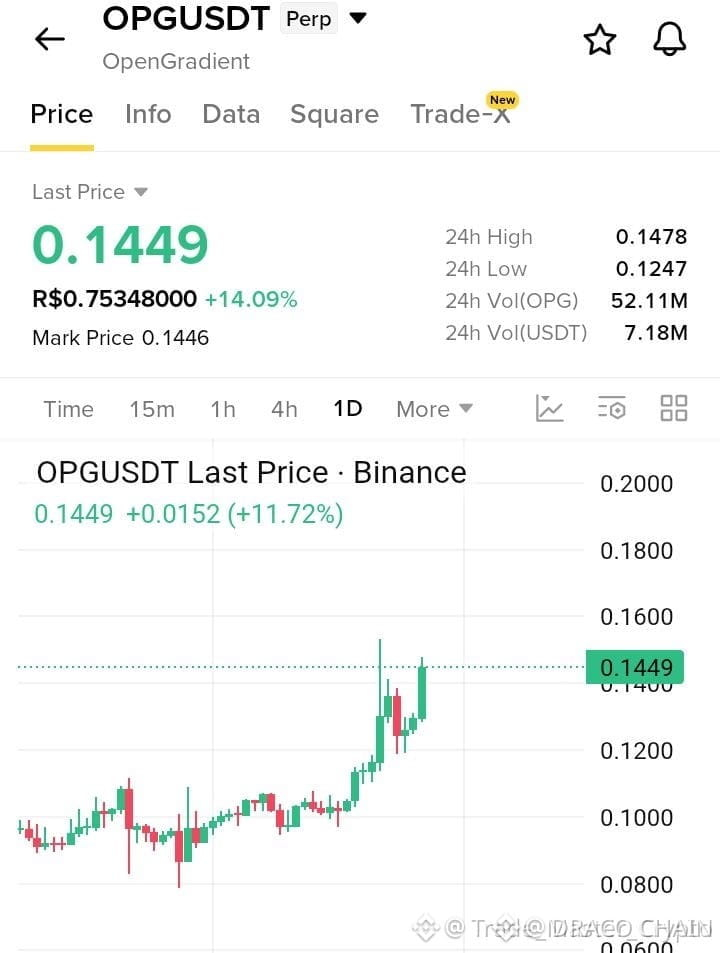
🚨 $OPG PREPARES FOR AN EXPANSION PHASE FROM A CRITICAL DEMAND POOL! 🟢
Entry: 0.01449 ⚡
📌 Price structure on $OPG is signaling a clean structural shift, with smart money defending the 0.01449 level as institutional order blocks get tapped. 📊 We are observing strong liquidity absorption around this key zone while downside pressure visibly dries up.
💡 With downside liquidity fully swept, the market is primed for a potential displacement back toward higher-timeframe inefficiencies. 🌊 Capital rotation into assets like $RARE and $MUBARAK suggests broader low-cap momentum is building across the board. 💬 Are you front-running this institutional demand block or waiting for structural confirmation? 👇
⚠️ Not financial advice. Always manage your risk. 🛡️
🏷️ #OPG #LongSetup #Crypto #MarketStructure #OrderFlow
🎯 🦈
🚨 $OPG PREPARES FOR AN EXPANSION PHASE FROM A CRITICAL DEMAND POOL! 🟢
Entry: 0.01449 ⚡
📌 Price structure on $OPG is signaling a clean structural shift, with smart money defending the 0.01449 level as institutional order blocks get tapped. 📊 We are observing strong liquidity absorption around this key zone while downside pressure visibly dries up.
💡 With downside liquidity fully swept, the market is primed for a potential displacement back toward higher-timeframe inefficiencies. 🌊 Capital rotation into assets like $RARE and $MUBARAK suggests broader low-cap momentum is building across the board. 💬 Are you front-running this institutional demand block or waiting for structural confirmation? 👇
⚠️ Not financial advice. Always manage your risk. 🛡️
🏷️ #OPG #LongSetup #Crypto #MarketStructure #OrderFlow
🎯 🦈
Entry: 0.01449 ⚡
📌 Price structure on $OPG is signaling a clean structural shift, with smart money defending the 0.01449 level as institutional order blocks get tapped. 📊 We are observing strong liquidity absorption around this key zone while downside pressure visibly dries up.
💡 With downside liquidity fully swept, the market is primed for a potential displacement back toward higher-timeframe inefficiencies. 🌊 Capital rotation into assets like $RARE and $MUBARAK suggests broader low-cap momentum is building across the board. 💬 Are you front-running this institutional demand block or waiting for structural confirmation? 👇
⚠️ Not financial advice. Always manage your risk. 🛡️
🏷️ #OPG #LongSetup #Crypto #MarketStructure #OrderFlow
🎯 🦈
42

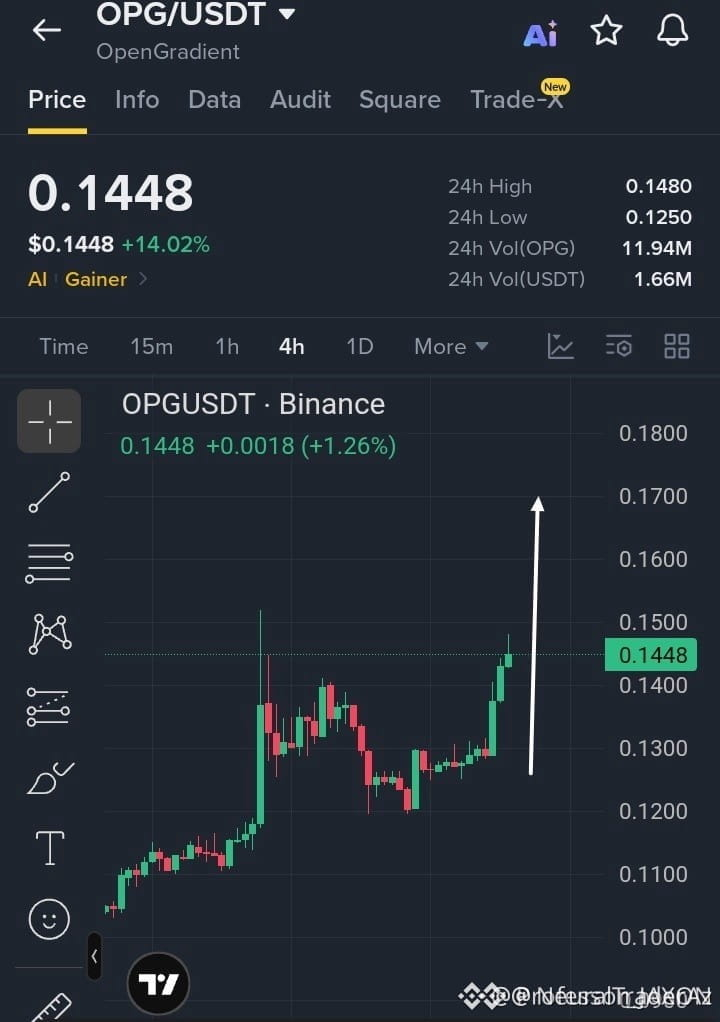
💥 $OPG BREAKS RANGE STRUCTURE AS SMART MONEY TARGETS $0.17 LIQUIDITY! ⚡
Entry: $0.142 - $0.145 ⚡
Target: $0.150 - $0.170 🚀
Stop Loss: $0.136 ⚠️
Smart money has efficiently reclaimed the pivotal $0.13–$0.14 range high with accelerating momentum. 📊 Sustained acceptance above $0.140 confirms institutional order flow absorption, clearing localized overhead supply.
As buy-side liquidity gets swept, the structural imbalance opens a fluid expansion path toward key upper resistance zones. 💡 Risk parameters remain tightly anchored below the market structure pivot at $0.136.
💬 Are you positioning on this structural reclaim, or waiting for a deeper entry sweep within the demand zone? 👇
⚠️ Not financial advice. Always manage your risk. 🛡️
🏷️ #OPG #LongSetup #Breakout #Crypto #MarketStructure
🎯 ⚡
💥 $OPG BREAKS RANGE STRUCTURE AS SMART MONEY TARGETS $0.17 LIQUIDITY! ⚡
Entry: $0.142 - $0.145 ⚡
Target: $0.150 - $0.170 🚀
Stop Loss: $0.136 ⚠️
Smart money has efficiently reclaimed the pivotal $0.13–$0.14 range high with accelerating momentum. 📊 Sustained acceptance above $0.140 confirms institutional order flow absorption, clearing localized overhead supply.
As buy-side liquidity gets swept, the structural imbalance opens a fluid expansion path toward key upper resistance zones. 💡 Risk parameters remain tightly anchored below the market structure pivot at $0.136.
💬 Are you positioning on this structural reclaim, or waiting for a deeper entry sweep within the demand zone? 👇
⚠️ Not financial advice. Always manage your risk. 🛡️
🏷️ #OPG #LongSetup #Breakout #Crypto #MarketStructure
🎯 ⚡
Entry: $0.142 - $0.145 ⚡
Target: $0.150 - $0.170 🚀
Stop Loss: $0.136 ⚠️
Smart money has efficiently reclaimed the pivotal $0.13–$0.14 range high with accelerating momentum. 📊 Sustained acceptance above $0.140 confirms institutional order flow absorption, clearing localized overhead supply.
As buy-side liquidity gets swept, the structural imbalance opens a fluid expansion path toward key upper resistance zones. 💡 Risk parameters remain tightly anchored below the market structure pivot at $0.136.
💬 Are you positioning on this structural reclaim, or waiting for a deeper entry sweep within the demand zone? 👇
⚠️ Not financial advice. Always manage your risk. 🛡️
🏷️ #OPG #LongSetup #Breakout #Crypto #MarketStructure
🎯 ⚡
29

·
--
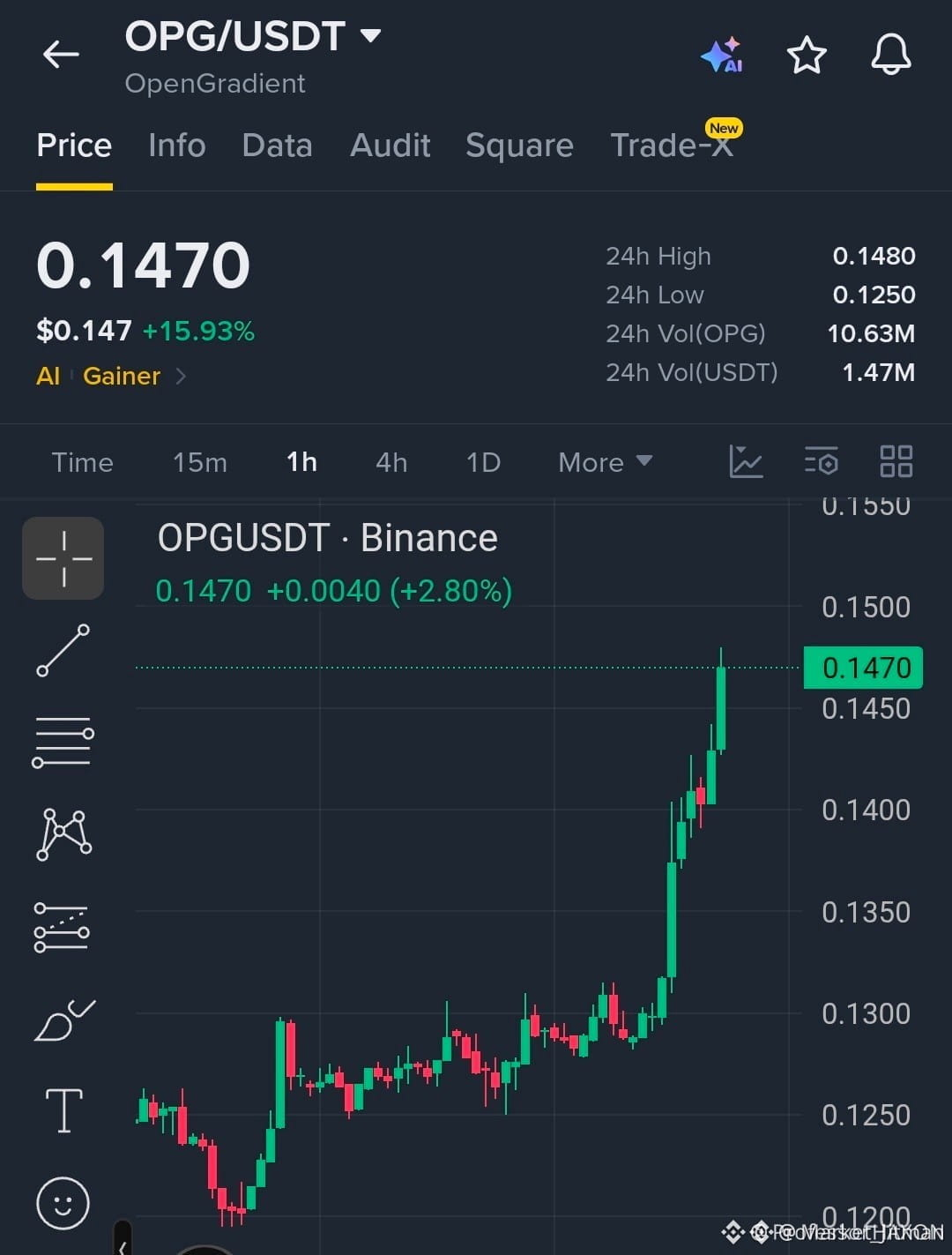
⚡ $OPG ACCUMULATION HEATS UP FOR A BREAKOUT PAST THE $0.1500 RESISTANCE! 💥
Entry: 0.1440 - 0.1470 ⚡
Target: 0.1500 / 0.1550 / 0.1620 🚀
Stop Loss: 0.1380 ⚠️
📌 $OPG is coiling right under the critical $0.1500 resistance block while volume steadily expands across lower timeframes. Price action continues to hold firmly above the previous breakout zone, demonstrating sharp demand absorbing every minor dip.
📊 If buyers force a clean push through $0.1500, momentum could rapidly accelerate toward our upper target expansion zones. 🔍 Keep your risk locked down, as dropping below 0.1380 invalidates this immediate continuation setup.
💬 Are you positioning inside this entry window before the breakout confirms, or waiting for the resistance flip? 👇
⚠️ Not financial advice. Always manage your risk. 🛡️
🏷️ #OPG #LongSetup #Breakout #Crypto
⚡ 💎
⚡ $OPG ACCUMULATION HEATS UP FOR A BREAKOUT PAST THE $0.1500 RESISTANCE! 💥
Entry: 0.1440 - 0.1470 ⚡
Target: 0.1500 / 0.1550 / 0.1620 🚀
Stop Loss: 0.1380 ⚠️
📌 $OPG is coiling right under the critical $0.1500 resistance block while volume steadily expands across lower timeframes. Price action continues to hold firmly above the previous breakout zone, demonstrating sharp demand absorbing every minor dip.
📊 If buyers force a clean push through $0.1500, momentum could rapidly accelerate toward our upper target expansion zones. 🔍 Keep your risk locked down, as dropping below 0.1380 invalidates this immediate continuation setup.
💬 Are you positioning inside this entry window before the breakout confirms, or waiting for the resistance flip? 👇
⚠️ Not financial advice. Always manage your risk. 🛡️
🏷️ #OPG #LongSetup #Breakout #Crypto
⚡ 💎
Entry: 0.1440 - 0.1470 ⚡
Target: 0.1500 / 0.1550 / 0.1620 🚀
Stop Loss: 0.1380 ⚠️
📌 $OPG is coiling right under the critical $0.1500 resistance block while volume steadily expands across lower timeframes. Price action continues to hold firmly above the previous breakout zone, demonstrating sharp demand absorbing every minor dip.
📊 If buyers force a clean push through $0.1500, momentum could rapidly accelerate toward our upper target expansion zones. 🔍 Keep your risk locked down, as dropping below 0.1380 invalidates this immediate continuation setup.
💬 Are you positioning inside this entry window before the breakout confirms, or waiting for the resistance flip? 👇
⚠️ Not financial advice. Always manage your risk. 🛡️
🏷️ #OPG #LongSetup #Breakout #Crypto
⚡ 💎
13
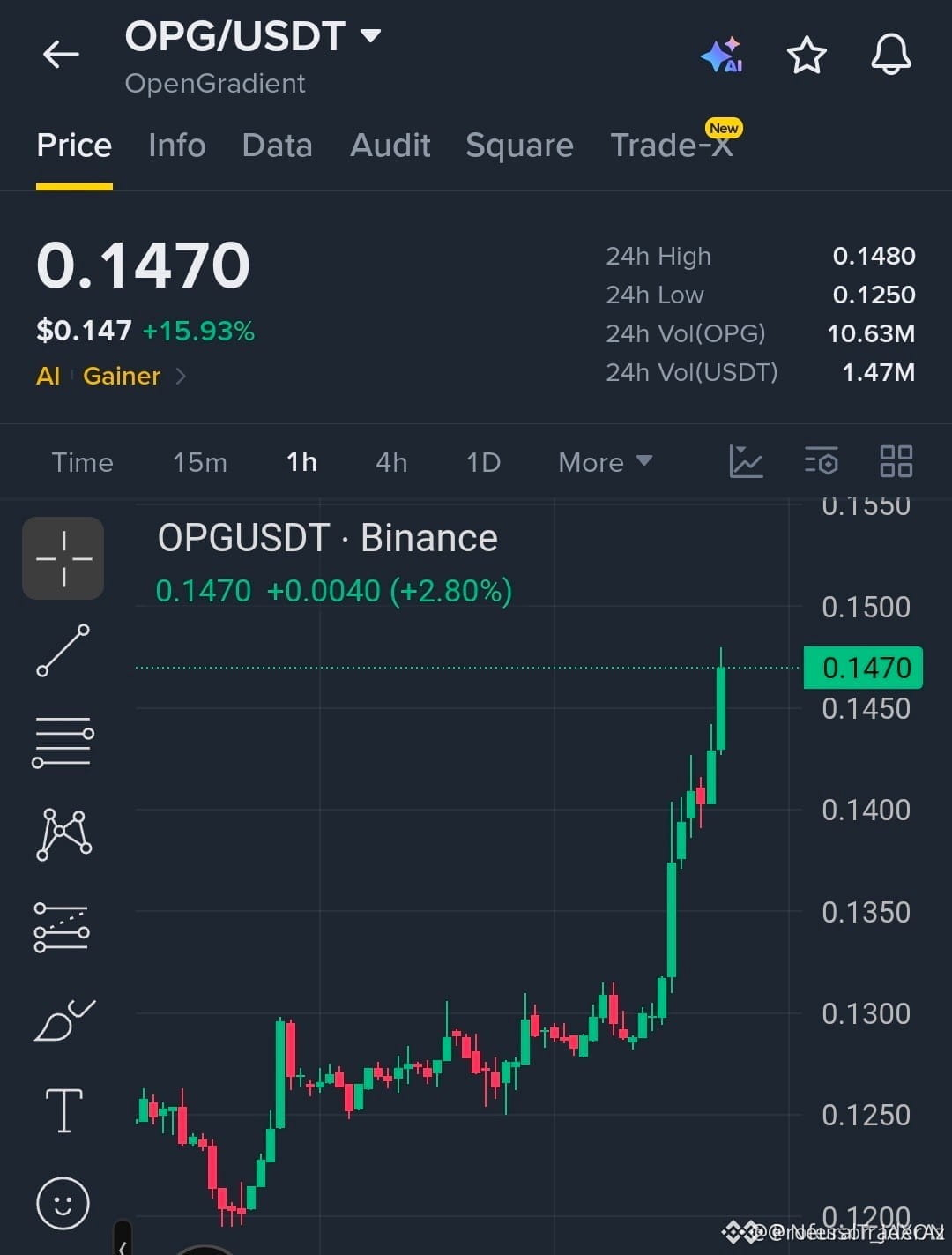
$OPG PRESSING LOCAL LIQUIDITY AT $0.1500 AS SMART MONEY ACCUMULATES ABOVE SUPPORT! 🚀 🟢
Entry: 0.1440 - 0.1470 ⚡
Target: 0.1620 🎯
Stop Loss: 0.1380 ⚠️
$OPG is demonstrating structural strength, sustaining price action cleanly above the prior consolidation flip zone. 📊 Rising volume confirms institutional demand absorption as price compresses directly beneath the key $0.1500 buy-side liquidity pool.
An aggressive acceptance above $0.1500 clears overhead inefficiency, opening the path for an expansion toward $0.1620. 💡 Risk remains strictly defined below the structural pivot at $0.1380 to preserve risk-to-reward asymmetry. 💬 Will buyers breach this supply zone on the current push, or do you expect one final sweep into the demand block? 👇
⚠️ Not financial advice. Always manage your risk. 🛡️
🏷️ #OPG #Breakout #Altcoins #SmartMoney #MarketStructure
🎯 🦈
$OPG PRESSING LOCAL LIQUIDITY AT $0.1500 AS SMART MONEY ACCUMULATES ABOVE SUPPORT! 🚀 🟢
Entry: 0.1440 - 0.1470 ⚡
Target: 0.1620 🎯
Stop Loss: 0.1380 ⚠️
$OPG is demonstrating structural strength, sustaining price action cleanly above the prior consolidation flip zone. 📊 Rising volume confirms institutional demand absorption as price compresses directly beneath the key $0.1500 buy-side liquidity pool.
An aggressive acceptance above $0.1500 clears overhead inefficiency, opening the path for an expansion toward $0.1620. 💡 Risk remains strictly defined below the structural pivot at $0.1380 to preserve risk-to-reward asymmetry. 💬 Will buyers breach this supply zone on the current push, or do you expect one final sweep into the demand block? 👇
⚠️ Not financial advice. Always manage your risk. 🛡️
🏷️ #OPG #Breakout #Altcoins #SmartMoney #MarketStructure
🎯 🦈
Entry: 0.1440 - 0.1470 ⚡
Target: 0.1620 🎯
Stop Loss: 0.1380 ⚠️
$OPG is demonstrating structural strength, sustaining price action cleanly above the prior consolidation flip zone. 📊 Rising volume confirms institutional demand absorption as price compresses directly beneath the key $0.1500 buy-side liquidity pool.
An aggressive acceptance above $0.1500 clears overhead inefficiency, opening the path for an expansion toward $0.1620. 💡 Risk remains strictly defined below the structural pivot at $0.1380 to preserve risk-to-reward asymmetry. 💬 Will buyers breach this supply zone on the current push, or do you expect one final sweep into the demand block? 👇
⚠️ Not financial advice. Always manage your risk. 🛡️
🏷️ #OPG #Breakout #Altcoins #SmartMoney #MarketStructure
🎯 🦈
20
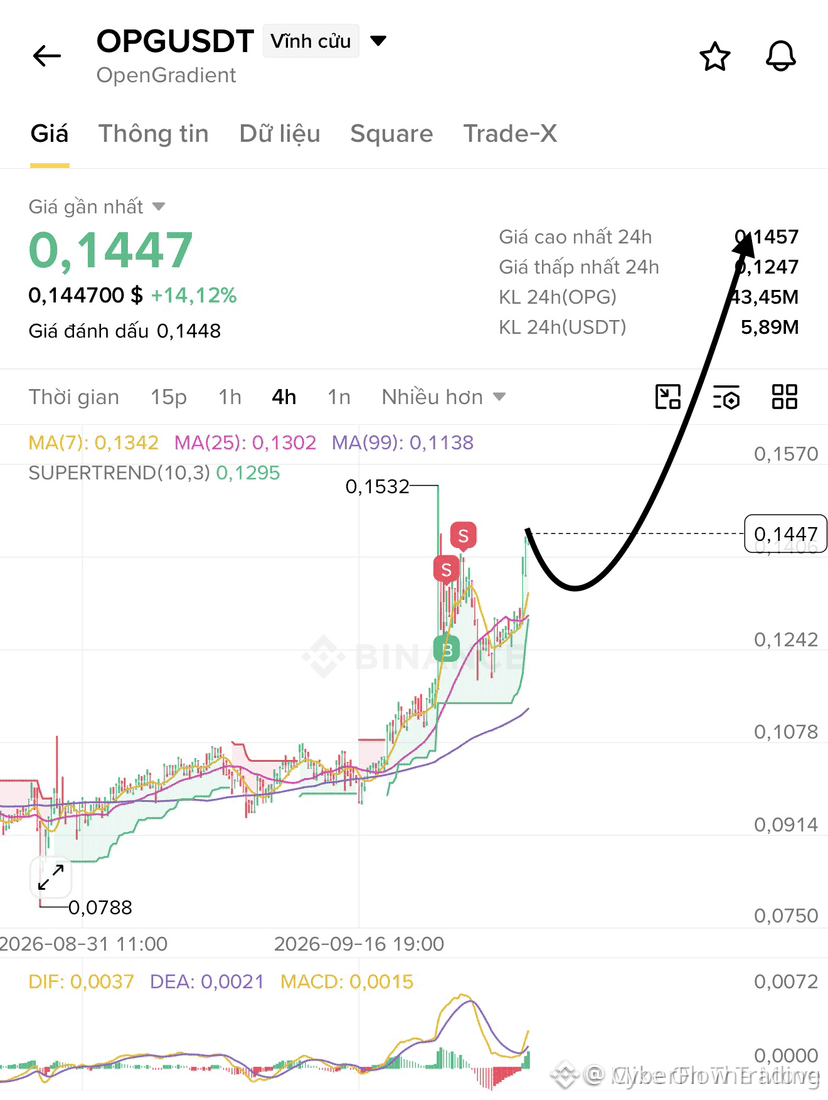
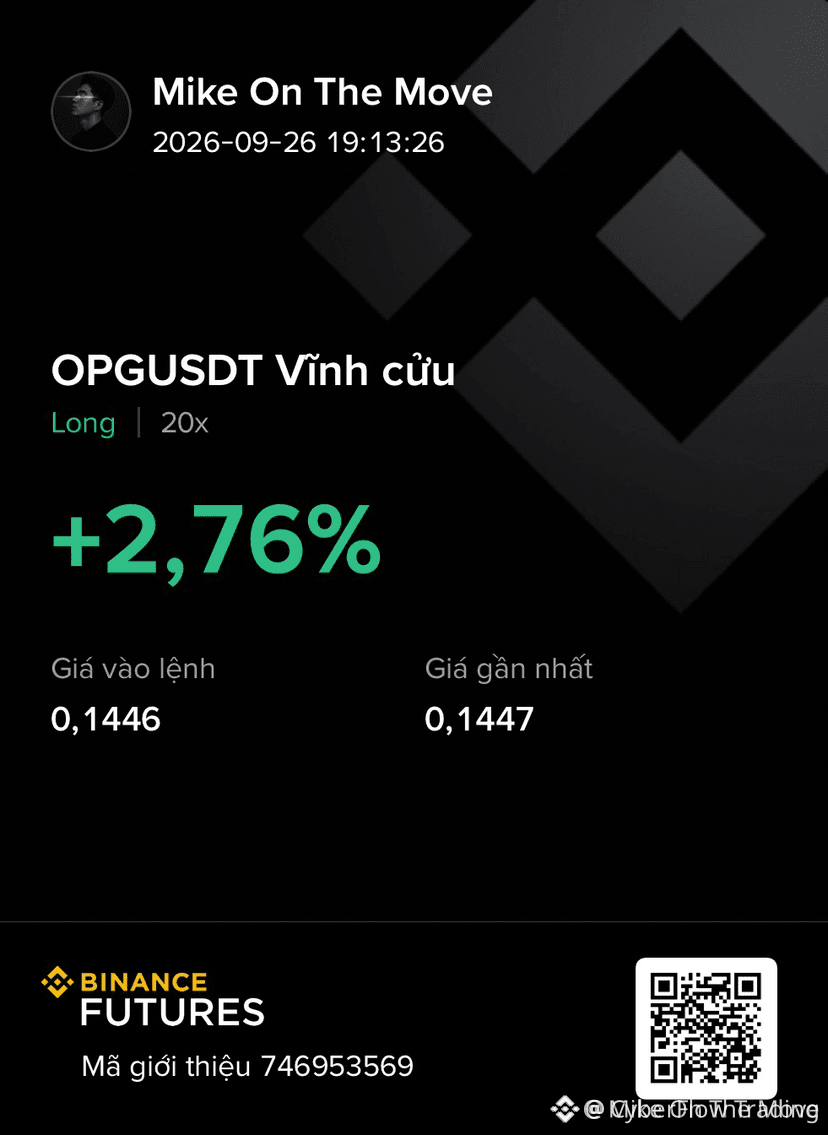
🚨 $OPG BREAKOUT MOMENTUM HEATS UP AS BUYERS ABSORB SELL-OFF PRESSURE! ⚡
Entry: 0.142 - 0.146 ⚡
Target: 0.149 - 0.158 🚀
Stop Loss: 0.132 ⚠️
📌 $OPG is coiling inside a tight accumulation block, with local dips getting aggressively absorbed by smart money positioning early for the expansion. 📊 Order flow indicates sellers are exhausting fast as price compresses right below the primary resistance shelf.
💡 A decisive reclaim above 0.146 clears the path for acceleration toward 0.158, offering a clean risk-defined long setup as upside velocity builds. 💬 Are you positioning in the bid zone now or waiting for the confirmed breakout candle? 👇
⚠️ Not financial advice. Always manage your risk. 🛡️
🏷️ #OPG #LongSetup #Breakout #Crypto
🔥 🎯
🚨 $OPG BREAKOUT MOMENTUM HEATS UP AS BUYERS ABSORB SELL-OFF PRESSURE! ⚡
Entry: 0.142 - 0.146 ⚡
Target: 0.149 - 0.158 🚀
Stop Loss: 0.132 ⚠️
📌 $OPG is coiling inside a tight accumulation block, with local dips getting aggressively absorbed by smart money positioning early for the expansion. 📊 Order flow indicates sellers are exhausting fast as price compresses right below the primary resistance shelf.
💡 A decisive reclaim above 0.146 clears the path for acceleration toward 0.158, offering a clean risk-defined long setup as upside velocity builds. 💬 Are you positioning in the bid zone now or waiting for the confirmed breakout candle? 👇
⚠️ Not financial advice. Always manage your risk. 🛡️
🏷️ #OPG #LongSetup #Breakout #Crypto
🔥 🎯
Entry: 0.142 - 0.146 ⚡
Target: 0.149 - 0.158 🚀
Stop Loss: 0.132 ⚠️
📌 $OPG is coiling inside a tight accumulation block, with local dips getting aggressively absorbed by smart money positioning early for the expansion. 📊 Order flow indicates sellers are exhausting fast as price compresses right below the primary resistance shelf.
💡 A decisive reclaim above 0.146 clears the path for acceleration toward 0.158, offering a clean risk-defined long setup as upside velocity builds. 💬 Are you positioning in the bid zone now or waiting for the confirmed breakout candle? 👇
⚠️ Not financial advice. Always manage your risk. 🛡️
🏷️ #OPG #LongSetup #Breakout #Crypto
🔥 🎯
43
Log in to explore more content
Join global crypto users on Binance Square
⚡️ Get latest and useful information about crypto.
💬 Trusted by the world’s largest crypto exchange.
👍 Discover real insights from verified creators.
Email / Phone number
Trending Topics
1
#NFPWatch
10.8M views
19,141 Discussing
2
#BitcoinFundingRateTriplesTo10%
147,147 views
1,087 Discussing
3
#BitcoinSurpasses$86KUp2.99%
47,032 views
108 Discussing
4
#ZcashFalls21%FromSeptemberPeak
80,549 views
791 Discussing
5
#USSeptemberPayrollsAdd29KUnemploymentRises4.2%
66,460 views
482 Discussing
6
#XRPPostsFirstThreeGreenMonthsInQ3
53,932 views
656 Discussing
7
#BNBChainTokenizedStocksTop$1BAt30%Share
24,720 views
37 Discussing
8
#BitcoinRisesToward$85K
117,005 views
154 Discussing
9
#AmazonPlansToSell$8BNvidiaChips
7,800 views
89 Discussing
10
#NEARFallsToAround$4.70Down14%
48,769 views
117 Discussing