
#brasil
brasil
2M views
1,858 Discussing
Hot
Latest

·
--
Foxbit files crypto license application as DTVM advances at Central BankFoxbit confirmed that it filed its application for authorization with the Central Bank on October 29 to operate as a virtual asset service provider (VASP), and revealed that its Securities Distributor (DTVM) structure is in the final stage of approval by the regulator.
Foxbit’s application is part of a broader industry trend. The Central Bank published an official list of 120 applications for authorization to operate with crypto assets in Brazil, 119 of which are still under review and one of which was denied.
Foxbit files crypto license application as DTVM advances at Central Bank
Foxbit confirmed that it filed its application for authorization with the Central Bank on October 29 to operate as a virtual asset service provider (VASP), and revealed that its Securities Distributor (DTVM) structure is in the final stage of approval by the regulator.
Foxbit’s application is part of a broader industry trend. The Central Bank published an official list of 120 applications for authorization to operate with crypto assets in Brazil, 119 of which are still under review and one of which was denied.
Foxbit’s application is part of a broader industry trend. The Central Bank published an official list of 120 applications for authorization to operate with crypto assets in Brazil, 119 of which are still under review and one of which was denied.
768
·
--
Binance Brasil receives foreign exchange license from the Central BankBinance Brasil received authorization from the Central Bank of Brazil to operate in the foreign exchange market, becoming the first native virtual asset platform to obtain this type of license in the country.
The license was granted to Binance Brasil Corretora, the company’s legal name, formerly known as Sim;paul. With it, the broker now holds three regulatory authorizations in Brazil: the foreign exchange license, along with the previously obtained licenses as a securities broker and electronic money issuer.
The most immediate practical effect is on international transfer limits. Foreign exchange brokers authorized to provide virtual asset services allow users to make international transfers of up to US$500,000, compared with a US$100,000 limit for clients of institutions without this authorization.
Binance Brasil receives foreign exchange license from the Central Bank
Binance Brasil received authorization from the Central Bank of Brazil to operate in the foreign exchange market, becoming the first native virtual asset platform to obtain this type of license in the country.
The license was granted to Binance Brasil Corretora, the company’s legal name, formerly known as Sim;paul. With it, the broker now holds three regulatory authorizations in Brazil: the foreign exchange license, along with the previously obtained licenses as a securities broker and electronic money issuer.
The most immediate practical effect is on international transfer limits. Foreign exchange brokers authorized to provide virtual asset services allow users to make international transfers of up to US$500,000, compared with a US$100,000 limit for clients of institutions without this authorization.
Priyanshu_01:
Big step for Binance in Brazil 🇧🇷 Does this mean BRL deposits and withdrawals get easier for users there?
1
11
5.5k
·
--
Federal Police launch three operations targeting R$ 4.3 billion laundered through cryptoassetsOn November 24, 2026, the Federal Police launched three simultaneous operations targeting money laundering schemes that used cryptoassets, online betting and shell companies to move more than R$ 4.3 billion.
The operations were named Narco Azimut III, Narco Oriente and Narco Alicerce. Around 130 federal police officers carried out 72 search and seizure warrants and temporary arrest warrants in São Paulo, Paraná, Pernambuco, Goiás, Rio Grande do Sul and the Federal District, according to the Federal Police’s official statement.
Federal Police launch three operations targeting R$ 4.3 billion laundered through cryptoassets
On November 24, 2026, the Federal Police launched three simultaneous operations targeting money laundering schemes that used cryptoassets, online betting and shell companies to move more than R$ 4.3 billion.
The operations were named Narco Azimut III, Narco Oriente and Narco Alicerce. Around 130 federal police officers carried out 72 search and seizure warrants and temporary arrest warrants in São Paulo, Paraná, Pernambuco, Goiás, Rio Grande do Sul and the Federal District, according to the Federal Police’s official statement.
The operations were named Narco Azimut III, Narco Oriente and Narco Alicerce. Around 130 federal police officers carried out 72 search and seizure warrants and temporary arrest warrants in São Paulo, Paraná, Pernambuco, Goiás, Rio Grande do Sul and the Federal District, according to the Federal Police’s official statement.
1
2.9k
·
--
Lumx brings together 100 stablecoin market leaders in São PauloLumx is holding the third edition of Lumx Connference in São Paulo on December 3, a closed-door gathering bringing together 100 decision-makers from the stablecoin market as the sector digests the end of the deadline for submitting authorization applications to the Central Bank.
The deadline for virtual asset companies already operating in Brazil to file an application for authorization with the Central Bank ended on October 30. The framework was established by BCB Resolutions No. 519, 520 and 521, published in November 2025.
Lumx brings together 100 stablecoin market leaders in São Paulo
Lumx is holding the third edition of Lumx Connference in São Paulo on December 3, a closed-door gathering bringing together 100 decision-makers from the stablecoin market as the sector digests the end of the deadline for submitting authorization applications to the Central Bank.
The deadline for virtual asset companies already operating in Brazil to file an application for authorization with the Central Bank ended on October 30. The framework was established by BCB Resolutions No. 519, 520 and 521, published in November 2025.
The deadline for virtual asset companies already operating in Brazil to file an application for authorization with the Central Bank ended on October 30. The framework was established by BCB Resolutions No. 519, 520 and 521, published in November 2025.
2
1k
·
--
Betting Law bans cryptocurrencies at licensed betting houses in BrazilThe Betting Law excluded cryptocurrencies from all payment methods accepted by licensed betting houses in Brazil, making it illegal for operators, funders, and intermediaries to process deposits or withdrawals in digital assets.
The ban does not stem from an isolated ordinance. The legislation establishing the regulatory framework for sports betting in Brazil classified cryptocurrencies under the broad term “virtual assets,” prohibiting their use as a means of payment on platforms authorized by the Ministry of Finance’s Secretariat of Prizes and Betting.
Betting Law bans cryptocurrencies at licensed betting houses in Brazil
The Betting Law excluded cryptocurrencies from all payment methods accepted by licensed betting houses in Brazil, making it illegal for operators, funders, and intermediaries to process deposits or withdrawals in digital assets.
The ban does not stem from an isolated ordinance. The legislation establishing the regulatory framework for sports betting in Brazil classified cryptocurrencies under the broad term “virtual assets,” prohibiting their use as a means of payment on platforms authorized by the Ministry of Finance’s Secretariat of Prizes and Betting.
The ban does not stem from an isolated ordinance. The legislation establishing the regulatory framework for sports betting in Brazil classified cryptocurrencies under the broad term “virtual assets,” prohibiting their use as a means of payment on platforms authorized by the Ministry of Finance’s Secretariat of Prizes and Betting.
160

Verified
Article
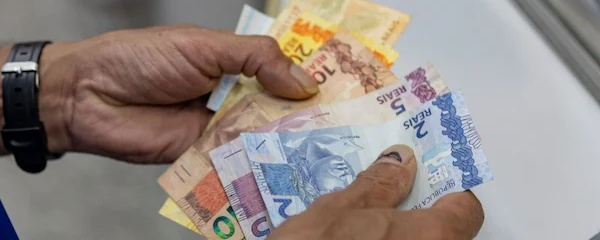
Brazil faces a “confidence shock,” and the real is Latin America’s second-most depreciated currencyBrazil’s central bank had to intervene on Thursday to support the real amid growing expectations of further interest rate hikes in the United States.
Brazil faces a “confidence shock,” and the real is Latin America’s second-most depreciated currency. Brazilian real.
Bloomberg Línea — Brazil faces a “confidence shock” driven by fiscal uncertainty, which has put pressure on the real and caused it to fall 7.84% against the U.S. dollar so far this year.
Brazil faces a “confidence shock,” and the real is Latin America’s second-most depreciated currency
Brazil’s central bank had to intervene on Thursday to support the real amid growing expectations of further interest rate hikes in the United States.
Brazil faces a “confidence shock,” and the real is Latin America’s second-most depreciated currency. Brazilian real.
Bloomberg Línea — Brazil faces a “confidence shock” driven by fiscal uncertainty, which has put pressure on the real and caused it to fall 7.84% against the U.S. dollar so far this year.
2
7.3k
·
--
Crypto Heist Operation arrests suspect accused of concealing R$ 61,000 in crypto in São PauloThe São Paulo Civil Police launched Operation Crypto Heist and arrested a 42-year-old man suspected of taking part in a robbery and concealing R$ 61,000 in cryptoassets in the state capital.
The operation was carried out by the State Department of Criminal Investigations (DEIC), through the 4th Precinct of the Cybercrime Division (DCCiber). The 42-year-old man was arrested on Tuesday, November 17, 2026.
To make the arrest and gather evidence, police simultaneously executed seven search and seizure warrants at three locations: the capital, Cotia, and Taboão da Serra.
Crypto Heist Operation arrests suspect accused of concealing R$ 61,000 in crypto in São Paulo
The São Paulo Civil Police launched Operation Crypto Heist and arrested a 42-year-old man suspected of taking part in a robbery and concealing R$ 61,000 in cryptoassets in the state capital.
The operation was carried out by the State Department of Criminal Investigations (DEIC), through the 4th Precinct of the Cybercrime Division (DCCiber). The 42-year-old man was arrested on Tuesday, November 17, 2026.
To make the arrest and gather evidence, police simultaneously executed seven search and seizure warrants at three locations: the capital, Cotia, and Taboão da Serra.
Square-Creator-7155764bb84b4af6ca3d:
nossa ..que fortuna!! os 131 milhões em contratos advocatícios nem contam...
1
4
4.4k

·
--
Bearish
Verified
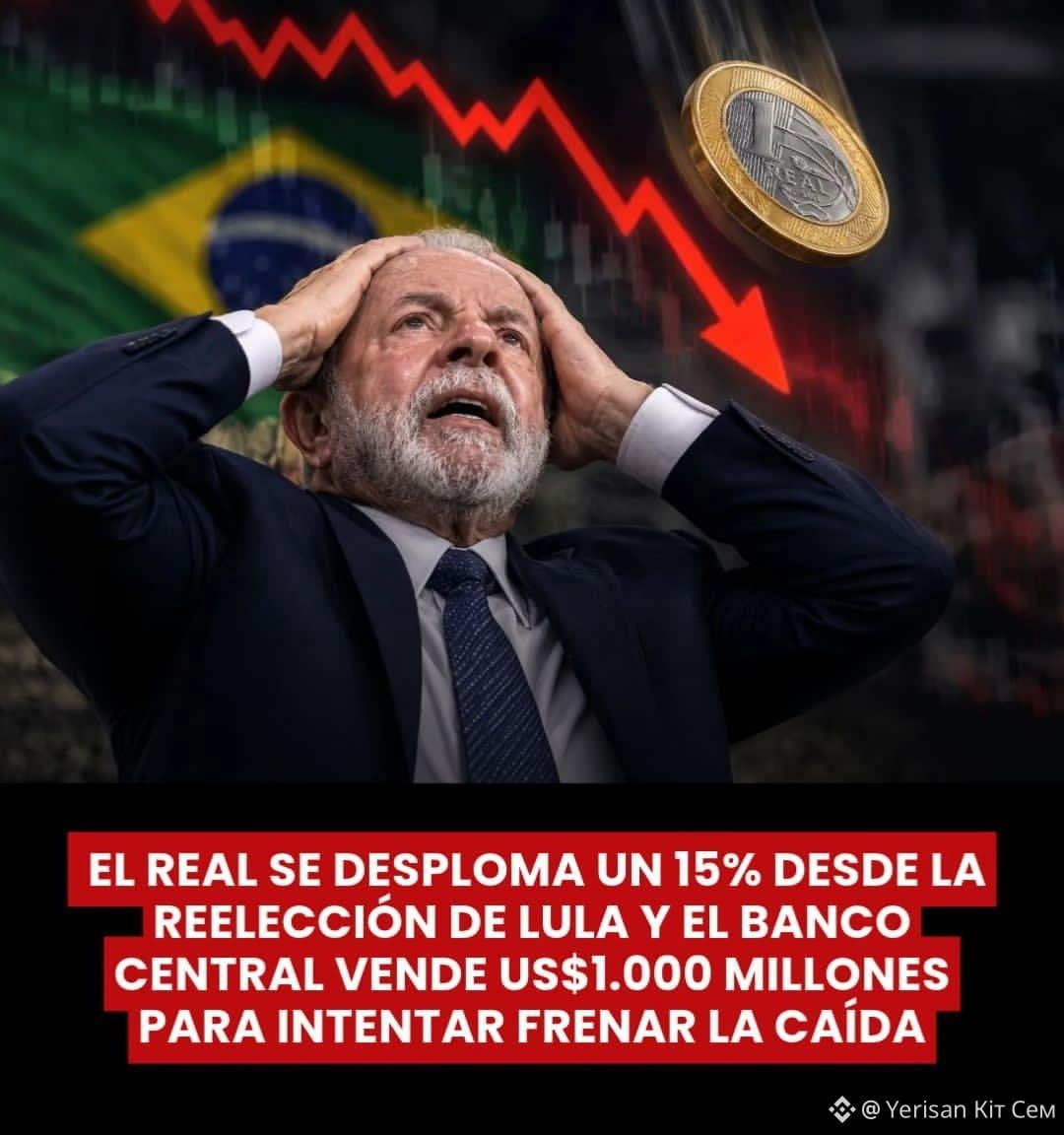
🚨🇧🇷 | Brazil is facing growing currency pressure following the re-election of Luiz Inácio Lula da Silva. The real has depreciated by 15% since October, prompting the Central Bank to intervene in the market and sell US$1 billion in an attempt to curb the currency’s plunge.
🔥
According to today’s exchange rate data, the Brazilian currency closed this Thursday at 5.9323 reais per dollar, down 1.10% for the day and reaching its lowest level since April 2025.
$BR
$SXT
$EVAA
#Brasil
#eeuu
{spot}(BNBUSDT)
{spot}(BTCUSDT)
{spot}(ETHUSDT)
🚨🇧🇷 | Brazil is facing growing currency pressure following the re-election of Luiz Inácio Lula da Silva. The real has depreciated by 15% since October, prompting the Central Bank to intervene in the market and sell US$1 billion in an attempt to curb the currency’s plunge.
🔥
According to today’s exchange rate data, the Brazilian currency closed this Thursday at 5.9323 reais per dollar, down 1.10% for the day and reaching its lowest level since April 2025.
$BR
$SXT
$EVAA
#Brasil
#eeuu
🔥
According to today’s exchange rate data, the Brazilian currency closed this Thursday at 5.9323 reais per dollar, down 1.10% for the day and reaching its lowest level since April 2025.
$BR
$SXT
$EVAA
#Brasil
#eeuu
3
647
·
--
Chainalysis launches AI to track cryptocurrencies and combat money laundering in BrazilChainalysis has made available in Brazil an artificial intelligence platform capable of tracking transactions in Bitcoin, stablecoins, and other digital assets, and automating money laundering investigations without requiring operators to master advanced blockchain analysis tools.
The solution, called Chain, processes a database of more than 450 billion transactions recorded on the Chainalysis network.
Governments, law enforcement agencies, banks, and exchanges can use it to analyze suspicious transaction alerts, map risks associated with wallets, and generate reports required by regulatory authorities, all within a single environment.
Chainalysis launches AI to track cryptocurrencies and combat money laundering in Brazil
Chainalysis has made available in Brazil an artificial intelligence platform capable of tracking transactions in Bitcoin, stablecoins, and other digital assets, and automating money laundering investigations without requiring operators to master advanced blockchain analysis tools.
The solution, called Chain, processes a database of more than 450 billion transactions recorded on the Chainalysis network.
Governments, law enforcement agencies, banks, and exchanges can use it to analyze suspicious transaction alerts, map risks associated with wallets, and generate reports required by regulatory authorities, all within a single environment.
81
·
--
Brazil has the 2nd-largest increase in identity fraud in Latin America, Sumsub report findsBrazil recorded a 58% increase in identity fraud in 2026, ranking second among Latin American countries with the largest growth in this type of crime, according to Sumsub’s Identity Fraud Report 2026–2027. The country is behind only Suriname (77%) and ahead of Haiti (41%) and Nicaragua (4%).
The report was prepared based on an analysis of 5.8 million fraud cases and a comparison of global identity verification data observed between 2025 and 2026. The study also incorporates a survey of more than 1,400 fraud and risk professionals and more than 1,500 consumers across 21 markets, including Brazil.
Brazil has the 2nd-largest increase in identity fraud in Latin America, Sumsub report finds
Brazil recorded a 58% increase in identity fraud in 2026, ranking second among Latin American countries with the largest growth in this type of crime, according to Sumsub’s Identity Fraud Report 2026–2027. The country is behind only Suriname (77%) and ahead of Haiti (41%) and Nicaragua (4%).
The report was prepared based on an analysis of 5.8 million fraud cases and a comparison of global identity verification data observed between 2025 and 2026. The study also incorporates a survey of more than 1,400 fraud and risk professionals and more than 1,500 consumers across 21 markets, including Brazil.
The report was prepared based on an analysis of 5.8 million fraud cases and a comparison of global identity verification data observed between 2025 and 2026. The study also incorporates a survey of more than 1,400 fraud and risk professionals and more than 1,500 consumers across 21 markets, including Brazil.
176

Article
Brazil: What the Central Bank allows and prohibits with stablecoinsBrazil: What the Central Bank allows and prohibits with stablecoins
A Central Bank of Brazil official linked stablecoins to money laundering, according to Livecoins. What Resolution 561 prohibits and what remains allowed.
The essentials
Gerson Romantini, head of the Foreign Exchange Division at the Central Bank of Brazil, said at a closed-door meeting that money moving into stablecoins acquires a “bad money mark,” according to Livecoins; the BCB has not confirmed this.
BCB Resolution 561, in force since October 1, prohibits using crypto assets to settle international payments through the regulated eFX channel, according to CoinDesk; it is not a general ban on stablecoins.
Brazil: What the Central Bank allows and prohibits with stablecoins
Brazil: What the Central Bank allows and prohibits with stablecoins
A Central Bank of Brazil official linked stablecoins to money laundering, according to Livecoins. What Resolution 561 prohibits and what remains allowed.
The essentials
Gerson Romantini, head of the Foreign Exchange Division at the Central Bank of Brazil, said at a closed-door meeting that money moving into stablecoins acquires a “bad money mark,” according to Livecoins; the BCB has not confirmed this.
BCB Resolution 561, in force since October 1, prohibits using crypto assets to settle international payments through the regulated eFX channel, according to CoinDesk; it is not a general ban on stablecoins.
23
·
--
Hashdex launches HYPH11, Brazil’s first Hyperliquid ETFHashdex announced HYPH11, Brazil’s first ETF dedicated to Hyperliquid’s HYPE token. It is set to launch on B3 on November 24, 2026, with a total annual fee of 0.70%.
HYPH11 will allow any investor with an account at a brokerage firm partnered with B3 to gain exposure to HYPE in Brazilian reais, without needing to open an account on a foreign exchange or manage their own digital wallet.
The fund will track the Nasdaq Hyperliquid Settlement Price Index, which reflects the price of HYPE in U.S. dollars, and will be managed by BTG Pactual. The offering is open to all investors and is regulated by the CVM.
Hashdex launches HYPH11, Brazil’s first Hyperliquid ETF
Hashdex announced HYPH11, Brazil’s first ETF dedicated to Hyperliquid’s HYPE token. It is set to launch on B3 on November 24, 2026, with a total annual fee of 0.70%.
HYPH11 will allow any investor with an account at a brokerage firm partnered with B3 to gain exposure to HYPE in Brazilian reais, without needing to open an account on a foreign exchange or manage their own digital wallet.
The fund will track the Nasdaq Hyperliquid Settlement Price Index, which reflects the price of HYPE in U.S. dollars, and will be managed by BTG Pactual. The offering is open to all investors and is regulated by the CVM.
377
·
--
NOVO lawmakers propose allowing Polymarket and Kalshi in BrazilNOVO party lawmakers introduced a bill to repeal the ban on prediction markets Polymarket and Kalshi in Brazil, transferring oversight of the platforms to the Brazilian Securities and Exchange Commission (CVM) and requiring the segregation of client funds in cryptoasset transactions.
The bill, identified as PL 5.811/2026, provides for contracts on elections, weather, and other events with verifiable outcomes. The proposal reverses the current regulatory approach: instead of bringing the platforms under sports betting law, it subjects them to the capital markets framework, under CVM supervision.
NOVO lawmakers propose allowing Polymarket and Kalshi in Brazil
NOVO party lawmakers introduced a bill to repeal the ban on prediction markets Polymarket and Kalshi in Brazil, transferring oversight of the platforms to the Brazilian Securities and Exchange Commission (CVM) and requiring the segregation of client funds in cryptoasset transactions.
The bill, identified as PL 5.811/2026, provides for contracts on elections, weather, and other events with verifiable outcomes. The proposal reverses the current regulatory approach: instead of bringing the platforms under sports betting law, it subjects them to the capital markets framework, under CVM supervision.
The bill, identified as PL 5.811/2026, provides for contracts on elections, weather, and other events with verifiable outcomes. The proposal reverses the current regulatory approach: instead of bringing the platforms under sports betting law, it subjects them to the capital markets framework, under CVM supervision.
2
3
1.3k
·
--
Central Bank identifies problems in 30% of crypto company license applicationsThe Central Bank of Brazil identified inconsistencies related to share capital in approximately 30% of authorization applications submitted by cryptocurrency companies. The situation highlights the challenges exchanges and other virtual asset service providers face in complying with the new rules governing the Brazilian market.
The information became public on Tuesday (10) during ABRACAM Speech 2026 in São Paulo. On the occasion, Ailton de Aquino Santos, the Central Bank’s Director of Supervision, expressed concern about companies that applied for licenses without presenting capital commensurate with regulatory requirements.
Central Bank identifies problems in 30% of crypto company license applications
The Central Bank of Brazil identified inconsistencies related to share capital in approximately 30% of authorization applications submitted by cryptocurrency companies. The situation highlights the challenges exchanges and other virtual asset service providers face in complying with the new rules governing the Brazilian market.
The information became public on Tuesday (10) during ABRACAM Speech 2026 in São Paulo. On the occasion, Ailton de Aquino Santos, the Central Bank’s Director of Supervision, expressed concern about companies that applied for licenses without presenting capital commensurate with regulatory requirements.
The information became public on Tuesday (10) during ABRACAM Speech 2026 in São Paulo. On the occasion, Ailton de Aquino Santos, the Central Bank’s Director of Supervision, expressed concern about companies that applied for licenses without presenting capital commensurate with regulatory requirements.
4
4.7k
·
--
Suplicy proposes blockchain for social currencies in São PauloEduardo Suplicy (PT-SP) introduced a bill in the São Paulo Legislative Assembly on social currencies and blockchain, authorizing the state government to provide financial and technological support to municipalities that create local payment systems backed by reais.
The text, divided into eight chapters, was filed with the São Paulo Legislative Assembly and regulates so-called solidarity finance in the state. The proposal states that nonprofit institutions known as community banks may issue digital assets for strictly local circulation, with each unit fully backed by reais.
Suplicy proposes blockchain for social currencies in São Paulo
Eduardo Suplicy (PT-SP) introduced a bill in the São Paulo Legislative Assembly on social currencies and blockchain, authorizing the state government to provide financial and technological support to municipalities that create local payment systems backed by reais.
The text, divided into eight chapters, was filed with the São Paulo Legislative Assembly and regulates so-called solidarity finance in the state. The proposal states that nonprofit institutions known as community banks may issue digital assets for strictly local circulation, with each unit fully backed by reais.
The text, divided into eight chapters, was filed with the São Paulo Legislative Assembly and regulates so-called solidarity finance in the state. The proposal states that nonprofit institutions known as community banks may issue digital assets for strictly local circulation, with each unit fully backed by reais.
1
1.2k
·
--
Government approves package to combat money laundering involving cryptocurrenciesThe Ministry of Justice and Public Security is coordinating a set of proposals to strengthen the fight against money laundering in Brazil, with cryptocurrencies explicitly included in financial investigations and in identifying the ultimate beneficiaries of suspicious transactions.
The Ministry of Justice and Public Security is drafting proposals to be sent to the National Congress with the aim of toughening legislation against organized crime.
Among the key points is the explicit inclusion of crypto assets in money laundering investigations, covering everything from the analysis of blockchain transactions to identifying the ultimate beneficiaries of wallets and transactions.
Government approves package to combat money laundering involving cryptocurrencies
The Ministry of Justice and Public Security is coordinating a set of proposals to strengthen the fight against money laundering in Brazil, with cryptocurrencies explicitly included in financial investigations and in identifying the ultimate beneficiaries of suspicious transactions.
The Ministry of Justice and Public Security is drafting proposals to be sent to the National Congress with the aim of toughening legislation against organized crime.
Among the key points is the explicit inclusion of crypto assets in money laundering investigations, covering everything from the analysis of blockchain transactions to identifying the ultimate beneficiaries of wallets and transactions.
1
2.3k

🔎 New from Brazil: Starting next week, Mercado Bitcoin customers will once again be able to deposit and withdraw via the PIX instant payment system 📲. An encouraging step after the lengthy interruption, but crypto transfers remain suspended 🤐. It seems the exchange is rebuilding trust one step at a time, and this may be a test of how users respond to traditional solutions before returning to the blockchain. Will cryptocurrencies return to the scene when the restrictions are lifted? 🤔
Not investment advice.
#BTC #CryptoNews #Brasil #PIX #MercadoBitcoin
Not investment advice.
#BTC #CryptoNews #Brasil #PIX #MercadoBitcoin

35
·
--
Brazilian bill seeks to block cryptocurrencies in deepfake fraudFederal Deputy José Medeiros (PL-MT) introduced Bill 5,729/2026, dubbed the Deepfake Anti-Crime Act, which establishes a national emergency protocol to block cryptoassets used in fraud involving deepfakes or voice cloning.
The bill was submitted to the Chamber of Deputies on November 3, 2026. The proposal requires Virtual Asset Service Providers (VASPs), banks, and payment institutions to provide detailed information about suspicious transactions upon receipt of a substantiated request or court order.
Brazilian bill seeks to block cryptocurrencies in deepfake fraud
Federal Deputy José Medeiros (PL-MT) introduced Bill 5,729/2026, dubbed the Deepfake Anti-Crime Act, which establishes a national emergency protocol to block cryptoassets used in fraud involving deepfakes or voice cloning.
The bill was submitted to the Chamber of Deputies on November 3, 2026. The proposal requires Virtual Asset Service Providers (VASPs), banks, and payment institutions to provide detailed information about suspicious transactions upon receipt of a substantiated request or court order.
The bill was submitted to the Chamber of Deputies on November 3, 2026. The proposal requires Virtual Asset Service Providers (VASPs), banks, and payment institutions to provide detailed information about suspicious transactions upon receipt of a substantiated request or court order.
3
4.5k
·
--
Brazil’s crypto market enters a new regulatory phase under the Central BankBrazil’s cryptoasset market entered a more regulated phase in late October, with the Central Bank taking on the role of supervisor for companies that broker, custody, or trade crypto in the country.
The key deadline in this transition was October 30: by that date, companies already operating in the country had to apply to the Central Bank for authorization to operate as Virtual Asset Service Providers (VASPs).
Those that did not apply for a license and wish to continue operating must notify the Central Bank in advance and comply with the same rules that apply to the sector.
Brazil’s crypto market enters a new regulatory phase under the Central Bank
Brazil’s cryptoasset market entered a more regulated phase in late October, with the Central Bank taking on the role of supervisor for companies that broker, custody, or trade crypto in the country.
The key deadline in this transition was October 30: by that date, companies already operating in the country had to apply to the Central Bank for authorization to operate as Virtual Asset Service Providers (VASPs).
Those that did not apply for a license and wish to continue operating must notify the Central Bank in advance and comply with the same rules that apply to the sector.
5
11.4k
·
--
CVM brings together Ripple, Stellar, Solana, and B3 to discuss tokenization in BrazilTokenization in Brazil is gaining a place on the regulatory agenda with a meeting organized by the Brazilian Securities and Exchange Commission (CVM). Next Friday, November 6, the agency will bring together representatives from Ripple, Stellar, Solana, B3, and other institutions to discuss the use of blockchain technology in the capital markets.
The event will mark the second meeting of the Tokenization Working Group (GTT) and will be streamed free of charge on the CVM’s official YouTube channel from 8:30 a.m. to 1 p.m. During the meeting, experts will present projects and proposals for trials involving the digital issuance of securities.
CVM brings together Ripple, Stellar, Solana, and B3 to discuss tokenization in Brazil
Tokenization in Brazil is gaining a place on the regulatory agenda with a meeting organized by the Brazilian Securities and Exchange Commission (CVM). Next Friday, November 6, the agency will bring together representatives from Ripple, Stellar, Solana, B3, and other institutions to discuss the use of blockchain technology in the capital markets.
The event will mark the second meeting of the Tokenization Working Group (GTT) and will be streamed free of charge on the CVM’s official YouTube channel from 8:30 a.m. to 1 p.m. During the meeting, experts will present projects and proposals for trials involving the digital issuance of securities.
The event will mark the second meeting of the Tokenization Working Group (GTT) and will be streamed free of charge on the CVM’s official YouTube channel from 8:30 a.m. to 1 p.m. During the meeting, experts will present projects and proposals for trials involving the digital issuance of securities.
1
273
Log in to explore more content
Join global crypto users on Binance Square
⚡️ Get latest and useful information about crypto.
💬 Trusted by the world’s largest crypto exchange.
👍 Discover real insights from verified creators.
Email / Phone number
Trending Topics
1
#CanMarketsReboundAfterThanksgiving?
30,177 views
643 Discussing
2
#CouldSpaceX’sOrbitalDataCentersBoostAIChipDemand?
19,004 views
404 Discussing
3
#EvolveAtBinanceBlockchainWeek
677,769 views
7,565 Discussing
4
#CorePCEBeatLiftsFedHikeOdds
185,035 views
1,432 Discussing
5
#BitcoinAndStocksSlipAgainAmidTrump’sTariffPlans
231,975 views
2,202 Discussing
6
#JensenHuangSaysNvidiaDoesn’tNeedASuccessionPlan
109,334 views
1,310 Discussing
7
#NasdaqFuturesSlideMoreThan3%
47,536 views
411 Discussing
8
#USOctoberPCEPriceIndexAt0.3%MoM
53,690 views
415 Discussing
9
#BitcoinETFsPostRecord$4.94BNovemberOutflows
10,207 views
53 Discussing
10
#TetherInvestsInArgentinasLemon
20,601 views
234 Discussing