

#tron
tron
5.9M views
22,584 Discussing
Hot
Latest

·
--
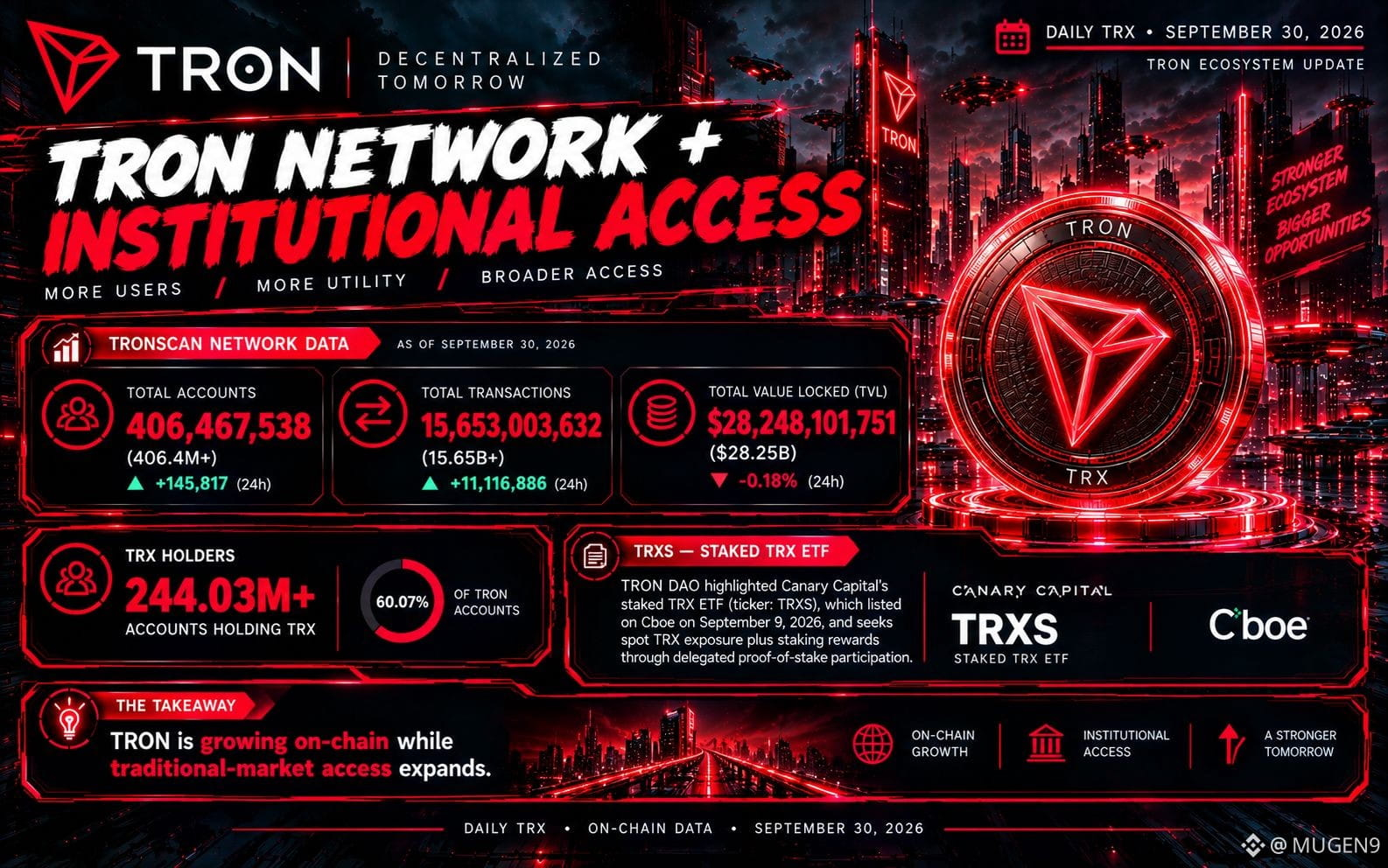
TRON is growing on-chain while access to TRX continues expanding.
Latest TRONSCAN data:
• 406.4M+ accounts
• 15.65B+ transactions
• 244M+ TRX holders
• $28.25B TVL
Around 60% of TRON accounts now hold TRX.
And in traditional markets, the TRXS Staked TRX ETF is giving investors a new way to gain spot TRX exposure while participating in TRON staking.
Different pieces, same bigger picture:
More network activity. More TRX holders. Broader access.
@TRONDAO
#TRX #TRON #Crypto #Blockchain
TRON is growing on-chain while access to TRX continues expanding.
Latest TRONSCAN data:
• 406.4M+ accounts
• 15.65B+ transactions
• 244M+ TRX holders
• $28.25B TVL
Around 60% of TRON accounts now hold TRX.
And in traditional markets, the TRXS Staked TRX ETF is giving investors a new way to gain spot TRX exposure while participating in TRON staking.
Different pieces, same bigger picture:
More network activity. More TRX holders. Broader access.
@TRON DAO
#TRX #TRON #Crypto #Blockchain
Latest TRONSCAN data:
• 406.4M+ accounts
• 15.65B+ transactions
• 244M+ TRX holders
• $28.25B TVL
Around 60% of TRON accounts now hold TRX.
And in traditional markets, the TRXS Staked TRX ETF is giving investors a new way to gain spot TRX exposure while participating in TRON staking.
Different pieces, same bigger picture:
More network activity. More TRX holders. Broader access.
@TRON DAO
#TRX #TRON #Crypto #Blockchain
75

·
--
🚀 TRON Is More Than Just TRX
TRON is building a full blockchain ecosystem for developers — not just a token.
The new TRON Getting Started guide makes it easier to: 🔹 Connect to the TRON network
🔹 Use TronWeb & TronLink
🔹 Test transactions on Shasta Testnet
🔹 Build DApps & smart contracts
🔹 Work with TRC tokens and on-chain applications
The interesting part? Developers can start testing without using real funds by using the Shasta testnet.
📈 My Market View: If TRON continues growing its developer and DApp ecosystem, $TRX can remain an important token to watch.
TRX is not just a payment token — the real story is the ecosystem behind it.
🔥 Watching $TRX closely.
What do you think — TRX HIGHER or LOWER from here?
#TRON #TRX #Crypto #Blockchain #Binance
{spot}(TRXUSDT)
🚀 TRON Is More Than Just TRX
TRON is building a full blockchain ecosystem for developers — not just a token.
The new TRON Getting Started guide makes it easier to: 🔹 Connect to the TRON network
🔹 Use TronWeb & TronLink
🔹 Test transactions on Shasta Testnet
🔹 Build DApps & smart contracts
🔹 Work with TRC tokens and on-chain applications
The interesting part? Developers can start testing without using real funds by using the Shasta testnet.
📈 My Market View: If TRON continues growing its developer and DApp ecosystem, $TRX can remain an important token to watch.
TRX is not just a payment token — the real story is the ecosystem behind it.
🔥 Watching $TRX closely.
What do you think — TRX HIGHER or LOWER from here?
#TRON #TRX #Crypto #Blockchain #Binance
TRON is building a full blockchain ecosystem for developers — not just a token.
The new TRON Getting Started guide makes it easier to: 🔹 Connect to the TRON network
🔹 Use TronWeb & TronLink
🔹 Test transactions on Shasta Testnet
🔹 Build DApps & smart contracts
🔹 Work with TRC tokens and on-chain applications
The interesting part? Developers can start testing without using real funds by using the Shasta testnet.
📈 My Market View: If TRON continues growing its developer and DApp ecosystem, $TRX can remain an important token to watch.
TRX is not just a payment token — the real story is the ecosystem behind it.
🔥 Watching $TRX closely.
What do you think — TRX HIGHER or LOWER from here?
#TRON #TRX #Crypto #Blockchain #Binance
79

·
--
☀️ Good morning, everyone!
This morning, I want to revisit one of TRON’s recent milestones from a slightly different angle.
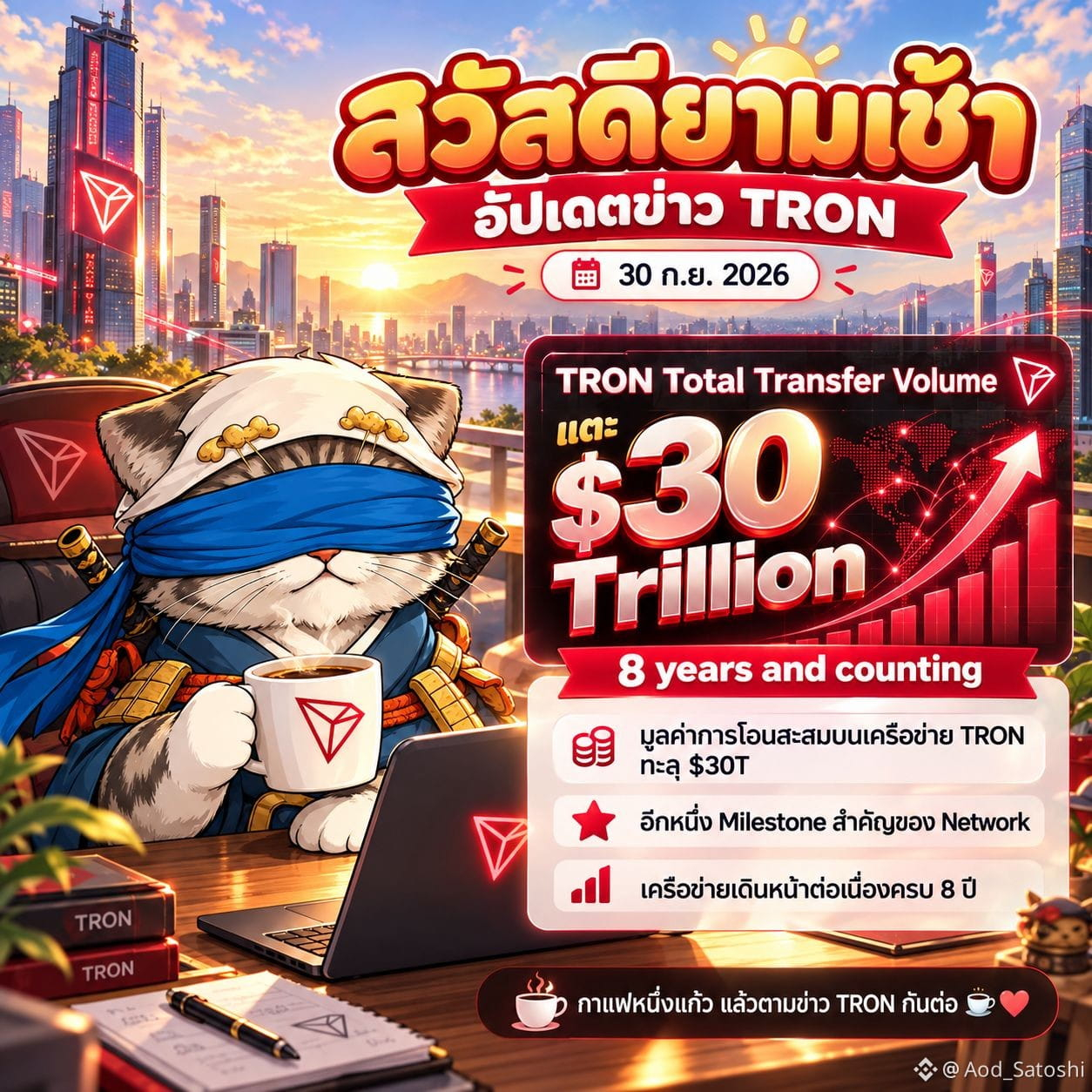
TRON DAO says the network has now surpassed $30 trillion in total transfer volume after more than 8 years of operation.
The number itself is huge, obviously.
But what interests me more is the consistency behind it.
That $30T didn’t come from one big transaction or one short period of hype. It’s the result of value moving through the network over years.
And when you look at the updates we’ve been following lately — USDT, stablecoins, cross-chain activity, wallets, and broader access — the bigger picture starts to make more sense.
For me, this milestone doesn’t mean TRX has to go up, and it doesn’t mean TRON “wins” against anyone.
What it does show is how much value has already moved through the network.
Now the next question is pretty simple:
How long will it take to go from $30T to $40T? 👀
Coffee first, then back to following TRON ☕️❤️
@TRONDAO @TronDao_THA @justinsuntron
#TRONGlobalFriends #TGF #TRON
☀️ Good morning, everyone!
This morning, I want to revisit one of TRON’s recent milestones from a slightly different angle.
TRON DAO says the network has now surpassed $30 trillion in total transfer volume after more than 8 years of operation.
The number itself is huge, obviously.
But what interests me more is the consistency behind it.
That $30T didn’t come from one big transaction or one short period of hype. It’s the result of value moving through the network over years.
And when you look at the updates we’ve been following lately — USDT, stablecoins, cross-chain activity, wallets, and broader access — the bigger picture starts to make more sense.
For me, this milestone doesn’t mean TRX has to go up, and it doesn’t mean TRON “wins” against anyone.
What it does show is how much value has already moved through the network.
Now the next question is pretty simple:
How long will it take to go from $30T to $40T? 👀
Coffee first, then back to following TRON ☕️❤️
@TRON DAO @TronDao_THA @justinsuntron
#TRONGlobalFriends #TGF #TRON
This morning, I want to revisit one of TRON’s recent milestones from a slightly different angle.
TRON DAO says the network has now surpassed $30 trillion in total transfer volume after more than 8 years of operation.
The number itself is huge, obviously.
But what interests me more is the consistency behind it.
That $30T didn’t come from one big transaction or one short period of hype. It’s the result of value moving through the network over years.
And when you look at the updates we’ve been following lately — USDT, stablecoins, cross-chain activity, wallets, and broader access — the bigger picture starts to make more sense.
For me, this milestone doesn’t mean TRX has to go up, and it doesn’t mean TRON “wins” against anyone.
What it does show is how much value has already moved through the network.
Now the next question is pretty simple:
How long will it take to go from $30T to $40T? 👀
Coffee first, then back to following TRON ☕️❤️
@TRON DAO @TronDao_THA @justinsuntron
#TRONGlobalFriends #TGF #TRON
1
98

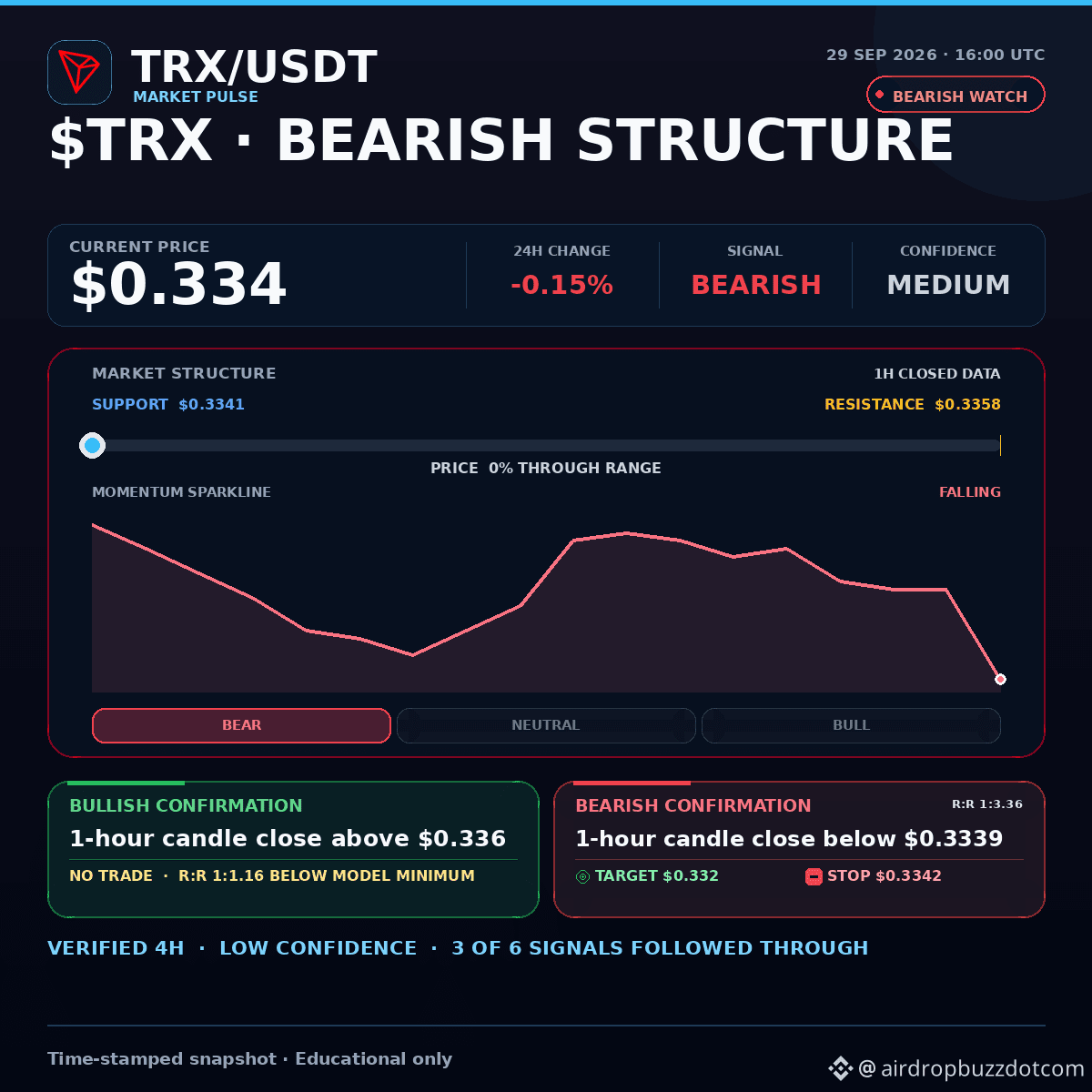
$TRX follow-through check: 3 of 6 recent directional moves were favorable.
📊 Snapshot
• Price: $0.334
• 24H: -0.15%
• Bias: Bearish
📈 Bull Trigger
1-hour reclaim above $0.336 with rising open interest
📉 Bear Trigger
1-hour close below $0.3339 with rising open interest
🎯 Signal Read
Pressure is concentrated at support; a closed break would carry more information than another intraday probe.
📌 Confidence
Medium · Low historical confidence · 3 of 6 directional moves were favorable
Signal Quality
- OI: Flat (-0.03%)
- 4H: Bearish | 1D: Bearish (Aligned)
- ATR filter: 0.50 ATR ($0.0003643)
- Risk/reward: 1:3.36
Bear scenario risk plan
- Entry: $0.3339
- Stop: $0.3342
- Target: $0.332
Trigger levels define confirmation; they do not guarantee where price will finish.
Support or selloff? Drop 🛡️ or 📉.
#TRX #TRON #CryptoTrading #MarketPulse
Educational only. Time-stamped market snapshot, not financial advice.
$TRX follow-through check: 3 of 6 recent directional moves were favorable.
📊 Snapshot
• Price: $0.334
• 24H: -0.15%
• Bias: Bearish
📈 Bull Trigger
1-hour reclaim above $0.336 with rising open interest
📉 Bear Trigger
1-hour close below $0.3339 with rising open interest
🎯 Signal Read
Pressure is concentrated at support; a closed break would carry more information than another intraday probe.
📌 Confidence
Medium · Low historical confidence · 3 of 6 directional moves were favorable
Signal Quality
- OI: Flat (-0.03%)
- 4H: Bearish | 1D: Bearish (Aligned)
- ATR filter: 0.50 ATR ($0.0003643)
- Risk/reward: 1:3.36
Bear scenario risk plan
- Entry: $0.3339
- Stop: $0.3342
- Target: $0.332
Trigger levels define confirmation; they do not guarantee where price will finish.
Support or selloff? Drop 🛡️ or 📉.
#TRX #TRON #CryptoTrading #MarketPulse
Educational only. Time-stamped market snapshot, not financial advice.
📊 Snapshot
• Price: $0.334
• 24H: -0.15%
• Bias: Bearish
📈 Bull Trigger
1-hour reclaim above $0.336 with rising open interest
📉 Bear Trigger
1-hour close below $0.3339 with rising open interest
🎯 Signal Read
Pressure is concentrated at support; a closed break would carry more information than another intraday probe.
📌 Confidence
Medium · Low historical confidence · 3 of 6 directional moves were favorable
Signal Quality
- OI: Flat (-0.03%)
- 4H: Bearish | 1D: Bearish (Aligned)
- ATR filter: 0.50 ATR ($0.0003643)
- Risk/reward: 1:3.36
Bear scenario risk plan
- Entry: $0.3339
- Stop: $0.3342
- Target: $0.332
Trigger levels define confirmation; they do not guarantee where price will finish.
Support or selloff? Drop 🛡️ or 📉.
#TRX #TRON #CryptoTrading #MarketPulse
Educational only. Time-stamped market snapshot, not financial advice.
6

·
--
⚡⚡TRON network surpassed $30 trillion in transaction volume
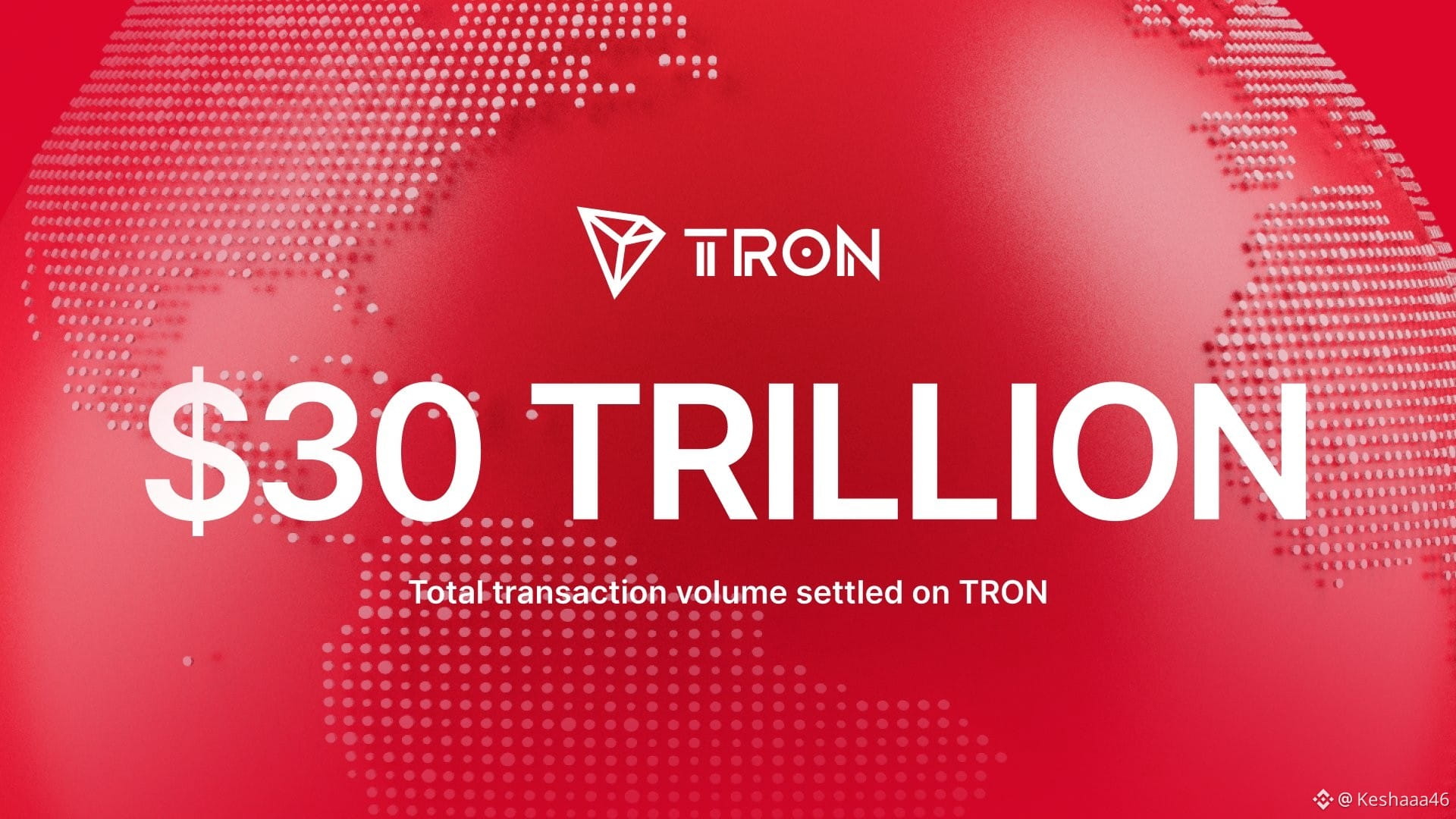
The total transaction volume on the TRON network has exceeded $30 trillion. The network has been operating for eight years and continues to grow its activity.
Most of this volume comes from $USDT transfers. TRON remains one of the main networks for stablecoin transfers: the network holds more than $94 billion in $USDT.
TRON is used daily for $USDT transfers between exchanges, wallets, and other services.
#TRON #TRX #TRONGlobalFriends
⚡⚡TRON network surpassed $30 trillion in transaction volume
The total transaction volume on the TRON network has exceeded $30 trillion. The network has been operating for eight years and continues to grow its activity.
Most of this volume comes from $USDT transfers. TRON remains one of the main networks for stablecoin transfers: the network holds more than $94 billion in $USDT.
TRON is used daily for $USDT transfers between exchanges, wallets, and other services.
#TRON #TRX #TRONGlobalFriends
The total transaction volume on the TRON network has exceeded $30 trillion. The network has been operating for eight years and continues to grow its activity.
Most of this volume comes from $USDT transfers. TRON remains one of the main networks for stablecoin transfers: the network holds more than $94 billion in $USDT.
TRON is used daily for $USDT transfers between exchanges, wallets, and other services.
#TRON #TRX #TRONGlobalFriends
1
222
·
--
$TRX
{spot}(TRXUSDT)
TRON is around $0.334, with today’s range near $0.334–$0.336.
I’m watching $0.332–$0.334 closely. If TRON holds this zone and reclaims $0.338, the next level I’d watch is $0.341.
If $0.332 breaks, the setup weakens and $0.327 becomes the next support.
Support hold or breakout — which level are you watching?
#TRX #Tron #Crypto #trading #BinanceSquare
$TRX
TRON is around $0.334, with today’s range near $0.334–$0.336.
I’m watching $0.332–$0.334 closely. If TRON holds this zone and reclaims $0.338, the next level I’d watch is $0.341.
If $0.332 breaks, the setup weakens and $0.327 becomes the next support.
Support hold or breakout — which level are you watching?
#TRX #Tron #Crypto #trading #BinanceSquare
TRON is around $0.334, with today’s range near $0.334–$0.336.
I’m watching $0.332–$0.334 closely. If TRON holds this zone and reclaims $0.338, the next level I’d watch is $0.341.
If $0.332 breaks, the setup weakens and $0.327 becomes the next support.
Support hold or breakout — which level are you watching?
#TRX #Tron #Crypto #trading #BinanceSquare
11

$TRX
{spot}(TRXUSDT)
is one of the quieter names on Binance today.
While several majors are trading lower, TRX is holding relatively firm.
Price is around the $0.33 area.
That relative strength is worth keeping on the watchlist.
A sustained move with stronger volume would add confirmation.
Until then, TRX remains a coin to monitor rather than chase.
#TRX #TRON #Crypto #BitMineETHHoldingsTop6Million
$TRX
is one of the quieter names on Binance today.
While several majors are trading lower, TRX is holding relatively firm.
Price is around the $0.33 area.
That relative strength is worth keeping on the watchlist.
A sustained move with stronger volume would add confirmation.
Until then, TRX remains a coin to monitor rather than chase.
#TRX #TRON #Crypto #BitMineETHHoldingsTop6Million
is one of the quieter names on Binance today.
While several majors are trading lower, TRX is holding relatively firm.
Price is around the $0.33 area.
That relative strength is worth keeping on the watchlist.
A sustained move with stronger volume would add confirmation.
Until then, TRX remains a coin to monitor rather than chase.
#TRX #TRON #Crypto #BitMineETHHoldingsTop6Million
1
6
·
--
Bullish
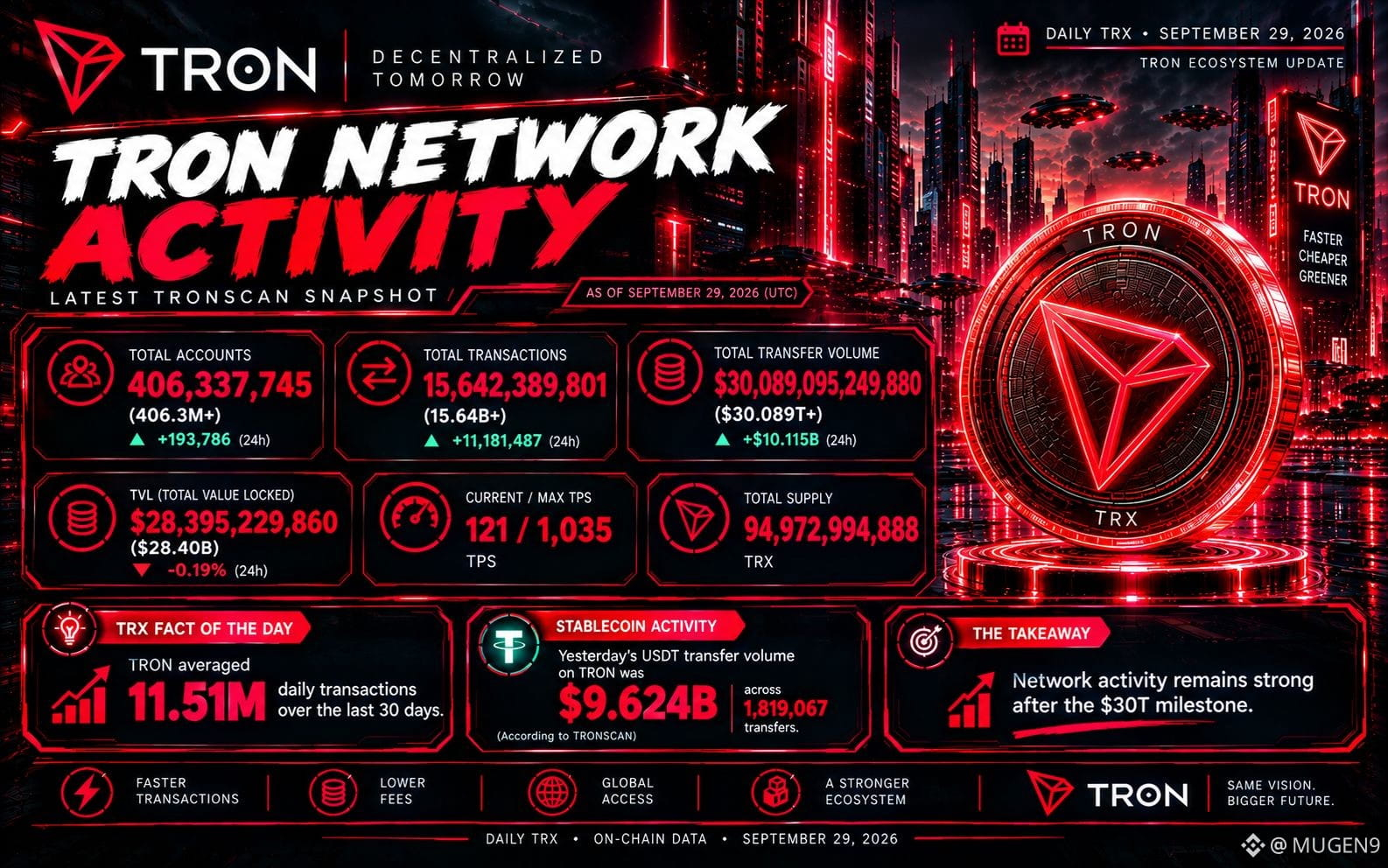
TRON’s network activity keeps moving.
Latest TRONSCAN data:
• 406.3M+ accounts
• 15.64B+ transactions
• $30.08T+ transfer volume
• $28.4B TVL
• +11.18M transactions in 24H
And stablecoins remain a major part of the network.
Yesterday alone, USDT on TRON recorded roughly $9.62B in transfer volume across 1.82M+ transfers.
The $30T milestone was only one checkpoint.
Now watch the activity behind the number.
@TRONDAO
#TRX #TRON #Crypto #Blockchain
TRON’s network activity keeps moving.
Latest TRONSCAN data:
• 406.3M+ accounts
• 15.64B+ transactions
• $30.08T+ transfer volume
• $28.4B TVL
• +11.18M transactions in 24H
And stablecoins remain a major part of the network.
Yesterday alone, USDT on TRON recorded roughly $9.62B in transfer volume across 1.82M+ transfers.
The $30T milestone was only one checkpoint.
Now watch the activity behind the number.
@TRON DAO
#TRX #TRON #Crypto #Blockchain
Latest TRONSCAN data:
• 406.3M+ accounts
• 15.64B+ transactions
• $30.08T+ transfer volume
• $28.4B TVL
• +11.18M transactions in 24H
And stablecoins remain a major part of the network.
Yesterday alone, USDT on TRON recorded roughly $9.62B in transfer volume across 1.82M+ transfers.
The $30T milestone was only one checkpoint.
Now watch the activity behind the number.
@TRON DAO
#TRX #TRON #Crypto #Blockchain
1
86

·
--
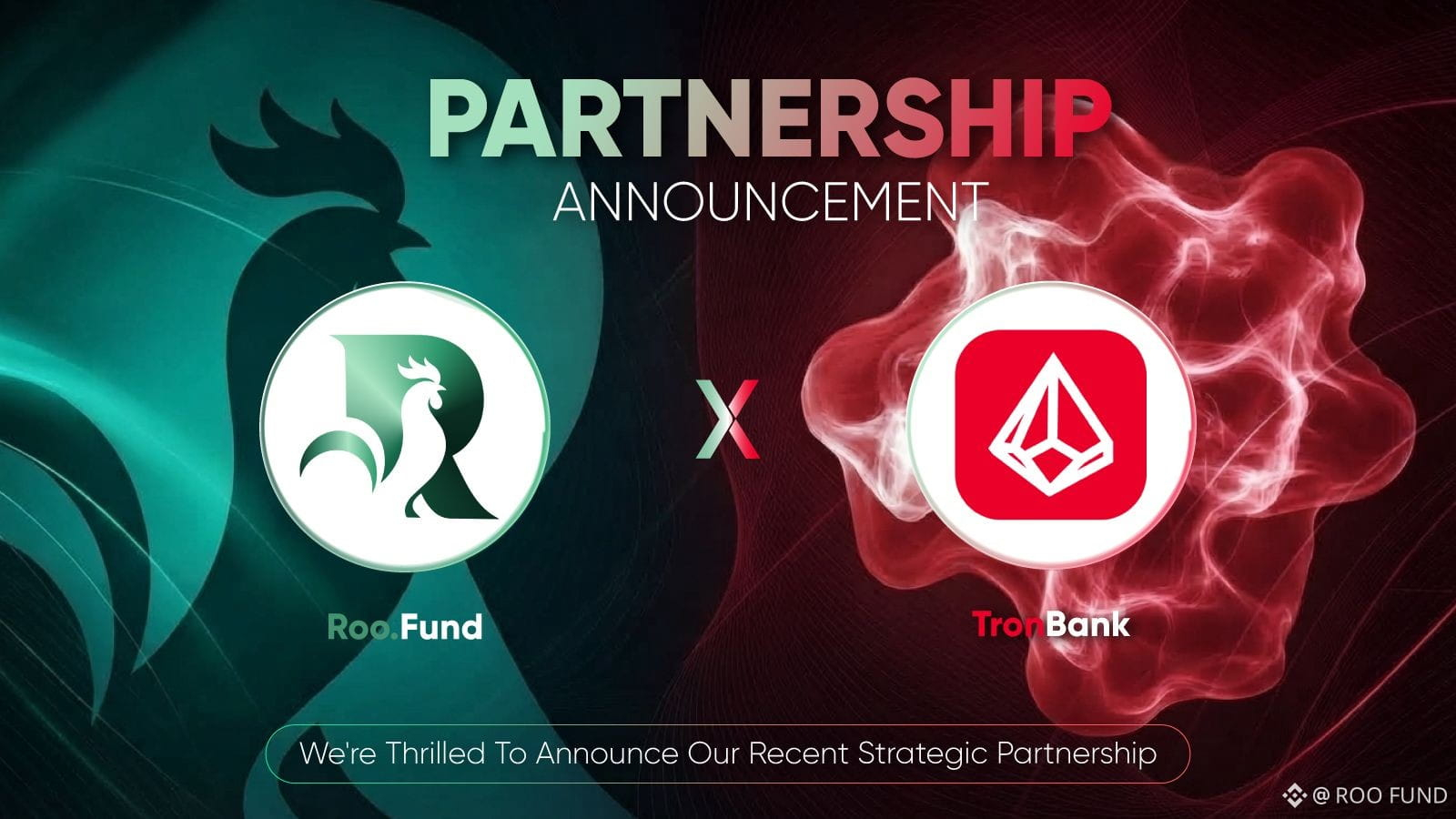
🐓 ROO.FUND × @TronBankPro
Thrilled to announce our partnership with TronBank — a TRON-based financial platform for energy leasing, TRX staking, and AI Agent services.
ROO.FUND brings the wallet-native gateway for fund strategies in Web3.
Together: DeFOF access meets efficient on-chain infrastructure.
#ROOFUND #DeFOF #Tron #Web3
🐓 ROO.FUND × @TronBankPro
Thrilled to announce our partnership with TronBank — a TRON-based financial platform for energy leasing, TRX staking, and AI Agent services.
ROO.FUND brings the wallet-native gateway for fund strategies in Web3.
Together: DeFOF access meets efficient on-chain infrastructure.
#ROOFUND #DeFOF #Tron #Web3
Thrilled to announce our partnership with TronBank — a TRON-based financial platform for energy leasing, TRX staking, and AI Agent services.
ROO.FUND brings the wallet-native gateway for fund strategies in Web3.
Together: DeFOF access meets efficient on-chain infrastructure.
#ROOFUND #DeFOF #Tron #Web3
2
185

·
--
Before September comes to an end, I’d like to once again round up some of the most important news and developments across #Tron for fellow #TRONGlobalFriends 🔻
This month, @TRONDAO saw notable updates across Wallet Integrations, Stablecoins, DeFi, Developer Infrastructure, ETFs, Payments, and Adoption.
Here are the highlights 👇
1️⃣ Trust Wallet added Tronify Energy Rental
2️⃣ MetaMask expanded dApp connectivity across TRON
3️⃣ Allbridge Core reached $1.64B in volume on TRON
4️⃣ Justin Sun launched the Justin Sun Prize
5️⃣ USDe and sUSDe expanded to TRON via Stargate
6️⃣ Ducat brought wUNIT to TRON
7️⃣ CoinsBee expanded real-world use cases for USDT on TRON
8️⃣ TRON joined CoinDesk Policy & Regulation 2026
9️⃣ Privy expanded its infrastructure support for TRON
🔟 OpenZeppelin launched its Contracts library and Dev Stack on TRON
1️⃣1️⃣ $TRXS expanded to 10 major U.S. investment platforms
1️⃣2️⃣ TRON accounted for 40% of payment volume on NOWPayments
1️⃣3️⃣ TRON surpassed $30T in cumulative transfer volume
For more details on each story, follow along on my Thread on X 🧵
#TGF @JustinSun
Before September comes to an end, I’d like to once again round up some of the most important news and developments across #Tron for fellow #TRONGlobalFriends 🔻
This month, @TRON DAO saw notable updates across Wallet Integrations, Stablecoins, DeFi, Developer Infrastructure, ETFs, Payments, and Adoption.
Here are the highlights 👇
1️⃣ Trust Wallet added Tronify Energy Rental
2️⃣ MetaMask expanded dApp connectivity across TRON
3️⃣ Allbridge Core reached $1.64B in volume on TRON
4️⃣ Justin Sun launched the Justin Sun Prize
5️⃣ USDe and sUSDe expanded to TRON via Stargate
6️⃣ Ducat brought wUNIT to TRON
7️⃣ CoinsBee expanded real-world use cases for USDT on TRON
8️⃣ TRON joined CoinDesk Policy & Regulation 2026
9️⃣ Privy expanded its infrastructure support for TRON
🔟 OpenZeppelin launched its Contracts library and Dev Stack on TRON
1️⃣1️⃣ $TRXS expanded to 10 major U.S. investment platforms
1️⃣2️⃣ TRON accounted for 40% of payment volume on NOWPayments
1️⃣3️⃣ TRON surpassed $30T in cumulative transfer volume
For more details on each story, follow along on my Thread on X 🧵
#TGF @Justin Sun孙宇晨
This month, @TRON DAO saw notable updates across Wallet Integrations, Stablecoins, DeFi, Developer Infrastructure, ETFs, Payments, and Adoption.
Here are the highlights 👇
1️⃣ Trust Wallet added Tronify Energy Rental
2️⃣ MetaMask expanded dApp connectivity across TRON
3️⃣ Allbridge Core reached $1.64B in volume on TRON
4️⃣ Justin Sun launched the Justin Sun Prize
5️⃣ USDe and sUSDe expanded to TRON via Stargate
6️⃣ Ducat brought wUNIT to TRON
7️⃣ CoinsBee expanded real-world use cases for USDT on TRON
8️⃣ TRON joined CoinDesk Policy & Regulation 2026
9️⃣ Privy expanded its infrastructure support for TRON
🔟 OpenZeppelin launched its Contracts library and Dev Stack on TRON
1️⃣1️⃣ $TRXS expanded to 10 major U.S. investment platforms
1️⃣2️⃣ TRON accounted for 40% of payment volume on NOWPayments
1️⃣3️⃣ TRON surpassed $30T in cumulative transfer volume
For more details on each story, follow along on my Thread on X 🧵
#TGF @Justin Sun孙宇晨
84

·
--
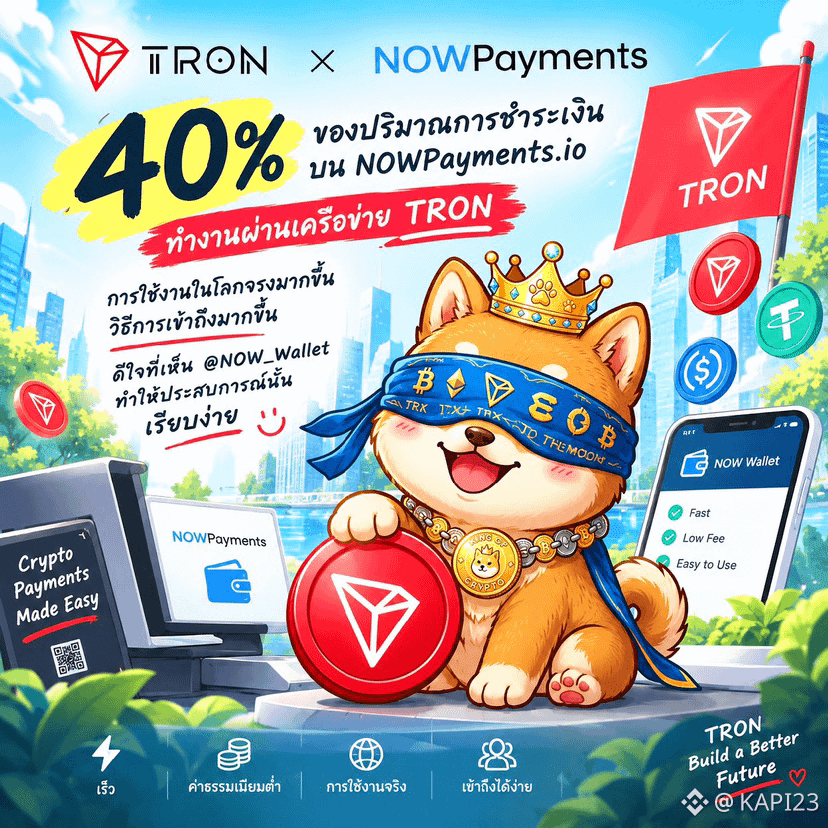
40% of the payment volume on @NOWPayments_io is powered by TRON.
That’s more than just a number. It’s another sign that blockchain is moving beyond speculation and into real-world payments.
TRON continues to play an important role in this space, especially as stablecoins and crypto payments become more accessible to users and businesses around the world.
And with solutions like @NOW_Wallet making the experience simpler, the barrier to using crypto for everyday payments gets lower.
Real adoption comes from real usage.
Seeing TRON powering a significant share of payment activity on a platform like NOWPayments is definitely something worth watching.
The journey toward mainstream crypto payments is still early — but the infrastructure is already being built. 🚀
#TRON @TRON DAO
40% of the payment volume on @NOWPayments_io is powered by TRON.
That’s more than just a number. It’s another sign that blockchain is moving beyond speculation and into real-world payments.
TRON continues to play an important role in this space, especially as stablecoins and crypto payments become more accessible to users and businesses around the world.
And with solutions like @NOW_Wallet making the experience simpler, the barrier to using crypto for everyday payments gets lower.
Real adoption comes from real usage.
Seeing TRON powering a significant share of payment activity on a platform like NOWPayments is definitely something worth watching.
The journey toward mainstream crypto payments is still early — but the infrastructure is already being built. 🚀
#TRON @TRON DAO
That’s more than just a number. It’s another sign that blockchain is moving beyond speculation and into real-world payments.
TRON continues to play an important role in this space, especially as stablecoins and crypto payments become more accessible to users and businesses around the world.
And with solutions like @NOW_Wallet making the experience simpler, the barrier to using crypto for everyday payments gets lower.
Real adoption comes from real usage.
Seeing TRON powering a significant share of payment activity on a platform like NOWPayments is definitely something worth watching.
The journey toward mainstream crypto payments is still early — but the infrastructure is already being built. 🚀
#TRON @TRON DAO
73
·
--
$TRX
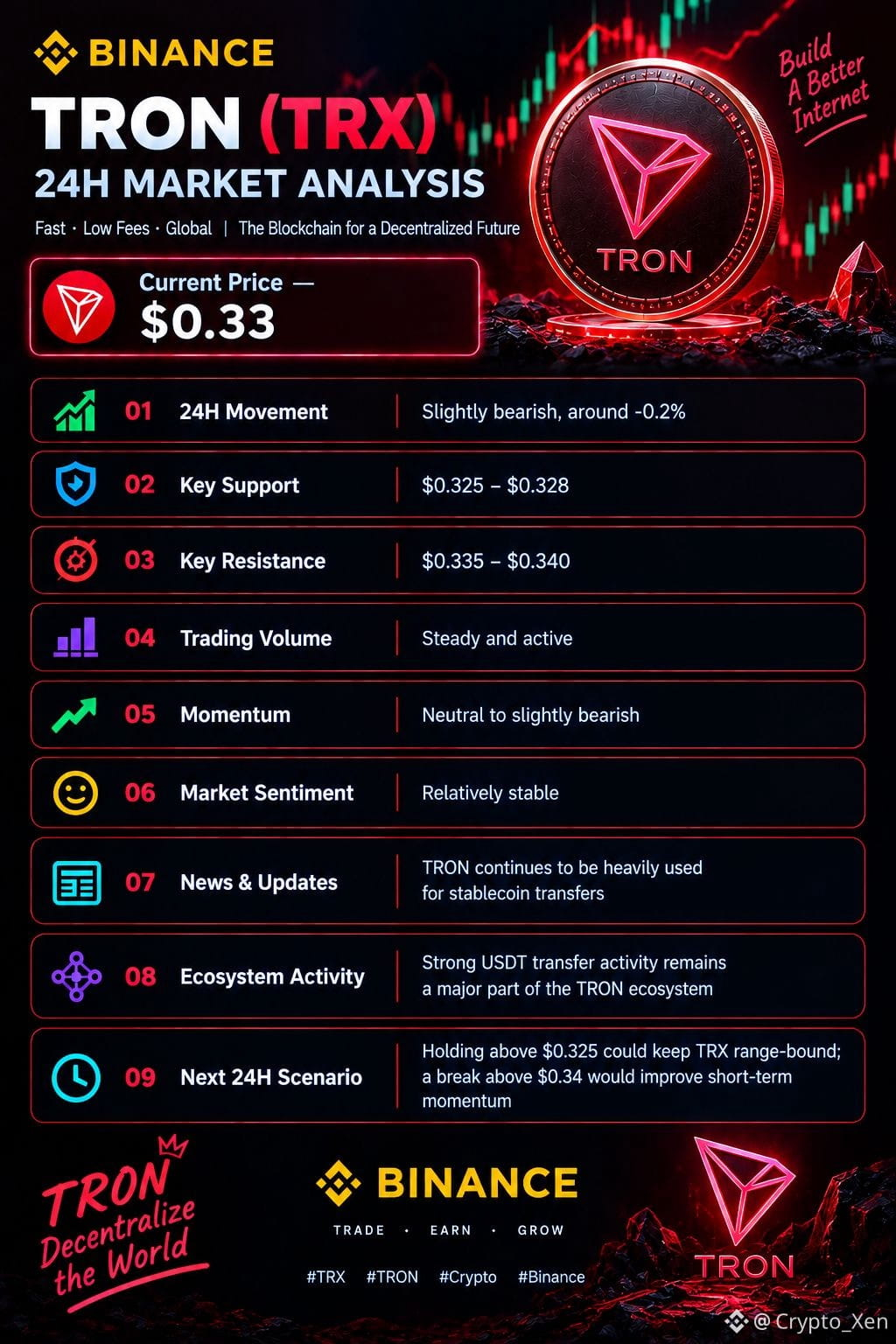
🔴 TRON (TRX) — 24H MARKET ANALYSIS
Current Price — $0.33
24H Movement — Slightly bearish, around -0.2%
Key Support — $0.325–$0.328
Key Resistance — $0.335–$0.340
Trading Volume — Steady and active
Momentum — Neutral to slightly bearish
Market Sentiment — Relatively stable
News & Updates — TRON continues to be heavily used for stablecoin transfers
Ecosystem Activity — Strong USDT transfer activity remains a major part of the TRON ecosystem
Next 24H Scenario — Holding above $0.325 could keep TRX range-bound; a break above $0.34 would improve short-term momentum
#TRON #TRX #Crypto #Binance
{spot}(TRXUSDT)
$TRX
🔴 TRON (TRX) — 24H MARKET ANALYSIS
Current Price — $0.33
24H Movement — Slightly bearish, around -0.2%
Key Support — $0.325–$0.328
Key Resistance — $0.335–$0.340
Trading Volume — Steady and active
Momentum — Neutral to slightly bearish
Market Sentiment — Relatively stable
News & Updates — TRON continues to be heavily used for stablecoin transfers
Ecosystem Activity — Strong USDT transfer activity remains a major part of the TRON ecosystem
Next 24H Scenario — Holding above $0.325 could keep TRX range-bound; a break above $0.34 would improve short-term momentum
#TRON #TRX #Crypto #Binance
🔴 TRON (TRX) — 24H MARKET ANALYSIS
Current Price — $0.33
24H Movement — Slightly bearish, around -0.2%
Key Support — $0.325–$0.328
Key Resistance — $0.335–$0.340
Trading Volume — Steady and active
Momentum — Neutral to slightly bearish
Market Sentiment — Relatively stable
News & Updates — TRON continues to be heavily used for stablecoin transfers
Ecosystem Activity — Strong USDT transfer activity remains a major part of the TRON ecosystem
Next 24H Scenario — Holding above $0.325 could keep TRX range-bound; a break above $0.34 would improve short-term momentum
#TRON #TRX #Crypto #Binance
15

·
--
Bullish
TRON ($TRX )
TRON remains a major blockchain asset and continues to attract attention from traders looking for steady large-cap altcoins. $TRX
{spot}(TRXUSDT)
is different from many fast-moving meme coins because its market activity is linked to a broad blockchain ecosystem. Today, I would focus on the chart structure and volume instead of expecting a sudden move. If support continues to hold, traders may watch for a recovery toward resistance. If support fails, caution becomes important. The best approach is to let price confirm the direction. Crypto markets can change quickly, so a simple plan with controlled risk is often better than an emotional entry. #TRON
TRON ($TRX )
TRON remains a major blockchain asset and continues to attract attention from traders looking for steady large-cap altcoins. $TRX
is different from many fast-moving meme coins because its market activity is linked to a broad blockchain ecosystem. Today, I would focus on the chart structure and volume instead of expecting a sudden move. If support continues to hold, traders may watch for a recovery toward resistance. If support fails, caution becomes important. The best approach is to let price confirm the direction. Crypto markets can change quickly, so a simple plan with controlled risk is often better than an emotional entry. #TRON
TRON remains a major blockchain asset and continues to attract attention from traders looking for steady large-cap altcoins. $TRX
is different from many fast-moving meme coins because its market activity is linked to a broad blockchain ecosystem. Today, I would focus on the chart structure and volume instead of expecting a sudden move. If support continues to hold, traders may watch for a recovery toward resistance. If support fails, caution becomes important. The best approach is to let price confirm the direction. Crypto markets can change quickly, so a simple plan with controlled risk is often better than an emotional entry. #TRON
8

🔥 $TRON.US $TRX
{spot}(TRXUSDT)
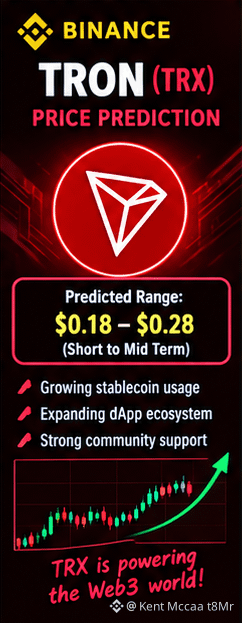
TRON (TRX) — Price Prediction
🚀 TRX could aim for $0.18–$0.28 if momentum continues!
💎 Stablecoin usage and dApp adoption are worth watching.
📈 Bullish or bearish on TRX?
#TRON #TRX #cryptooinsigts
🔥 $TRON.US $TRX
TRON (TRX) — Price Prediction
🚀 TRX could aim for $0.18–$0.28 if momentum continues!
💎 Stablecoin usage and dApp adoption are worth watching.
📈 Bullish or bearish on TRX?
#TRON #TRX #cryptooinsigts
TRON (TRX) — Price Prediction
🚀 TRX could aim for $0.18–$0.28 if momentum continues!
💎 Stablecoin usage and dApp adoption are worth watching.
📈 Bullish or bearish on TRX?
#TRON #TRX #cryptooinsigts
1
11

·
--
Bullish
🚀 $TRX / USDT - Quick Market Update & Setup! 📈
$TRX is currently consolidating around $0.3340, hovering near its key Moving Averages:
• MA(7): $0.3378
• MA(25): $0.3377
• MA(99): $0.3316
📍 Key Levels to Watch:
• Support Zone: $0.3200 - $0.3220 (Strong bounce area)
• Resistance Zone: $0.3385 - $0.3490 (Breakout target)
💡 Trading Insight:
$TRX is trading in a tight range. A breakout above $0.3385 could trigger a strong bullish momentum towards the recent high of $0.3493. However, holding above the $0.3316 (MA 99) support is crucial to maintain stability.
What are your thoughts on $TRX? Are you Bullish 🐂 or Bearish 🐻? Let me know in the comments! 👇
#TRX #TRON #BinanceSquareFamily #CryptoAnalysis #Write2Earn
🚀 $TRX / USDT - Quick Market Update & Setup! 📈
$TRX is currently consolidating around $0.3340, hovering near its key Moving Averages:
• MA(7): $0.3378
• MA(25): $0.3377
• MA(99): $0.3316
📍 Key Levels to Watch:
• Support Zone: $0.3200 - $0.3220 (Strong bounce area)
• Resistance Zone: $0.3385 - $0.3490 (Breakout target)
💡 Trading Insight:
$TRX is trading in a tight range. A breakout above $0.3385 could trigger a strong bullish momentum towards the recent high of $0.3493. However, holding above the $0.3316 (MA 99) support is crucial to maintain stability.
What are your thoughts on $TRX ? Are you Bullish 🐂 or Bearish 🐻? Let me know in the comments! 👇
#TRX #TRON #BinanceSquareFamily #CryptoAnalysis #Write2Earn
$TRX is currently consolidating around $0.3340, hovering near its key Moving Averages:
• MA(7): $0.3378
• MA(25): $0.3377
• MA(99): $0.3316
📍 Key Levels to Watch:
• Support Zone: $0.3200 - $0.3220 (Strong bounce area)
• Resistance Zone: $0.3385 - $0.3490 (Breakout target)
💡 Trading Insight:
$TRX is trading in a tight range. A breakout above $0.3385 could trigger a strong bullish momentum towards the recent high of $0.3493. However, holding above the $0.3316 (MA 99) support is crucial to maintain stability.
What are your thoughts on $TRX ? Are you Bullish 🐂 or Bearish 🐻? Let me know in the comments! 👇
#TRX #TRON #BinanceSquareFamily #CryptoAnalysis #Write2Earn
1
101
·
--
Bullish
$TRX
TRON's main strength is stablecoin settlement. Huge amounts of USDT move on its network every day because fees are low and transfers are fast. That real utility gives $TRX
{spot}(TRXUSDT)
a steady base of demand even when the market is quiet. With stablecoins becoming central to payments, as seen with recent bank and card-network moves, TRON is well positioned. Price action stays range-bound, but fundamentals remain strong. Boring can be beautiful. #Tron
$TRX
TRON's main strength is stablecoin settlement. Huge amounts of USDT move on its network every day because fees are low and transfers are fast. That real utility gives $TRX
a steady base of demand even when the market is quiet. With stablecoins becoming central to payments, as seen with recent bank and card-network moves, TRON is well positioned. Price action stays range-bound, but fundamentals remain strong. Boring can be beautiful. #Tron
TRON's main strength is stablecoin settlement. Huge amounts of USDT move on its network every day because fees are low and transfers are fast. That real utility gives $TRX
a steady base of demand even when the market is quiet. With stablecoins becoming central to payments, as seen with recent bank and card-network moves, TRON is well positioned. Price action stays range-bound, but fundamentals remain strong. Boring can be beautiful. #Tron
7

·
--
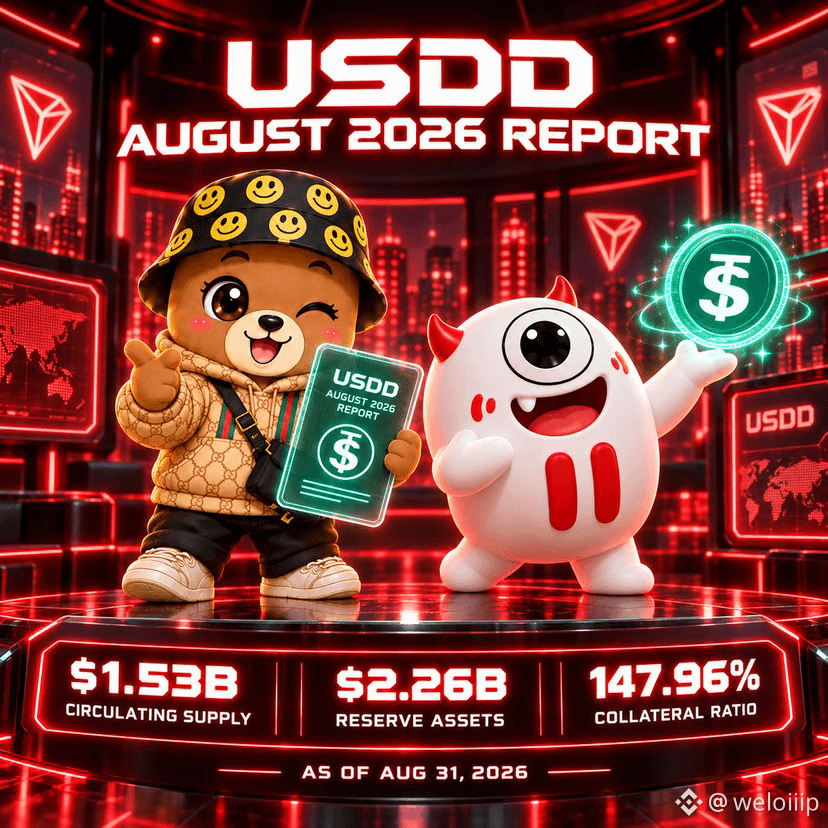
🐻 **Did you know? USDD is a stablecoin in the TRON ecosystem**, designed to maintain a value close to $1 per token and backed by crypto assets at a value higher than the amount of USDD issued.
Here’s a quick look at the **August 2026 report** 📊
As of August 31, 2026:
• $1.53B USDD in circulation
• $2.26B in reserve assets
• 147.96% collateralization ratio
In simple terms, every $1 of USDD was backed by around **$1.48 in reserve assets** at the time of the report. The ratio can change with market prices, so it doesn’t mean USDD is risk-free.
🟣 **USDD Vault** expanded to Ethereum, allowing users to use ETH and WBTC as collateral to mint USDD.
🔺 **GasFree** added support for USDD on TRON, allowing transfers without needing TRX separately for gas fees.
DeFi updates also include **sUSDD activity on Pendle** and the launch of USDD’s **PSM** on Gate DEX and SaveWallet.
Overall, the report gives a nice snapshot of both **USDD’s reserves and its growing utility across DeFi.** ✨
@TRONDAO @justinsuntron @Trondao_THA
#TRON #TRONGlobalFreinds #tgf
🐻 **Did you know? USDD is a stablecoin in the TRON ecosystem**, designed to maintain a value close to $1 per token and backed by crypto assets at a value higher than the amount of USDD issued.
Here’s a quick look at the **August 2026 report** 📊
As of August 31, 2026:
• $1.53B USDD in circulation
• $2.26B in reserve assets
• 147.96% collateralization ratio
In simple terms, every $1 of USDD was backed by around **$1.48 in reserve assets** at the time of the report. The ratio can change with market prices, so it doesn’t mean USDD is risk-free.
🟣 **USDD Vault** expanded to Ethereum, allowing users to use ETH and WBTC as collateral to mint USDD.
🔺 **GasFree** added support for USDD on TRON, allowing transfers without needing TRX separately for gas fees.
DeFi updates also include **sUSDD activity on Pendle** and the launch of USDD’s **PSM** on Gate DEX and SaveWallet.
Overall, the report gives a nice snapshot of both **USDD’s reserves and its growing utility across DeFi.** ✨
@TRON DAO @justinsuntron @Trondao_THA
#TRON #TRONGlobalFreinds #tgf
Here’s a quick look at the **August 2026 report** 📊
As of August 31, 2026:
• $1.53B USDD in circulation
• $2.26B in reserve assets
• 147.96% collateralization ratio
In simple terms, every $1 of USDD was backed by around **$1.48 in reserve assets** at the time of the report. The ratio can change with market prices, so it doesn’t mean USDD is risk-free.
🟣 **USDD Vault** expanded to Ethereum, allowing users to use ETH and WBTC as collateral to mint USDD.
🔺 **GasFree** added support for USDD on TRON, allowing transfers without needing TRX separately for gas fees.
DeFi updates also include **sUSDD activity on Pendle** and the launch of USDD’s **PSM** on Gate DEX and SaveWallet.
Overall, the report gives a nice snapshot of both **USDD’s reserves and its growing utility across DeFi.** ✨
@TRON DAO @justinsuntron @Trondao_THA
#TRON #TRONGlobalFreinds #tgf
72
·
--
Bullish
Today’s TRX data is worth watching.
According to TRONSCAN, on September 25:
🔥 2.08M TRX burned
⚡ 3.92M TRX generated
📈 +1.84M TRX net increase
TRON has also burned 16.92B+ TRX cumulatively through network resources and fees.
The takeaway? TRX supply isn't simply deflationary every day. It depends on the balance between generation and burn activity.
Watch the network. Watch the supply.
@TRONDAO
#TRX #TRON #Crypto #Blockchain
Today’s TRX data is worth watching.
According to TRONSCAN, on September 25:
🔥 2.08M TRX burned
⚡ 3.92M TRX generated
📈 +1.84M TRX net increase
TRON has also burned 16.92B+ TRX cumulatively through network resources and fees.
The takeaway? TRX supply isn't simply deflationary every day. It depends on the balance between generation and burn activity.
Watch the network. Watch the supply.
@TRON DAO
#TRX #TRON #Crypto #Blockchain
According to TRONSCAN, on September 25:
🔥 2.08M TRX burned
⚡ 3.92M TRX generated
📈 +1.84M TRX net increase
TRON has also burned 16.92B+ TRX cumulatively through network resources and fees.
The takeaway? TRX supply isn't simply deflationary every day. It depends on the balance between generation and burn activity.
Watch the network. Watch the supply.
@TRON DAO
#TRX #TRON #Crypto #Blockchain
1
68

TRON recently participated in the CoinDesk Policy & Regulation 2026 event in Washington, D.C.
TRON participated in CoinDesk Policy & Regulation 2026
as a Gold Sponsor.
The event featured discussions on key issues shaping the future of regulation and oversight of the crypto industry.
At the event, John Hurston, General Counsel, U.S. at TRON, served as the Moderator in the Session.
“The Future of Monitoring Illicit Finance on Public Blockchains”
The discussion covered tracking transactions related to illegal activities on Public Blockchains,
including the role of On-chain Analytics, Compliance, and collaboration between the private sector and regulators.
The event also addressed major industry topics such as:
- Crypto Regulation in the U.S.
- Stablecoin Regulation
- CLARITY Act & GENIUS Act
- Compliance & Sanctions
- AI + Crypto Compliance
TRON’s involvement in Policy & Regulation reflects the growing importance of regulatory and oversight issues in the Blockchain industry.
Amazing, folks 🔥
#TRON #TGF #TRONGlobalFreinds @TRONDAO @JustinSun
TRON recently participated in the CoinDesk Policy & Regulation 2026 event in Washington, D.C.
TRON participated in CoinDesk Policy & Regulation 2026
as a Gold Sponsor.
The event featured discussions on key issues shaping the future of regulation and oversight of the crypto industry.
At the event, John Hurston, General Counsel, U.S. at TRON, served as the Moderator in the Session.
“The Future of Monitoring Illicit Finance on Public Blockchains”
The discussion covered tracking transactions related to illegal activities on Public Blockchains,
including the role of On-chain Analytics, Compliance, and collaboration between the private sector and regulators.
The event also addressed major industry topics such as:
- Crypto Regulation in the U.S.
- Stablecoin Regulation
- CLARITY Act & GENIUS Act
- Compliance & Sanctions
- AI + Crypto Compliance
TRON’s involvement in Policy & Regulation reflects the growing importance of regulatory and oversight issues in the Blockchain industry.
Amazing, folks 🔥
#TRON #TGF #TRONGlobalFreinds @TRON DAO @Justin Sun孙宇晨
TRON participated in CoinDesk Policy & Regulation 2026
as a Gold Sponsor.
The event featured discussions on key issues shaping the future of regulation and oversight of the crypto industry.
At the event, John Hurston, General Counsel, U.S. at TRON, served as the Moderator in the Session.
“The Future of Monitoring Illicit Finance on Public Blockchains”
The discussion covered tracking transactions related to illegal activities on Public Blockchains,
including the role of On-chain Analytics, Compliance, and collaboration between the private sector and regulators.
The event also addressed major industry topics such as:
- Crypto Regulation in the U.S.
- Stablecoin Regulation
- CLARITY Act & GENIUS Act
- Compliance & Sanctions
- AI + Crypto Compliance
TRON’s involvement in Policy & Regulation reflects the growing importance of regulatory and oversight issues in the Blockchain industry.
Amazing, folks 🔥
#TRON #TGF #TRONGlobalFreinds @TRON DAO @Justin Sun孙宇晨

54
Log in to explore more content
Join global crypto users on Binance Square
⚡️ Get latest and useful information about crypto.
💬 Trusted by the world’s largest crypto exchange.
👍 Discover real insights from verified creators.
Email / Phone number
Trending Topics
1
#BitcoinClears$85200
0 views
12 Discussing
2
#AltcoinSeasonIndexHoldsAbove60For5Days
311 views
109 Discussing
3
#BitcoinSlipsBelow$84000
577 views
52 Discussing
4
#BankOfKoreaToBuy1TonGoldInDecember
0 views
0 Discussing
5
#USADPAdds90000JobsInSeptember
0 views
0 Discussing
6
#USCorePCEEasesTo3%InAugust
0 views
0 Discussing
7
#KospiPostsWorstQuarterSince2020
179 views
70 Discussing
8
#SECToClarifyOnChainFundraisingRules
4,154 views
250 Discussing
9
#UKFCAOpensCryptoFirmAuthorization
7,478 views
238 Discussing
10
#JapanMOFStudyGroupOnTokenizedGovtBonds
6,490 views
236 Discussing