
Maybe that sounds strange but crypto has a habit of turning every new AI release into a huge narrative before anyone has actually used it. So when I see that the platform has been open sourced I assumed it would follow a familiar pattern a burst of excitement a few impressive demos & then everyone moves on to the next thing.
A few days later I went back & start looking at what people were actually building.
Thatz when it got more interesting.
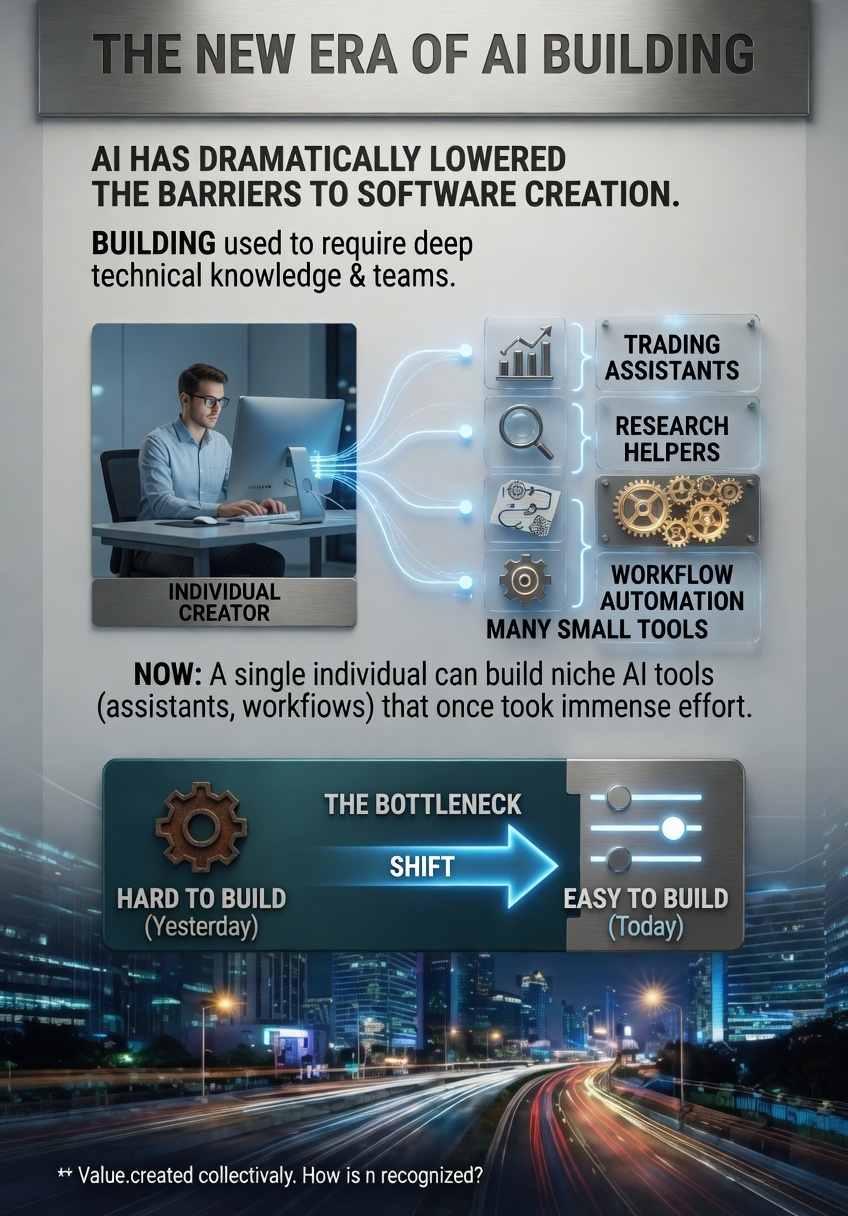
What stood out wasn0t some breakthrough application or a startup claiming to change the world. It was the number of small highly specific tools showing up around it. Trading assistants / research helpers / workflow automations niche AI utilities. Most of them will probably never become billion-dollar businesses & honestly thatz fine.
The fact that people were building at all felt more important than the size of what they were building.
That observation kept pulling me toward a big question.
As AI makes software creation easier what happens to the people contributing to the systems that create value?
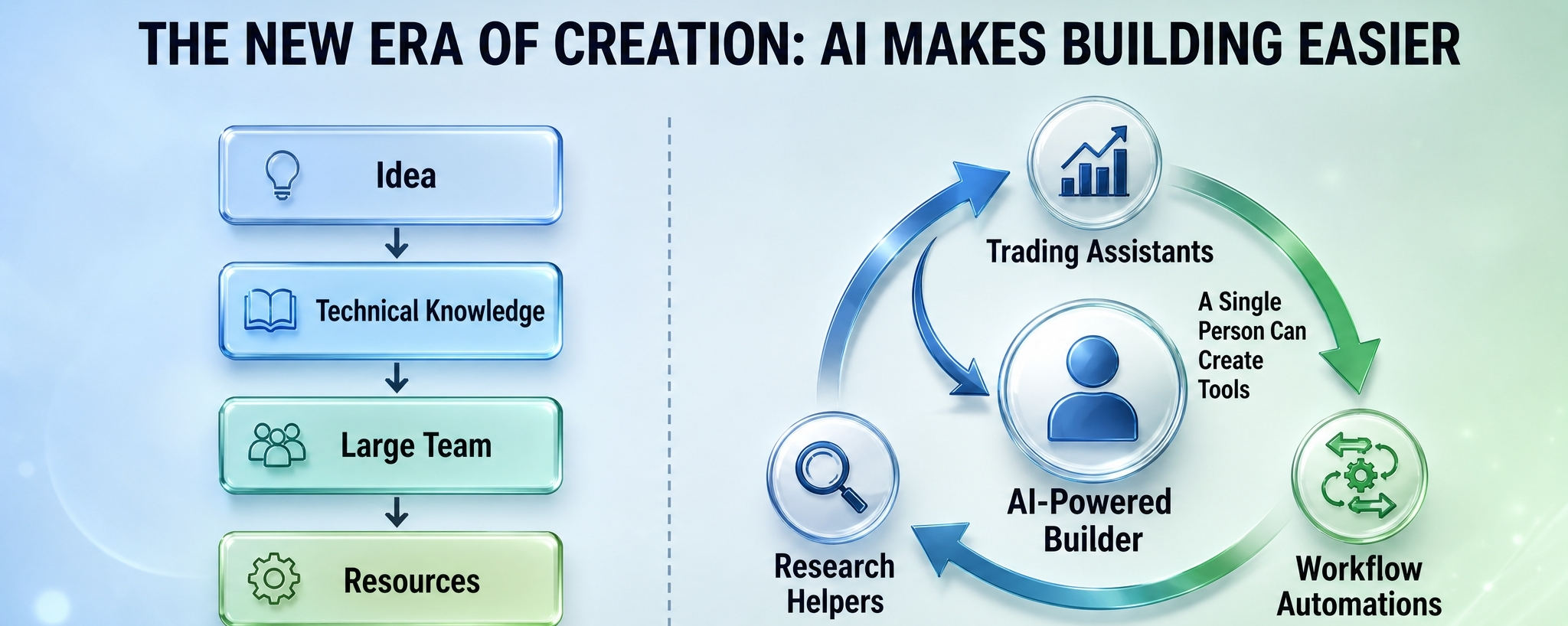
For years the hardest part was building. You needed technical knowledge resources & often an entire team just to turn an idea into something functional. AI is changing that. A single person can now create tools & workflows that would has taken significantly more effort only a few years ago.
But making creation easier doesn0t automatically solve participation.
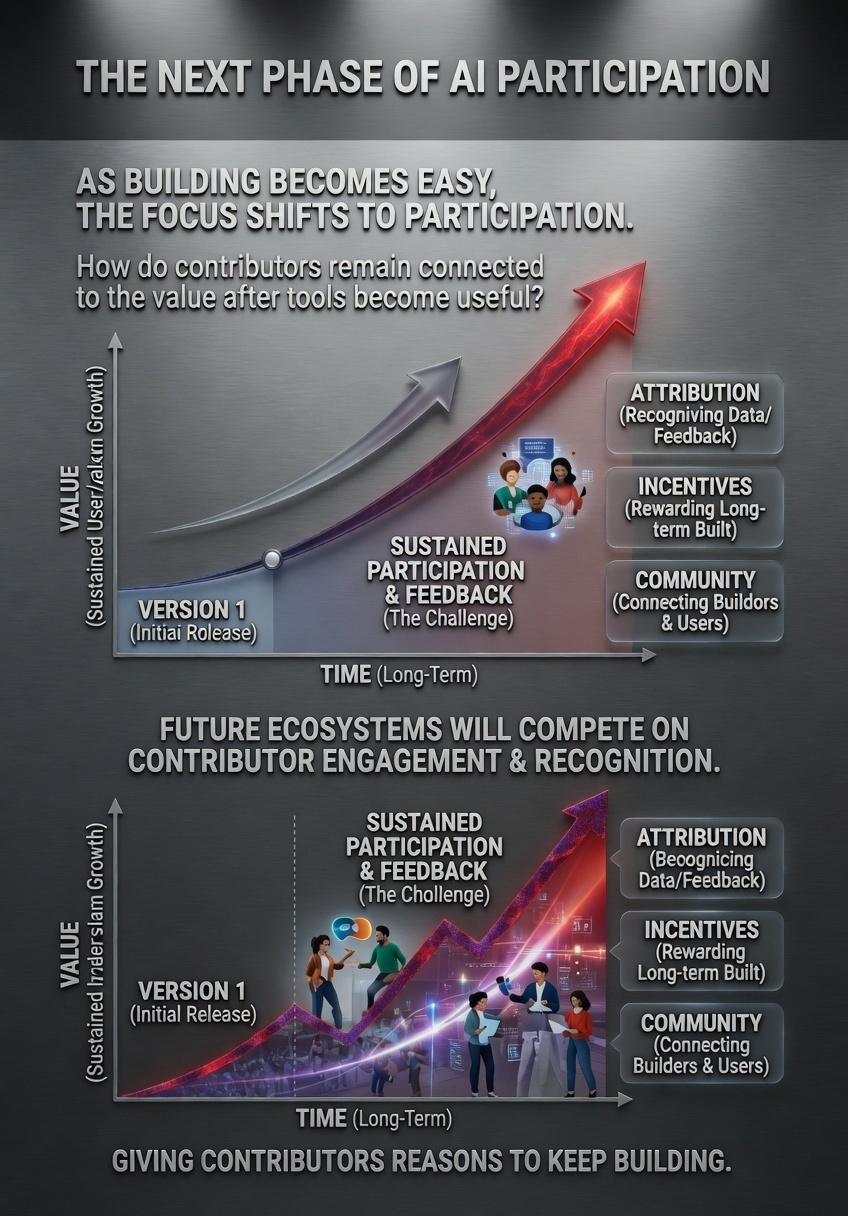
People contribute ideas data testing feedback & experimentation every day. Those contributions often help systems improve over time yet many remain difficult to recognize in any meaningful way. Value gets created collectively but visibility doesn0t always follow the same path.
Thatz 1 reason @OpenLedger caught my attention beyond the platform itself.
The project seems to be exploring a broader question how can builders / contributors / applications & AI systems remain connected inside the same network rather than operating as isolated pieces?
Viewed from that angle the VibeCoded platform starts looking less like a standalone product and more like an entry point.
Someone builds a tool.
People start using it.
New feedback appears.
New ideas emerge.
Applications evolve.
Other builders improve on what already exists.
Over time value compounds through participation rather than through a single product alone.
Maybe I am reading too much into it but it feels like AI has quietly changed the bottleneck.
A few years ago building was the hard part.
Now building is becoming easier every month.
The harder question may be figuring out how contributors stay connected to the value created after something becomes useful.
Thatz where components like Datanets / OpenLoRA & OpenLedger’s attribution-focused infrastructure start making more sense to me.
Individually they look like separate pieces of technology.
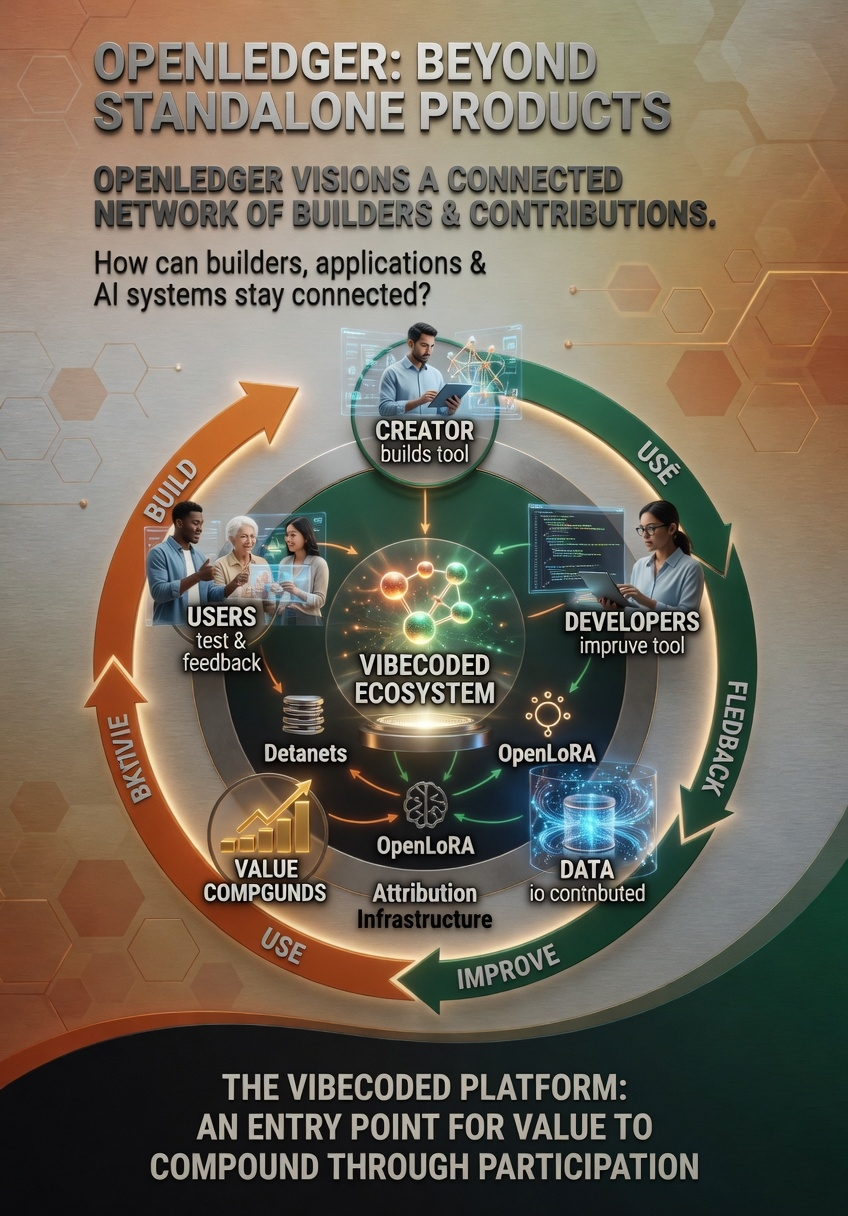
Together they seem aimed at creating an environment where data / models / applications & contributors can interact more closely instead of existing in completely separate silos.
Whether that vision succeeds is something only time will answer.
Open-source ecosystems are rarely simple. AI infrastructure is becoming increasingly competitive. Adoption is never guaranteed & incentive systems don0t always behave the way designers expect.
Those risks are real.
At the same time the underlying trend feels difficult to ignore.
AI is dramatically increasing the number of people capable of creating useful products, workflows, and digital tools.
If that trend continues future ecosystems may compete on more than just technology. They may compete on how effectively they support experimentation / participation & long-term contributor engagement.
Thatz why OpenLedger’s VibeCoded platform feels more interested to me than a typical product release.
The platform itself matters.
But the bigger story might be what happens after something gets built.
Because the next phase of AI may not be defined only by who can create the most tools.
It may be shaped by which networks give contributors meaningful reasons to keep building long after the first version goes live.
& honestly that feels like a much more interesting challenge to solve.
