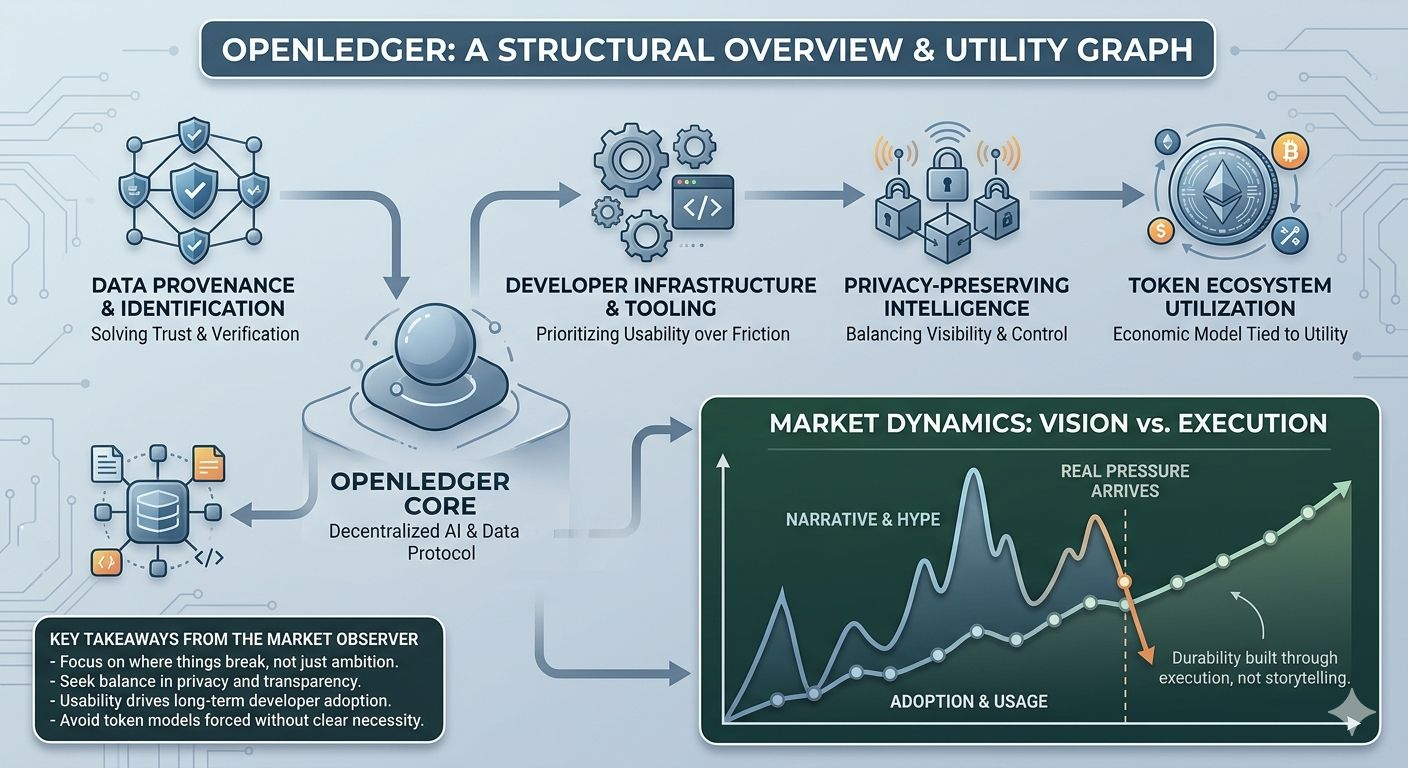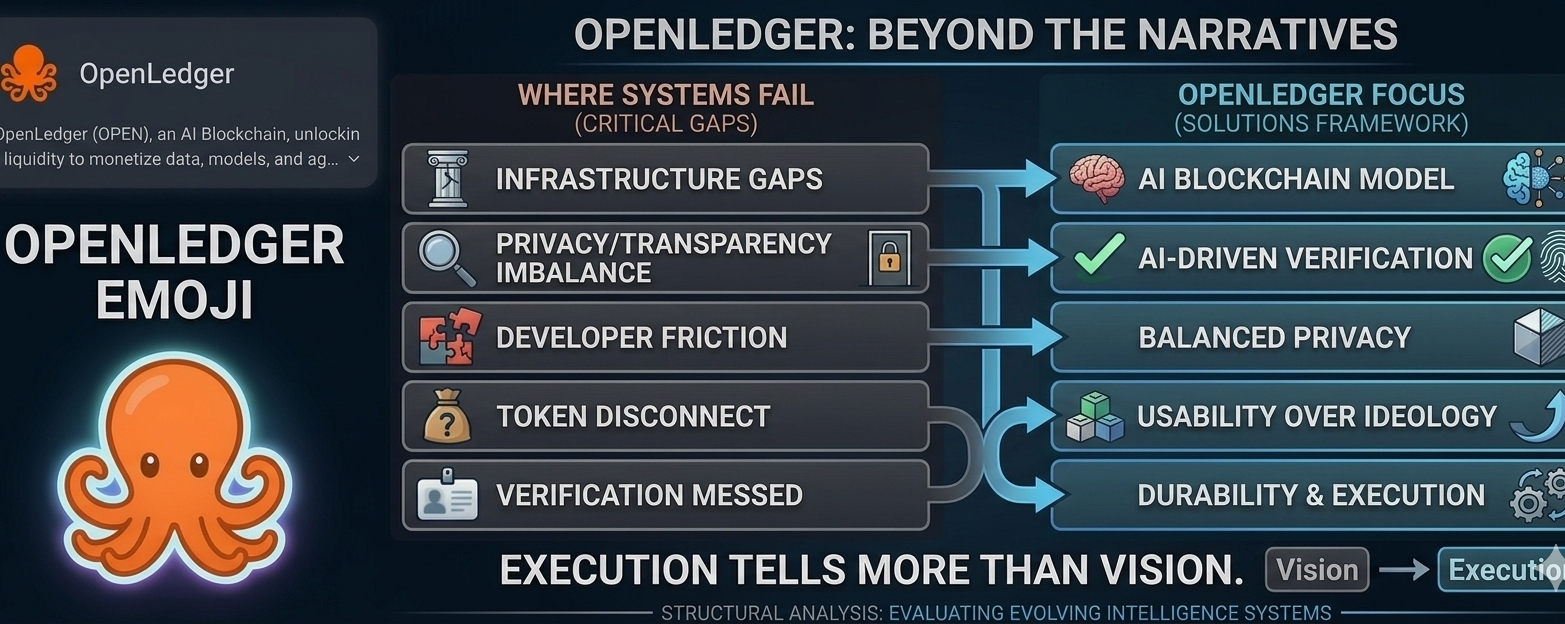
I’ve spent enough time watching this market repeat itself that I’ve stopped reacting to big narratives the way I used to. Every cycle sounds different on the surface, but underneath it all, the same patterns keep showing up again and again. New language replaces old language, new slogans take over timelines, and suddenly everyone pretends something familiar is revolutionary again. That’s probably why OpenLedger keeps sitting in the back of my mind lately. Not because I’m convinced by it, but because it makes me think about problems I still don’t think this space has solved properly.
The longer I stay around these systems, the harder it becomes to trust polished explanations. Too many projects feel designed for storytelling first and actual usage second. Everything looks clean in theory until real pressure arrives. Then the gaps start showing up fast. Infrastructure always sounds important when people describe it, but most infrastructure only gets noticed when it fails. That’s where my attention usually goes now. I care less about ambition and more about where things break. OpenLedger keeps making me think about that distinction because the market keeps rewarding presentation far more than durability.
One thing I keep running into is how badly this industry still handles privacy and transparency. Somehow we normalized a level of exposure that would feel absurd almost anywhere else. People talk about openness like it’s automatically good, even when it creates systems that quietly strip away boundaries. But at the same time, privacy-focused systems often swing too far in the opposite direction. They become difficult to use, difficult to trust, or so isolated that normal interaction starts feeling unnatural. I don’t think most people actually want total visibility or total invisibility. They want systems that feel balanced. OpenLedger makes me think about that because balance still feels strangely rare.
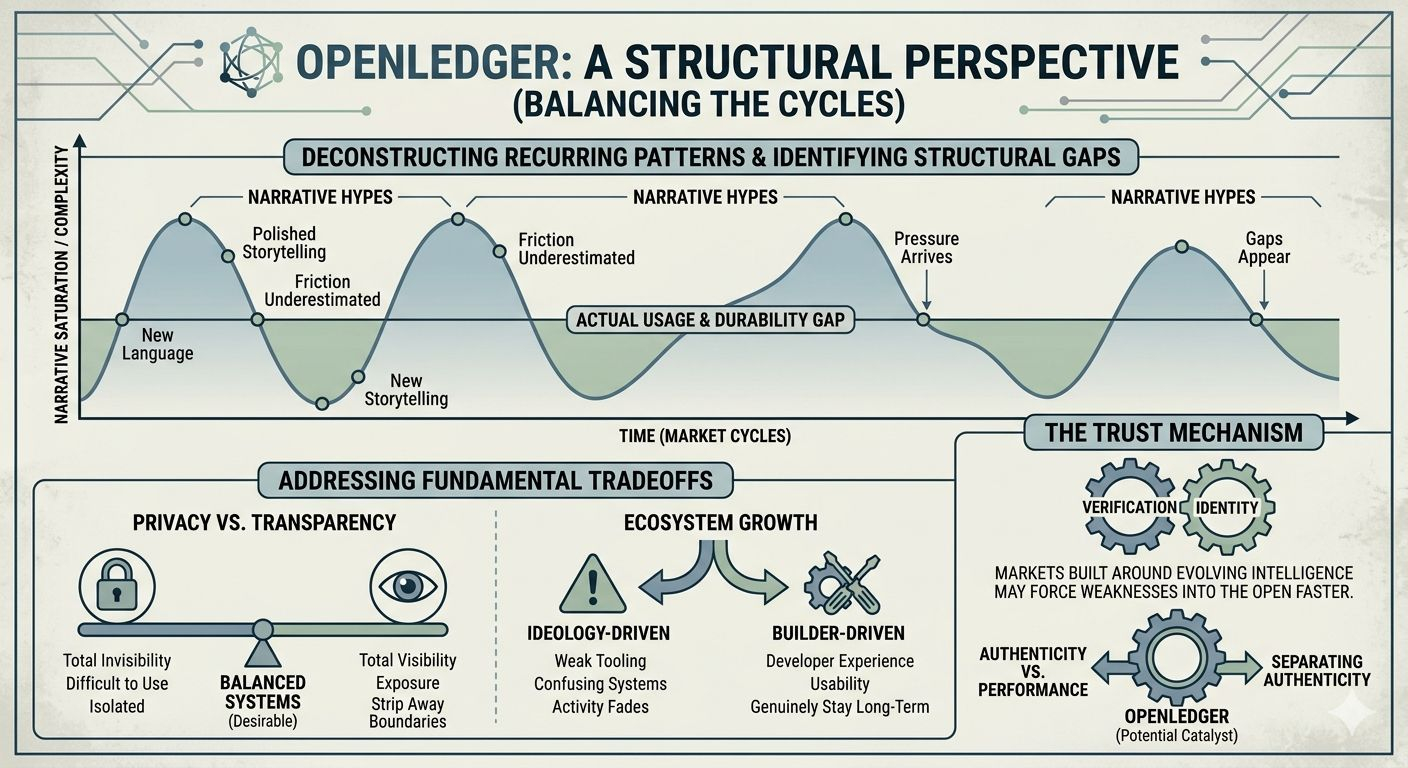
I also keep noticing how developer experience gets ignored until adoption stalls. People talk endlessly about ecosystems growing, but very few stop to ask whether builders genuinely want to stay there long term. Friction gets underestimated constantly. Weak tooling gets excused. Confusing systems get defended with abstract arguments about the future. Then everyone acts surprised when activity fades. OpenLedger interests me mostly because I’m starting to think usability is becoming more important than ideology, even if the market hasn’t fully admitted it yet.
The same thing happens with token systems. I’ve lost count of how many times I’ve seen economic models forced into places where they never felt necessary. Sometimes it feels like markets are created first and usefulness gets added later as justification. That disconnect becomes hard to ignore after a while. OpenLedger keeps pulling my attention back because I’m trying to figure out whether intelligence-based systems eventually escape that pattern or simply repeat it with better language.
What really keeps me watching, though, is trust. Verification still feels messy. Identity still feels unreliable. Systems still struggle to separate authenticity from performance. And honestly, I think that problem matters more than most people admit. OpenLedger doesn’t suddenly solve that in my mind, but it does make me wonder whether markets built around evolving intelligence force those weaknesses into the open faster than older systems did.
Maybe that’s why I haven’t completely checked out yet. I’m more skeptical than I used to be, definitely more tired of recycled narratives, but I’m still curious enough to watch closely when something feels slightly different underneath the noise. Most projects eventually reveal themselves through execution, not vision. That gap between ambition and actual usage almost always shows up in the end. OpenLedger may or may not escape that reality. I honestly don’t know yet. But I think paying attention to where systems fail tells me more than listening to how confidently they describe themselves.