I’ve spent enough time around this industry to notice how often the same cycles repeat under different names. Every few months, a new narrative appears, everyone rushes toward it, and suddenly the entire conversation starts sounding identical again. OpenLedger is one of the few names that keeps pulling me back into that pattern of thinking, not because I’m convinced by it, but because it sits in the middle of questions I still don’t think this space has answered properly. After years of watching infrastructure promises come and go, I’ve become less interested in polished narratives and more interested in what actually survives pressure once attention fades.
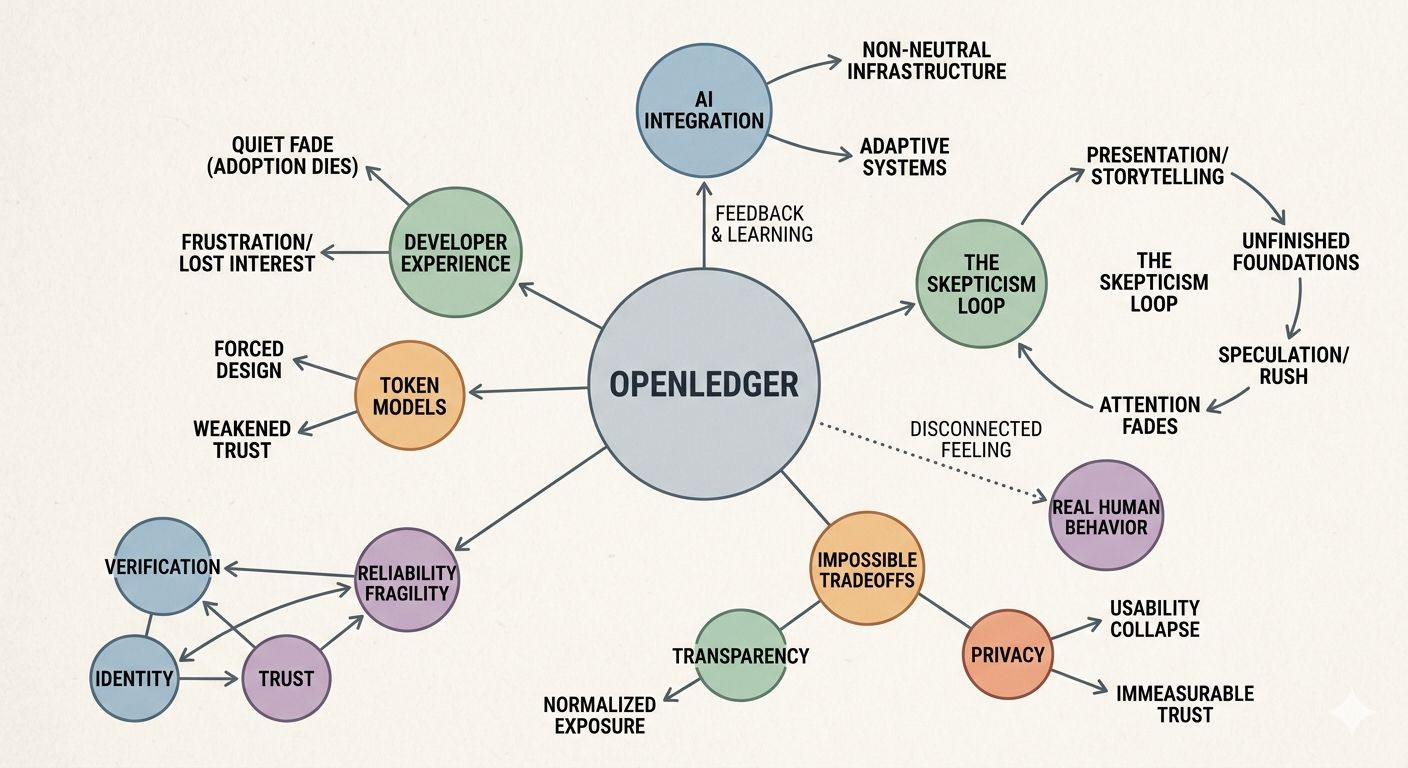
What keeps bothering me is how disconnected most systems feel from real human behavior. OpenLedger makes me think about that because infrastructure has always been presented as something passive, almost invisible, quietly supporting everything underneath. But AI changes that dynamic. Once systems start learning, adapting, and influencing decisions instead of simply processing instructions, the infrastructure itself stops feeling neutral. And honestly, I’m still trying to figure out whether that’s a good thing or just another layer of complexity people are pretending not to notice.
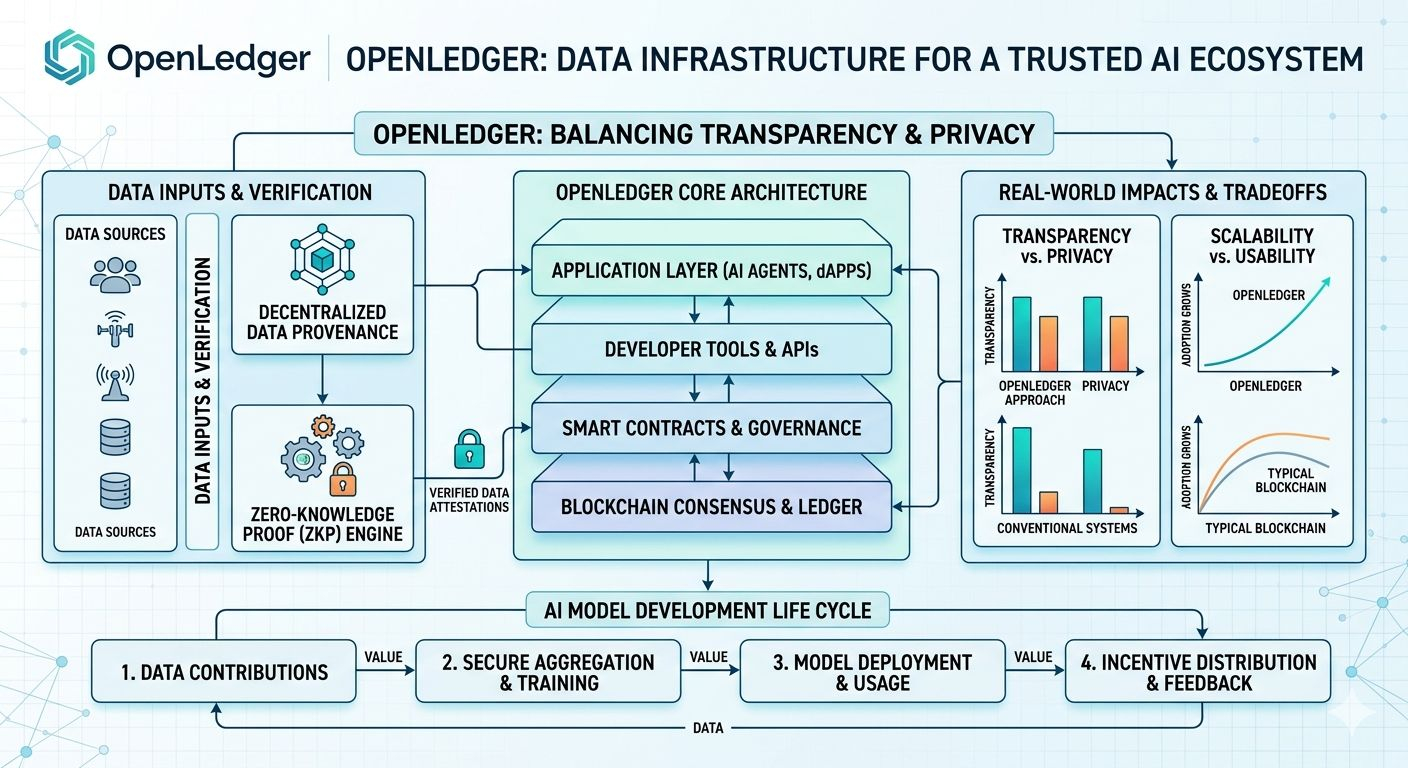
A lot of this skepticism comes from seeing how often the industry forces impossible tradeoffs. OpenLedger enters a landscape where transparency and privacy still seem stuck in constant conflict. One side pushes exposure so aggressively that it starts feeling normalized in places where it probably shouldn’t be. The other side swings so far toward privacy that usability collapses and trust becomes impossible to measure. I keep running into systems that claim to solve both problems at once, but most of them end up sacrificing practicality somewhere along the way. The gap between theory and actual behavior never really disappears.
That’s probably why I’ve stopped trusting presentation alone. OpenLedger exists in a market where storytelling often matters more than execution, and after watching enough projects rise and disappear, it becomes difficult not to notice how much energy goes into appearances. Big visions are easy to describe. Ambitious language is everywhere. But when you look closely, the foundations underneath often feel unfinished. Infrastructure always sounds powerful in abstract discussions, yet very few systems prove they can handle stress, scale naturally, or remain useful once speculation slows down.
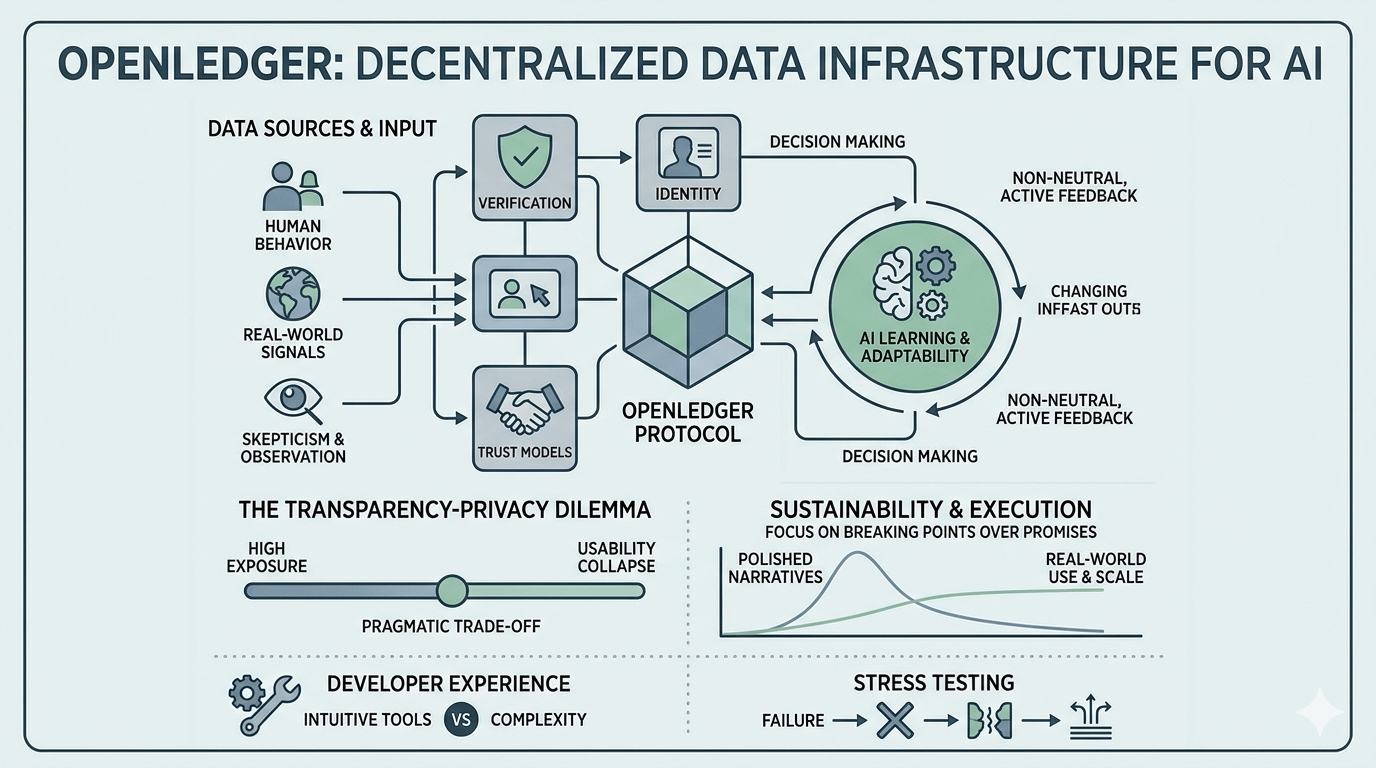
I also think developer experience gets ignored far more than people admit. OpenLedger makes me reflect on that because adoption rarely dies publicly. Most of the time it fades quietly. Developers lose interest, systems become frustrating to work with, and eventually the ecosystem empties out while the narrative keeps pretending growth is still happening. The same thing happens with token models. Too many of them feel attached after the fact, almost like they exist because every project assumes they have to. And over time, that forced design starts weakening trust instead of strengthening it.
The deeper issue for me is that verification, identity, and trust still feel unresolved almost everywhere I look, including around conversations tied to OpenLedger. We keep building systems that talk about coordination, ownership, and intelligent participation, yet reliability still feels fragile underneath. Maybe that’s why I’ve become more interested in breaking points than promises. I don’t really care how polished something sounds anymore. I care about where it fails, how it behaves under pressure, and whether the ideas still make sense once the excitement disappears. That curiosity is probably the only reason I’m still paying attention at all.