
I used to think crypto automation was mainly a convenience problem. Someone wanted a bot to rebalance a portfolio, claim rewards, move collateral, or execute a trade while they slept. The hard part seemed to be building better agents. Over time, that explanation started to feel too shallow. The deeper problem is not whether software can act for us. Software already does that. The real problem is whether markets can trust delegated action when money, identity, and institutional rules are all involved.
That is the lens through which I now look at Newton. Not as another agent project, and not as a collection of automation features, but as a small attempt to answer a larger question: if crypto becomes more automated, who verifies that automated action stayed inside the rules before damage occurs?
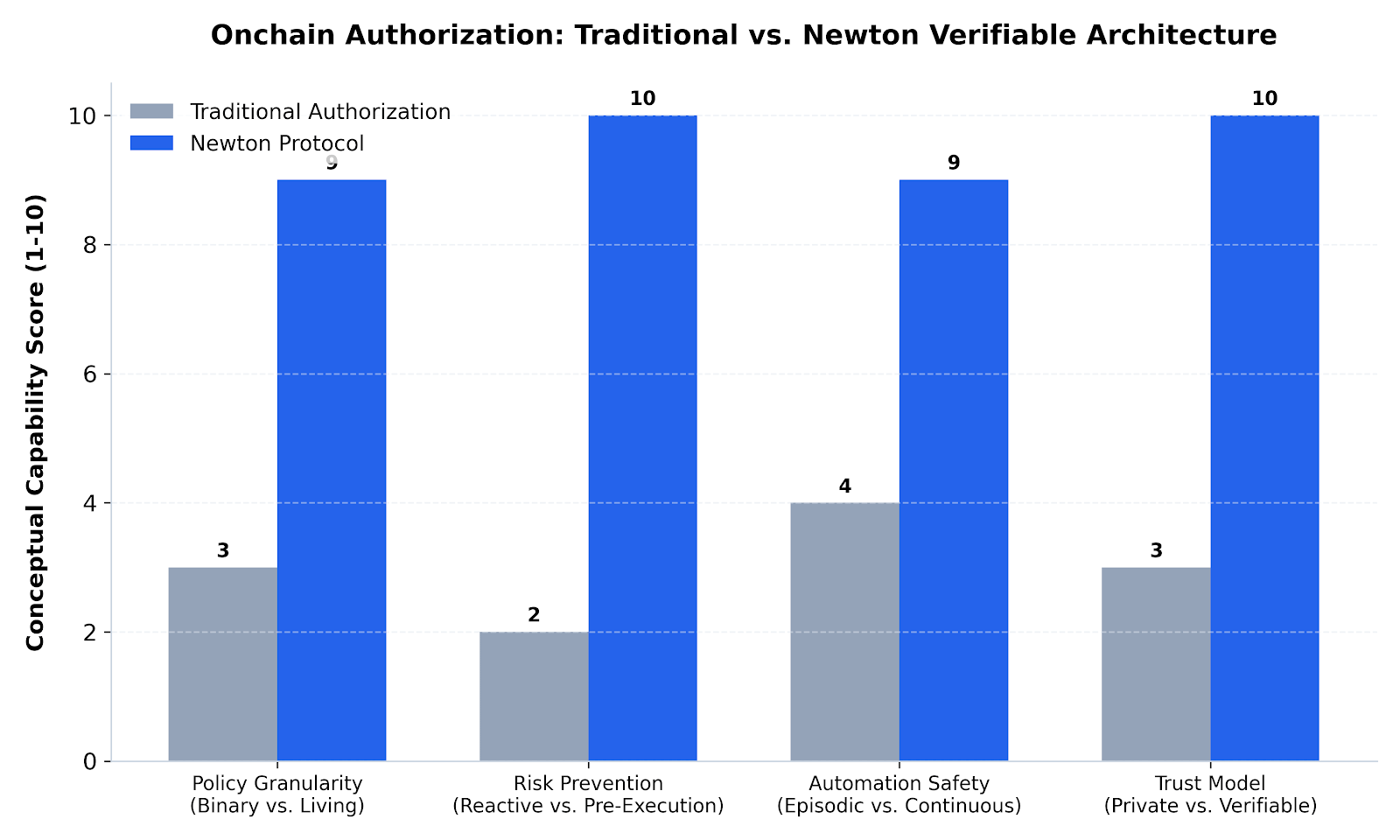
Most crypto systems still treat authorization as a binary event. A wallet signs. A contract accepts. A transaction executes. This design works when the user is present, the action is simple, and the risk is visible. It breaks down when users delegate authority to agents, institutions need policy controls, or applications depend on external data. In that environment, permission is no longer a yes-or-no question. It becomes a living constraint.
Newton’s interesting choice is to move that constraint into runtime. Its documentation describes the protocol as a decentralized policy engine for onchain transaction authorization, built as an EigenLayer AVS, with policies, tasks, attestations, and operator evaluation forming the core lifecycle . That sounds technical, but the economic point is simpler: rules become something the market can ask a network to evaluate, rather than something buried in private compliance systems or assumed inside a smart contract audit.
This matters because automation changes the failure mode of crypto. A human mistake is usually episodic. A bad automated permission can repeat itself quickly, across contracts and chains, until the capital path is exhausted. In that world, the investor question is not “can agents execute?” It is “can delegation become safe enough that larger pools of capital will allow agents to execute?” Newton is relevant only if that second question becomes important.
The overlooked part, in my view, is that Newton is not only competing for developer mindshare. It is competing to define a new market layer: verifiable authorization. Its architecture separates policy definition, offchain policy evaluation by operators, BLS signature aggregation, and onchain verification before execution . This is not the same as a trading bot, a keeper network, or a smart wallet module. It is closer to a pre-execution court where transactions must prove they satisfy a rule set before they are allowed to move.
That framing also changes how I think about $NEWT. The token is not interesting because automation is a fashionable word. It is interesting only if economic coordination around policy evaluation becomes scarce. Newton’s materials say NEWT is used for operator staking, fees for policy evaluations, challenge and dispute resolution, and governance once the protocol decentralizes . Those functions are meaningful only if real applications submit enough policy checks for operators, challengers, and governors to matter. Without that demand, the token is just attached to an elegant design.
What I find especially important is the way Newton handles disagreement. Operators may fetch time-sensitive external data, so the protocol uses a two-phase process: first collect unsigned data, compute median values within a tolerance, then have operators evaluate and sign the same canonical message . That detail tells me the team is thinking about a real operational problem, not just publishing a narrative. Automated finance will constantly touch imperfect data. The question is not whether variance exists. The question is whether variance is handled explicitly enough that the system fails safely instead of pretending every input is clean.
There is still a lot I would not assume. A policy engine can be correct and still fail commercially if developers find integration too heavy, if users do not understand what they are delegating, or if institutions prefer private controls over shared infrastructure. Slashing and challenges sound strong in theory, but their value depends on observable faults, active challengers, credible collateral, and clear dispute economics. A network can have cryptographic attestations and still struggle to create a liquid, useful market for trust.
This is why I would not describe Newton as “the future of AI agents.” That phrase hides more than it reveals. The more precise thesis is that crypto may be moving from transaction authorization to delegated intent authorization. If that shift happens, the protocols that matter will not merely automate actions. They will make automation governable, inspectable, and economically accountable.
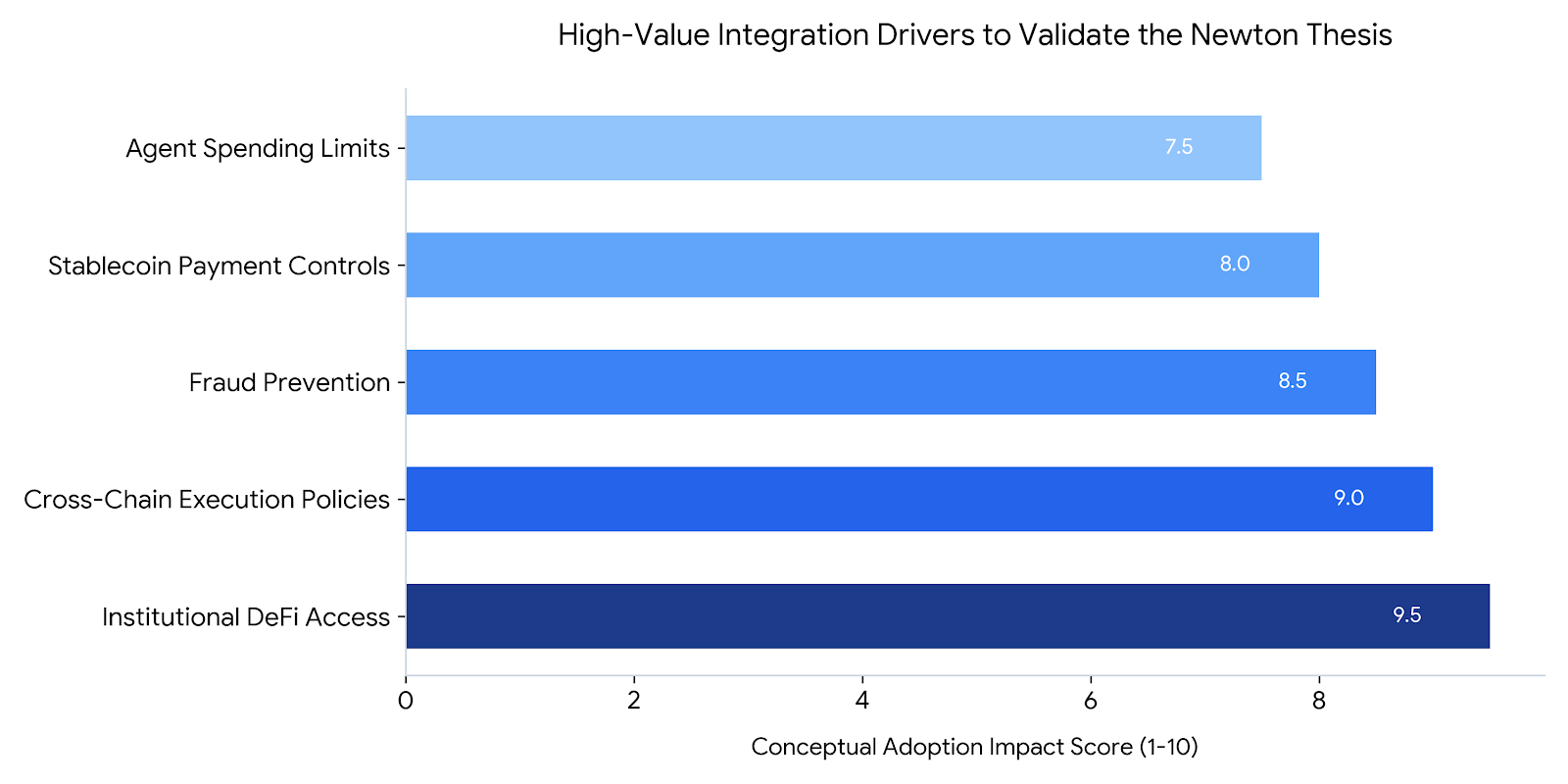
What would strengthen this thesis? I would want to see integrations where Newton protects flows that could not safely be automated before: institutional DeFi access, stablecoin payment controls, agent spending limits, fraud prevention, or cross-chain execution policies. I would also want evidence that developers reuse policy templates rather than treating every integration as bespoke work. Network effects here would not look like social attention. They would look like a growing library of enforceable rules.
What would weaken it? Low task volume, passive governance, weak challenge participation, or use cases that remain demos instead of production controls. If automation demand grows but developers choose wallet-native permissions, centralized risk engines, or simpler keeper systems, then Newton’s structural insight may be real while its market position remains limited.
So over the coming months, I will watch the boring indicators: policy deployments, recurring evaluation fees, operator diversity, challenge activity, and whether serious applications describe Newton as necessary infrastructure rather than optional security theater. If those signals appear together, $NEWT may represent something larger than another agent narrative. It may show that the next crypto automation trend is not about giving software more freedom, but about making delegated freedom harder to abuse.