
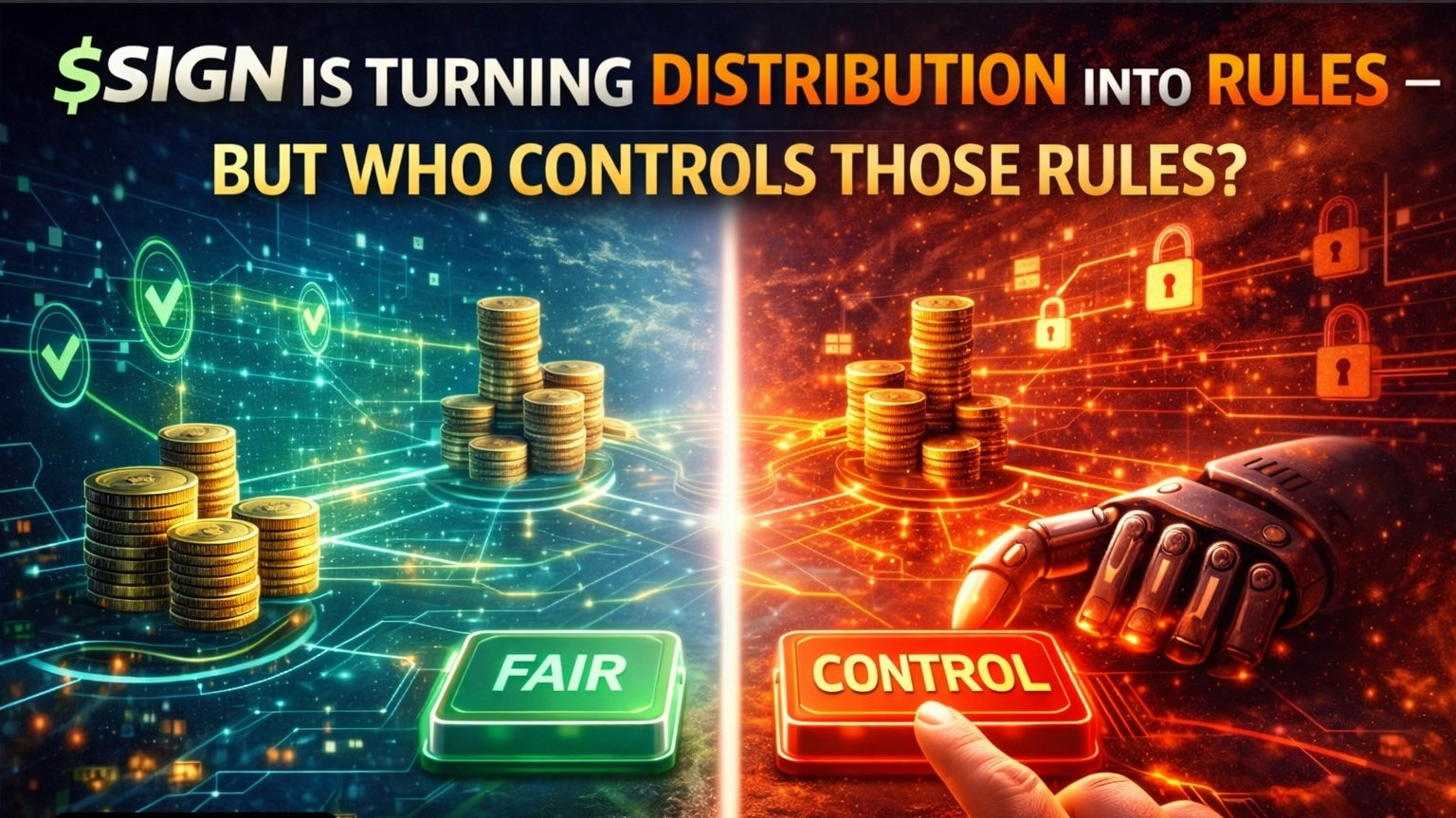
Something feels different about how $SIGN is approaching distribution.
Most projects treat distribution like a simple process.
Who gets tokens.
How much they get.
When they unlock.
But $SIGN seems to be doing something else.
Turning distribution into rules.
Conditions.
Eligibility.
Verification.
On paper, that sounds like progress.
But the moment you turn distribution into rules…
You introduce control.
Because rules don’t just execute.
They decide outcomes.
Who qualifies.
Who doesn’t.
What counts.
What gets ignored.
And that’s where things get complicated.
Because those rules don’t appear on their own.
Someone defines them.
Someone controls them.
And someone benefits from them.
That’s the part people don’t talk about enough.
Because distribution is never neutral.
It reflects decisions.
And decisions reflect power.
$SIGN might be building something deeper than just token infrastructure.
But that also means the risks are deeper.
If the rules are fair, the system works.
If they’re not…
Everything changes.
Still early.
But this feels less like simple infrastructure…
And more like a system that decides how value flows.