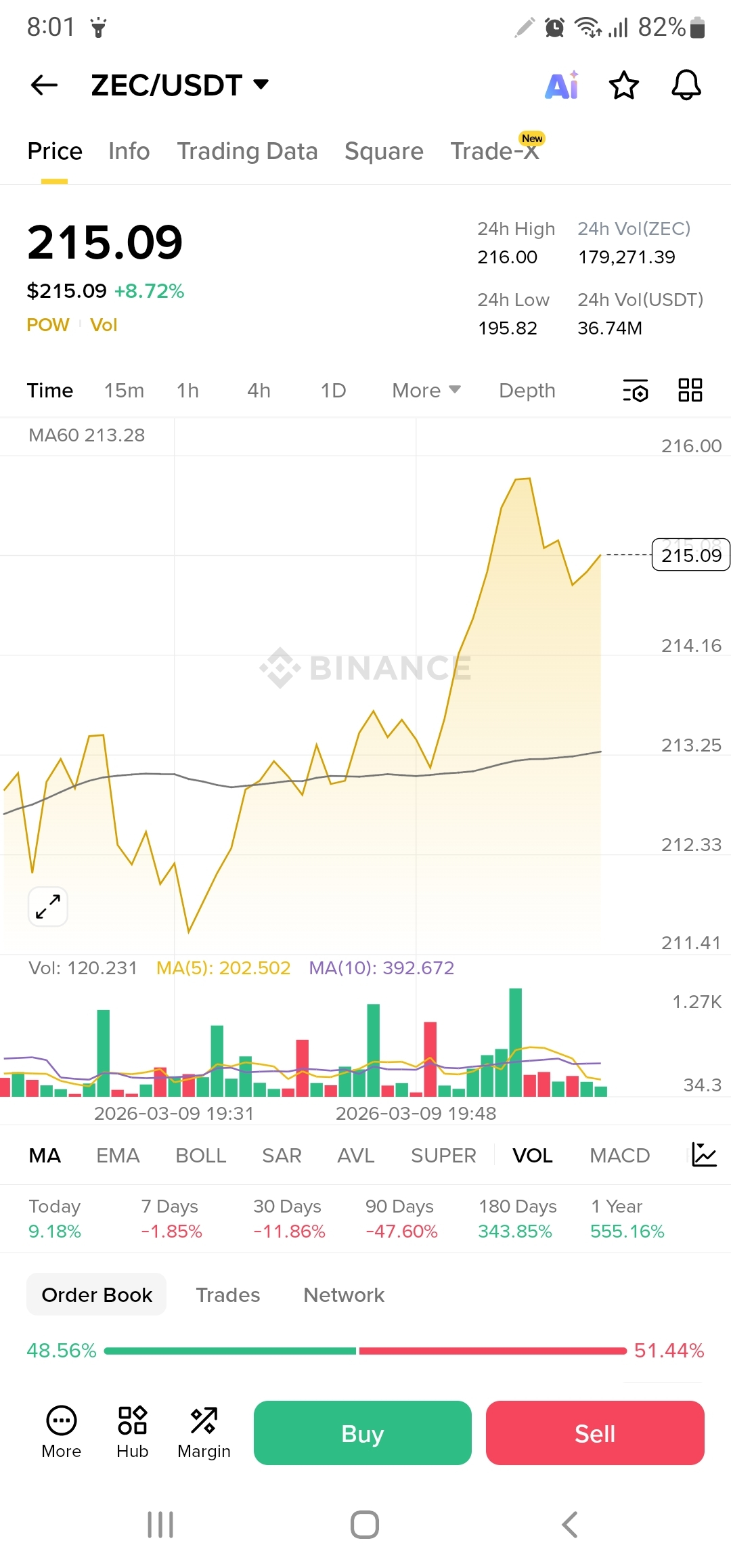


Cryptocurrencies are digital or virtual forms of money that use cryptography for security and operate on decentralized networks called blockchains. Unlike traditional currencies issued by governments or central banks, cryptocurrencies function through distributed computer networks that record and verify transactions without relying on a central authority.
The development of cryptocurrencies has created a new financial ecosystem involving digital assets, decentralized finance, and blockchain-based applications.
What Is Cryptocurrency?
A cryptocurrency is a digital asset designed to work as a medium of exchange using cryptographic techniques to secure transactions and control the creation of new units. Most cryptocurrencies operate on blockchain networks, which ensure transparency and prevent double-spending.
The first and most well-known cryptocurrency is , introduced in 2009 by the pseudonymous developer .
Since then, thousands of other cryptocurrencies have been created, including:
These digital currencies can be traded on exchanges, used for payments, or applied within blockchain-based platforms.
What Is Blockchain Technology?
Blockchain is a distributed ledger technology that records transactions across a network of computers. Instead of storing information in a single centralized database, blockchain distributes copies of the ledger to many participants in the network.
Each record in the blockchain is stored in a block, and blocks are linked together in chronological order, forming a chain.
Key Characteristics
Decentralization
No central authority controls the blockchain network.
Transparency
Transactions can be publicly verified by participants.
Security
Cryptographic techniques protect transaction data.
Immutability
Once data is recorded on the blockchain, it is extremely difficult to alter.
These features make blockchain suitable for financial systems and many other applications.
How Cryptocurrencies Work
Cryptocurrency transactions follow several steps:
A user sends cryptocurrency from a digital wallet.
The transaction is broadcast to a blockchain network.
Network nodes verify the transaction.
Verified transactions are grouped into a block.
The block is added to the blockchain.
Different blockchain networks use different consensus mechanisms to validate transactions.
Common Consensus Methods
Proof of Work (PoW) — Used by . Miners solve complex mathematical puzzles to validate blocks.
Proof of Stake (PoS) — Used by after its network upgrade known as .
Applications of Blockchain
Although blockchain technology was originally designed for cryptocurrencies, it now has many broader applications.
1. Digital Payments
Cryptocurrencies allow peer-to-peer transactions without banks or payment processors.
2. Smart Contracts
Smart contracts are self-executing programs stored on blockchains such as . They automatically execute agreements when predefined conditions are met.
3. Decentralized Finance (DeFi)
DeFi platforms provide financial services such as lending, borrowing, and trading without traditional intermediaries.
4. Supply Chain Management
Blockchain can track goods from production to delivery, improving transparency and reducing fraud.
5. Digital Identity and Records
Governments and organizations are exploring blockchain for identity verification, voting systems, and secure record keeping.
Advantages of Cryptocurrencies and Blockchain
Decentralization – Reduced reliance on central authorities
Lower transaction costs in some cases
Global accessibility for financial services
Improved transparency and auditability
Innovation in financial technology
Challenges and Risks
Despite its potential, the technology faces several challenges:
Price volatility
Cryptocurrency markets can fluctuate rapidly.
Regulatory uncertainty
Governments are still developing legal frameworks.
Security risks
Hacks, scams, and exchange failures can lead to financial losses.
Energy consumption
Some networks using Proof of Work require significant computing power.
Future of Blockchain and Cryptocurrencies
Blockchain technology continues to evolve with innovations such as:
Layer-2 scaling solutions
Tokenized assets
Decentralized applications (dApps)
Central bank digital currencies (CBDCs)
Major institutions, technology companies, and governments are increasingly exploring blockchain-based systems, suggesting that the technology may play an important role in the future of finance and digital infrastructure.
✅ In summary:
Cryptocurrencies are digital assets that rely on blockchain technology to enable secure, decentralized transactions. Since the creation of , blockchain has grown into a broad technological field with applications far beyond digital currency, influencing finance, supply chains, and digital services worldwide.