
In the early days of crypto, people often emphasized “transparency at all costs.” The idea was straightforward, everything should be visible on-chain. However, by now, the idea has changed. People are beginning to understand that complete transparency isn’t always practical, especially for businesses, personal data, or real-world uses.
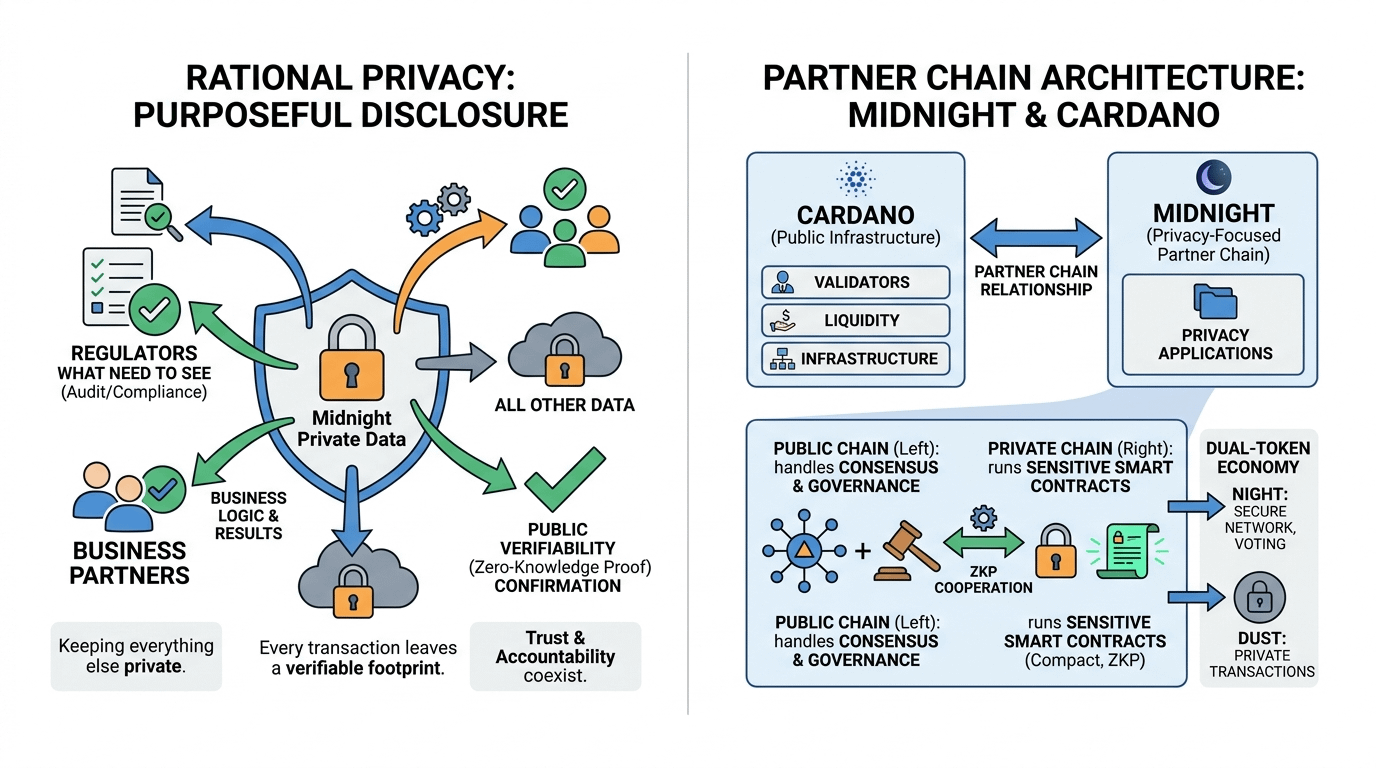
This is where the @MidnightNetwork comes in.
Midnight is often referred to as a fourth-generation blockchain focused on rational privacy. Instead of forcing users to choose between full transparency and total anonymity, it keeps a balance between the two.
Rational Privacy: A Middle Ground
Most blockchains exist at one of two extremes. Networks like Bitcoin and Ethereum are fully transparent. Every transaction, wallet balance, and interaction is publicly accessible on the blockchain.
On the flip side, privacy coins like Moreno concentrate on concealing transaction data altogether, which can make issues on regulatory compliance.
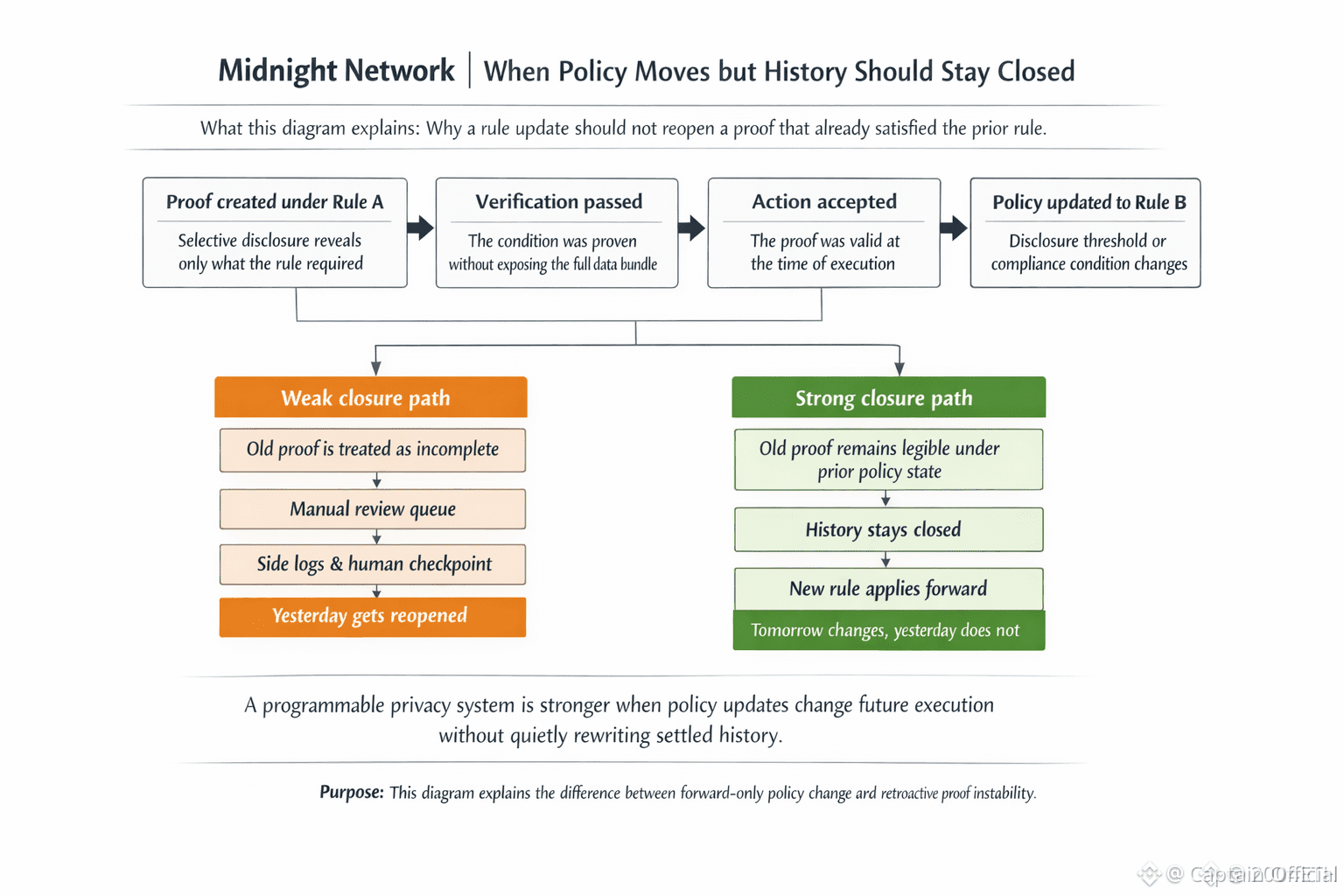
Midnight takes a different approach. Its concept of rational privacy allows for selective disclosure. In simple words, you can prove something about your data without disclosing the data itself.
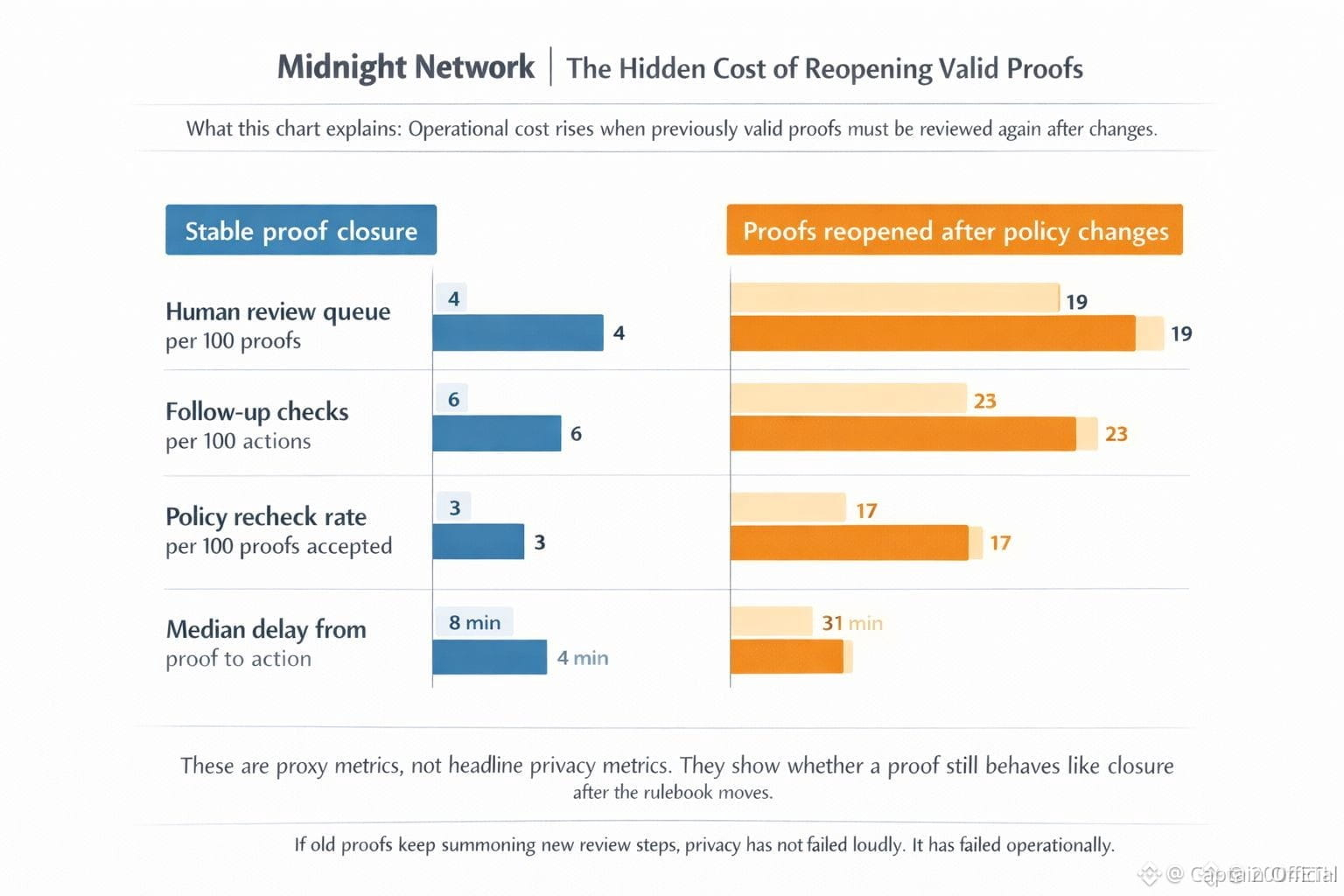
For instance, you might prove that you’re over 18, have a certain credit score, or reside in a specific country, without actually sharing your birthdate, financial details, or personal documents! Midnight transforms privacy into something programmable rather than a binary option.
How the Technology Works
Technically, Midnight isn’t just another sidechain linked to Cardano. It is built as a partner chain with its own structure designed for privacy.
One of the main tools behind it is zero-knowledge proofs, specifically a system called Halo 2. These cryptographic proofs allow the network to confirm that a transaction is valid without revealing the sensitive details involved. The system can validate that funds exist and signature are correct all while keeping the underlying information private.
Another key component is the Kachina Protocol. This allows Midnight to be programmable for devs. When users engage with apps on the network, most data processing occurs off-chain in a private setting. Instead of posting all the information to the blockchain, only a small cryptographic proof is recorded publicly.
The outcome is a system that keeps sensitive data secure while still upholding the trust and security that blockchains are known for.
Building Privacy Apps Without a Math Degree
Midnight also aims to make privacy development easier. Its smart contract language, Compact, is based on TypeScript. Since many developers are already familiar with TypeScript, it lowers the entry barrier for creating privacy-focused applications. Developers don’t need extensive cryptography knowledge; they can use more familiar programming tools.
Where Midnight Is Now (2026)
As of March 2026, the network is entering a significant development phase called Kūkolu, part of its Hawaiian-themed roadmap.
The project’s founder, Charles Hoskinson, recently announced at the Consensus Hong Kong conference that the federated mainnet launch is set for late March. Several large infrastructure companies, including Google Cloud, Blockdaemon, and eToro, have signed on as early node operators.
The network has also completed its Glacier Drop, a large token distribution event that rewarded early supporters and Cardano stakers with new NIGHT tokens.
Why some People Call It the “Privacy Layer”
Midnight isn’t trying to conceal everything from the world. Instead, it aims to give normal people and businesses more control over how much they disclose.
Think of it less like a blackout curtain and more like a digital privacy filter. You can confirm the truth of something when you need, while keeping sensitive information hidden.
If the concept works in practice, $NIGHT could become what many are calling “the privacy layer for the global economy.” In a world where data is growing in value and vulnerability, having that option might be more important than ever.