
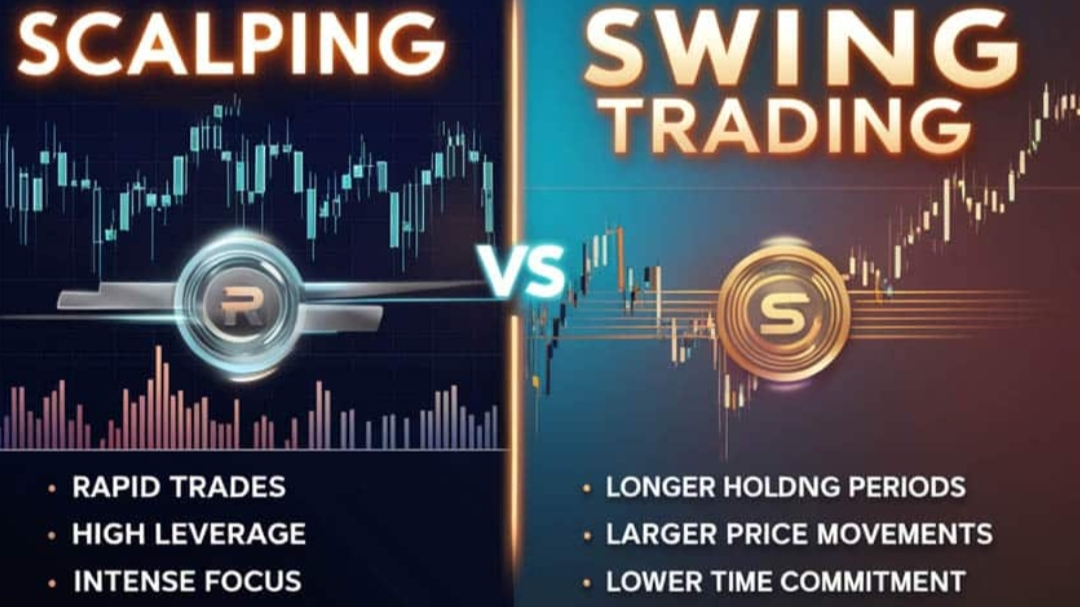


Most traders enter crypto thinking it’s all about catching big moves, but the truth is simple your strategy matters more than your prediction. Two of the most popular approaches are scalping and swing trading. Both can make money. Both can destroy accounts. The difference comes down to how well you understand the game you’re playing.
Scalping is fast, aggressive, and unforgiving. It’s about taking small profits repeatedly by entering and exiting trades within minutes or even seconds. You’re not trying to catch the whole move. You’re just taking pieces of it again and again. On paper, it looks easy. In reality, it demands extreme focus, discipline, and quick decision-making. One mistake, one hesitation, or one emotional trade can wipe out multiple wins. That’s why most beginners fail at scalping. It’s not just a strategy — it’s a mental battle.
The advantage of scalping is that it reduces exposure to market uncertainty. You’re in and out quickly, so you’re less affected by sudden news, volatility spikes, or unexpected dumps. In highly volatile markets, scalpers can generate consistent profits because there are always small price movements to exploit. But the downside is clear. It requires constant screen time, strong execution, and tight risk control. If your mindset is not sharp, scalping becomes gambling very fast.
Swing trading operates on a completely different rhythm. Instead of chasing small moves, you aim to capture larger trends over hours, days, or even weeks. You enter with a plan, set your levels, and allow the market to move. This approach is less stressful in terms of execution but more challenging in terms of patience. Watching price fluctuate without reacting emotionally is not easy, especially when you see temporary losses before the move plays out.
The strength of swing trading is that it aligns with how markets actually move. Crypto doesn’t just spike randomly — it trends, consolidates, and then expands. Swing traders position themselves within these phases. They don’t need to be right every minute. They just need to catch the right direction at the right time. This allows for bigger profits with fewer trades, which also reduces fees and overtrading mistakes.
However, swing trading has its own risks. Holding positions longer exposes you to market news, sudden reversals, and liquidity shifts. A perfectly planned trade can turn against you overnight. That’s why risk management becomes even more important here. Stop losses, position sizing, and patience are everything. Without them, swing trading can slowly bleed your account instead of growing it.
So what actually works? The honest answer is not one or the other — it’s what fits your personality and lifestyle. If you are highly focused, quick under pressure, and can manage emotions in real time, scalping can be extremely profitable. But if you prefer a more structured approach, with less stress and more calculated decisions, swing trading usually delivers better long-term results.
Most successful traders eventually lean toward swing trading because it is more sustainable. It doesn’t require you to sit in front of charts all day, and it allows you to think instead of react. But many also use scalping as a tool to take advantage of short-term volatility when the opportunity is clear.
The real edge is not choosing a strategy. The real edge is mastering one approach and staying consistent. Jumping between scalping and swing trading without a clear plan is where most traders lose. Consistency builds confidence, and confidence builds profits.
At the end of the day, the market rewards discipline, not speed. Whether you scalp or swing, if you manage risk, stay patient, and control your emotions, you can win. If you don’t, no strategy will save you.