
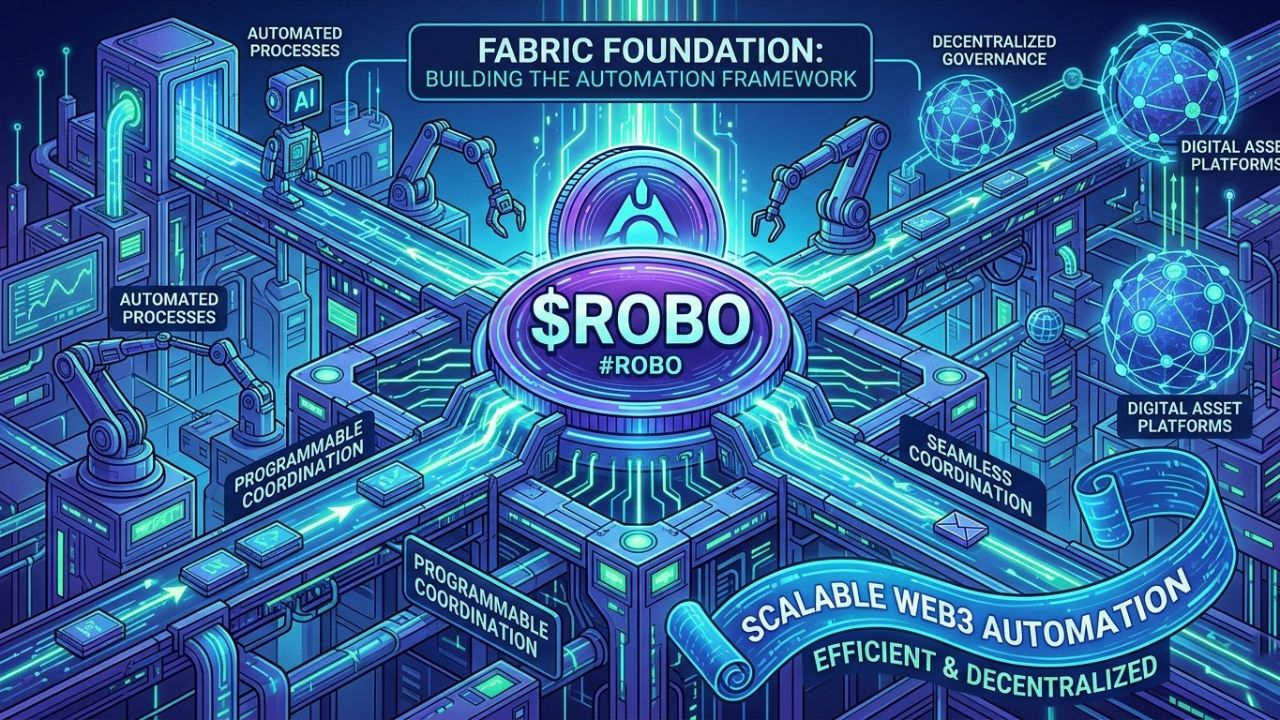
As blockchain ecosystems expand, complexity grows alongside them. Managing decentralized systems manually becomes inefficient when networks scale and user participation increases. Fabric Foundation is focused on addressing this challenge by developing structured automation infrastructure that supports seamless coordination across Web3 environments.
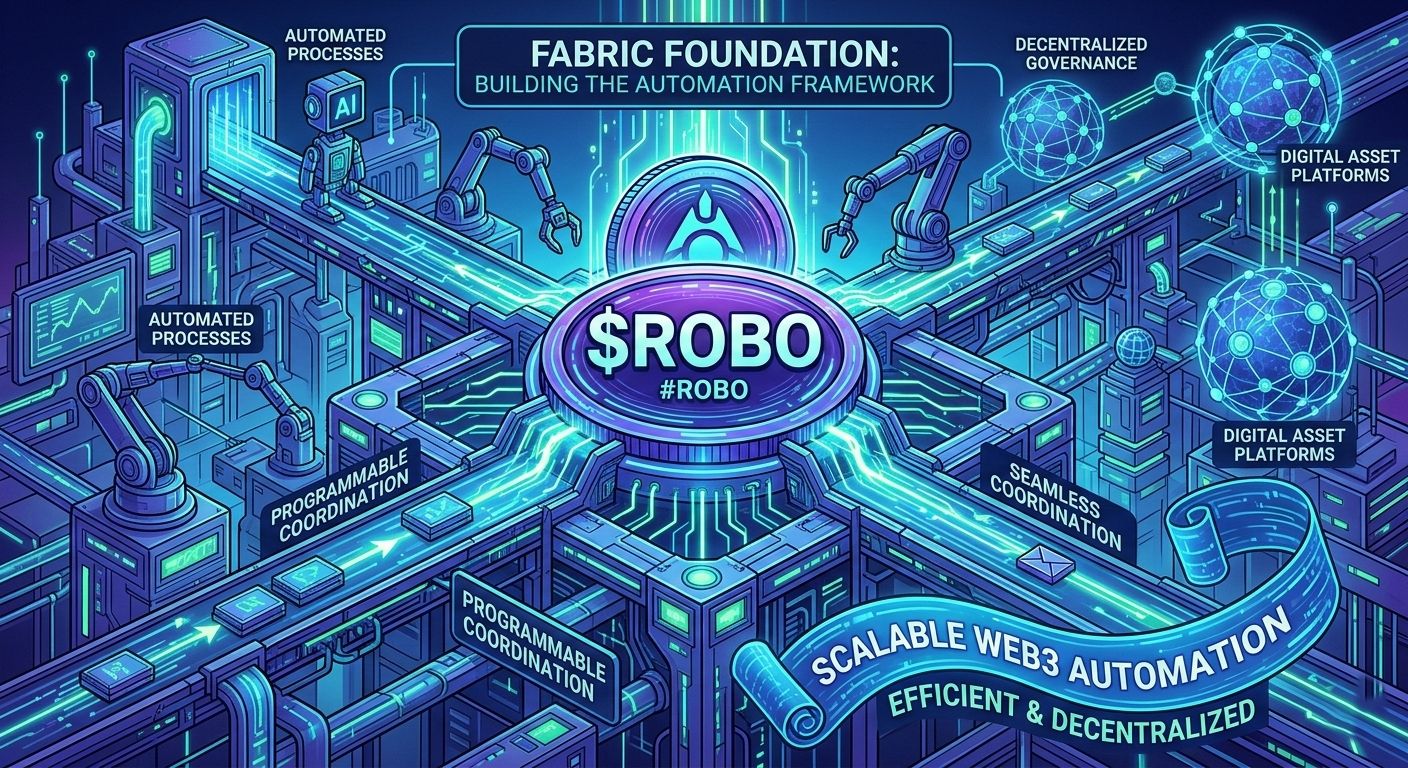
Rather than relying purely on human-driven processes, Fabric Foundation emphasizes programmable mechanisms that enhance efficiency and reduce operational friction. Automation ensures consistency, minimizes delays, and strengthens reliability — especially in ecosystems that require continuous activity and transparent execution.
At the center of this framework is $ROBO . The token plays a critical role in aligning incentives, supporting participation, and powering network-level coordination. By embedding economic logic directly into the infrastructure, Fabric Foundation encourages sustainable ecosystem development while maintaining decentralization.
#ROBO represents more than simple token utility; it symbolizes the shift toward intelligent blockchain automation. As decentralized finance, governance systems, and digital asset platforms evolve, infrastructure capable of supporting automated processes will become essential.
Fabric Foundation’s focus on scalable automation and programmable coordination positions $ROBO within a growing narrative: Web3 must become not only decentralized, but also operationally efficient. By combining structured automation with token-driven incentives, Fabric is contributing to a more resilient and future-ready decentralized ecosystem.
$ROBO @Fabric Foundation #robo
