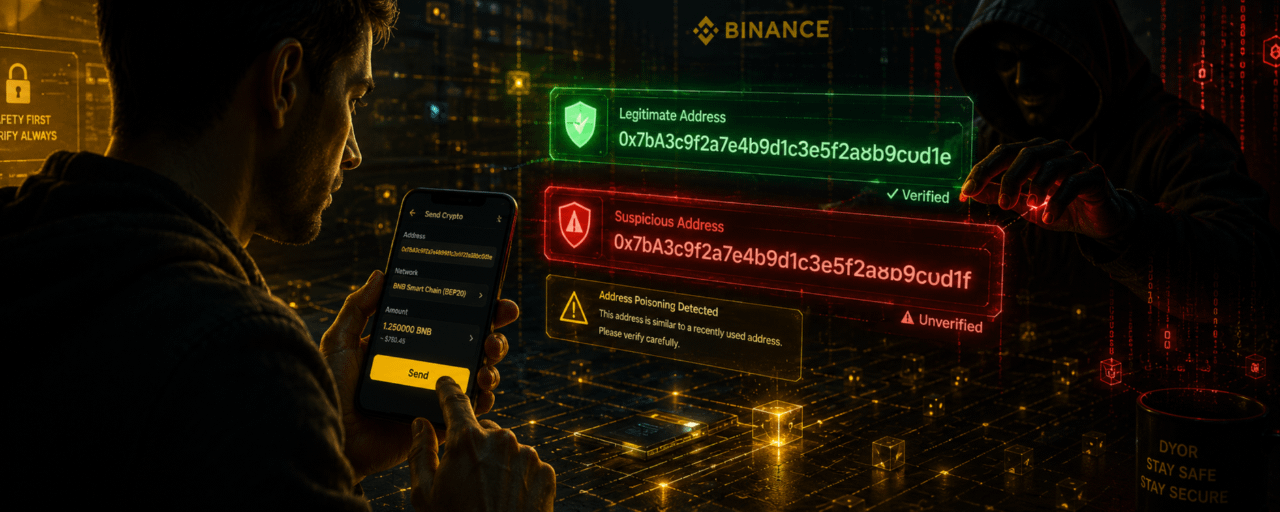
Crypto transactions are fast and irreversible. That makes one simple mistake very expensive.
One growing scam is called Address Poisoning.
What Is Address Poisoning?
Scammers send a tiny amount of crypto to your wallet from an address that looks very similar to one you have used before.
Their goal is simple:
They hope you will copy the fake address from your transaction history and accidentally send funds to them later.
Since many users only check the first few and last few characters of an address, the scam can be surprisingly effective.
Example
Imagine you regularly send USDT to:
0x813e...87627
A scammer creates a similar-looking address:
0x813e...87621
They send you a small transaction so their address appears in your wallet history.
Later, when you're in a hurry, you copy the wrong address and send your funds directly to the scammer.
The transaction cannot be reversed.
How to Stay Safe
1. Never Copy Addresses From Transaction History
Always use a saved address book or verify the full address before sending.
2. Double-Check Every Transfer
Don't rely only on the first and last few characters.
3. Use Binance Address Management
Save verified addresses and whitelist trusted recipients whenever possible.
4. Send a Small Test Transaction
For large transfers, send a small amount first and confirm it arrives correctly.
5. Ignore Random Dust Transactions
Unexpected tiny deposits may be attempts to place a fake address in your history.
Final Thoughts
Address poisoning doesn't hack your wallet.
Instead, it tries to trick you into making a mistake.
In crypto, security isn't only about protecting your private keys—it's also about paying attention to every address you use.
Stay alert, verify carefully, and always think twice before pressing "Send."
#scam #AddressPoisoning #crypto