
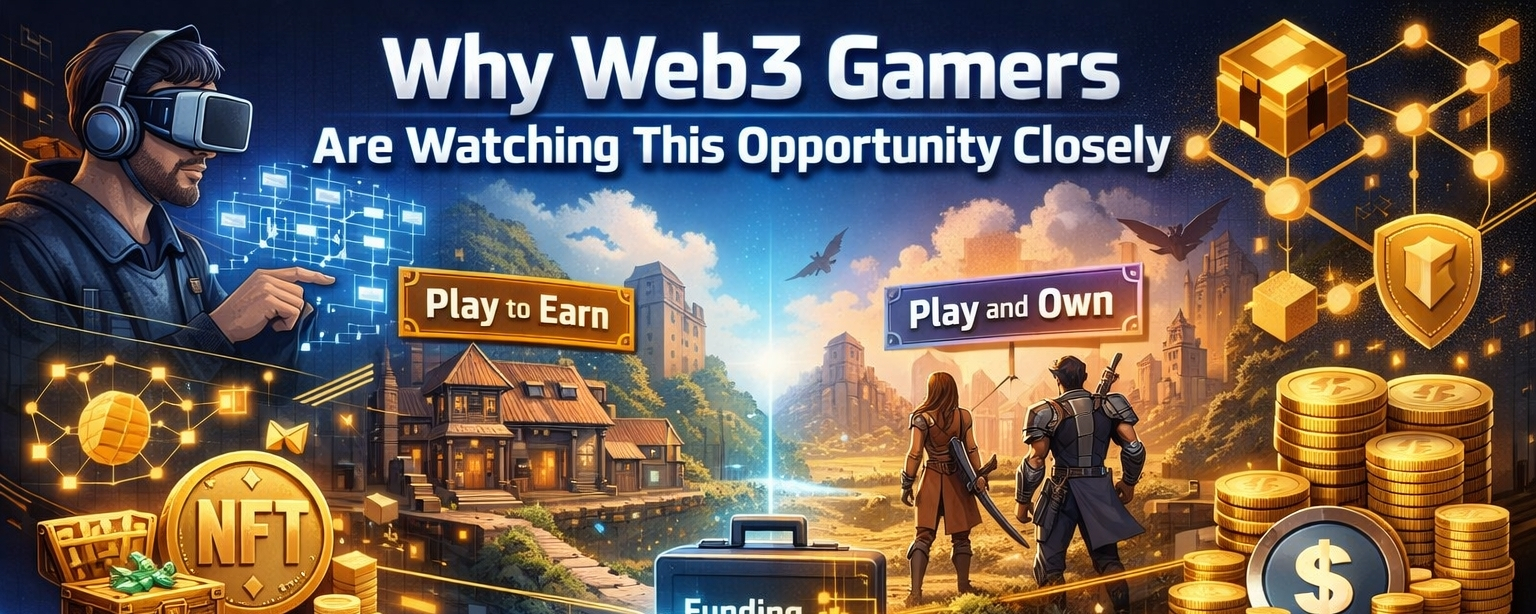
Web3 gaming is going through an important transformation phase.
The hype that once surrounded it is slowing down, but the real development is becoming stronger.
Gamers, developers, and investors are now focusing more on value than speculation.
The question has shifted from “what if Web3 gaming works” to “where is it actually working right now.
Over the past few years, the industry has seen rapid ups and downs.
Many projects entered the space with big promises but weak gameplay.
As a result, the market experienced a correction phase where only serious builders remained active.
This filtering process is now creating a more stable foundation for the future.
Recent data shows that Web3 gaming still holds strong user activity.
Millions of daily active wallets interact with blockchain games across different ecosystems.
Transaction volumes remain high compared to other Web3 sectors.
This proves that real users are still engaging with games, not just investors or short-term speculators.
At the same time, funding patterns have changed significantly.
Instead of large hype-driven investments, capital is now more selective.
Investors are focusing on infrastructure, scalability, and long-term gaming ecosystems.
This shift shows maturity in the industry rather than decline.
One of the biggest reasons gamers are watching closely is ownership.
Traditional gaming does not allow players to truly own in-game items.
Everything remains locked inside centralized servers.
Web3 changes this model by turning items into digital assets on the blockchain.
These assets can be traded, transferred, or even used across different platforms.
This creates a new kind of gaming economy.
Players are no longer just participants, but also stakeholders in the ecosystem.
The idea of earning while playing is becoming more structured rather than purely speculative.
However, the focus is slowly shifting from “play to earn” toward “play and own.”
Another major development is the improvement of game quality.
Earlier Web3 games were criticized for weak gameplay and heavy focus on tokens.
Now, developers are putting more effort into storylines, graphics, and user experience.
Blockchain features are being integrated in the background rather than dominating the gameplay.
This makes the experience smoother and more appealing to mainstream gamers.
Big gaming companies have also started showing interest.
Established studios are testing blockchain integration in limited formats.
They are exploring ways to use NFTs, digital assets, and virtual economies safely.
This involvement adds credibility to the space and attracts more serious development.
Stable digital currencies are also improving the ecosystem.
They reduce volatility and make in-game economies more predictable.
This helps both players and developers maintain balance in gaming markets.
Cross-border transactions also become easier and faster through blockchain systems.
Another important factor is interoperability.
In traditional gaming, assets remain stuck inside a single game.
Web3 aims to change this by allowing assets to move across different games and platforms.
This creates a wider digital universe where progress is not limited to one title.
Even though the industry is growing, it has also faced challenges.
Many early projects failed due to poor design and unsustainable token models.
This led to a loss of trust among casual gamers.
However, the current phase is focused on rebuilding that trust through better systems.
Security and regulation are also becoming important topics.
Developers are now more aware of compliance, user protection, and fair economic systems.
This is helping the industry move closer to mainstream acceptance.
From a future perspective, Web3 gaming still holds strong potential.
If executed properly, it can change how digital ownership works in entertainment.
Players may have long-term value from time spent in games.
Developers may earn more sustainable income from active communities.
The biggest opportunity lies in combining fun gameplay with real digital ownership.
If games become enjoyable first and profitable second, adoption will grow naturally.
This balance is what the industry is currently trying to achieve.
In the coming years, we may see Web3 gaming become less visible as a concept.
Instead of focusing on blockchain, players will simply enjoy games that use it in the background.
Just like most people do not think about servers or databases today, blockchain may become invisible infrastructure.
This is why Web3 gamers are watching the opportunity so closely.
They are not chasing hype anymore.
They are looking for real, playable, and sustainable ecosystems.
The current phase is not about promises, but about execution.
And whoever succeeds in that execution may define the future of gaming itself.