
In 2021, a healthcare platform I used for three years sent me an email. Apologetic tone. Formal language. The kind of email you recognize before you finish the first sentence.

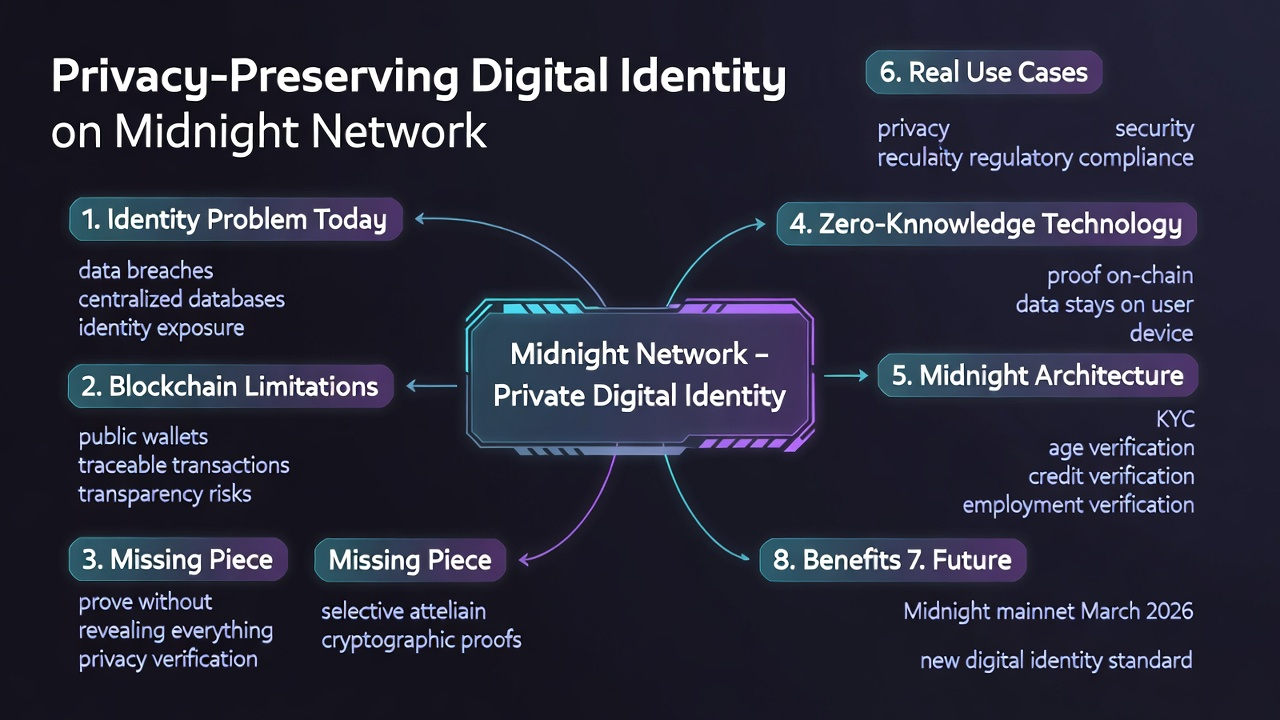
They had been breached. Names, addresses, identification numbers, medical history. Everything I had handed over because the system required it — because proving who I was meant emptying my pockets onto their server and hoping nobody with bad intentions ever found the door.
I was not angry at the hackers. I was angry at the architecture. The system was designed to collect everything because it had no way to verify anything without collecting everything. That was not negligence. That was how every digital identity system in existence actually works. You cannot prove you qualify for something without first handing over everything that makes you who you are. The verification and the exposure are the same transaction.
That email stayed in my head for a long time.
Digital identity is the problem that blockchain was supposed to solve and never quite got around to solving properly. The early promise was clear — give people control over their own credentials, remove the centralized honeypot, put the individual back in charge. What actually got built was a different version of the same problem. Public wallets. Visible transaction histories. Addresses that could be traced, analyzed, and connected to real identities with enough patience and the right tools.
The exposure moved. It did not disappear.

What was missing was never the decentralization. It was the ability to prove something specific without revealing everything adjacent to it. To say I am over 18 without saying when you were born. To say my credit clears this threshold without opening your full financial history to the counterparty. To say I am a verified citizen of this jurisdiction without attaching your name, address, and identification number to a permanent public record.
These are not exotic requirements. They are the minimum standard for a functioning digital identity system. And until zero-knowledge proofs became practical infrastructure rather than academic curiosity, there was no honest way to deliver them.
@MidnightNetwork is building toward exactly this. The architecture allows selective attestation — proof that a credential is valid without transmitting the credential itself. A digital driver's license that confirms age without revealing a birthdate. An employment qualification that confirms a degree without exposing the institution or graduation year. A credit verification that confirms eligibility without disclosing income, debt, or account history.
The proof lands on-chain. The data stays on your device. The counterparty gets the answer to the specific question they asked and nothing else.
What this changes practically:
— KYC on decentralized exchanges becomes possible without building centralized data repositories that become breach targets
— Medical and financial credentials can travel with individuals across platforms without those platforms accumulating sensitive archives
— Regulatory compliance becomes achievable without forcing users to sacrifice the privacy that made decentralized systems worth building in the first place
I think about the healthcare breach sometimes when I read about identity solutions that still require full disclosure to function. The problem was never that hackers are clever. The problem was that the system gave them something worth stealing. A server full of medical records exists because the verification architecture demanded it. Remove the architectural requirement and the honeypot disappears with it.
That is what a serious identity solution actually looks like. Not better encryption around the same centralized collection. A fundamental redesign of what verification requires.
Most people will not care about this until the next breach email lands in their inbox. And it will. The current architecture guarantees it. Systems that collect everything will eventually lose everything. Not because of carelessness. Because of design.

Midnight mainnet launches late March 2026. That is not a distant promise. That is weeks away.
The healthcare platform eventually offered me twelve months of credit monitoring as compensation. A temporary patch on a permanent structural flaw.
I would have preferred a system that never needed my data in the first place.