 There’s a quiet shift happening in crypto right now, and I don’t think enough people are talking about it.
We’ve spent the last few cycles obsessing over DeFi yields, NFT waves, meme tokens, L2 scaling wars, and more recently, AI tokens. But under the surface, something more structural is forming — something that feels less like speculation and more like infrastructure. When I saw that the Fabric Foundation officially opened the $ROBO claim portal, it didn’t just feel like another airdrop event. It felt symbolic.
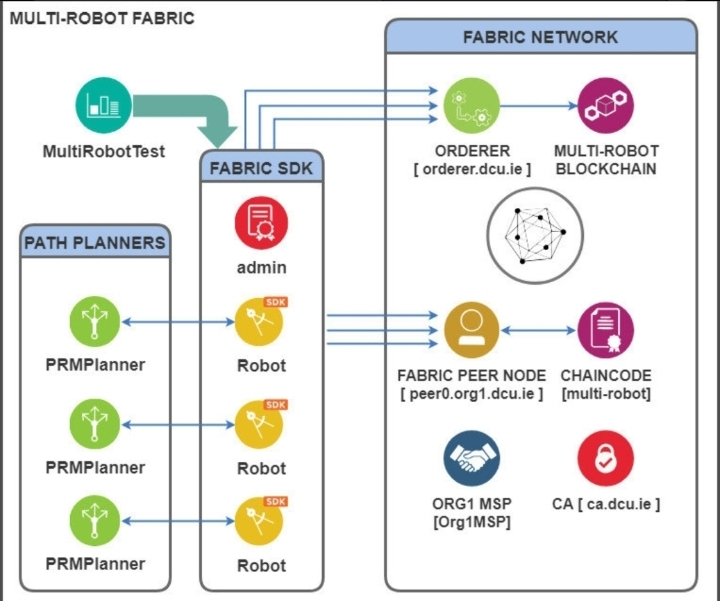
Because what Fabric is pushing isn’t just a token. It’s the idea of a verifiable machine work economy.
And that concept has been sitting in the back of my mind for months now.
At first glance, $ROBO might look like another AI-adjacent crypto launch. We’ve seen plenty of those. Anything remotely tied to AI tends to attract attention fast — sometimes too fast. But from what I’ve seen, Fabric’s angle is a bit different.
Instead of just tokenizing AI hype, they’re leaning into the idea that machines — whether AI agents, robots, or automated systems — will eventually perform real economic work. And that work needs to be verified, measured, and rewarded on-chain.
That’s where things start getting interesting.
We’ve already accepted the idea that humans can earn crypto for work — through mining, staking, validating, providing liquidity, contributing compute, even creating content. But what happens when machines become autonomous economic actors?
I’ve noticed that this conversation is slowly shifting from sci-fi theory to practical design.
The claim portal opening for feels like an early step in that direction. It signals distribution, community alignment, and the beginning of token circulation. But more than that, it represents a network bootstrapping around a new economic primitive: proof of machine work.
Not proof of stake.
Not proof of work in the traditional mining sense.
But proof that a machine performed a task, verifiably, and can be compensated accordingly.
If you zoom out, that’s a massive concept.
From what I understand, Fabric’s broader mission is about creating systems where machine-performed tasks can be tracked and settled transparently. Think about AI agents executing trades, running logistics, optimizing supply chains, or even managing micro-tasks online.
Right now, most of that machine activity happens off-chain, in closed systems owned by corporations. You trust the company’s database. You trust their reporting.
But crypto has always been about minimizing blind trust.
So the natural evolution is: can we build a system where machine work itself becomes auditable?
That’s the core idea that stands out to me.
And let’s be honest — we’re already surrounded by machine labor. Algorithms decide what we see online. Bots manage liquidity. Trading systems operate 24/7. Data centers crunch numbers nonstop.
Yet economically, these machines are still extensions of centralized entities.
Fabric seems to be asking a deeper question: what if machines had their own verifiable identity layer and economic rails?
It sounds abstract at first. But so did smart contracts in 2014.
I’ve also noticed that AI tokens this cycle have largely been narrative-driven. Big pumps, strong volatility, heavy speculation. Some projects are real, others are just riding momentum.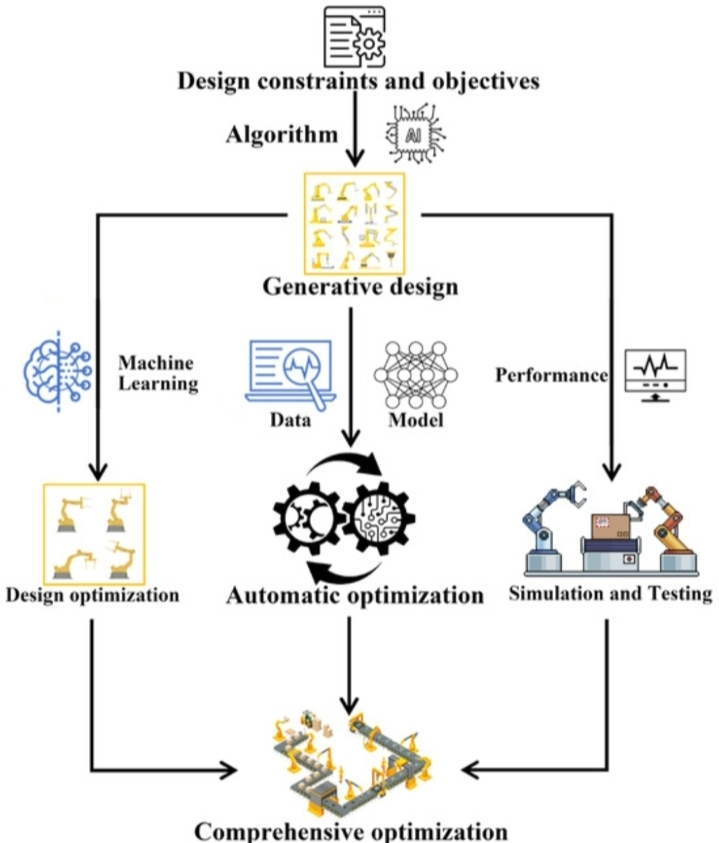
What makes Fabric slightly different, at least from my perspective, is that it’s not trying to position as “the AI coin.” Instead, it’s framing the token as infrastructure for something bigger: a machine work marketplace.
That framing matters.
Narratives fade. Infrastructure compounds.
The opening of the claim portal itself is a strategic moment. Distribution events are always delicate. They shape community psychology early on. If handled poorly, they create short-term sell pressure and long-term distrust. If handled thoughtfully, they create alignment and organic participation.
I’ve seen enough token launches to know that this phase can define a project’s trajectory.
And in the case of $ROBO, it feels like the beginning of an experiment rather than a finished product. The token isn’t the end goal — it’s the coordination mechanism.
That distinction changes how I look at it.
What stands out to me most is the timing.
We’re entering an era where AI agents are becoming increasingly autonomous. They can write code, trade assets, negotiate API calls, even interact with blockchains directly. It’s not far-fetched to imagine AI agents operating wallets and executing tasks independently.
But once that happens, we need economic logic to govern them.
Who pays them?
Who verifies their output?
How do we prevent manipulation?
How do we assign accountability?
Crypto is uniquely positioned to answer those questions.
This is where the idea of verifiable machine work becomes powerful.
If machines can generate value, then that value should be measurable. If it’s measurable, it can be priced. If it can be priced, it can be tokenized.
And if it can be tokenized, it can participate in global markets.
That’s a radical shift in how we think about labor and capital.
I’m not saying we’re there yet. We’re probably very early. But early infrastructure projects are usually messy before they’re meaningful.
Another angle I’ve been thinking about is decentralization.
If machine work becomes dominant in certain industries — logistics, AI services, automation — do we really want that controlled by a handful of corporations? Or does it make more sense for those machines to plug into decentralized networks?
Fabric seems to be betting on the latter.
And honestly, it aligns with crypto’s original philosophy.
We’ve decentralized money (Bitcoin).
We’ve decentralized finance (DeFi).
We’re experimenting with decentralized governance (DAOs).
Decentralizing machine productivity feels like the next frontier.
Of course, there are risks.
Execution risk is huge. Technical complexity is non-trivial. Verifying machine output securely and trustlessly is not simple. There’s also regulatory uncertainty once machines start generating income streams.
And let’s not ignore market volatility. $ROBO, like any new token, will likely experience sharp price swings. Early distribution phases are rarely smooth.
But I’ve learned over time that volatility doesn’t invalidate vision. It just tests conviction.
From a broader market perspective, I think we’re transitioning into a cycle where real-world utility narratives matter more. The market is getting smarter. Capital is more selective.
AI + crypto isn’t enough anymore. There needs to be a clear mechanism, a reason for the token to exist beyond speculation.
The idea of compensating verifiable machine work actually provides that mechanism.
It connects AI, automation, blockchain, and token economics into a single framework.
That coherence is rare.
Personally, I see $ROBO’s claim portal opening as a small but symbolic milestone. It’s the moment where theory starts becoming distribution. Where whitepaper concepts start entering wallets.
I’ve been around long enough to know that not every ambitious idea succeeds. But I also know that the biggest shifts in crypto started as niche experiments most people ignored.
Ethereum was once “just another alt.”
DeFi was once “just yield farming.”
Now they’re pillars.
Could machine work economies become another pillar?
Maybe.
What excites me isn’t the short-term chart. It’s the long-term implication.
If machines become economic participants, crypto becomes the settlement layer for non-human labor. That’s a mind-bending thought.
Imagine autonomous fleets paying for maintenance automatically. AI agents hiring other AI agents. Smart contracts negotiating service agreements between machines.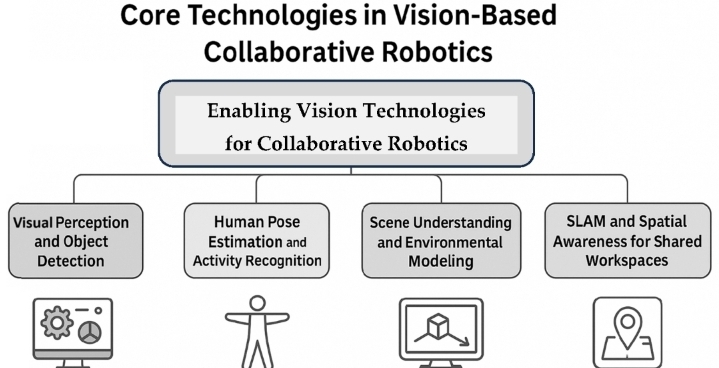
It sounds futuristic — but so did decentralized finance a decade ago.
As I reflect on all this, I don’t feel hype. I feel curiosity.
The opening of the Fabric Foundation claim portal feels like a quiet door opening into a new design space. It’s not loud. It’s not flashy. But it signals direction.
Crypto has always been about redefining who — or what — can participate in an economy.
First it was individuals without banks.
Then it was developers without permission.
Now it might be machines without intermediaries.
I’m watching this space closely, not because I expect instant returns, but because I think we’re witnessing the early scaffolding of something bigger.
And if there’s one thing I’ve learned in this market, it’s that infrastructure stories take time — but when they click, they reshape everything.
For now, I’m just observing, thinking, and trying to understand where this “verifiable machine work economy” might lead us.
It feels early.
And in crypto, early is usually where the real shifts begin.