
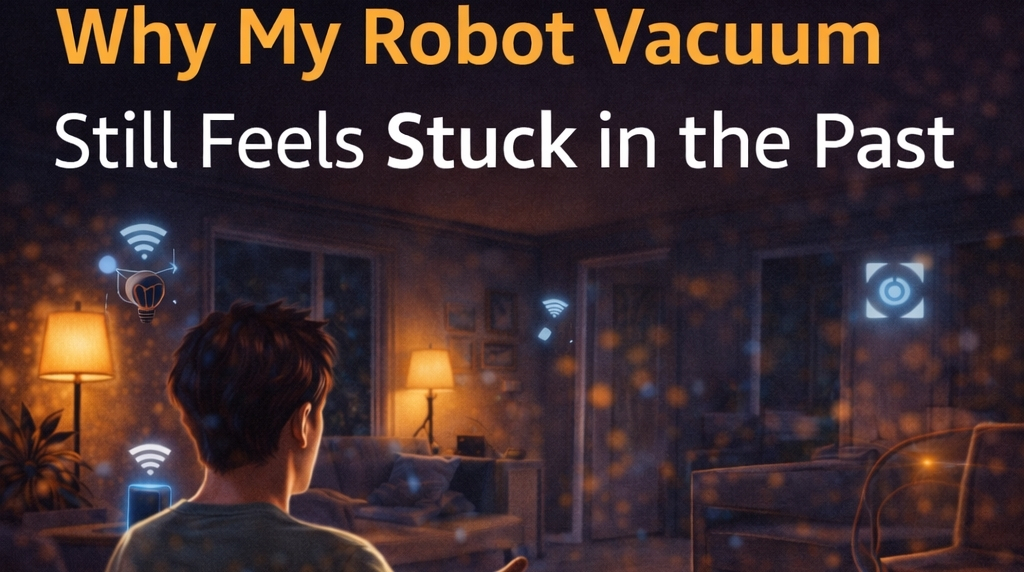

I never thought I would be arguing with a vacuum cleaner, yet here I am — standing in the middle of my living room, moving chairs and picking up cords just so a “smart” device can do the job it promised to handle on its own. It’s frustrating in a way that feels almost absurd. My home has smart lights, security cameras, motion sensors, and voice assistants. I can control half my house from my phone. But my robot vacuum still bumps into table legs like it has never seen furniture before and has no awareness of what the rest of my smart home already knows.
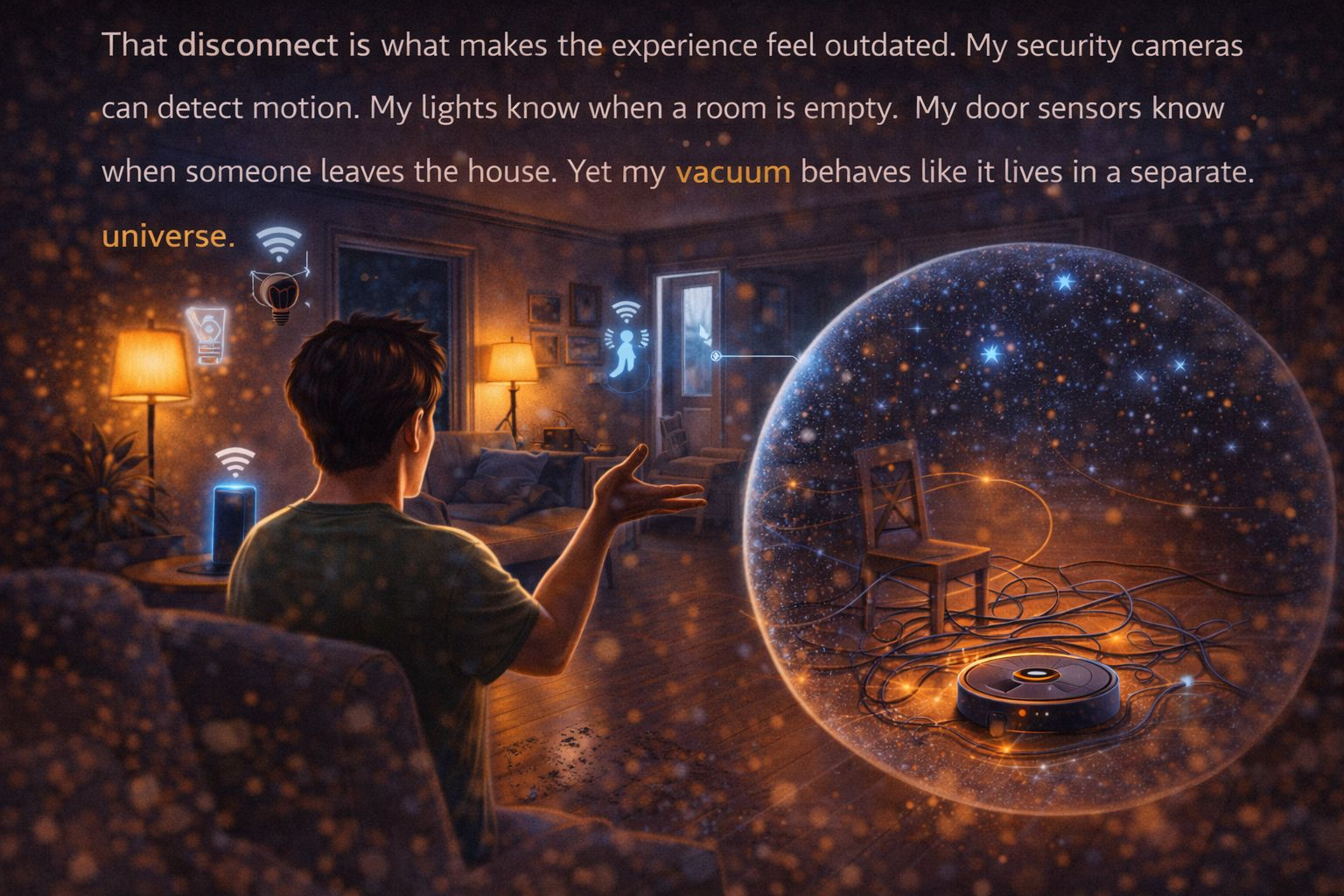
That disconnect is what makes the experience feel outdated. My security cameras can detect motion. My lights know when a room is empty. My door sensors know when someone leaves the house. Yet my vacuum behaves like it lives in a separate universe. It doesn’t know when the house is empty and the perfect time to clean. It doesn’t know when the lights are off and the room is free of activity. It doesn’t even know when the dog tracked mud across the hallway five minutes ago. Instead, I have to open its app, set schedules, and rescue it when it gets stuck under the couch.
This is the hidden reality behind many “smart homes” today: they are not truly smart — they are collections of expensive tools that do not speak the same language. Each device lives inside its own app, its own ecosystem, its own rules. If you buy a vacuum from one brand, it often cannot communicate with a camera from another. If you choose one lighting system, it may not integrate fully with your security sensors. These walled gardens keep devices isolated, forcing humans to act as the bridge between machines.
And that defeats the purpose of automation.
The real promise of a smart home is not remote control — it is coordination. A home that understands context. A home that responds to activity. A home that works together instead of waiting for instructions.
Imagine a vacuum that starts cleaning automatically when your security system detects that everyone has left the house. Imagine it avoiding rooms where motion is detected. Imagine it prioritizing areas where activity was recently recorded. Imagine it recognizing when lights are turned off for the night and quietly cleaning the kitchen. These are not futuristic fantasies — they are simple coordination tasks. The missing piece is communication.
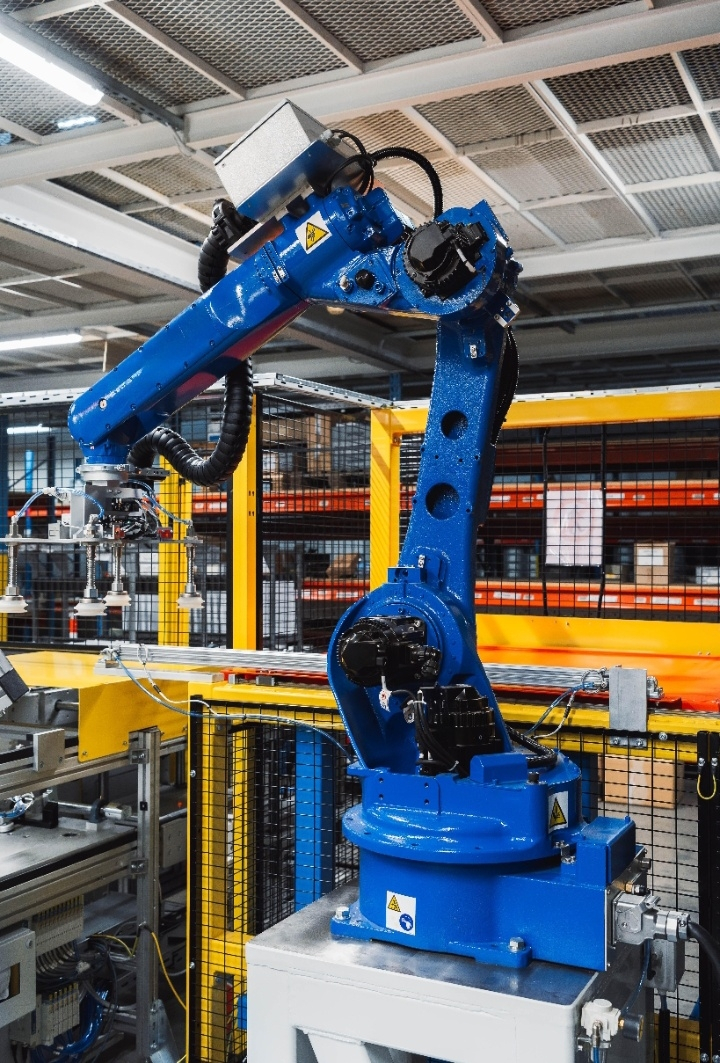
This is why the idea behind $ROBO and the Fabric Foundation caught my attention. Their vision centers on solving the language barrier between machines by building a universal coordination layer called OM1. Instead of each device operating in isolation, OM1 would allow machines to share context and collaborate regardless of brand. If my vacuum operated within such a system, it could understand what every other device in my home already knows.
But what truly makes this vision feel transformative is the concept of Skill Chips.
Instead of buying a device that is locked into its original capabilities, robots could download new skills the way smartphones download apps. Want your vacuum to detect pet messes? Install a skill. Want it to avoid specific objects? Install a skill. Want it to prioritize high-traffic areas or respond to weather conditions? Install a skill.
In this model, $ROBO becomes the fuel of the ecosystem — enabling robots to pay for skills, share data, and access new capabilities. A simple appliance becomes something closer to an independent worker, capable of learning, adapting, and improving over time.
That idea changes how we think about home robotics. Today’s robots are static. Tomorrow’s robots could be evolving.
We’ve already seen this transformation with smartphones. Early mobile phones had fixed functions. Modern smartphones become more useful with every app installed. The device improves over time, not because the hardware changes, but because its capabilities expand. Applying that same logic to home robotics could unlock a new era of flexibility and usefulness.
Emotionally, the appeal is simple: we want technology to reduce friction in our lives, not create more of it. We want tools that anticipate needs instead of waiting for instructions. We want systems that work together rather than forcing us to manage them individually.
Right now, many smart homes feel like orchestras without a conductor — instruments are present, but they are not playing in harmony.
A shared language could change that.
If robots and devices can communicate, learn, and coordinate, the smart home stops feeling like a collection of gadgets and starts feeling like a living system.
And maybe one day, instead of rescuing my vacuum from under the couch, I’ll watch it quietly adapt, learn, and improve — doing its job without needing me at all.
Until then, I’ll keep wondering what Skill Chip I’d install first.

A pet mess detector sounds like a good start. 😊
