When I first used Fogo, I expected it to be as fast as a top-tier application. But I didn't anticipate the profound impact its infrastructure would have on the user experience. Fogo wasn't just a marketing gimmick for performance improvements; it ran on a customized version of Firedancer, a C-based validation client developed by Jump Crypto. This design revolutionized everything.
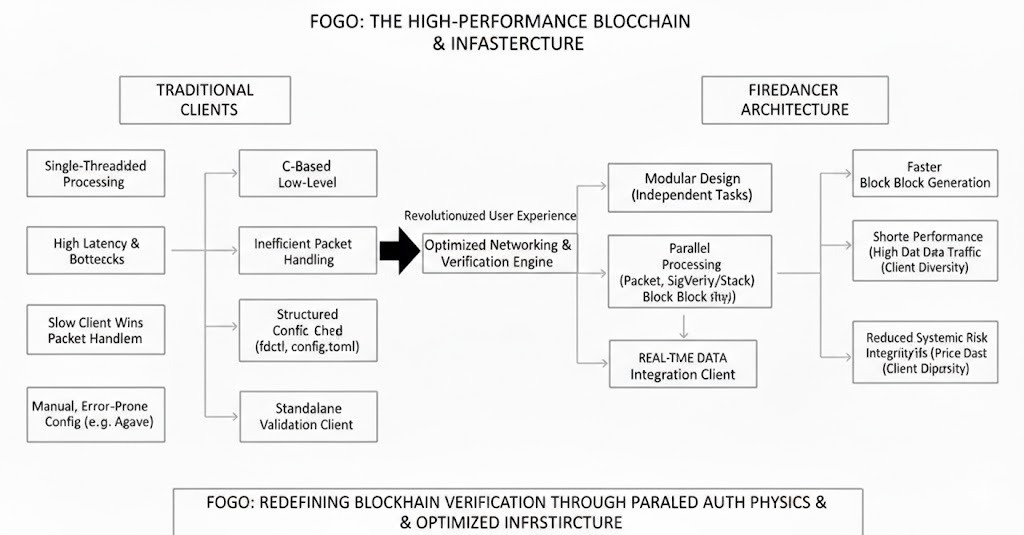
Firedancer wasn't just a cosmetic improvement; it was specifically designed to reduce latency. Written in C, Firedancer used independent "modules," each responsible for specific tasks such as packet processing, signature verification, and block building. Instead of enforcing a single path, it finely distributed the work in parallel. This architecture reduced bottlenecks and improved the accuracy of results under pressure.
What impressed me most was how it solved the "slow client wins" problem. In many networks, performance is limited by inefficient validation software. Firedancer raised the bar. The improved network architecture and smoother packet processing aimed to eliminate unnecessary latency, preventing it from escalating and slowing down the consensus process.
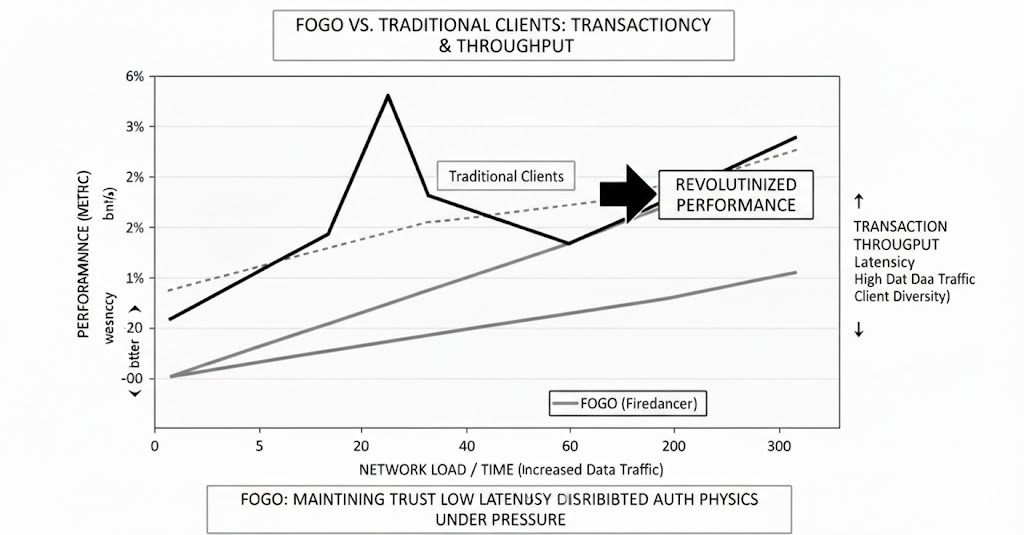
On the Fogo, this translates to faster block generation, more accurate transaction ordering, and shorter, more frequent block generation cycles. It's not only incredibly fast under ideal conditions, but it also remains stable even with increased data traffic. This is a significant speed improvement, especially important during periods of market volatility.
Another aspect that impressed me was the integration. Fogo connects this validation architecture to real-time data through the Pyth Network's price data source. For a transaction-centric ecosystem, data freshness is paramount. Execution speed and price integrity must go hand in hand. Firedancer's low-latency design supports this synchronization.
On the operational side, the experience is much smoother. Instead of a traditional configuration system, Firedancer uses structured config.toml files and manages them via fdctl. This may seem simple, but better configuration management means less human error, faster deployment, and more predictable upgrades. These details reflect the maturity of the infrastructure.
Independence from the traditional Agave client is also crucial. Running as a standalone validation application improves network resilience. Customer diversity reduces systemic risk, while efficiency improvements within each customer increase overall throughput. Firedancer strikes a balance between these two aspects by operating as a standalone platform focused on performance.
More importantly: Fogo is not merely adding new features within existing constraints; it is continuously refining its verification engine. With parallel processing, optimized networking, and ambitions to scale to extremely high transaction volumes, its architecture appears tailor-made for serious blockchain transactions.
Speed is easy to increase, but maintaining consistent performance under pressure is difficult. After using Fogo, I began to view it as an experiment aimed at improving verification levels, not just another blockchain. If infrastructure determines the outcome, then that's where the real competitive advantage lies.