

When I first came across Fogo, I assumed it was another “fast L1” headline.
We’ve all seen them.
But after actually spending time digging through the architecture and understanding what they’re optimizing for, my perspective shifted.
Fogo isn’t trying to be loud.
It’s trying to be precise.
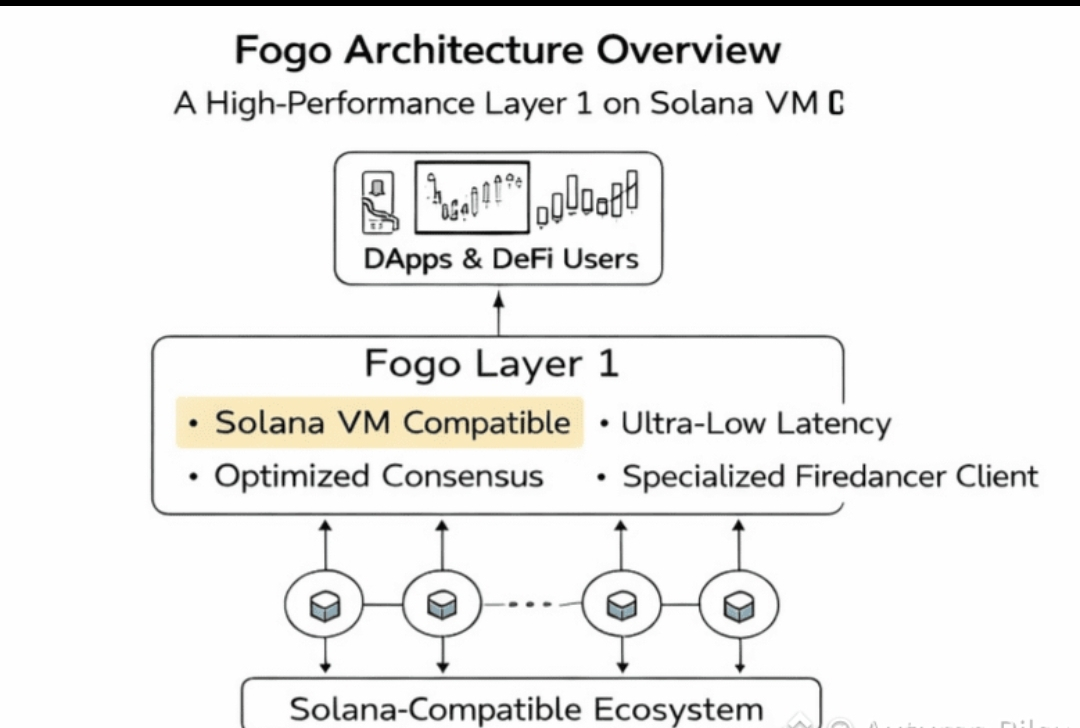
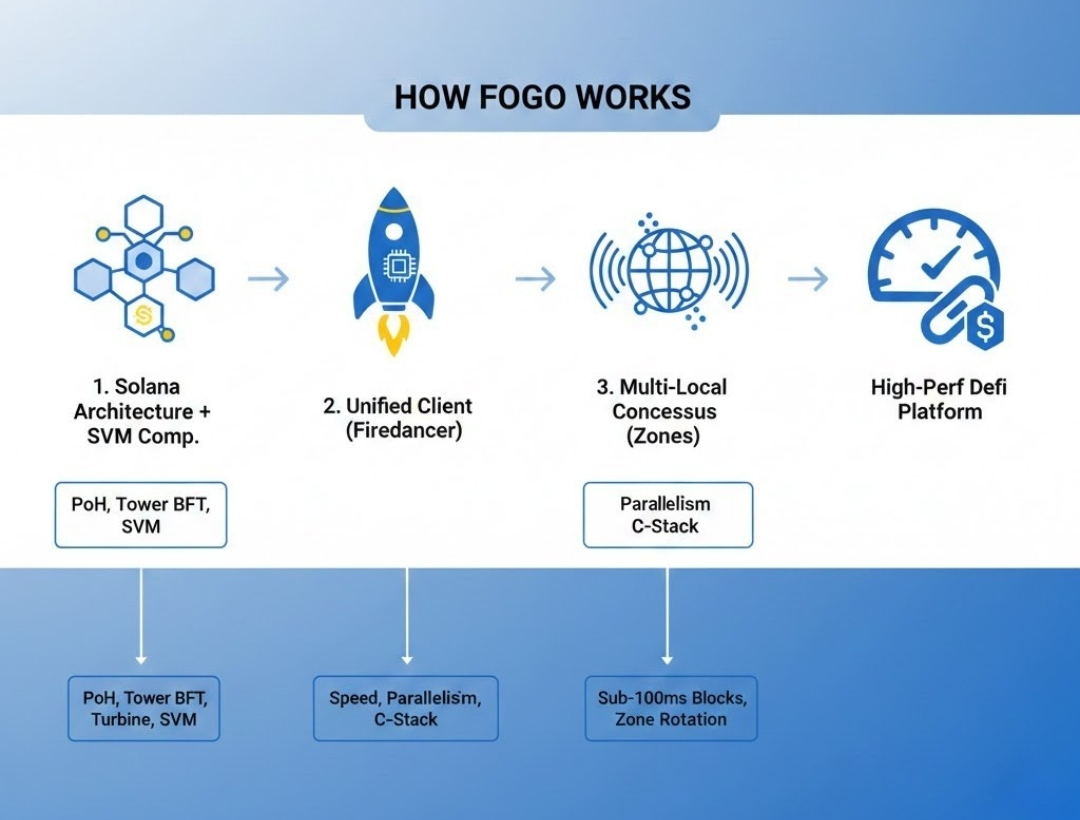
Fogo is a high-performance Layer-1 built on the Solana Virtual Machine (SVM). On paper, that sounds like ecosystem compatibility — and yes, that’s part of it. Developers can use familiar tooling, programming models, and SVM-native design patterns.
But what really caught my attention wasn’t execution.
It was consensus structure.
The Part Most Chains Avoid Talking About
Here’s something I’ve learned analyzing L1s: decentralization and performance pull in opposite directions once latency starts to matter.
Most globally distributed validator sets span continents. That looks strong ideologically. But physically, it embeds delay into every coordination round. Messages travel through fiber. Distance creates variance. Under stress, that variance becomes visible.
Fogo doesn’t pretend geography doesn’t exist.
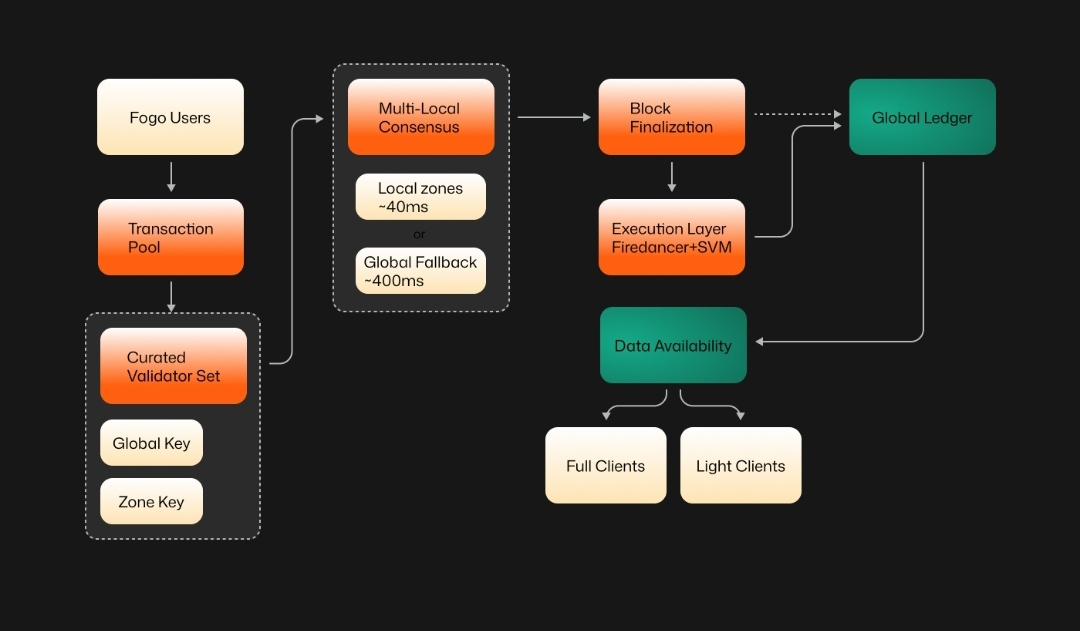
Its Multi-Local Consensus model narrows validator coordination into optimized zones. Validators are curated, performance-aligned, and co-located in infrastructure built for low-latency communication.
That’s a deliberate tradeoff.
It sacrifices maximal dispersion for deterministic performance.
Some people won’t like that. And that’s fair.
But if you’re building infrastructure for real-time markets — derivatives, auctions, latency-sensitive DeFi — unpredictability is more dangerous than ideological imperfection.
After reviewing the model, it feels less like a compromise and more like a choice about target audience.
SVM Without Inheriting Someone Else’s Congestion
One subtle detail that stood out to me:
Fogo runs the Solana Virtual Machine independently.
Same execution environment.
Separate validator set.
Separate state.
If congestion hits Solana, Fogo doesn’t automatically inherit it. Developers get compatibility without shared bottlenecks.
That separation is powerful.
It lowers migration friction while maintaining performance isolation — something most “ecosystem-aligned” chains don’t fully achieve.
Who Is Fogo Really For?
After analyzing it from different angles, I don’t see Fogo as a retail speculation chain.
It feels engineered for:
• Structured on-chain markets
• High-frequency DeFi
• Deterministic settlement environments
• Capital-heavy liquidity systems
In other words, environments where milliseconds influence outcomes.
If DeFi matures into something closer to capital markets infrastructure, Fogo is positioned correctly.
If it remains meme-driven and narrative-based, its architectural advantages won’t be fully priced.
That’s the honest assessment.
My Personal Framework Shift
I used to ask:
“How fast is the execution engine?”
Now I ask:
“How far apart are the validators?”
“What happens to finality when the network is busy?”
Fogo is one of the few L1s that seems built around those questions from the start.
And whether or not the market rewards that approach, I respect the clarity of the bet.
They’re not pretending physics doesn’t matter.
They’re building around it.