

Blockchain infrastructure has largely been shaped by financial priorities. Security settlement finality and trustless asset transfers defined early design decisions. These characteristics remain essential for DeFi but they do not automatically translate to success in entertainment-driven use cases.
Entertainment systems operate under different constraints. Games interactive digital worlds and live virtual events depend on real-time responsiveness frequent state updates and uninterrupted user flow. When interaction is delayed or fragmented the experience breaks down. This is why many entertainment projects encounter limitations when deployed on general-purpose finance-first blockchains.
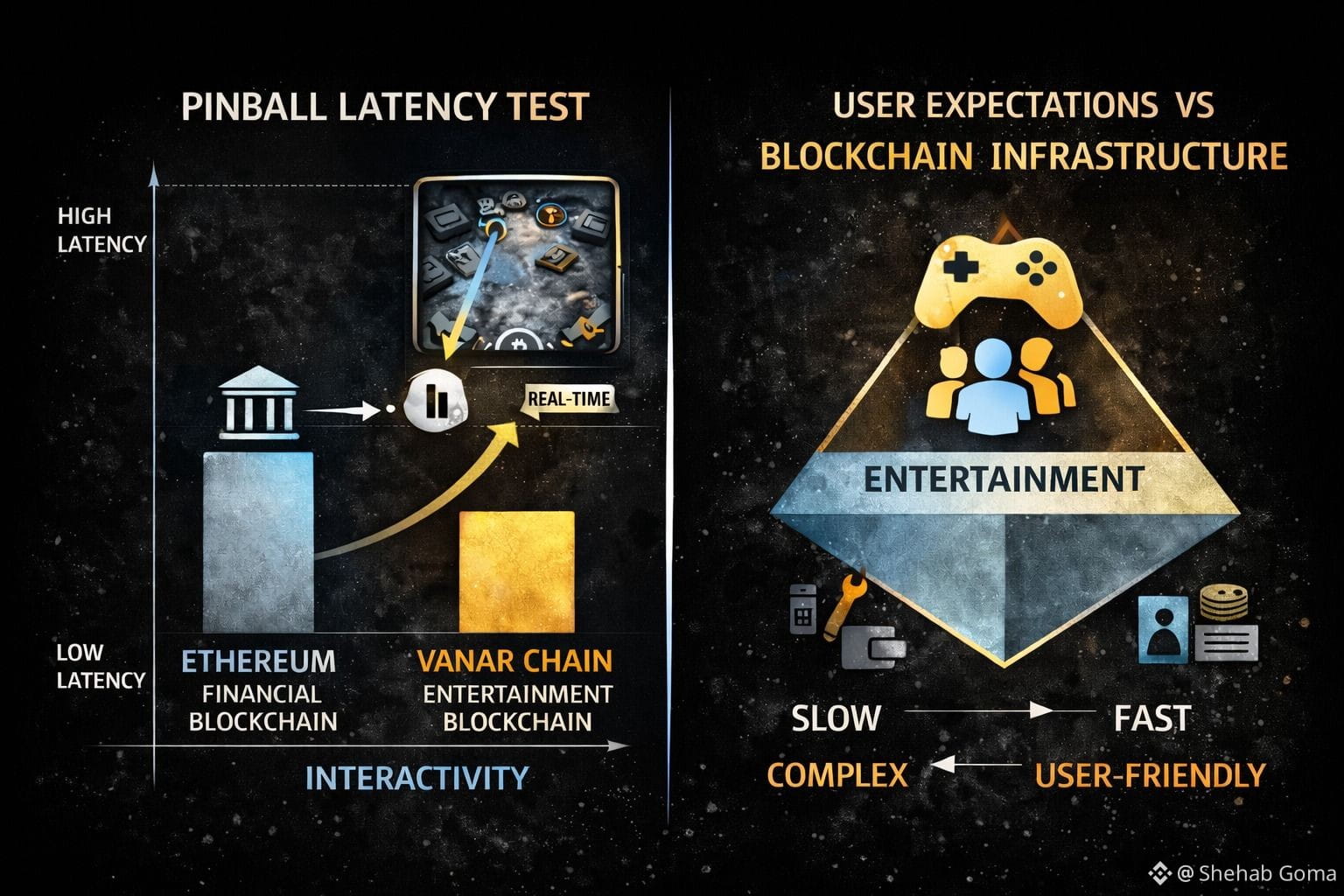
From an architectural perspective the difference is substantial. Financial applications can tolerate slower confirmation cycles because correctness outweighs immediacy. Entertainment applications by contrast prioritize speed continuity and immersion. Infrastructure that fails to recognize this distinction often introduces latency and usability friction that directly impacts user engagement.
This context helps explain the design approach behind Vanar Chain. Its architecture is shaped around the technical requirements of interactive experiences rather than financial abstraction. Emphasis is placed on low-latency execution efficient state handling and systems capable of supporting continuous interaction without unnecessary complexity.
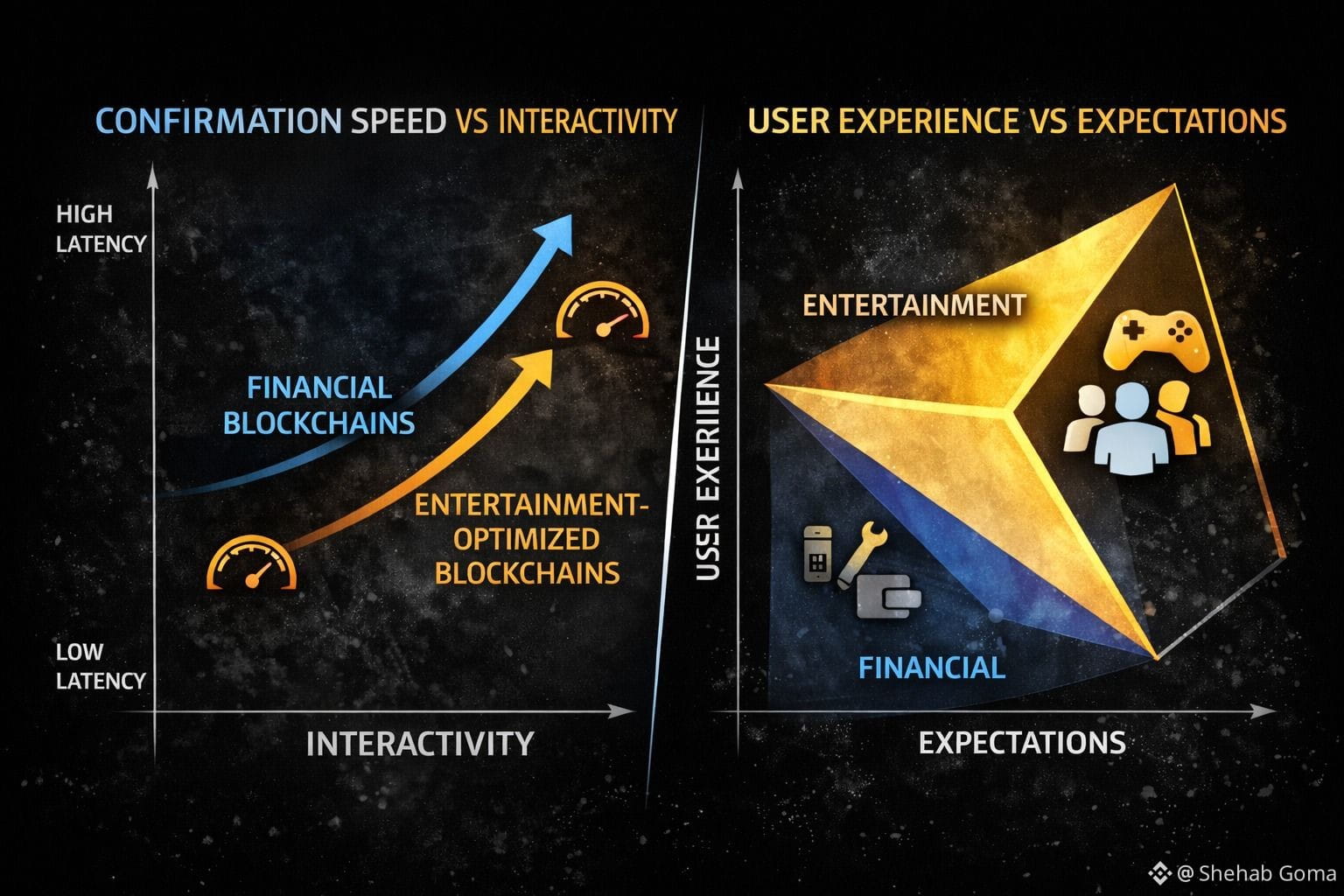
User expectations further reinforce this separation. Financial platforms often assume users will manage wallets confirmations and transaction delays as part of the process. Entertainment audiences expect immediacy and intuitive interaction. Infrastructure aligned with these expectations is better positioned to support sustained adoption.
As blockchain use expands beyond finance specialization becomes increasingly important. Entertainment represents a distinct problem space with unique technical and experiential demands. Networks designed with these constraints in mind illustrate how blockchain infrastructure can evolve to support real-world interaction at scale.
