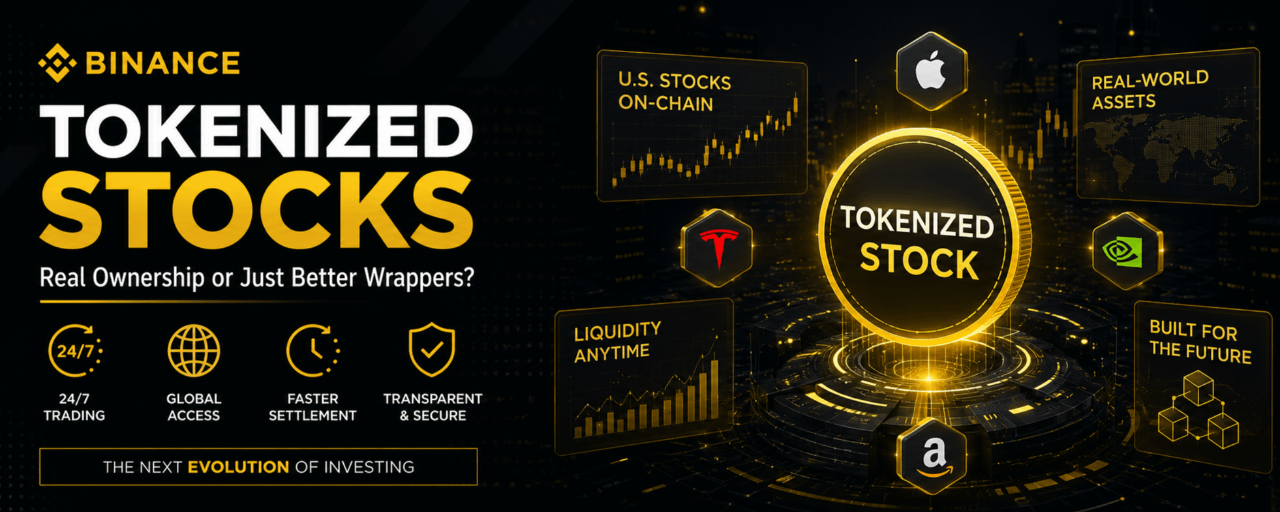
I keep coming back to one question: when a stock becomes tokenized, what actually changes for the investor?
On the surface, the appeal is easy to understand. Tokenized equities promise faster settlement, around-the-clock trading, and a cleaner bridge between traditional markets and on-chain finance. The SEC has also been explicit that changing the format of a security to onchain does not change the fact that it is still a security under federal law. In the same statement, it described both custodial tokenized securities and synthetic tokenized securities, which means the label “tokenized stock” can hide very different economic realities.
That distinction matters more than most people think. In a custodial model, the token may represent an indirect interest in the underlying share held in custody. In a synthetic model, the holder may only get price exposure, without the same ownership rights as a real shareholder. That is why the current debate is not just about technology — it is about rights, custody, and what investors are really getting when they buy the token.
The market is clearly moving in this direction. Ondo Finance has launched a tokenized equity platform for non-U.S. investors with access to more than 100 U.S. stocks and ETFs, and those tokens are backed by securities held at U.S.-registered broker-dealers. Binance has also said it will soon introduce bStocks, after launching U.S. equities trading for eligible users and previewing tokenized securities on its platform.
But the pushback is just as real. Reuters reported that the World Federation of Exchanges urged regulators to clamp down on tokenised stocks, arguing that they can mimic equities without providing the same rights or trading safeguards. That is the core tension I keep seeing: the user experience may look like stock ownership, but the legal and market structure underneath may still be much closer to a wrapper, a contract, or a synthetic exposure product.
Personally, I think tokenization becomes meaningful only when the rights behind the token are transparent. If it gives me real exposure, clear custody, and protections that match the underlying asset, then I see it as a genuine infrastructure upgrade. If it only gives me a prettier way to track price, then I treat it very differently from a normal share.
So my real question is this:
If tokenized stocks become mainstream, what would make you trust them enough to use them instead of traditional shares - real shareholder rights, onchain liquidity, lower fees, 24/7 trading, or something else? And where would you draw the line between a true tokenized stock and just a synthetic price wrapper?
#MyStocksQuestion
$NVDA