
Think about what you’ve done online today. Sent a tweet? Uploaded a photo? Wrote a few lines of code on a public repo? Congratulations. You just did unpaid labor for a multi-trillion-dollar AI machine.
The tech giants own the drilling rights to your data. It’s a straight-up monopoly. But here’s the catch no one talks about. Beneath all the hype, the AI ecosystem has a massive liquidity problem. The actual valuable assets—the raw data, the brilliant open-source models, the autonomous agents—are trapped behind corporate walled gardens.
OpenLedger (OPEN) fixes this. It’s an AI blockchain built specifically to turn those trapped assets into liquid cash. Period.
Let’s be honest. The way AI makes money right now is a complete joke. Big tech companies scrape the entire internet, train their massive language models, and keep all the profits for their shareholders. The people actually providing the data get absolutely nothing. Meanwhile, brilliant open-source developers build the foundational math that pushes the whole industry forward. But because they have no built-in way to charge for their work, they end up begging for sponsorships or living on donations.
Then you have AI agents. Those smart little bots executing tasks for us. As they get smarter, they have absolutely no native financial infrastructure to transact with each other. It’s incredibly chaotic. Dealing with this bottleneck is the biggest challenge in tech right now. OpenLedger steps in as the financial layer to solve it. It takes intangible digital ghosts and turns them into liquid, tradeable commodities. Giving power back to the people actually creating the value.
To get why this matters, you have to look at where this space is heading. We are moving toward an economy where bots pay bots. But how do we get there? It comes down to three things: data, models, and agents.
Let's look at data first. Say you’re part of a research group with a highly niche, incredibly accurate dataset of rare medical diagnostics. Historically, you’d have to hand that over to a pharmaceutical giant for a flat, one-time fee. A terrible deal. On OpenLedger, you just tokenize it. Every single time an AI model queries your data for training or inference, a smart contract triggers. You get paid in $OPEN. Microtransactions flowing into your wallet while you sleep. The people building the AI get better, more diverse data, and you get continuous passive income.
Then you have the math. The models themselves. If you build a killer image-generation model in your bedroom, you shouldn't have to pray for a job offer from OpenAI to get rich. OpenLedger lets you deploy your model directly to the network. Through cryptographic proofs, you can guarantee that a specific output came from your specific code. Users, or even other smart contracts, pay a tiny fee to use it. It’s a direct creator-to-consumer economy functioning smoothly without a middleman taking a thirty percent cut.
But the wildest part? The agents. Soon, your personal AI travel agent is going to need to book a flight for you. To do it right, it needs to talk to a weather AI to check for storm delays, pay that bot a fraction of a cent for the info, and then hit up a broker AI to buy the ticket. Traditional banking infrastructure absolutely chokes on this. Visa and Mastercard were not built for micro-second, machine-to-machine transactions. OpenLedger is. It provides the high-speed, trustless rails required for these bots to negotiate and collaborate entirely on their own.
I know, this sounds like typical crypto whitepaper fluff. But it’s actually happening in the real world. Think about digital artists who are sick and tired of AI scraping their life's work. They can upload their portfolios to this network. If an AI uses their specific style as a reference, an automatic royalty is paid out on the blockchain. Plagiarism gets replaced by real compensation. Or look at decentralized finance. Quantitative analysts are building AI trading bots and deploying them on-chain. Regular investors can stake their funds with the winning agents, and profits distribute automatically. You can even lease your idle smartphone or laptop computing power to the network to help train these models.
I know what you’re thinking. "What’s the catch?" The reality is much messier than a perfect pitch.
If anyone can monetize data, won't bad actors just spam the network with synthetic, useless garbage? Yes, they will try. But OpenLedger uses curation markets to stop it. Validators have to stake real $OPEN tokens to verify data quality. If they approve garbage data, they lose their money. Hit them in the wallet, and the system stays honest. Economic incentives align perfectly with truth.
And blockchains are notoriously slow, right? Dealing with massive AI compute on a public ledger sounds like a logistical joke. It would be, except OpenLedger isn't actually doing the heavy math on-chain. That computation happens off-chain in decentralized server networks. The blockchain merely records the proof of the computation, the origin of the data, and the financial transaction. It’s the receipt, not the calculator.
And if you’re worried about privacy—because putting health records on a public ledger sounds insane—deep cryptography solves this too. Zero-Knowledge Proofs are a big breakthrough that allows an AI model to learn from your sensitive data without ever actually seeing or exposing the data itself. It sounds like magic. It’s just math.
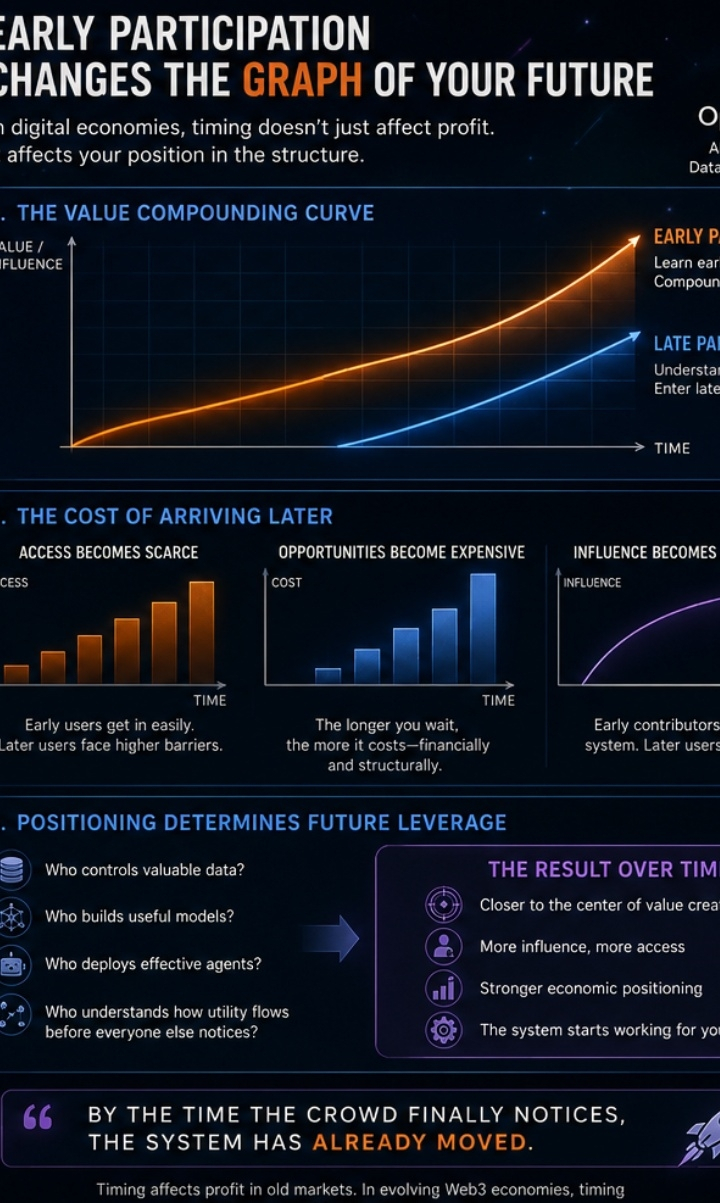
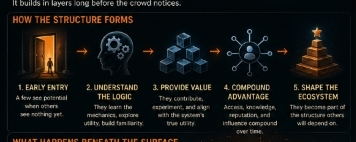
The era of Big Tech hoarding all this intelligence is coming to a close. The convergence of Web3 and AI is changing how value is created and distributed on a fundamental level. The window to position yourself for this shift is open right now.
If you’re a developer, you need to stop giving your work away for free. Learn how to wrap your models in smart contracts and tap into this new liquidity. If you own a business, audit your proprietary data immediately. It’s a goldmine waiting to be tokenized. And if you’re an investor, look past the mainstream noise of chatbots. The deep infrastructure layer—the rails providing the base liquidity for this entire ecosystem—is where the real asymmetric bets are hiding.
For the last ten years, we have lived with artificial intelligence. The next ten years will be defined by owned intelligence. OpenLedger is laying down the tracks. It’s time to get on board.