
The blockchain narrative has officially shifted. We are moving past the era of "isolated dApps" and entering the age of Sovereign Infrastructure. While many projects are still chasing retail hype, Sign Protocol ($SIGN) has quietly positioned itself as the underlying evidence layer for actual national systems.
Here is why $SIGN is a "sovereign-grade" gem you need to understand.
1. The Feature Set: Trust as a Utility
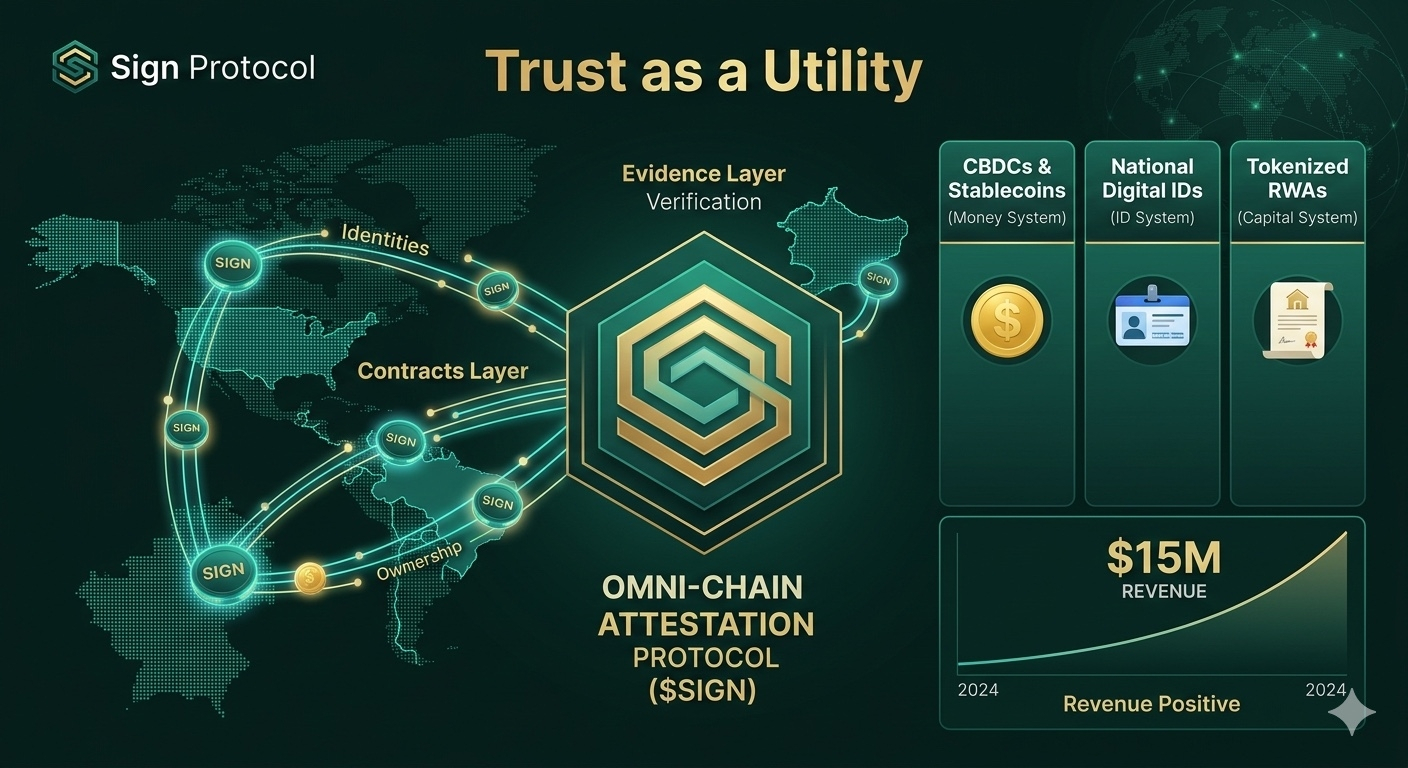
$SIGN isn't just a token; it is the fuel for an Omni-chain Attestation Protocol. It provides the "proof" that makes digital interactions legally and operationally valid across borders.
• Sign Protocol (The Evidence Layer): A universal standard that allows anyone to attest to anything—identities, contracts, or ownership—and verify it across Ethereum, Solana, and TON.
• National-Scale Adoption: This isn't theoretical. Sign is already powering digital infrastructure in the UAE, Thailand, and Sierra Leone, with 20+ more countries in the pipeline. It’s one of the few protocols actually touching the "Sovereign" level.
• The Three Systems of S.I.G.N.: * New Money: Infrastructure for CBDCs and regulated stablecoins.
• New ID: National digital identities via Verifiable Credentials (VCs).
• New Capital: Tokenized Real-World Assets (RWA) and programmable distribution.
• Revenue Positive: Unlike many "ghost chain" projects, the Sign ecosystem generated $15M in revenue in 2024, proving there is a massive B2B and G2B (Government-to-Business) demand.
2. The Market Thesis: Why $SIGN is a "Must-Grab"
In a market currently dominated by noise, $SIGN is a signal. Here is my professional take on why the current setup is a major opportunity:
The Fundamental Divergence
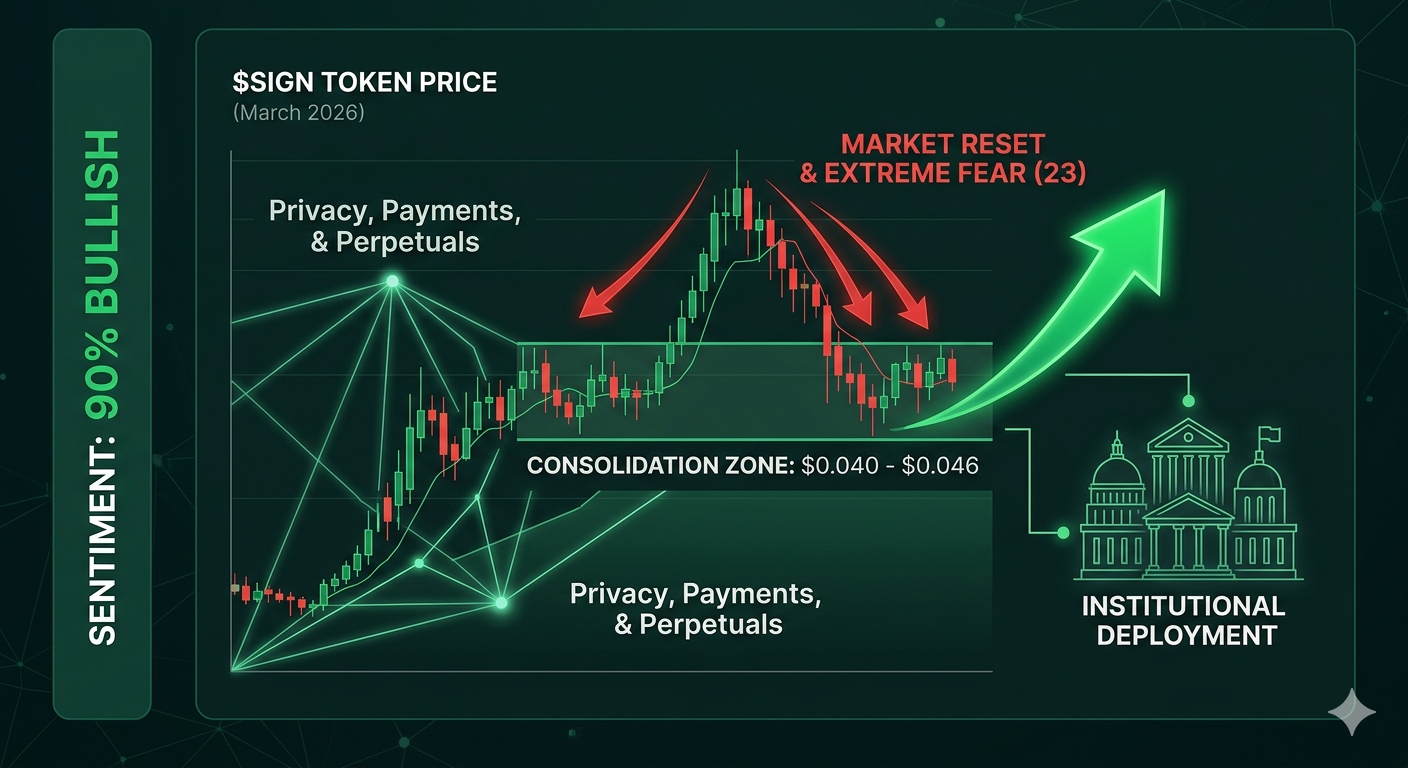
As of late March 2026, $SIGN is trading in a consolidation zone around $0.045. While the "Fear & Greed Index" is showing Extreme Fear (23), the technical sentiment is 90% Bullish. This divergence usually happens right before a fundamental catalyst—like the activation of the Mainnet transition—reprices the asset.
The "Institutional Trio" Play
We are entering a phase where Privacy, Payments, and Perpetuals will lead the market. $SIGN sits at the intersection of all three, providing the compliant verification layer that institutions require before they can deploy billions into DeFi.
3. The Strategy: How to Position
If you’re looking to add this to your "Sovereign Gems" portfolio, here is the roadmap:
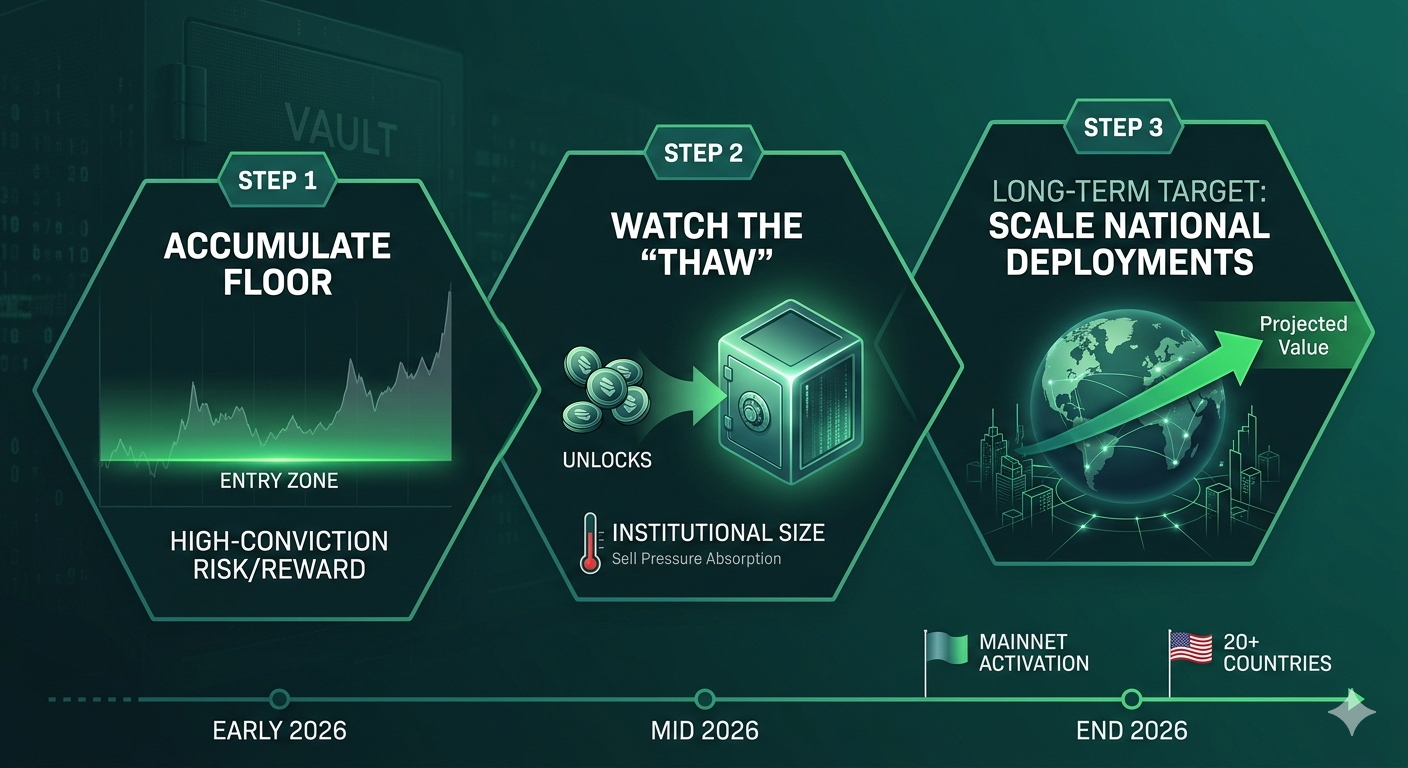
• The Entry Zone: The $0.040 - $0.046 range has established itself as a strong floor. With the market reset currently flushing out leverage, entries at these levels offer a high-conviction risk/reward profile.
• Accumulate the "Thaw": Watch the monthly token unlocks. Historically, these create brief windows of sell pressure that are quickly absorbed by institutional buyers looking for size.
• The Long-Term Target: Analysts are projecting a move toward $0.13+ by the end of 2026 as national deployments scale. This isn't a "pump and dump" play; it’s an infrastructure hold.
The Bottom Line
$SIGN is building the plumbing for the future of global nations. When governments start moving their identity and capital systems onto a protocol, you don't trade the token—you own the infrastructure.