
Not sure if anyone else has run into this, but I had a weird moment a while ago when someone asked me to prove I had enough funds for a deal. Sounds simple right just show the wallet. But the moment you do that, you’re not only proving that one thing, you’re basically exposing everything tied to that address. Balance, past transactions, patterns... way more than what was actually asked.
I remember thinking at that time, why does proving one condition require revealing the whole context. In normal situations, you don’t hand over your entire financial history just to confirm you can afford something. You show the minimum needed, nothing more. But onchain, it often works the other way around.
That’s probably why the idea behind $NIGHT feels a bit more grounded to me than the usual privacy narrative. It’s not about hiding activity completely, it’s about narrowing down what needs to be revealed. Prove the requirement, not the full story behind it. Sounds like a small shift, but it actually changes how interactions can happen.
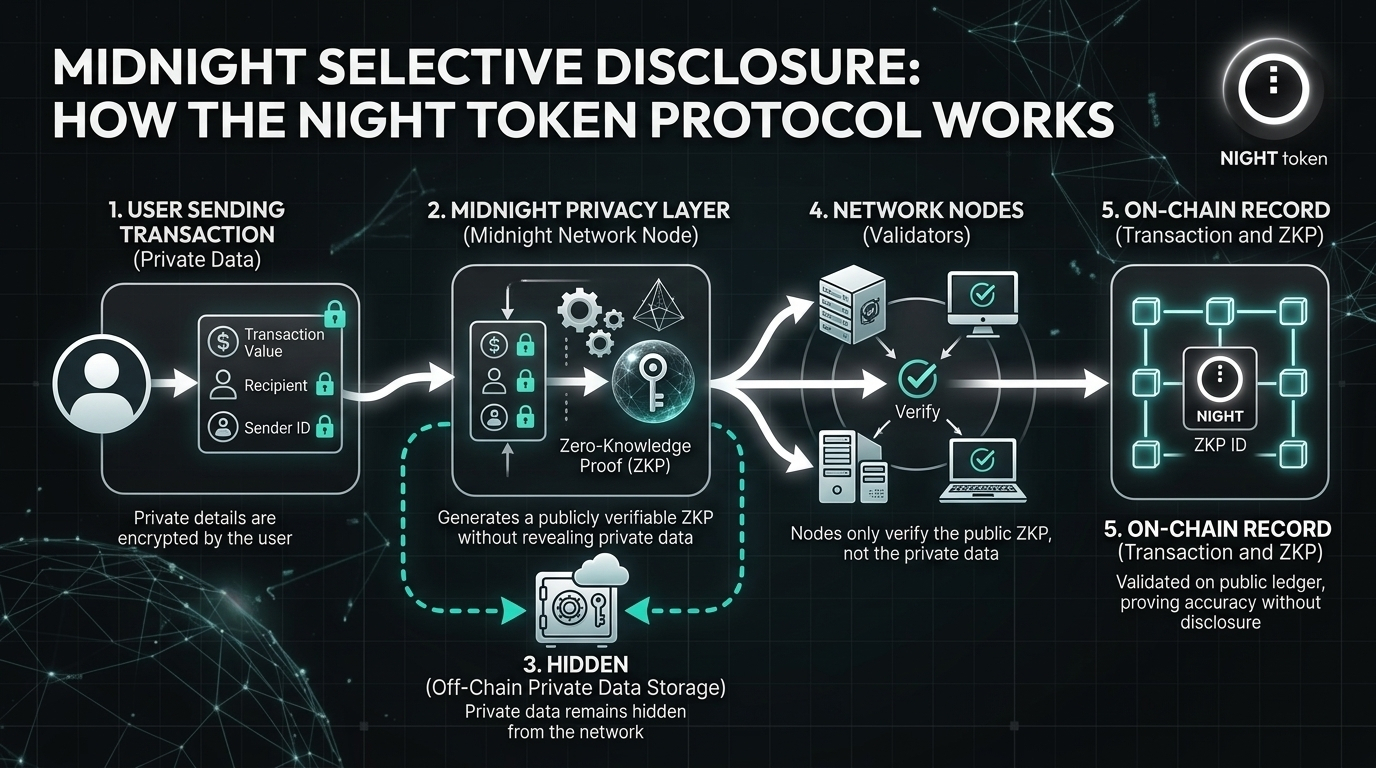
Right now, trust onchain often comes from overexposure. You show everything so the other side feels safe. But that’s not really efficient, and honestly not sustainable if crypto wants to move into more serious use cases. Systems should be able to verify conditions without forcing users to over-share.
People already adapt by using multiple wallets, moving funds around, or avoiding certain interactions just to keep things separate. It’s like everyone is building their own privacy system manually, piece by piece. With Midnight Network, the real question for me isn’t whether the tech works in isolation.
It’s whether it reduces the need for those small defensive habits people have developed over time. If users still feel the need to hide, split, or reroute everything, then the system didn’t really solve the problem. If that becomes normal, then privacy in crypto stops being a workaround and starts becoming part of the design.