
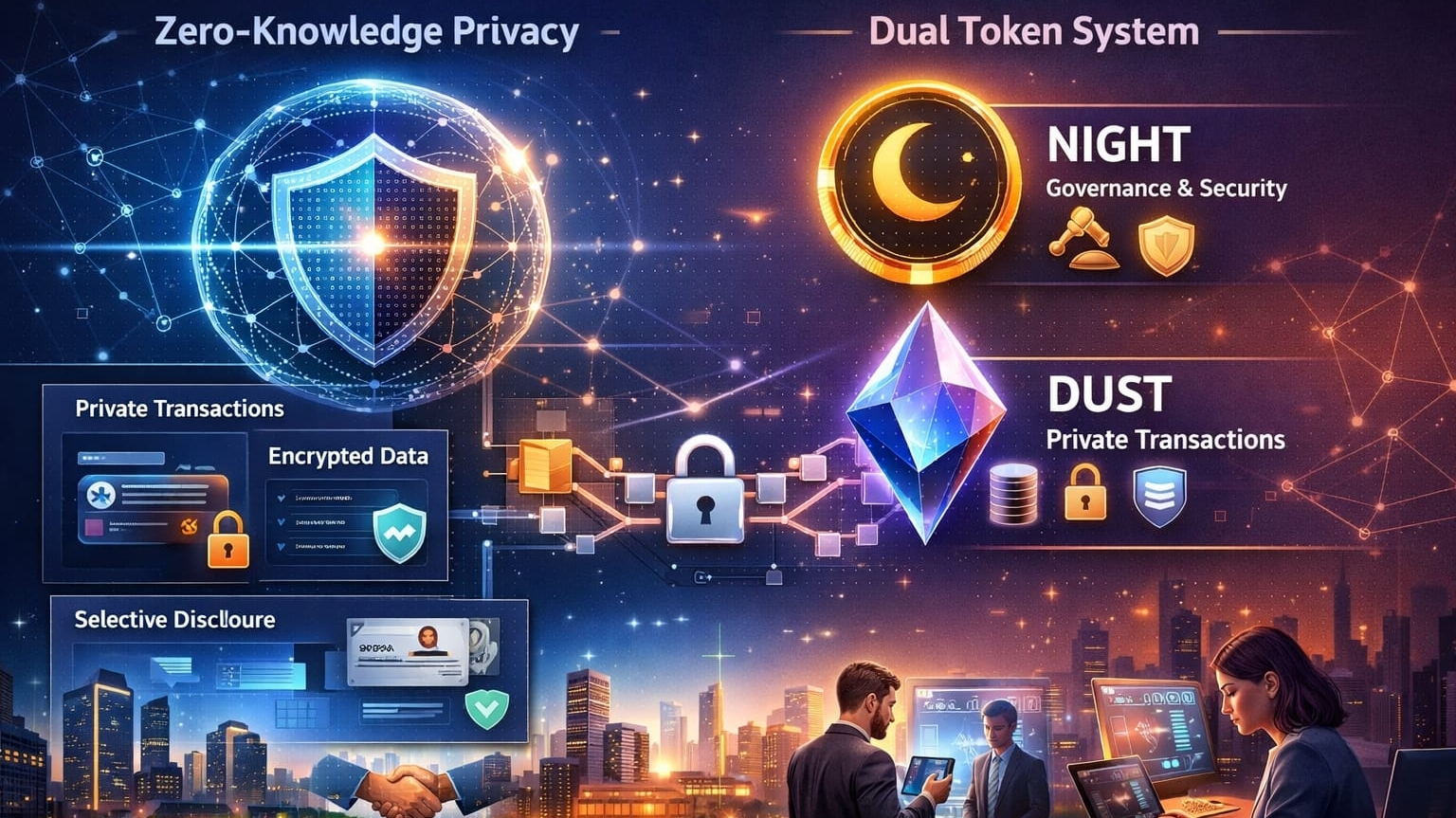
Crypto has always pushed transparency as trust. But in real life, that doesn’t hold. People don’t want their financial data exposed. Businesses don’t want competitors watching everything. This is where most blockchains quietly fail.
Midnight tries to fix that using zero-knowledge (ZK) proofs, allowing transactions and data to stay private while still being verifiable. That idea is powerful — but not new. The difference is how Midnight applies it: programmable privacy, where apps decide what to reveal and what to hide
What stands out
The most interesting part is its economic design:
NIGHT → governance & security
DUST → network usage (private transactions)
This separates speculation from utility — something most chains fail to do. In theory, this could lead to more stable fees and better user experience.
The real challenge
Privacy sounds great, but it adds friction:
harder to build
harder to use
harder to regulate
Midnight tries to simplify this with developer tools like Compact, but the core problem remains:
Can privacy be added without making everything slower and more complex?
The key question most ignore
Midnight talks about many use cases, but:
Who actually needs this right now?
Until there’s a clear “must-have” use case, adoption stays uncertain.
Final take
Midnight is not just another blockchain — it’s a bet that privacy can become a standard feature, not a niche.
But success won’t come from better tech alone.