
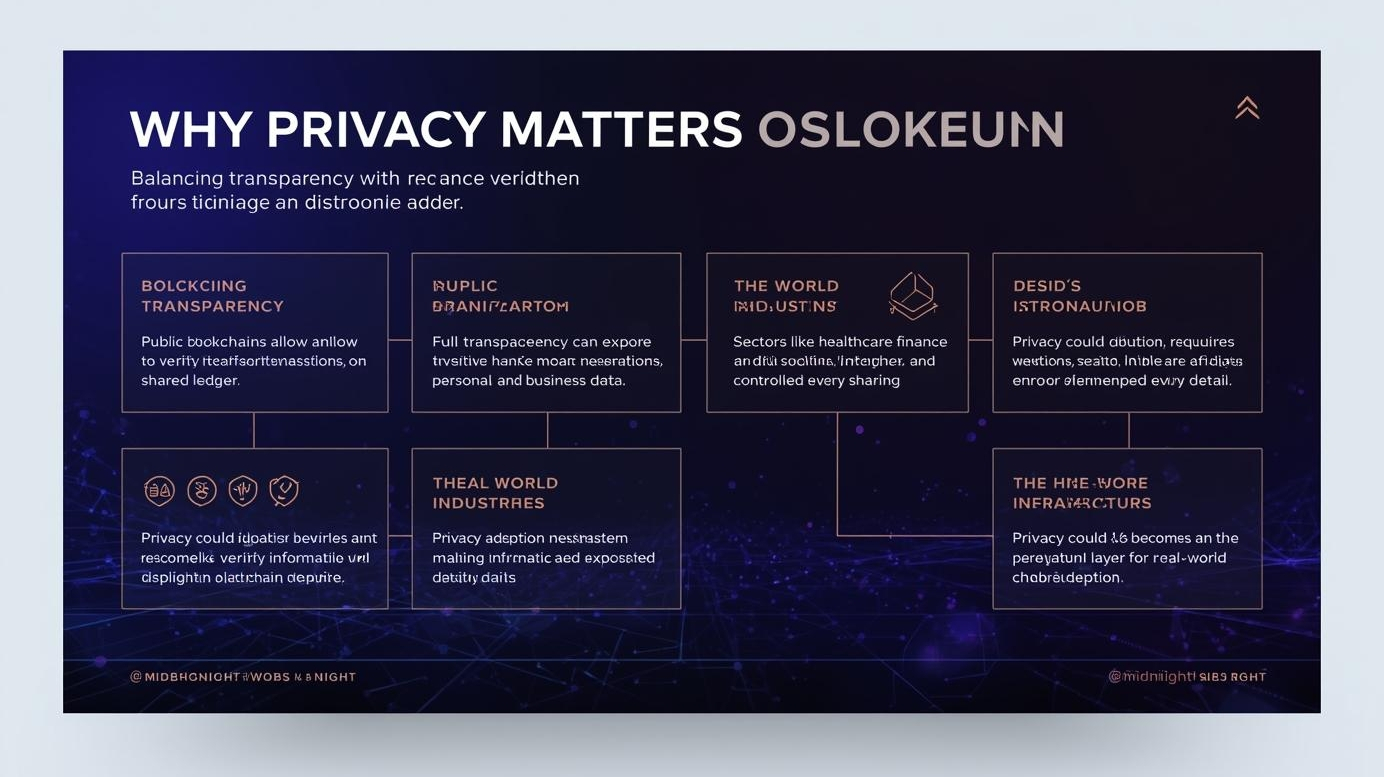
In the world of blockchain and Web3, one topic that is becoming increasingly important is privacy. Over the past few years, most blockchain projects have focused on improving transaction speed, reducing fees, and increasing scalability. While these improvements are necessary, I believe there is another challenge that deserves just as much attention. That challenge is how to protect sensitive information while still maintaining the transparency that makes blockchain trustworthy. This is where Midnight Network begins to stand out.
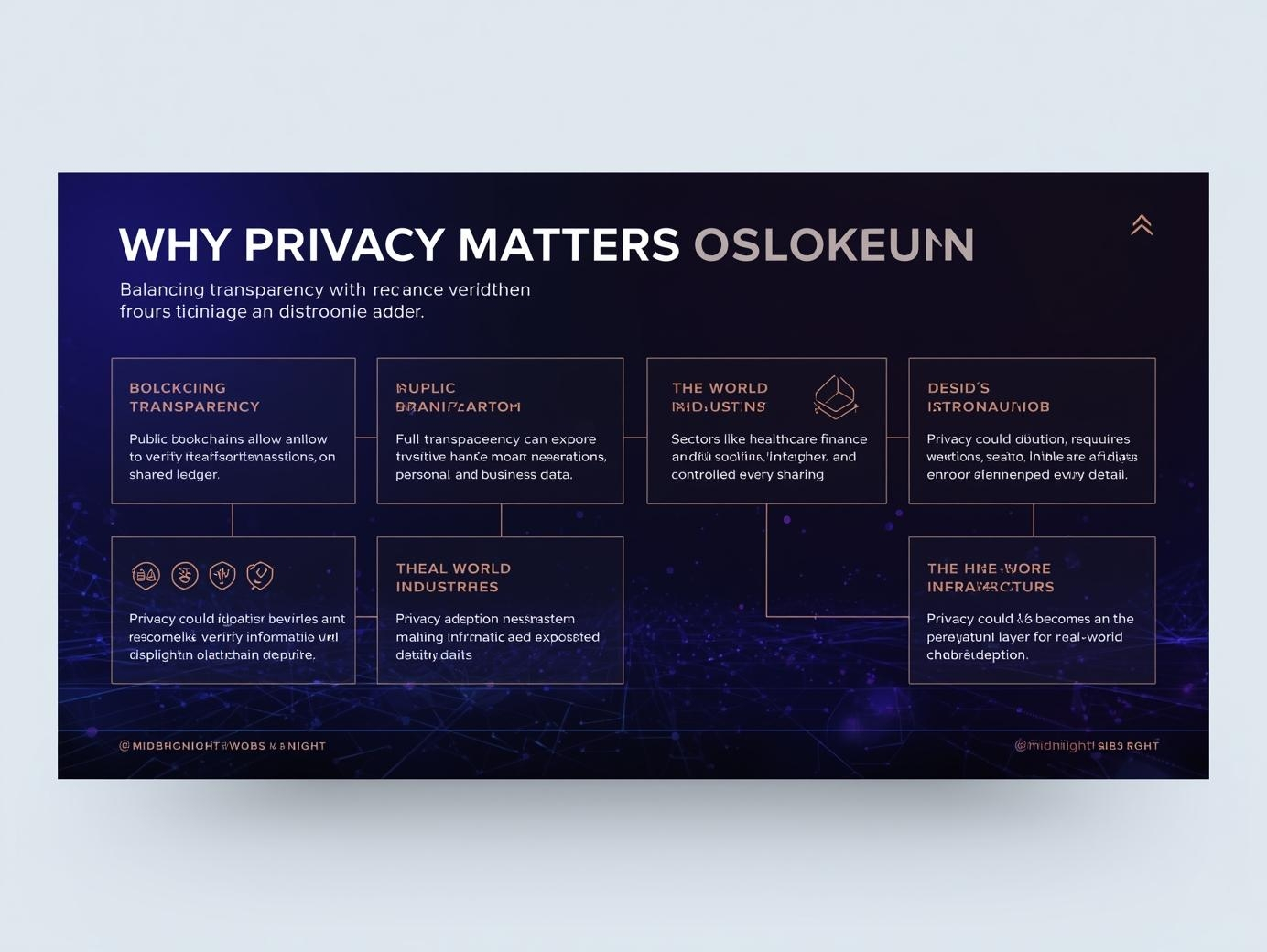
Midnight Network is often described as a privacy-focused blockchain infrastructure designed to support decentralized applications without exposing confidential data. What makes this concept interesting is the idea of combining transparency with controlled privacy. Traditional blockchains allow anyone to view transaction details on the public ledger. This transparency is useful because it ensures that transactions can be verified by anyone. However, it also creates a situation where too much information can become public.
When I think about real-world industries like finance, healthcare, or supply chain systems, it becomes clear that full transparency is not always practical. Businesses often handle sensitive financial data, and healthcare systems manage private patient records. In these cases, organizations need systems that can verify information without exposing every detail. Midnight Network appears to be working toward exactly that goal.
One of the key ideas behind Midnight Network is selective disclosure. This means users or applications can choose which information should remain private and which information can be verified publicly. Instead of exposing all transaction data, the system allows verification through advanced cryptographic methods. In simple terms, it makes it possible to prove that something is true without revealing the underlying sensitive information.
From my perspective, this concept could play an important role in the next stage of blockchain adoption. Many institutions are interested in using blockchain technology, but they hesitate because of privacy concerns. If projects like Midnight Network can successfully balance privacy with accountability, it could open the door for more industries to adopt decentralized systems.
Another interesting aspect of Midnight Network is the role of its native token, NIGHT. Like many blockchain ecosystems, the token helps power the network by supporting governance, transactions, and other operational functions. However, the real value of the token will likely depend on how useful the network becomes for developers and organizations building privacy-focused applications.
What makes Midnight Network particularly worth watching is that it addresses a structural issue in blockchain rather than just trying to improve performance numbers. Many new projects enter the market promising faster block times or cheaper transactions, but only a few attempt to solve deeper problems within the technology itself. Privacy is one of those fundamental challenges.
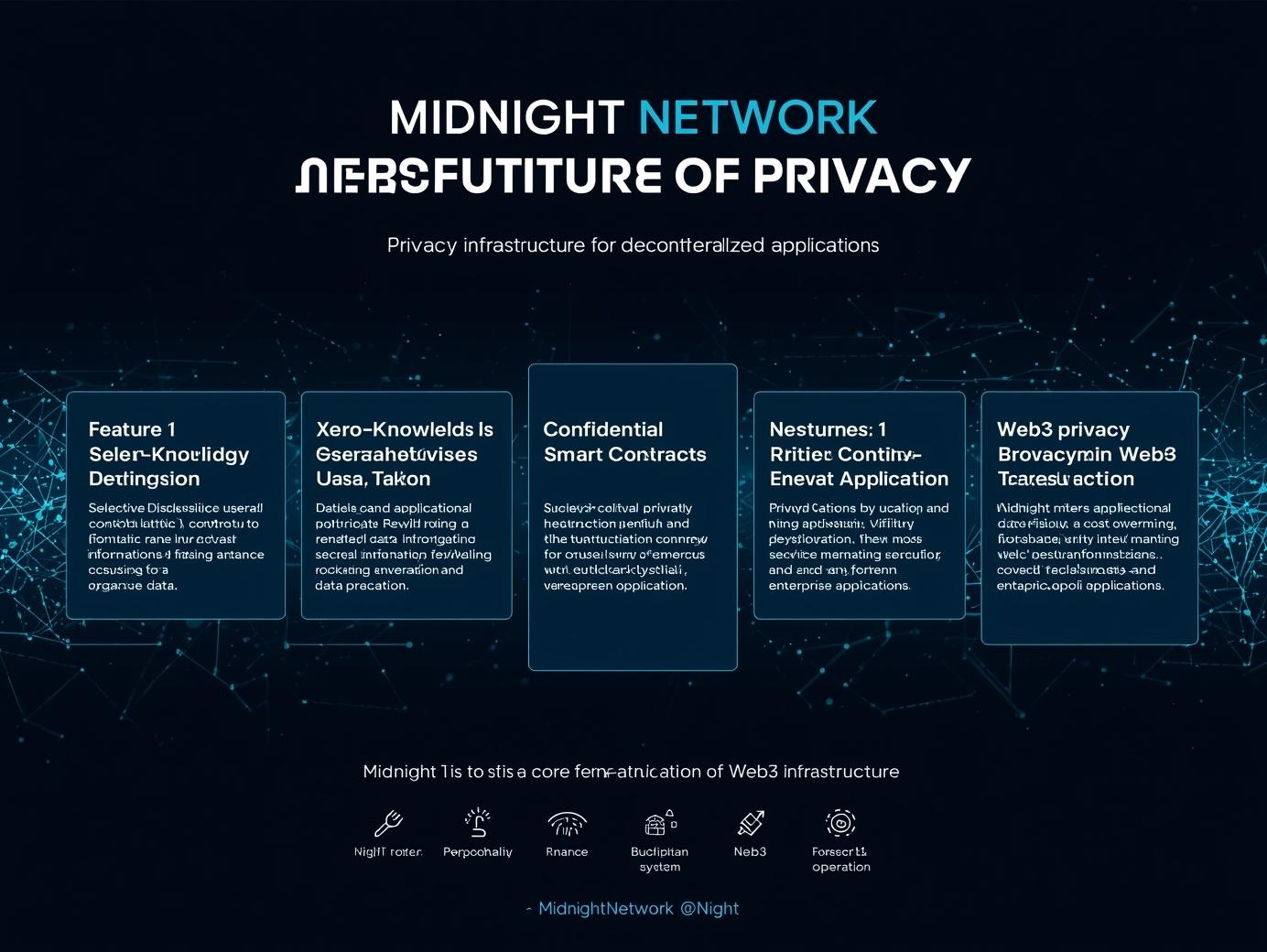
Of course, the project still faces several hurdles. Privacy-focused blockchain systems often attract regulatory attention because governments worry that these technologies could be misused. As a result, Midnight Network will need to demonstrate that strong privacy features can exist while still maintaining accountability and compliance. Balancing those two factors will likely be one of the project’s biggest challenges moving forward.
Despite these challenges, I think Midnight Network represents an important direction for Web3. If blockchain is going to support real-world systems, privacy must become a core feature rather than an afterthought. Transparent systems are powerful, but they need to evolve in ways that also respect confidentiality.
In the long run, projects that solve practical problems usually have the greatest impact. Midnight Network is trying to address one of the most significant gaps in current blockchain infrastructure. If it succeeds in building a reliable privacy layer for Web3 applications, it could become a key part of the broader decentralized ecosystem.