
Something about crypto conversations lately feels a little strange to me 🤔
Not in a dramatic way… just a small shift that’s easy to miss.
Years ago when people talked about blockchain the conversation almost always came back to the same thing. Ownership. Privacy. Control over your own data.
Somewhere along the way that focus quietly changed.
Now most discussions are about speed, fees, scalability, or which chain has the most users this month. Those things matter of course but the original promise of crypto was never just efficiency.
It was freedom over information.
That’s why “Midnight” caught my attention when I started reading about it.
Instead of treating privacy as a niche feature or something only certain applications need, Midnight builds the entire network around what it calls rational privacy.
The idea behind it is actually pretty simple.
People should not have to choose between using blockchain applications and protecting their personal data.
Most blockchains today force that trade-off.
Everything is transparent by default. Transactions, balances, interactions with smart contracts. Anyone can verify activity but the cost of that transparency is that your data becomes public infrastructure.
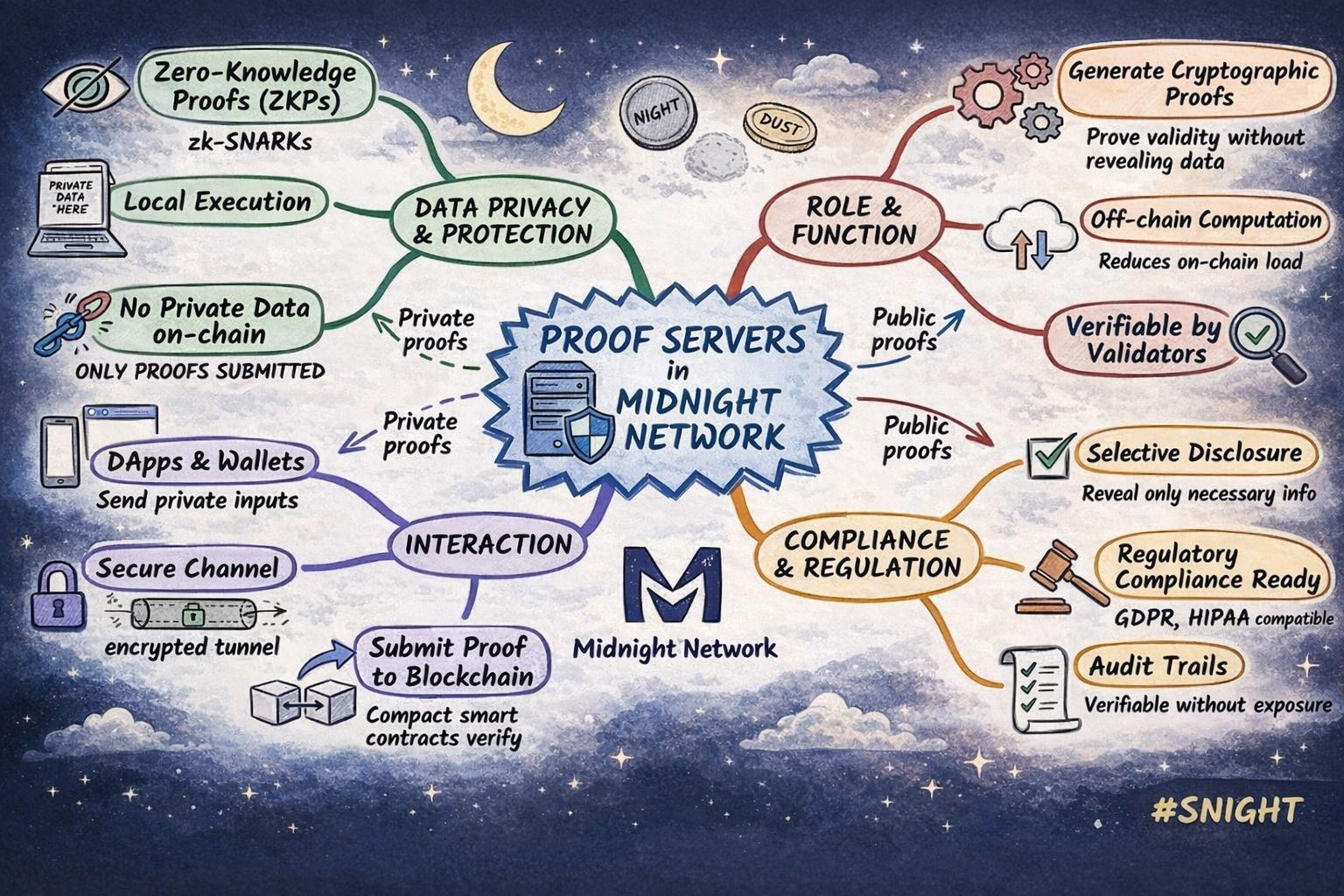
Midnight approaches that problem differently by using zero-knowledge proof technology.
Zero-knowledge systems allow a network to verify that something is true without revealing the underlying information used to prove it.
In other words the system can confirm that a rule was followed… without exposing the data behind it.
That might sound abstract but it solves a real tension inside blockchain design.
Verification and privacy usually conflict with each other.
If everything is visible the network can easily verify transactions. But users lose control over their information. If data stays private the network struggles to confirm what actually happened.
Zero---knowledge proofs allow Midnight to balance those two sides.
Participants can prove compliance with rules, contract logic, or transaction requirements while keeping sensitive information hidden.
So the network still maintains verifiability but users don’t have to expose personal data to the entire chain.
What also stood out to me is how Midnight tries to make this technology usable.
Privacy cryptography has historically been powerful but difficult to work with. Many developers avoid it simply because the tooling is too complex.
Midnight addresses that by introducing “Compact”, its smart contract language.
Compact is designed to feel familiar to developers because it’s based on TypeScript. Instead of forcing engineers to learn entirely new cryptographic languages the system tries to integrate privacy tools into a more approachable development environment.
That detail might sound small but it actually matters a lot.
If privacy technology stays difficult to implement it will remain a niche feature used only by specialists. By lowering the learning curve Midnight is trying to make privacy something developers can integrate into everyday applications.
That’s where the idea of a fourth-generation blockchain comes in.
Earlier generations of blockchains focused on decentralization, programmability, and scalability. Midnight focuses on something slightly different.
A network where utility and privacy can coexist.
Because the reality is that many real-world applications require both.
Businesses need to verify transactions without exposing internal data. Individuals want to use digital infrastructure without broadcasting every interaction publicly.
Midnight’s architecture is built around that balance.
You can verify the truth of what happened on the network… while still maintaining ownership of the information behind it.
I think that idea resonates more today than it did a few years ago.
As blockchain moves closer to mainstream use the tension between transparency and privacy becomes harder to ignore.
Total transparency sounds ideal until personal information becomes permanently visible. Total privacy sounds appealing until systems lose the ability to verify what actually happened.
Midnight tries to stand in the middle of that problem.
Not hiding activity completely… but allowing verification without forcing exposure.
And in a world where digital systems increasingly shape how we interact with money, identity, and data… that balance might turn out to be one of the most important pieces of infrastructure crypto builds.