

If you’ve spent any real time trading on-chain, you already know the trade off. Transparency is great until it isn’t. Every wallet, every move, every position is out there for anyone to track. For retail traders, that’s uncomfortable. For larger players, it’s a real risk.
That’s where the current wave of “private DeFi” comes in, and in early 2026, one project keeps popping up in conversations: Midnight.
Midnight isn’t trying to reinvent trading itself. It’s trying to fix the environment traders operate in. And honestly, that’s long overdue.
The core idea behind Midnight is simple: you should be able to prove a transaction is valid without exposing all the details behind it. This is done using something called zero-knowledge proofs, which sound complex but work in a very practical way. You can think of it as showing the result of a calculation without revealing the inputs.
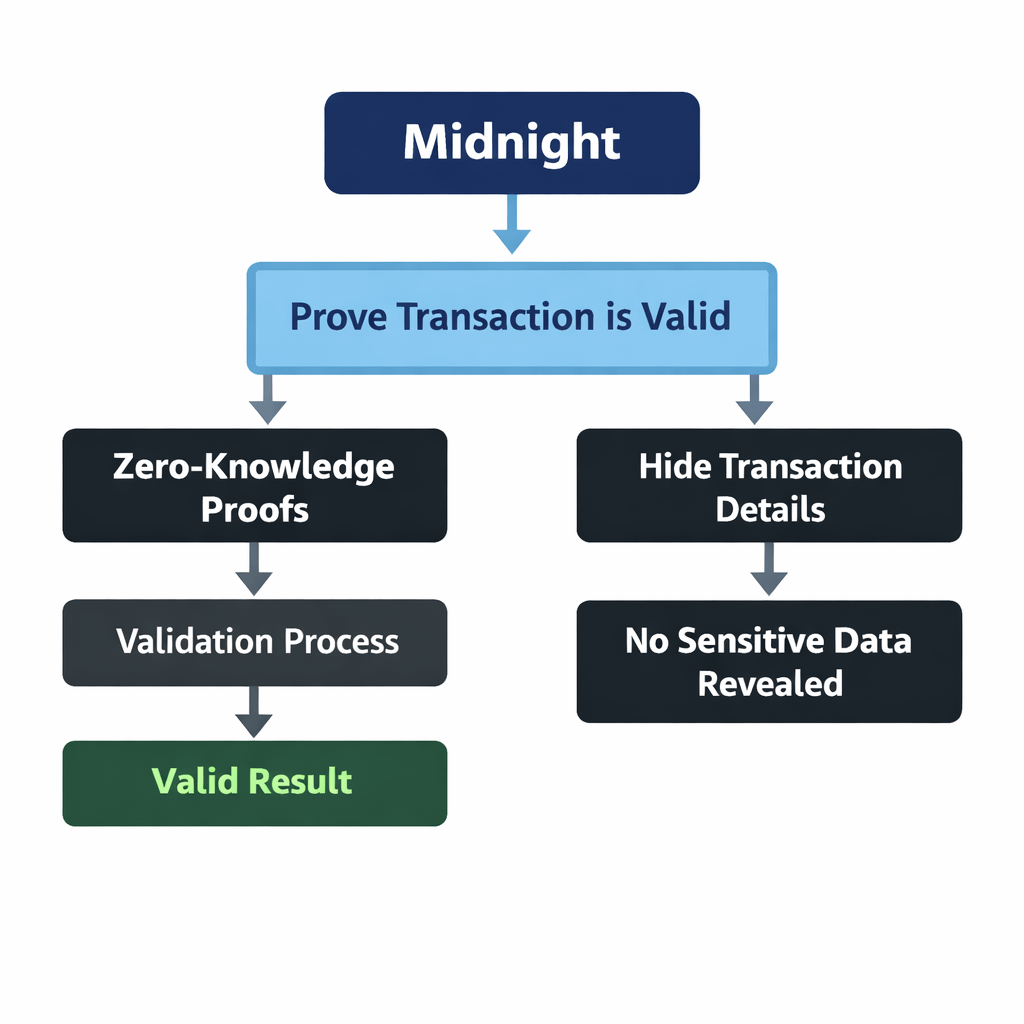
Why does that matter for DeFi? Because right now, most on-chain trading feels like trading in a glass room. Your positions, your liquidity, even your strategy can be analyzed in real time. That creates front-running, copy trading, and sometimes outright exploitation.
Midnight flips that dynamic. Instead of full transparency, it introduces “selective disclosure.” You choose what’s visible and what isn’t.
From a trader’s perspective, that alone changes the game. Imagine executing a large swap without broadcasting your intent to the entire market. Or providing liquidity without exposing your entire portfolio structure. It starts to feel less like a public spectacle and more like a controlled environment.
But privacy alone isn’t why Midnight is trending right now. Timing matters.
The network is expected to launch its mainnet in late March 2026, and that’s pushing it into the spotlight. At the same time, the broader market is shifting. Real world asset tokenization has surged past $24 billion, and institutions are finally paying attention to on-chain finance but they’re not comfortable doing it publicly.
That’s the gap Midnight is trying to fill: privacy that still works within regulatory frameworks.
And this is where it gets interesting for developers.
Building privacy into blockchain apps has traditionally been painful. Zero-knowledge systems are powerful, but they’re also complex, slow to implement, and often unpredictable in cost. Midnight tries to reduce that friction by offering developer-friendly tools and a more structured environment for building privacy-aware applications.
In simple terms, it’s aiming to make private DeFi easier to build, not just easier to use.
That matters more than most people realize. Developers don’t avoid privacy because they don’t want it they avoid it because it’s hard. If Midnight can simplify that layer, it lowers the barrier for an entirely new category of DeFi apps.
Speed and cost are part of that equation too. Midnight separates its token system so that transaction costs remain predictable instead of fluctuating wildly with market prices. For traders, that means fewer surprises. For developers, it means better planning.
Still, it’s worth asking: does private DeFi actually make trading safer, or just more opaque?
From experience, the answer sits somewhere in between.
Privacy reduces certain risks like being targeted after a large trade or having your strategy copied instantly. It also makes DeFi more usable for businesses that can’t afford to expose financial data publicly.
But it introduces new challenges too. Less visibility can mean less accountability if not designed carefully. That’s why Midnight’s approach of “rational privacy” not hiding everything, just hiding what’s unnecessary feels more balanced than older privacy models.
And th
at balance is probably why it’s getting attention now.
There’s also a broader shift happening in how traders think about on chain activity. A few years ago, full transparency was seen as a feature. Today, many see it as a limitation. Not because transparency is bad but because it doesn’t match how financial systems work in the real world.
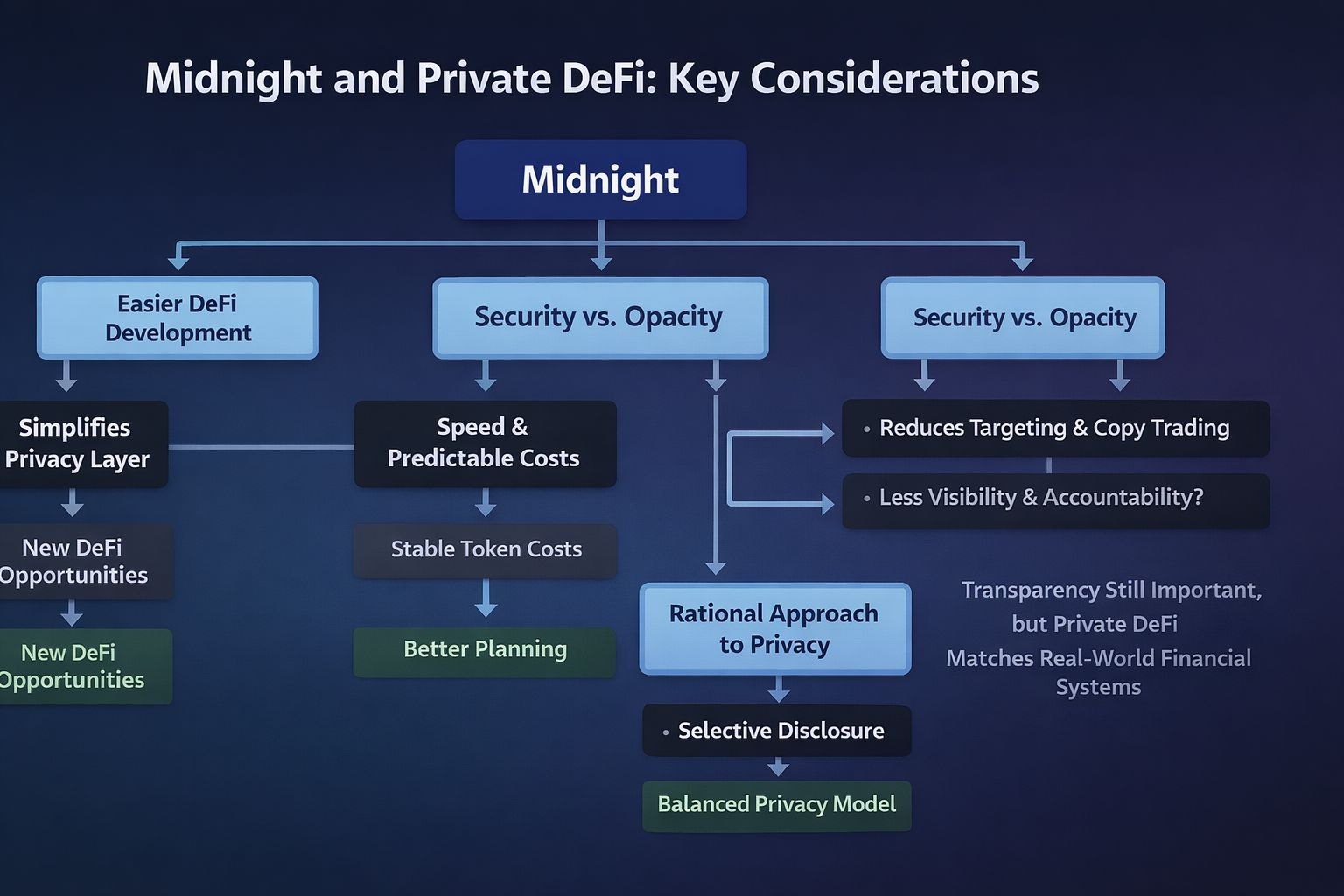
Even in traditional markets, not every trade is broadcast with full context. There’s always a layer of privacy, timing, and controlled disclosure.
DeFi is slowly moving in that direction.
Midnight is one of the first serious attempts to make that transition feel natural rather than forced. It doesn’t ask users to choose between full transparency and complete secrecy. It sits somewhere in the middle, where most real world use cases actually live.
Will it solve everything? Probably not.
Liquidity, adoption, and developer traction will decide whether it becomes infrastructure or just another experiment. But the direction is clear. Traders want safer environments. Developers want simpler tools. Institutions want privacy without breaking compliance.
Midnight is trying to align all three.
And if it works even partially it could make on chain trading feel less like a public performance and more like what it was always supposed to be: just trading.