

The reason ROBO could gain more investor interest as Fabric Protocol keeps growing is not just the usual crypto story about hype, listings, and momentum. It is also about a much more practical issue: developers hate friction. They hate slow systems, complicated deployment paths, unclear incentives, and tooling that makes building feel heavier than it should. Fabric Protocol is trying to position itself around a simpler idea create the coordination layer for robots, agents, and machine driven services, then make participation easier for builders and operators. That matters because markets usually pay attention when a project looks like it is reducing real world bottlenecks instead of inventing new ones.
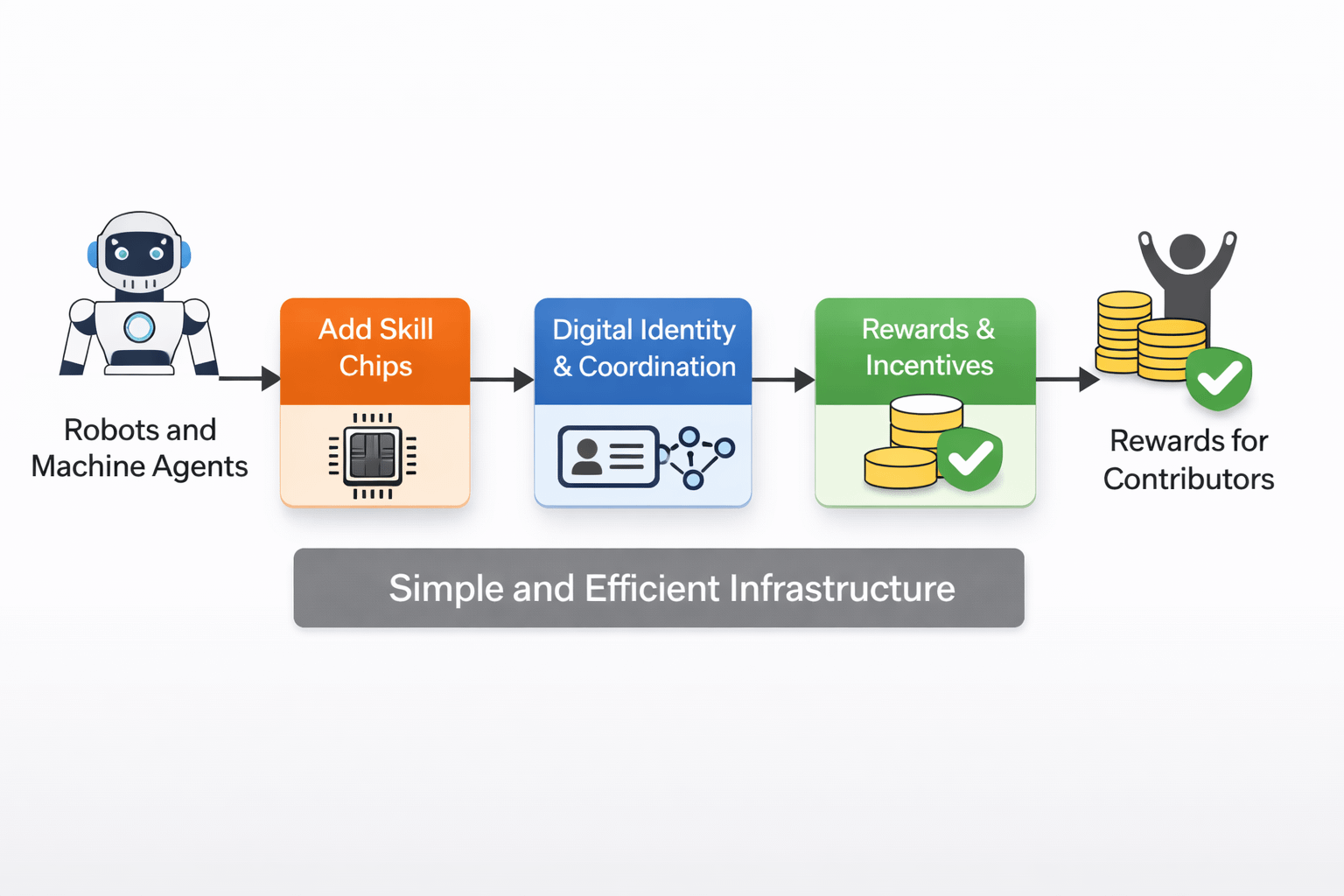
Fabric’s official material frames the protocol as open infrastructure for building, governing, and operating general-purpose robots, with public ledgers used for identity, coordination, and reward systems. Its December 2025 whitepaper describes a system where robot skills can be added like “skill chips,” similar to apps, while contributors who train, secure, and improve the system can be rewarded through the protocol. In plain language, that means Fabric wants robotics and machine services to be easier to plug into an economic network rather than rebuilt from scratch every time. For developers, that is an attractive pitch because complexity is expensive. Every extra integration, custom payment rail, or trust layer slows product work and raises costs.
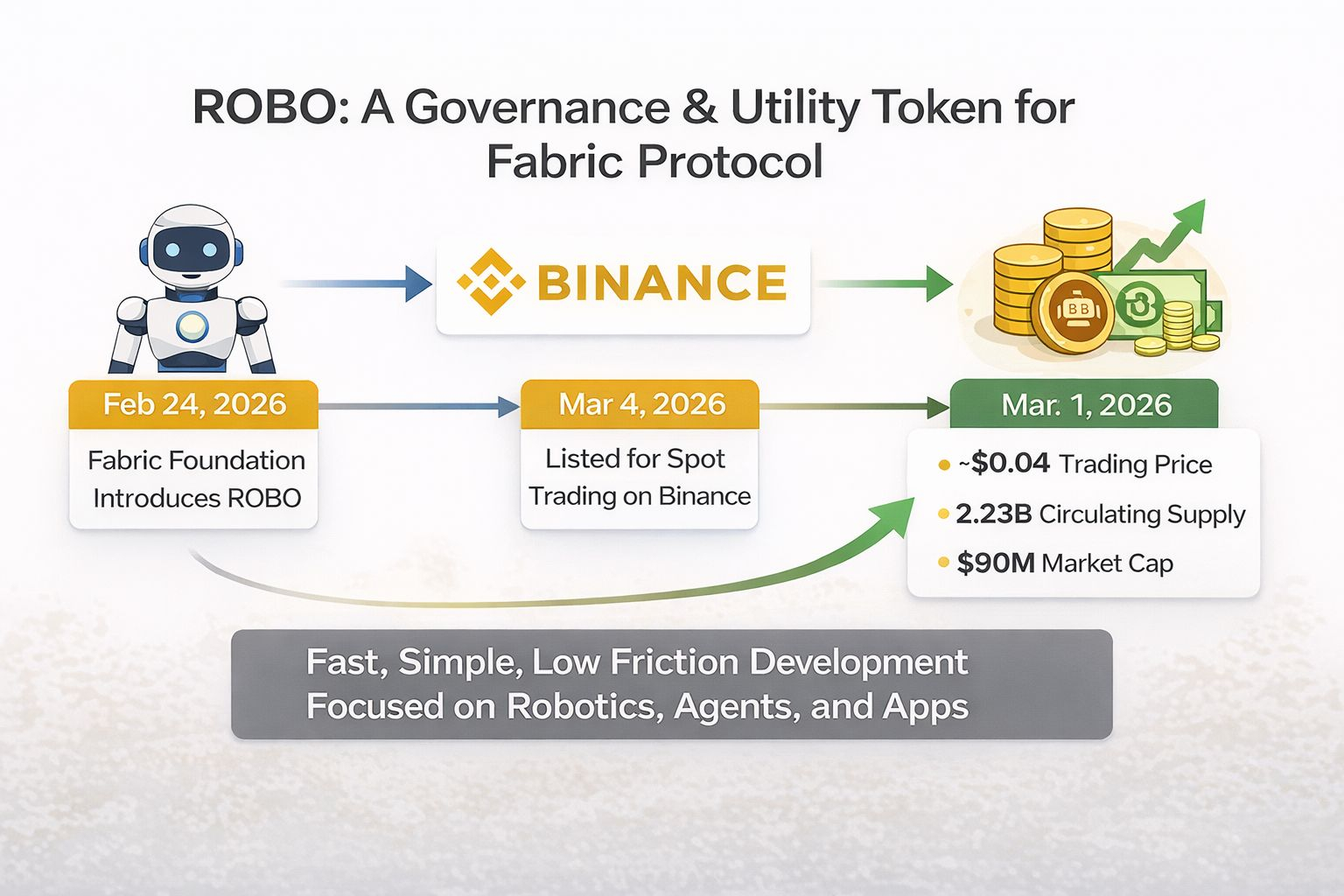
That is where ROBO enters the conversation. On February 24, 2026, the Fabric Foundation introduced ROBO as the protocol’s core utility and governance asset, and on March 4, 2026, Binance listed ROBO for spot trading with pairs including ROBO/USDT and ROBO/USDC. That combination of a fresh token narrative plus a major exchange listing immediately gave the market something it understands: access, liquidity, and visibility. As of mid-March 2026, CoinMarketCap shows ROBO trading around $0.04, with a circulating supply of 2.231 billion tokens out of a 10 billion maximum supply, daily volume around the mid-$40 million range, and a market cap near $90 million. For a newer token, that is enough to put it on traders’ screens without making it look fully priced.
Still, price alone is not why investor attention could keep building. The stronger angle is that Fabric is speaking directly to a pain point developers know well: speed matters, but simplicity matters even more. A fast protocol that is hard to use often loses to a slightly less ambitious one that gets builders shipping quickly. Fabric’s roadmap for 2026 is centered on initial deployment for robot identity, task settlement, structured data collection, contribution based incentives, broader app-store participation, and better reliability and throughput by Q4. That roadmap reads less like a vague metaverse promise and more like an attempt to reduce development friction step by step. From a trader’s perspective, that is important because markets tend to reward execution milestones that can later translate into usage.
One detail I find especially interesting is Fabric’s emphasis on settlement and payment speed. The whitepaper openly criticizes legacy payment delays and argues for fast, irreversible settlement among humans, agents, and robots. That may sound abstract at first, but it is actually very concrete. If a developer is building machine to machine services, delayed settlement is not a minor inconvenience; it becomes a product problem. The smoother the payment and identity rails, the easier it is to launch useful applications. And when builders face fewer moving parts, they are more likely to stay, iterate, and create demand around the network’s token.
Why is this trending now? Partly because the broader AI and robotics narrative is hot, but also because Fabric has started turning vision into dated milestones. The protocol published its version 1.0 whitepaper in December 2025, opened ROBO airdrop registration in late February 2026, and followed that with exchange access in early March. The official roadmap also points to real-world data collection and verified task execution during 2026, which gives the market a sequence to watch rather than a distant dream. Traders like stories, but they trust timelines more. Developers are similar. They do not need perfection on day one; they need proof that the road is getting smoother. If Fabric keeps showing that it can make machine focused development faster, simpler, and less painful, then ROBO may keep attracting attention not because it is loud, but because it is useful.