
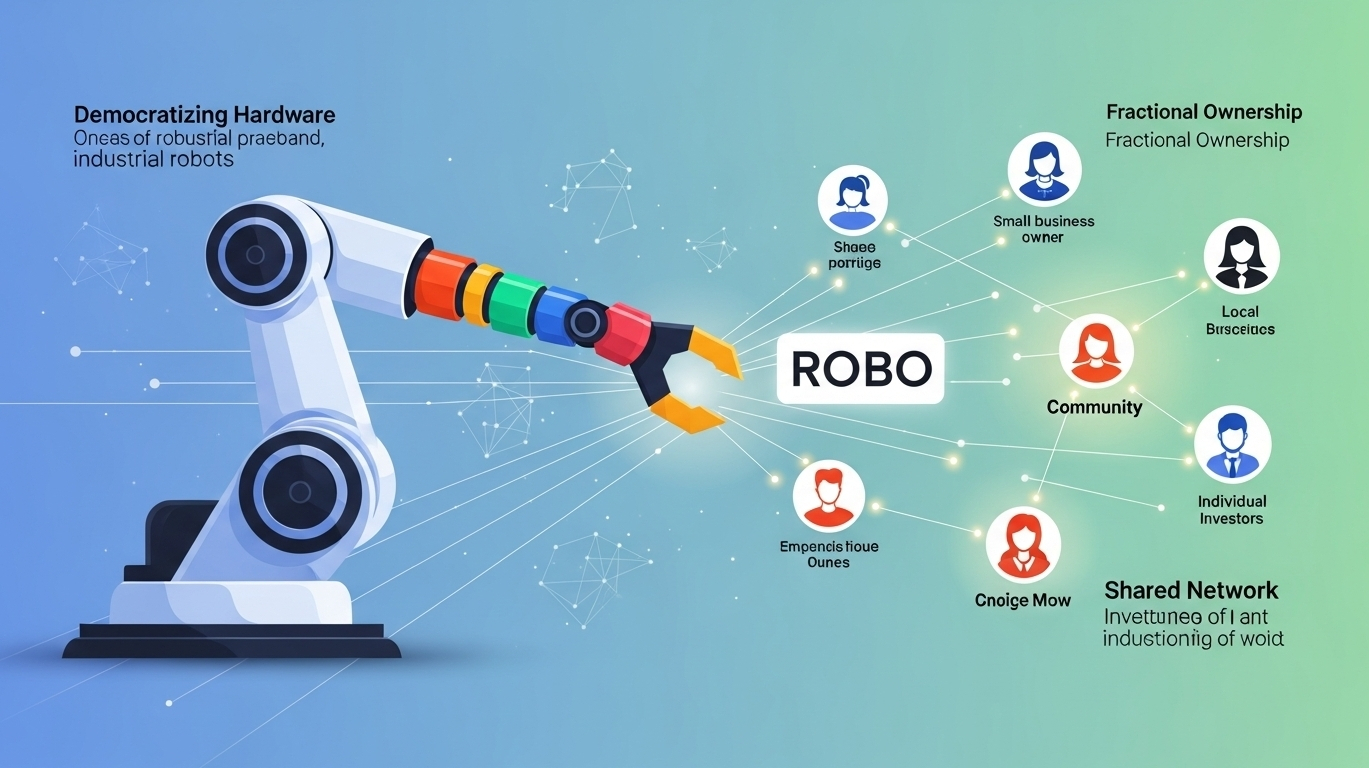
For a long time only big companies can afford industrial robots. The upfront costs were huge, and you needed special infrastructure just to get started. Small manufacturers and local businesses were pretty much left out.
Now, that’s starting to shift. There’s this new idea of “democratizing hardware” which is all about making advanced machines more accessible kind of like how people share rides or vacation homes.
#ROBO take this approach and let people own pieces of industrial robots, so a bunch of folks can share the same machines and split the benefit.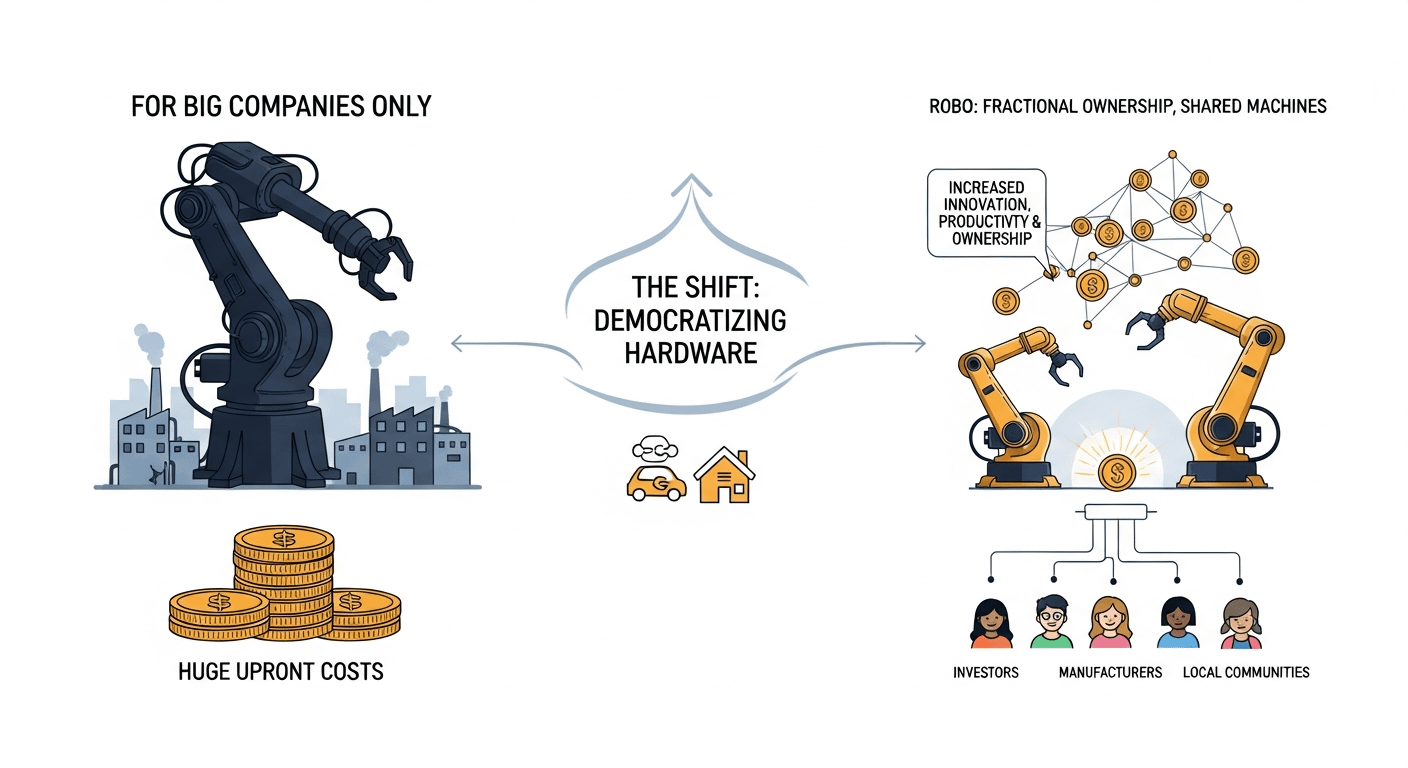
With fractional ownership robots stop being just one company’s asset. They’re part of a shared network. Investors, manufacturers and even whole communities can chip in smaller amount of money and get access to robotic power based on what they put in.
It’s a big change robots move from being a massive expense for one business to a collaborative setup, where cost and risk are spread out.
This community-driven approach also solve another problem: robots sitting around doing nothing. By sharing these machines they stay busier, serving more production lines and helping more people automate.
In long run platforms like $ROBO could open up world of industrial automation to way more people not just the big players but smaller companies and local communities too. That means more innovation, better productivity and a wider sense of ownership over the technology that’s shaping the future.