
Pixels PIXELis one of those games that doesn’t try too hard to impress you at the beginning—and that’s exactly why it works so well.
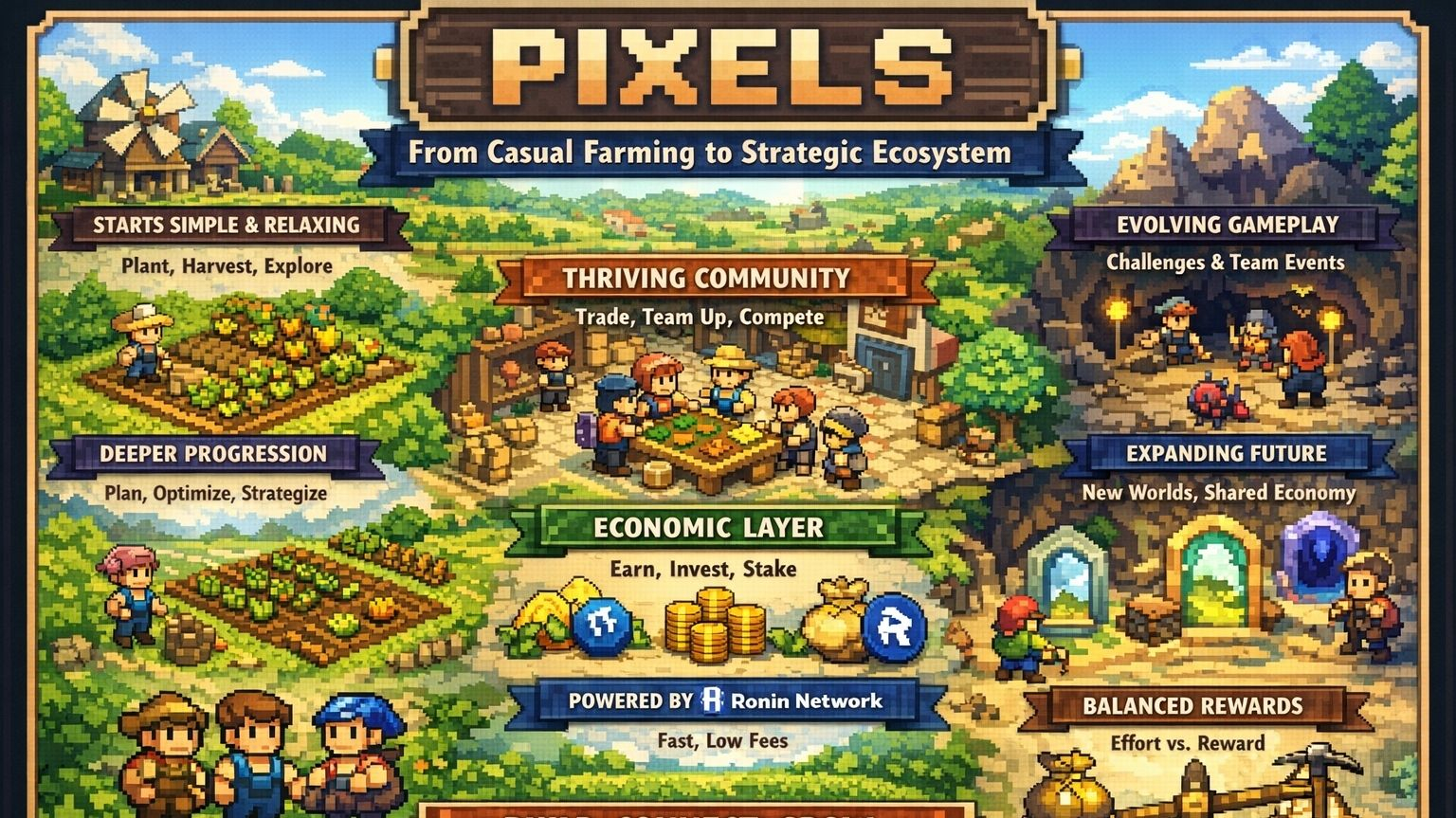
At first, it feels simple. You’re given a small piece of land, you plant crops, you harvest them, and you wander around a soft, pixel-style world. It’s calm, almost nostalgic. There’s no pressure, no complexity thrown at you right away. Just a slow, easy start.
But the more time you spend in it, the more you begin to notice something deeper.
You stop playing randomly and start thinking more intentionally. You begin planning your crops, managing your time, figuring out better ways to earn resources. What started as a relaxing farming game slowly turns into something that requires strategy and decision-making. That transition happens naturally, almost without you realizing it.
And then there’s the world itself.
You’re not playing alone. Everywhere you go, there are other players—some casually enjoying the game, others fully focused on optimizing everything. You see people trading, experimenting, grinding, and interacting. It creates a kind of energy that makes the world feel alive, like it’s constantly moving even when you step away.
The social side adds another layer to everything. You can connect with other players, trade items, or even join groups where people work together. Once you become part of a group, the experience changes completely. It’s no longer just about your own progress—it becomes about teamwork, coordination, and sometimes even competition with others. That sense of shared purpose makes the game feel much bigger than it looks.
Then there’s the economic side, which is what draws a lot of attention.
There are two main currencies in the game. One comes from simply playing—planting, harvesting, completing tasks. The other is more valuable and tied to bigger decisions, like upgrades, assets, and long-term benefits. You can trade, invest, and even stake tokens, which adds a real sense of value to what you’re doing.
But unlike many earlier Web3 games, you can’t just repeat the same action forever and expect rewards to keep coming. You have to think, adapt, and sometimes reinvest what you earn. That balance between effort and reward makes the system feel more stable and less like a short-term grind.
A big shift happened when Pixels moved to the Ronin Network. Before that, things were slower and less efficient. After the move, everything became smoother—transactions were faster, fees were lower, and more players started joining. It gave the game the foundation it needed to grow properly, and you can feel that difference when you play.
Over time, the game has been evolving in noticeable ways.
It’s no longer just about farming. Competition has become more serious, especially with team-based mechanics and group strategies coming into play. Players now have to think beyond their own land and consider how they fit into a bigger system.
There’s also a gradual move toward more complex gameplay. Efficiency matters more. Planning matters more. Some systems are starting to feel less like simple farming and more like managing something larger and more structured. It adds depth without completely losing the original charm.
Behind the scenes, there’s even experimentation with AI to help balance the game and understand player behavior. It’s not something you directly see, but it quietly improves how everything feels and functions.
On the token side, there have been changes as well. Supply adjustments, staking incentives, and reward systems are being refined to make the economy more sustainable over time. Instead of focusing only on growth, there’s a clear effort to keep things stable and long-lasting.
What’s interesting is that Pixels is no longer just one game—it’s slowly turning into something bigger. There are signs of expansion into new types of gameplay, possibly even multiple connected experiences that share the same economy. It feels like the beginning of a broader ecosystem rather than a single standalone project.
Despite all of this, the main reason people stay is simple—it’s enjoyable.
There’s something satisfying about building your land, improving your setup, and watching your progress grow over time. Add in the social interaction and the economic layer, and it becomes something you can keep coming back to without it feeling empty.
Of course, it’s not perfect. The grind can sometimes feel heavy, especially if you’re trying to stay competitive. The economy depends on active players, which means things can shift. And since it’s connected to crypto, there’s always some uncertainty in the background.
Still, when you step back and look at it, Pixels feels like more than just a game.
It’s a space where players don’t just play—they participate, build, and shape the world around them. It blends gameplay, community, and ownership in a way that feels natural instead of forced.
And maybe that’s why it stands out. It doesn’t overwhelm you at the start. It lets you ease into it. And before you realize it, you’re not just playing anymore—you’re part of something that keeps growing.
