Every time I read about the future of robotics, it feels cinematic. Autonomous drones mapping cities. Humanoid assistants working factory lines. Machines coordinating with each other faster than any human team could. But when I think about what actually allows complex systems to function in the real world, it’s rarely raw intelligence that keeps things stable. It’s structure identity systems, deposits, contracts, receipts, enforcement.
That’s what drew me to Fabric Protocol. It’s not trying to build a better robot. It’s trying to design the institutional scaffolding robots would need if they’re going to operate in open environments without creating constant ambiguity about responsibility.
If robots are going to move beyond closed corporate fleets and into shared economic space, they need something like economic personhood. Humans operate inside networks of accountability. We have bank accounts, legal identities, insurance coverage, reputational histories. When something breaks, there’s a framework imperfect but functional for assigning consequences. Robots today don’t have that. They’re extensions of whoever owns them.
Fabric is attempting to create an open coordination layer where robotic agents can register, transact, and be governed under shared rules. In human terms, it’s building a registry, an escrow system, and a compliance mechanism for machines. That’s less glamorous than AI breakthroughs, but arguably more foundational.
The economic design is where the concept becomes tangible. The ROBO token isn’t framed as abstract governance symbolism. It’s embedded into network usage fees, access, and, most importantly, work bonds. That’s the mechanism that makes the idea concrete.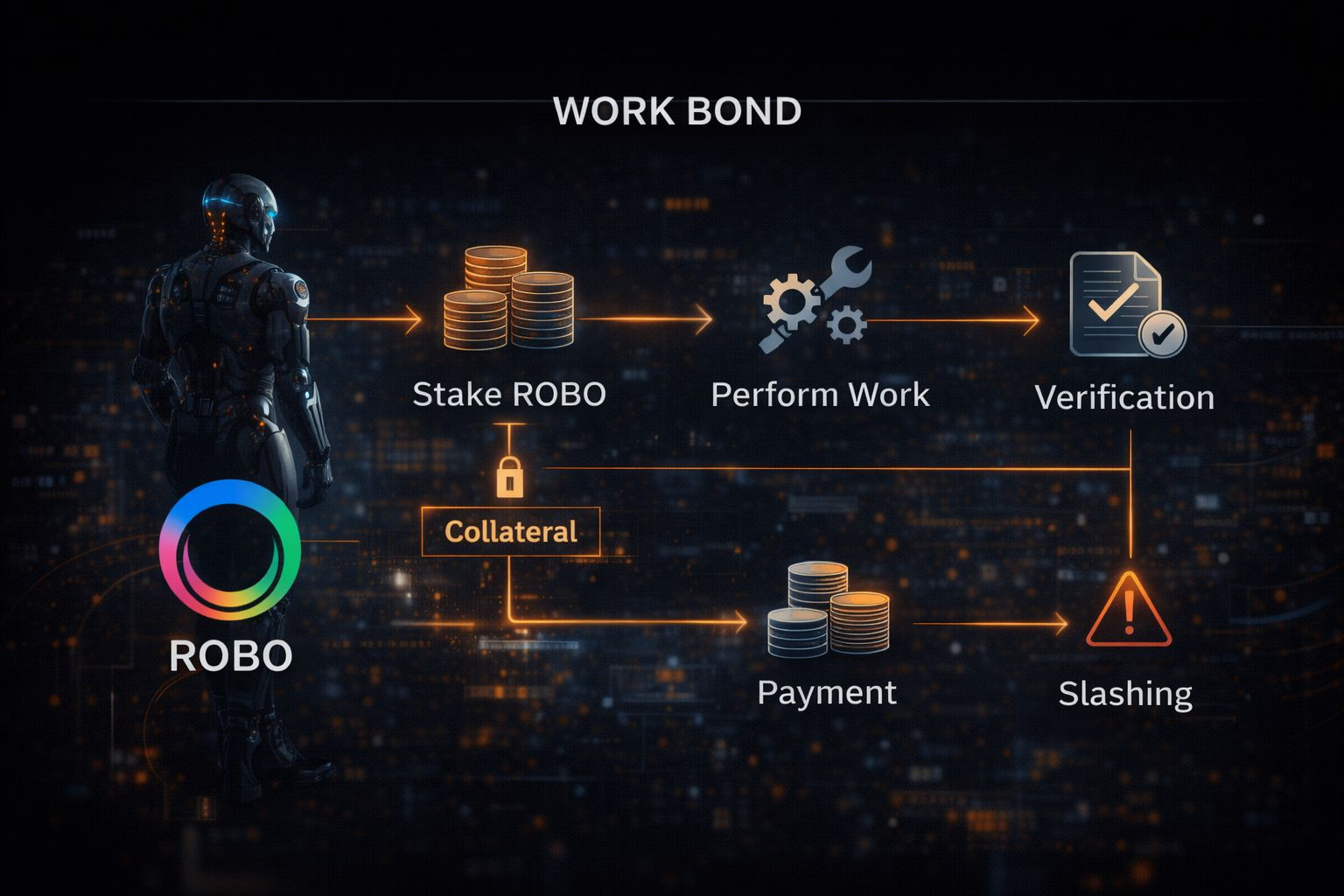 A work bond is straightforward. If you want to operate as a robotic service provider within the network, you stake ROBO as collateral. That capital sits at risk. If the robot misreports output, violates safety parameters, or fails agreed conditions, part of that bond can be slashed. It mirrors systems we already understand. Contractors post bonds. Tenants leave deposits. Performance guarantees exist precisely because trust needs backing.
In robotics, accountability often dissolves into opaque corporate structures. When something fails, tracing responsibility can become complicated. Fabric’s bond model attempts to anchor that responsibility in economic exposure. Capital becomes the enforcement layer.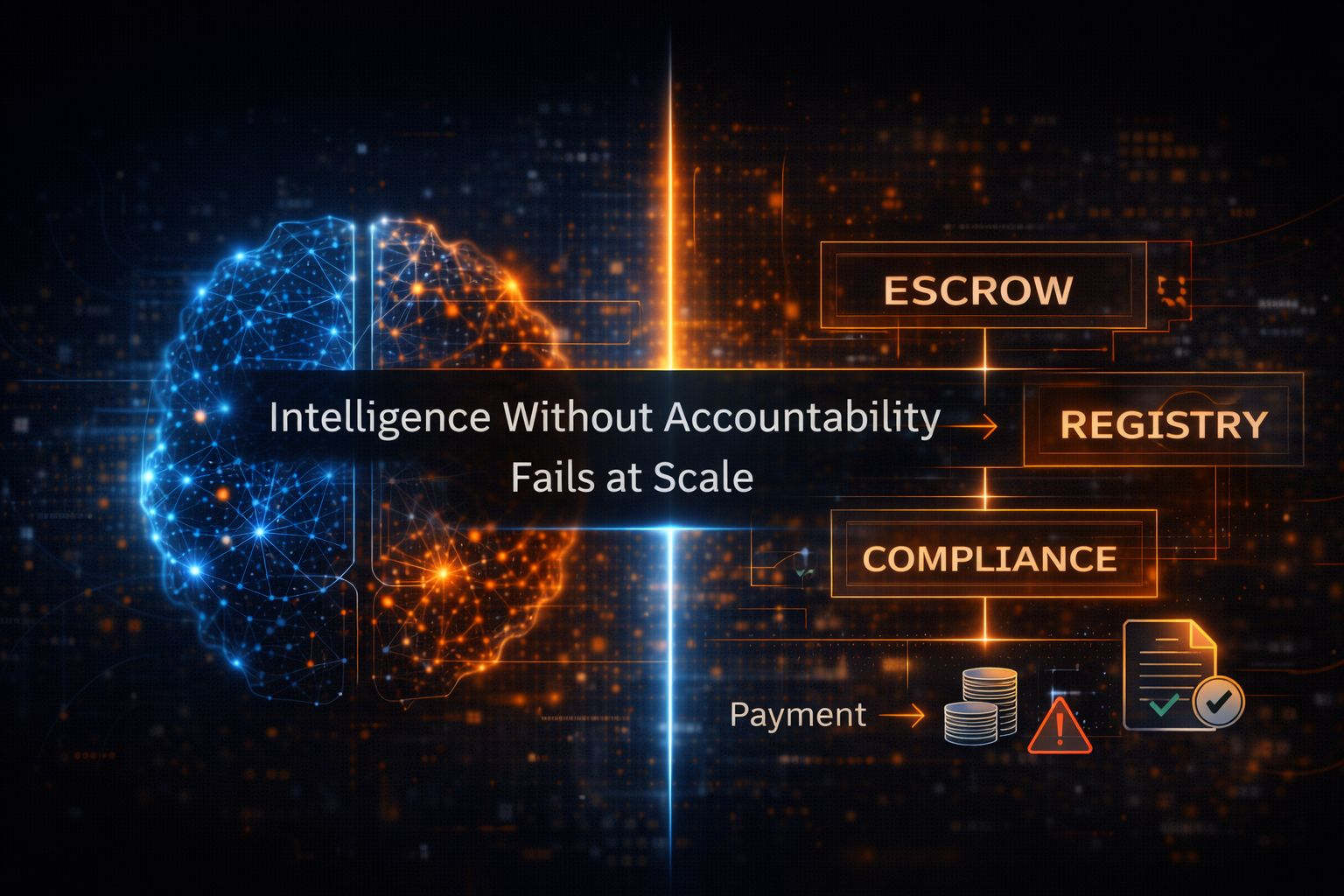 But the entire model hinges on verification. “Proof of robotic work” is easy to write in documentation. It’s harder to implement credibly. Digital actions are simple to log. Physical-world performance is not. Did a delivery actually occur? Was maintenance performed correctly? Were safety constraints respected? Verification needs to be robust enough to discourage fraud but efficient enough that it doesn’t erase margins.
That balance defines whether Fabric becomes infrastructure or an experiment vulnerable to manipulation.
The distribution process around ROBO reveals another layer of intent. Structured registration, anti-Sybil mechanisms, and identity-linked participation suggest the protocol isn’t aiming for chaotic anonymity. Governance that enforces slashing and bonding requires disciplined identity formation. If anyone can replicate endlessly, bonds lose meaning. Fabric appears aware that accountability and anonymity sit in tension.
On-chain signals show early-stage formation rather than saturation. Supply is capped, distribution is still consolidating, and participation metrics remain modest. That’s not necessarily weakness. For a protocol focused on bonding and governance, the more relevant metric isn’t trading volume. It’s how much capital becomes locked in active bonds and how often those bonds secure real task settlements.
Initial deployment on Base provides accessible infrastructure, but longer-term ambitions toward dedicated chain architecture introduce complexity. Identity systems, reputation layers, and economic guarantees don’t migrate cleanly. Transitions will test whether the protocol is designing for durable coordination or temporary convenience.
What stands out to me most is how Fabric frames governance. It doesn’t treat it as community sentiment or social branding. It treats governance as regulation clear policies, enforcement rules, parameter adjustments. In a system coordinating autonomous agents, incentives replace supervision. If the incentives are wrong, behavior degrades. If they’re calibrated correctly, coordination scales.
The vision becomes clearer when you imagine the loop functioning smoothly: a robotic operator registers, stakes a bond, performs verifiable work, receives payment, and builds reputation over time. Each completed task strengthens both economic standing and credibility. That loop resembles labor markets more than token speculation. If Fabric can make that cycle reliable, it could become background infrastructure for open robotic economies. Not because it promises artificial consciousness or dramatic AI breakthroughs, but because it addresses the unglamorous layer of trust.
If it fails, it risks becoming another token narrative attached to a futuristic theme without solving the core coordination problem.
I don’t view Fabric as a bet on robots replacing humans. I see it as a bet that autonomous systems, if they are to integrate into open markets, will need rule structures that feel familiar collateral, receipts, slashing, reputation.
It’s not a loud thesis. It doesn’t promise transformation overnight.
But historically, the systems that manage accountability outlast the technologies they govern. And if autonomous machines become economically active participants, the social contracts around them may matter more than the machines themselves.