The Robot Economy Is Here — And It's More Human Than You Think
A deep dive into @Fabric Foundation and the story behind #ROBO
Let me paint you a picture.
It's 2 AM in a warehouse somewhere. Hundreds of robots are moving inventory, scanning shelves, sorting packages. They've been doing this for hours without a single break, without a coffee, without complaining about the playlist. And somewhere across town, a humanoid robot is learning how to fold laundry in someone's home, guided by an AI brain that gets smarter every single day.
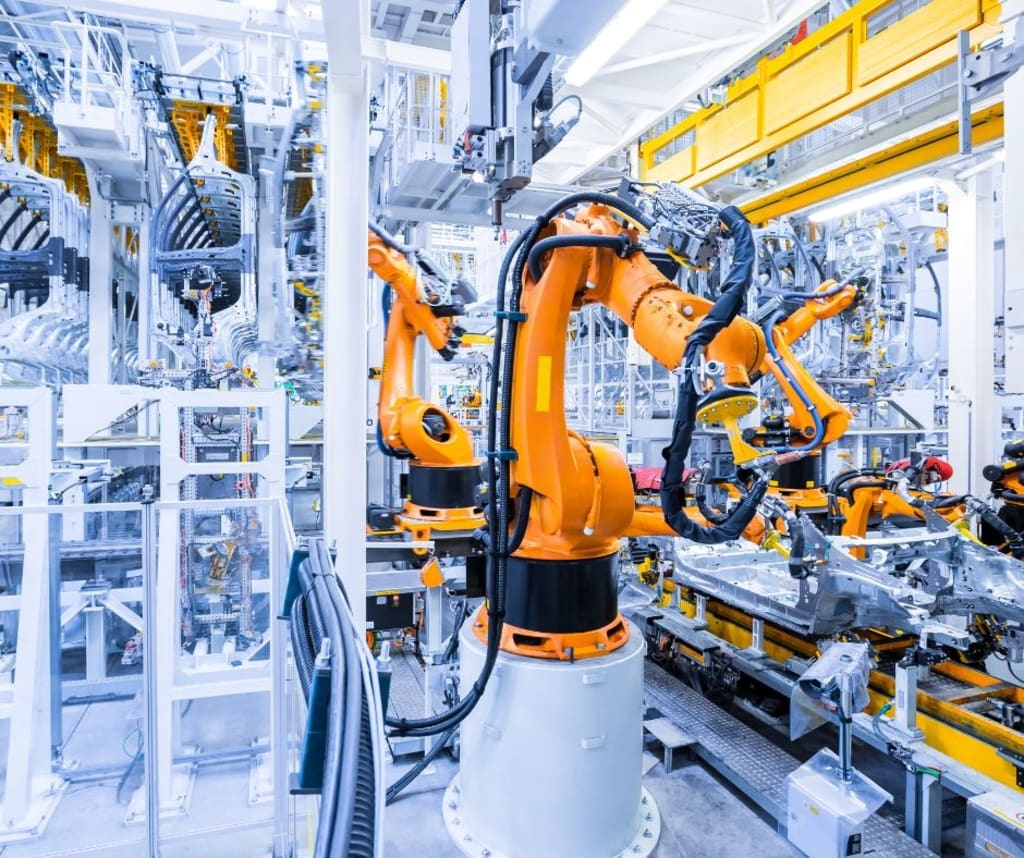
This isn't a scene from a movie. This is 2026.
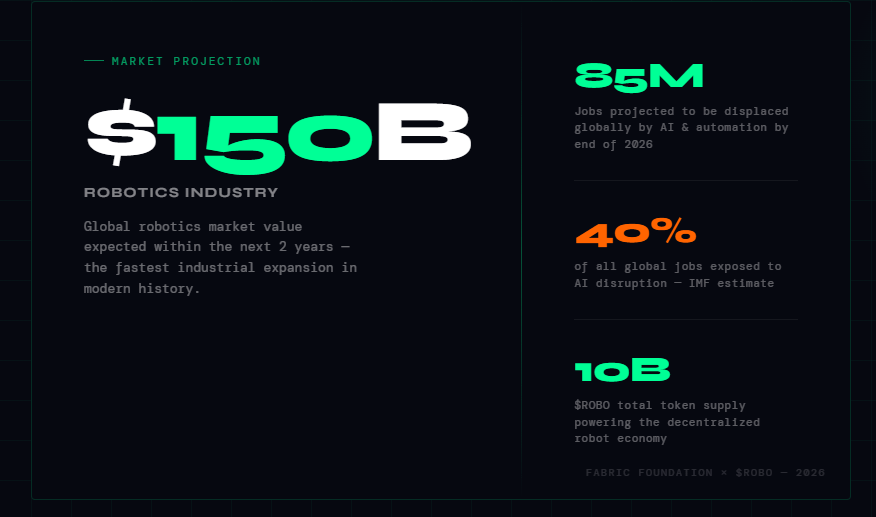
The robotics industry is projected to surpass $ 150 billion in the next two years alone. Not decade. Two years. The machines aren't coming — they're already here, already working, already embedded in supply chains, hospitals, factories, and homes across the world.
But here's the problem nobody is talking about.
A World Full of Robots That Can't Talk to Each Other
Imagine building a city where every single building uses a completely different electrical system. One building runs on 110V, the next on 220V, the next on something the engineer made up on a Tuesday. Nothing connects. Nothing shares. You can't plug a lamp from one building into the socket of another.
That's the robot world right now.
A warehouse robot built by one company cannot coordinate with a delivery robot built by another. The AI brain trained by one lab cannot share what it learned with a robot from a different manufacturer. Every robotics company has built high walls around their technology, their data, their systems. The result is thousands of incredibly capable machines that are, underneath all that sophistication, completely isolated from each other.
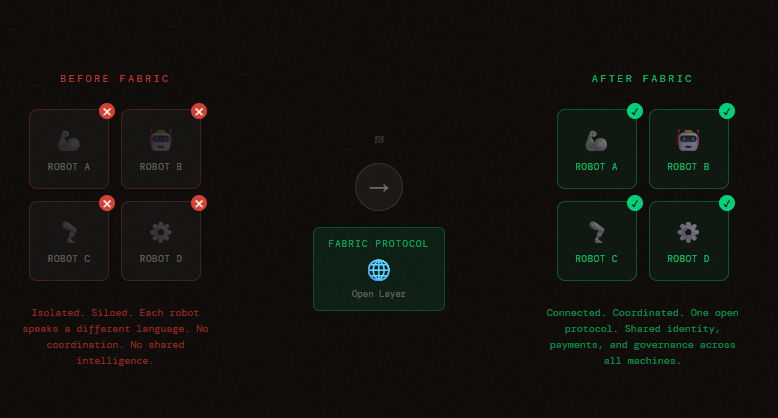

This isn't just inefficient. It's the single biggest thing slowing down the future that everyone keeps talking about.
Fabric Foundation was built specifically to tear those walls down.
What Fabric Foundation Actually Is
Fabric Foundation is a non-profit organization with one mission: build the open infrastructure that allows the entire robotics world to connect, collaborate, and grow together — without any single company owning the keys.
Think of what the internet did for computers. Before it existed, computers were powerful but isolated. The internet didn't make computers smarter — it made them connected, and that connection created everything we know today. Google, banking, social media, this post you're reading right now — none of it exists without that shared open layer underneath.

Just a week ago, we had the chance to see a choreography for the Chinese spring festivals by robots' synchronized movements. Even if this is completly other story, it goes to show how working together makes the big diffrencein the finishing results. Robotics is already so advanced that a guiding brain for this technology will be a game-changer.
Fabric Foundation wants to be that layer for robots.
The technology arm behind this vision is OpenMind — a company that has already built what they describe as the operating system for robotics. Just like your phone runs apps from thousands of different developers on one shared system, OpenMind's OS allows robots from completely different manufacturers to run on one unified platform. A humanoid from one company, a robotic arm from another, a quadruped robot dog from a third — all running the same software layer, all able to communicate, all able to share learned experiences.
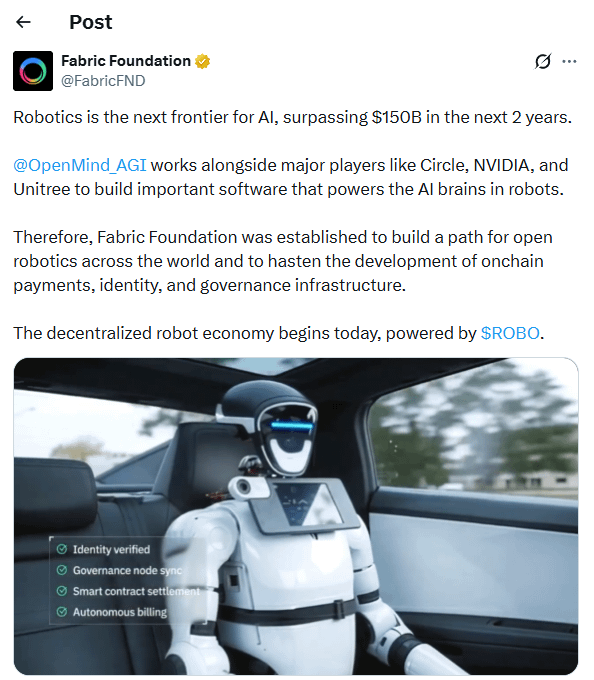
And the partnerships they've built to get here are not small names. NVIDIA — who builds the most powerful AI computing chips on the planet — is working alongside OpenMind. Circle — infrastructure behind digital payments at a global scale — is part of this ecosystem too. Unitree — one of the world's leading robotics manufacturers — is in the mix. These aren't speculative relationships. These are the builders of the physical and digital infrastructure of the modern world, all pointing in the same direction.
The Blockchain Part — Why It Actually Makes Sense Here
This is where a lot of people's eyes glaze over, so let's make it concrete.
Imagine a robot that does delivery work. It completes a job. Who pays it? How does the payment get verified? How does the company that trained its AI get compensated for that training data? How does the robot pay for its own charging station between routes? How do two robots from completely different companies split the revenue from a shared task?
Right now, the answer to all of those questions is: a human, somewhere, manually handling it. Which is slow, expensive, and kind of defeats the purpose of having autonomous machines.
Fabric Protocol solves this by giving every robot a verifiable identity and a wallet on a public ledger. The robot can receive payment, split revenue, pay for its own energy, and log every transaction transparently — all automatically, all without a human in the loop. Not because the robot is "conscious" or making decisions — but because the protocol handles it the same way your phone automatically connects to WiFi without you typing in a password every time.
This is what people mean by a decentralized robot economy. It's not science fiction. It's just automation applied to the financial layer, the same way it's already been applied to the physical layer.
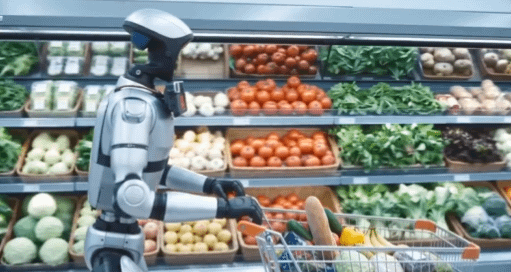
The Token: ROBO
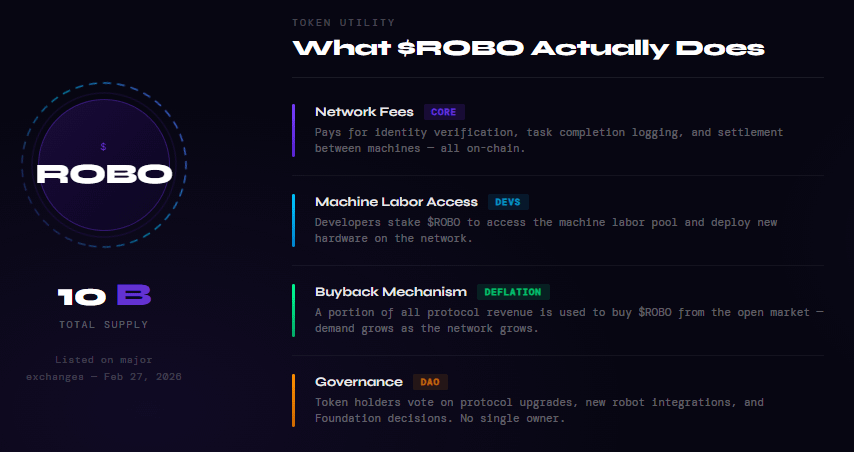
ROBO is the fuel that runs all of this. It's used to pay for network fees — things like registering a robot's identity, verifying a task was completed, settling payments between machines. Developers building on the network use it to access the machine labor pool. And a portion of all protocol revenue is used to buy $ROBO back from the market, meaning as the network grows, the token has built-in demand mechanics.
The total supply is 10 billion tokens. Worth noting that a significant portion remains locked under vesting schedules — which means there's future supply that will gradually enter the market. This is standard for protocol tokens but worth understanding before making any financial decisions.
Why This Matters Beyond the Price
Here's the part that doesn't get talked about enough.
The robot economy is going to exist whether Fabric Foundation succeeds or not. The $ 150 billion market is coming. The humanoids are being built. The AI brains are getting smarter every month. That future is not in question.
The question is who owns the infrastructure underneath it.
A closed version of this future — where one corporation controls the operating system all robots run on, the identity layer, the payment rails — is genuinely concerning. Not in a sci-fi way. In a very boring, very real "one company controls the labor of every machine on earth" kind of way.
An open version — public ledger, no single owner, transparent governance, anyone can build on it — is a meaningfully different outcome. It's the difference between the internet and a shopping mall. One is infrastructure that belongs to everyone. The other belongs to whoever owns the building.
Fabric Foundation's bet is that open wins. History, at least when it comes to technology infrastructure, tends to agree with that bet.
The Bottom Line
Fabric Foundation isn't a robotics company. They're not building the robot that folds your laundry. They're building the layer that makes it possible for any robot, made by anyone, to exist in a connected, functional, economically viable world.
That's a quieter story than "look at this robot backflip." But it might be the more important one.
The decentralized robot economy launched today. Whether you're excited, terrified, or somewhere in between — it's probably worth paying attention.
ROBO is live. The infrastructure is being laid. And the coffee machine still hasn't taken a sick day.