
Fogo is positioned as a high-performance Layer-1 blockchain built on top of the Solana Virtual Machine, and understanding why that matters requires stepping away from marketing language and looking at how blockchains actually behave under stress. Most people only experience chains during calm market conditions. My own trading and liquidity-providing experience has been the opposite: volatile periods, congested mempools, failed transactions, delayed confirmations, and unexpected fees. That is exactly where infrastructure quality is revealed, and it is the lens through which Fogo makes sense.
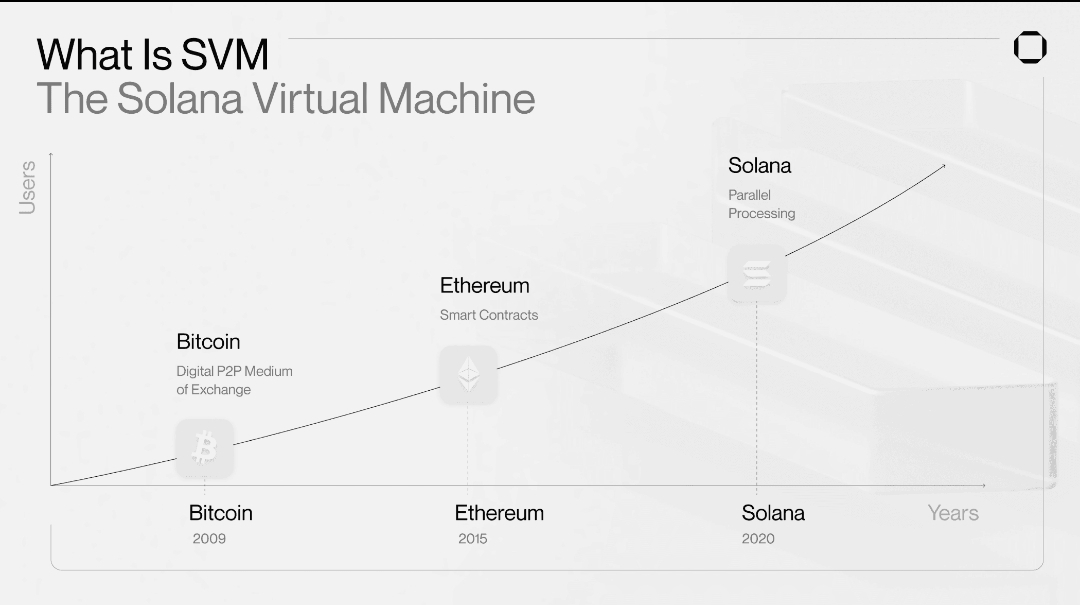
At its core, Fogo is not trying to invent a new execution environment. Instead, it deliberately adopts the Solana Virtual Machine (SVM), which has already been tested in some of the most extreme real-world crypto conditions. From a market participant’s perspective, this is a pragmatic decision. New virtual machines often promise elegance but fail in execution because tooling, developer intuition, and battle-tested assumptions take years to mature. By building on the SVM, Fogo inherits parallel execution, high throughput, and deterministic performance characteristics that matter directly to traders, liquidity providers, and infrastructure-aware developers.
One of the most overlooked issues in crypto markets is execution predictability. Traders do not just care about low fees; they care about knowing what will happen when they submit a transaction during a spike in volatility. On many general-purpose chains, congestion creates a feedback loop where fees rise, transactions fail, and users overpay just to get included. In my own experience market-making on multiple chains, the hidden cost is not the fee itself but the uncertainty around settlement timing. Fogo’s SVM-based architecture is designed to address that problem by executing transactions in parallel wherever state dependencies allow, rather than forcing everything into a single sequential bottleneck.
For liquidity providers, performance is not an abstract metric. It directly affects inventory risk. When rebalancing lags or arbitrage execution is delayed, LPs are exposed to adverse selection. A chain that can process thousands of transactions simultaneously with consistent finality reduces this risk. Fogo’s design emphasizes sustained throughput rather than theoretical peak numbers. That distinction matters. Many chains advertise impressive transactions-per-second figures that collapse under real demand. A high-performance L1 that maintains stable execution during volatile market events becomes a safer environment for serious capital.
From the perspective of infrastructure-aware developers, Fogo’s choice to align with the SVM is equally important. Developers who have already built or audited Solana programs understand account models, parallelism constraints, and runtime behavior. This lowers the cognitive barrier to entry. In practice, that translates into faster iteration, fewer critical bugs, and more reliable applications. When I evaluate chains as a user or early participant, I look closely at developer ergonomics because they determine how quickly real products emerge, not just prototypes.
Some practical implications stand out when looking at Fogo through this lens:
• Parallel execution allows unrelated trades, liquidations, and arbitrage paths to occur simultaneously, reducing contention during peak usage.
• Lower and more predictable fees make strategy modeling easier for traders and bots, especially those operating on thin margins.
• Fast finality reduces the window of uncertainty between intent and settlement, which is crucial during rapid price movements.
• SVM compatibility enables reuse of existing tooling, audits, and mental models, shortening development cycles.
For general crypto readers and new developers, it helps to think of Fogo as infrastructure optimized for “when things go wrong.” Anyone can build a blockchain that looks fine at low usage. The real test is how the system behaves during sudden demand spikes, liquidations, and high-frequency trading bursts. My own research into past market crashes shows that many losses attributed to “bad trades” were actually infrastructure failures: transactions stuck, orders filled late, or positions liquidated due to delayed updates. High-performance execution environments reduce these second-order risks.
Another important angle is market integrity. When a chain becomes congested, it often advantages insiders or validators with better access or higher fee tolerance. This erodes trust. A chain like Fogo, designed to maintain throughput under load, can support a more level playing field. That matters not just philosophically but economically, because fairer execution attracts deeper liquidity over time.
For broad investors, the takeaway is not that Fogo will magically eliminate risk, but that it is aligned with a clear thesis: infrastructure quality compounds. Chains that prioritize execution efficiency and developer familiarity tend to attract applications that actually get used. Usage drives fees, fees drive sustainability, and sustainability supports long-term value. While speculative narratives come and go, infrastructure that works during stress tends to outlast hype cycles.
There are also trade-offs worth acknowledging. High-performance systems require careful engineering and disciplined state management. Parallel execution introduces complexity for developers who are not used to thinking about concurrency. However, this is a solvable learning curve, and the benefits become obvious once applications scale beyond trivial usage.
For traders, LPs, and serious market participants, the actionable insight is simple: pay attention to where your strategies execute best during volatility, not where marketing is loudest. For developers, the lesson is to build where tooling and execution characteristics support long-term growth. For general readers and investors, it is to look beyond slogans and evaluate whether a chain’s design choices align with real-world market behavior.
The clear takeaway is that Fogo’s use of the Solana Virtual Machine is not a cosmetic choice. It is a deliberate alignment with performance, predictability, and developer efficiency. In markets where milliseconds, fees, and reliability matter, infrastructure decisions shape outcomes more than narratives ever will.

